

Key Takeaways
- AI answering services answer calls, qualify leads, and book appointments automatically — not just take messages.
- They cost $200–$1,000+/month depending on features and call volume — significantly less than a full-time receptionist.
- Look for calendar integration, CRM syncing, natural voice quality, and industry-specific training when choosing a provider.
- Home service businesses (HVAC, plumbing, roofing, electrical) see the highest ROI because of high call volume and ticket values.
What Is an AI Answering Service?
An AI answering service is an artificial intelligence system that answers your business phone calls, has natural conversations with callers, qualifies leads, and takes real action -- like booking appointments or sending follow-up messages -- without any human intervention.
It is not a chatbot. It is not a voicemail box with a friendlier greeting. And it is not one of those clunky "press 1 for sales, press 2 for support" phone trees that everyone hates.
Think of it as an AI receptionist for your small business -- one that picks up every call, understands what the caller needs, answers their questions, and moves them toward a booked appointment. It works 24 hours a day, 7 days a week, and never calls in sick. Research from Salesforce shows that 78% of customers buy from the company that responds first -- and an AI receptionist makes sure that company is yours.
The technology has matured significantly over the past two years. Modern AI answering services use advanced voice AI and natural language processing to sound remarkably human. According to Smith.ai, businesses using AI receptionists capture up to 40% more leads than those relying on voicemail alone. Most callers can't tell the difference -- and frankly, most callers don't care, as long as they get the help they need quickly.
How AI Answering Services Work
Under the hood, an AI call answering service combines several technologies to create a natural, conversational experience for your callers. Here is the basic flow:
- Voice AI picks up the call. When a call comes in -- whether it's during business hours or at 2 AM -- the system answers with a natural-sounding voice, greeting the caller by your business name.
- NLP understands intent. Natural language processing listens to what the caller says and determines what they actually need. "My AC isn't blowing cold air" gets routed differently than "I want to schedule my annual tune-up."
- The AI responds naturally. It doesn't read from a rigid script. It has a real back-and-forth conversation -- answering questions about your services, pricing, service area, and hours of operation.
- It qualifies the lead. The system asks the right questions to determine if this is a real opportunity -- property type, urgency, location, what service they need -- and captures all relevant details.
- Calendar integration books the appointment. The AI checks your real-time availability and books the caller into an open slot -- no double-booking, no manual scheduling required.
- Notifications go out instantly. You get a text or app notification with the caller's details and what was booked. The caller gets a confirmation message. Everyone is on the same page.
AI Call Handling Flow
The entire process takes a few minutes. By the time a traditional answering service would have emailed you a message slip, the AI has already had the conversation, qualified the lead, and put them on your calendar. A Drift lead response study found that the odds of qualifying a lead drop 21x if you wait longer than 30 minutes to respond -- which is exactly the window AI eliminates.
AI vs. Traditional Answering Services
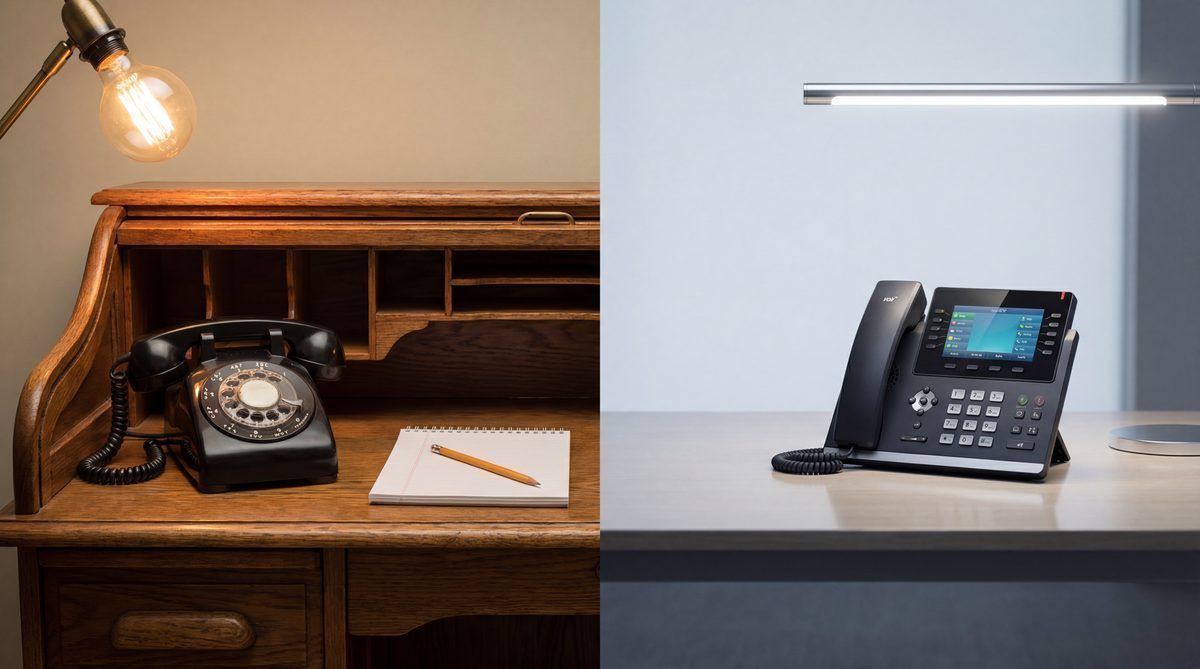
The fundamental difference comes down to one thing: traditional answering services take messages. AI answering services take action. BrightLocal research confirms that consumers expect near-instant responses from local businesses -- a standard that message-taking services simply cannot meet.
A traditional answering service employs human operators who answer your phone, collect the caller's name and number, jot down what they need, and send you the message. You then have to call back, have the same conversation again, check your schedule, and book the appointment yourself.
An AI answering service handles the entire interaction from start to finish. The caller hangs up with an appointment already on the books.
| Traditional | AI-Powered | |
|---|---|---|
| What happens on the call | Takes a message | Has a full conversation, qualifies and books |
| Response speed | You call back in 30-120 min | Instant -- booking happens on the call |
| After-hours coverage | Extra cost, limited quality | Same quality 24/7, no extra cost |
| Appointment booking | Manual -- you do it on callback | Automatic -- booked directly to your calendar |
| Lead follow-up | None | Automated sequences until lead converts |
| Cost | $200-500/mo + per-minute fees | Predictable monthly pricing |
We wrote a detailed comparison of AI vs. traditional answering services for contractors if you want the full breakdown. The short version: traditional services create more work for you. AI services eliminate it.
See how your lead response stacks up
We'll mystery-shop your business — submit a real quote request, call after hours — and show you exactly where leads are falling through. Free. Results in 48 hours.
Who Should Use an AI Answering Service?

An AI answering service makes sense for any business where missed calls mean missed revenue. But some businesses benefit more than others.
Home service contractors are the most obvious fit. HVAC technicians, plumbers, electricians, roofers, and general contractors spend their days on job sites where they physically cannot answer every call. When a homeowner's furnace dies at 9 PM and they call three companies, the one that responds first wins the job. An AI receptionist for small business ensures you are always that first responder.
Medical and dental practices deal with high call volumes and patients who expect immediate responses. An AI system can handle appointment scheduling, answer common questions about office hours and accepted insurance, and triage urgent vs. routine calls.
Solo practitioners and owner-operators in any field benefit enormously. If you are the business -- meaning you are the one doing the work and managing the operations -- you cannot also be a full-time receptionist. But your leads don't care about your workload. They care about getting a response.
Any business running paid advertising should seriously consider an AI answering service. You are paying for every click and every call. When you spend $50 to get a lead on the phone and nobody answers, you just lit that $50 on fire. Harvard Business Review found that companies responding within five minutes are 100x more likely to connect with a lead than those waiting 30 minutes. An AI system makes sure every dollar you spend on marketing has a chance to convert.
What to Look For in an AI Answering Service
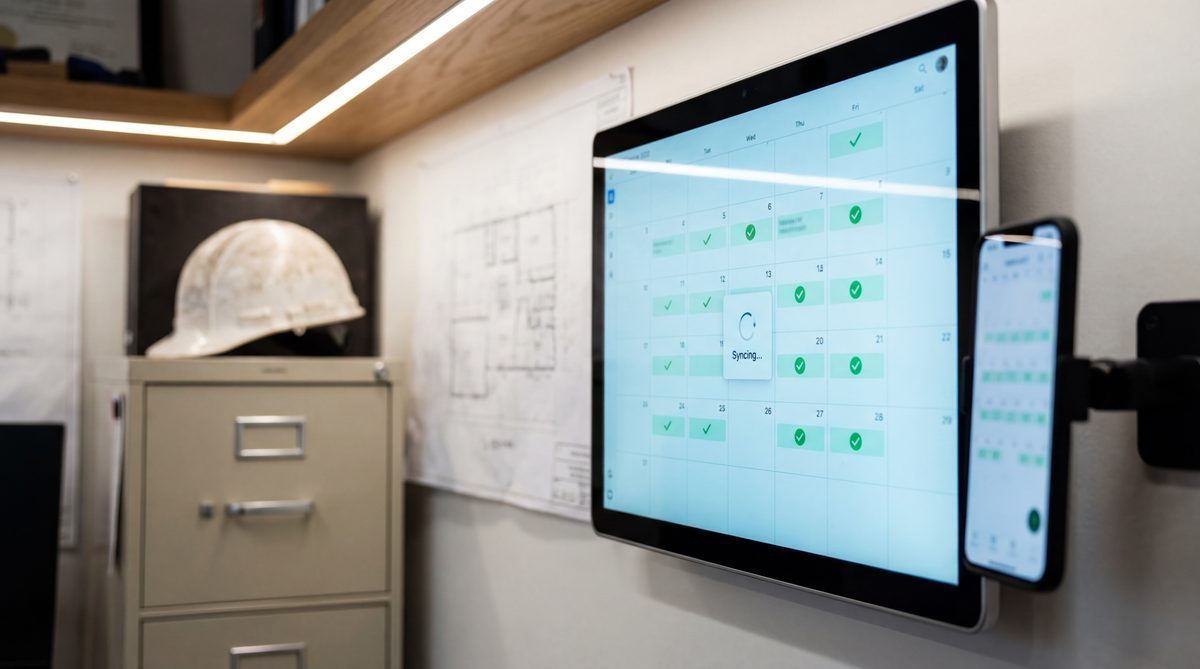
Not all AI answering services are created equal. Some are glorified IVR systems with a fresh coat of paint. Others are genuinely capable of handling complex conversations and driving real business outcomes. Here is what separates the good from the mediocre:
- Natural-sounding voice. The AI should sound like a real person, not a robot reading a script. Listen to demo calls before you commit. If it sounds stilted or unnatural, your callers will notice and hang up.
- Calendar integration. The whole point is to book appointments without your involvement. If the system can't connect to your scheduling tool and book in real time, it's just a fancier voicemail.
- Lead qualification. The AI should ask the right questions for your specific business -- not just collect a name and number, but determine the type of service needed, property type, urgency, and location.
- After-hours support. If the system only works during business hours, you are still losing every evening and weekend lead. The best AI answering services run 24/7 with zero quality degradation.
- CRM integration. Every call and every lead should flow into your existing system automatically. Manual data entry defeats the purpose of automation.
- Industry-specific customization. A generic AI answering service doesn't know the difference between an emergency water heater replacement and a routine inspection. The best services are trained on your industry's terminology, common questions, and booking workflows.
- Transparent pricing. Watch out for per-minute billing, overage charges, and hidden fees. Some services advertise a low base price but charge $1-2 per minute of call time, which adds up fast for busy businesses.
The best AI answering service is the one that's built for your specific industry. A system trained on HVAC calls will perform very differently from one designed for a law firm -- even if they use the same underlying technology.
The Best AI Answering Services for Small Business in 2026
The AI answering service market has grown rapidly. There are now dozens of options ranging from bare-bones call transcription tools to full-service automation platforms. Here is how to think about the landscape:
Generic AI answering services handle basic call answering across all industries. They offer standard greetings, simple FAQ responses, and message-taking. They're affordable and work fine for businesses with straightforward needs -- a simple "take a message and text it to me" workflow.
Platform-based solutions integrate AI answering as one feature within a larger business management tool. These tend to be broader but shallower -- they can answer calls, but the AI isn't deeply trained on any particular industry's conversations or workflows.
Industry-specific AI answering services are built for a particular vertical and understand the unique language, objections, and booking patterns of that industry. For home service businesses, this category has matured rapidly -- purpose-built AI receptionists now understand trade-specific terminology, common objections, and booking workflows out of the box.
The best virtual receptionists for contractors, HVAC companies, plumbers, electricians, and roofers understand the difference between an emergency call and a routine maintenance request. They know how to ask the right qualifying questions for each trade. And they go beyond just answering calls -- including missed call text-back, automated lead follow-up, appointment booking, and review automation in a single platform. Research from Invesp shows that 80% of sales require at least five follow-ups, yet 44% of salespeople give up after one -- making automated follow-up sequences a critical differentiator.
The distinction matters because a generic AI system might stumble on industry-specific conversations. When a homeowner says "my unit is short-cycling," the AI needs to understand that's an HVAC issue, ask relevant follow-up questions, and book an appropriate service call -- not just say "I'll pass along your message."
AI Answering Service Pricing: What to Expect

Pricing varies significantly depending on what you're getting. Here is a realistic breakdown of what the market looks like in 2026:
Traditional Answering Services
$200 - $500/month
Human operators take messages and forward them to you. Per-minute charges often apply. You handle everything after the initial call.
Generic AI Answering Services
$100 - $300/month
Basic AI call handling with standard responses. Limited customization. May include simple booking features. Often charge per-minute or per-call overages.
Specialized AI Platforms (e.g., Ignitvio)
Starting at $997/month
Full automation suite purpose-built for your industry. Includes AI answering, missed call text-back, automated lead follow-up, appointment booking, and review automation. No per-minute billing surprises.
Yes, a specialized platform costs more upfront. But consider what's included: the $997/month Ignitvio plan replaces your answering service, your text-back tool, your follow-up sequences, your booking system, and your review management. Buying those separately would cost significantly more -- and they wouldn't be integrated.
The real cost of any answering service isn't the monthly fee. It's the revenue you lose from leads that slip through the cracks. One missed $5,000 HVAC installation pays for months of AI answering service.
What About Free AI Answering Services?

You'll see free AI answering service options out there. They exist, and they can be a reasonable starting point if you're a brand new business with zero budget and minimal call volume.
Here is what you typically get at the free tier: basic voicemail transcription, maybe simple auto-responses, and very limited minutes per month. There is usually no calendar integration, no lead qualification, no follow-up automation, and no industry-specific training.
Free tools are fine for experimentation. But if you're running a real business and spending money on marketing to generate calls, a free answering service will cost you far more in lost leads than a paid one would cost in monthly fees. The gap between "answering the phone" and "converting the call into a booked appointment" is where the money is -- and free tools don't bridge that gap.
Getting Started with an AI Answering Service
Implementing an AI answering service is simpler than most business owners expect. Here is a straightforward process to evaluate and get started:
- 1. Audit your current call handling. How many calls do you miss per week? How long does it take you to return calls? How many leads go cold before you get back to them? These numbers will tell you how much revenue you're leaving on the table.
- 2. Define what you need. Do you just need someone to answer and take messages? Or do you need full lead qualification, booking, and follow-up? The answer determines whether you need a basic tool or a comprehensive platform.
- 3. Test the AI voice quality. Request a demo call. Listen to how the AI handles common scenarios in your industry. Ask it a curveball question and see how it responds. If it can't handle your typical caller, move on.
- 4. Check integrations. Make sure the service connects with your calendar, CRM, and any other tools you rely on. Integration is what makes the difference between "cool technology" and "actual time savings."
- 5. Start and measure. Track your booking rate, response time, and lead conversion for the first 30 days. Compare it to your previous numbers. The ROI should be obvious within the first month.
Most businesses see results within the first week. Calls that used to go to voicemail now get answered. Leads that used to go cold now get booked. And the business owner gets to focus on doing the actual work instead of playing phone tag all day.
Try AI Answering Built Specifically for Home Services
Ignitvio's AI answering service is purpose-built for contractors, HVAC companies, plumbers, and electricians. See exactly how it would handle your calls, qualify your leads, and book your appointments -- without adding a single person to your payroll.
Get Your Free Lead Response Audit