
Facebook Ads for Contractors: A Complete Guide for 2026

Jake Melendy
Founder, Ignitvio · Updated April 2, 2026 · 14 min read
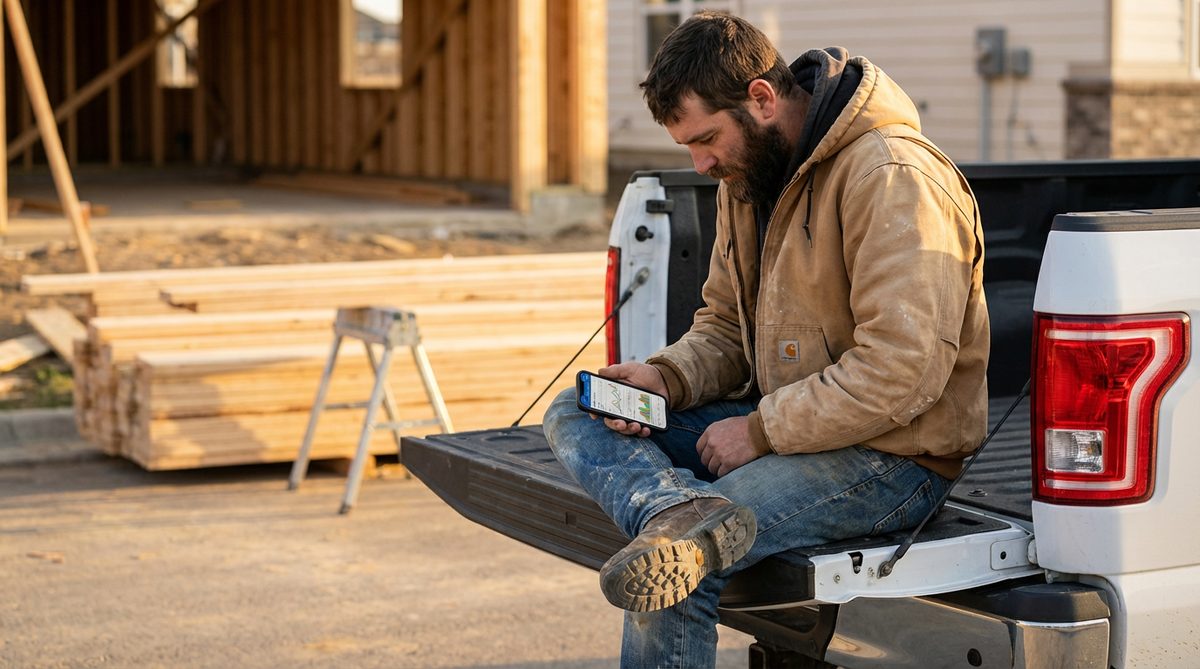
Every contractor knows the Google Ads game: bid on "emergency plumber near me," pay $80 per click, and hope the caller doesn't ghost you. It works, but it's expensive, competitive, and entirely dependent on someone already searching for your service. Facebook and Instagram ads flip the model. Instead of waiting for demand, you create it -- putting your work in front of homeowners who need your services but haven't started looking yet.
The opportunity is massive. With over 3 billion monthly active users on Facebook and 2 billion on Instagram, these platforms reach more homeowners than any search engine. And because you're targeting people based on who they are and where they live -- not what they're searching for -- the cost per lead is dramatically lower.
This guide covers everything you need to run Facebook ads for contractors that actually produce booked jobs: how to target the right homeowners, what ad creative works, how to structure campaigns and budgets, and the critical follow-up system that determines whether your ad spend turns into revenue or gets wasted.
Key Takeaways
- Facebook and Instagram ads generate contractor leads at $15-$40 CPL -- 60-75% less than Google Ads.
- Before/after photos and video testimonials outperform polished creative by 3-5x on social platforms.
- The #1 reason contractor Facebook ads fail isn't targeting or creative -- it's slow follow-up on the leads they generate.
- Pairing Facebook ads with automated lead response turns a $30/day ad budget into a predictable pipeline of booked jobs.
1. Why Facebook & Instagram Ads Work for Contractors
Google Ads are intent-based. Someone types "roof repair near me" and you bid to appear in their results. Facebook and Instagram ads are interruption-based. You put your ad in front of a homeowner while they're scrolling through photos of their friend's vacation -- and you stop them with a before/after photo of a roof transformation in their neighborhood.
That distinction matters because it changes your cost structure entirely. With Google Ads, you're competing against every other contractor bidding on the same high-intent keyword, which drives costs per lead into the $40-$150 range for most home services. On Facebook and Instagram, you're reaching homeowners before the bidding war starts. The average cost per lead for home services Facebook ads falls between $15 and $40 -- a fraction of what you'd pay on Google.
The audience is there. Facebook has over 3 billion monthly active users. Instagram has over 2 billion. According to a 2025 Pew Research survey, 76% of homeowners use social media daily. These aren't just younger demographics either -- Facebook's fastest-growing age group is 45-65, which happens to be the peak homeownership demographic.
The conversion potential is real. WordStream's Facebook Ads Benchmarks report that Facebook lead ads have a 12.5% average conversion rate across industries -- significantly higher than most landing pages. And Nosto's Consumer Content Report found that 79% of people say user-generated content in social ads highly impacts their purchasing decisions. For contractors, that means photos of your actual work and real customer testimonials carry enormous weight.
Social media marketing for contractors isn't about going viral or building a brand. It's about generating a predictable flow of leads from homeowners in your service area at a cost that makes sense. Facebook and Instagram are the platforms where that math works best.
Cost Per Lead by Channel
Average CPL for home services across major advertising platforms
2. Targeting: How to Reach Homeowners Who Need Your Services
The power of Facebook ads for contractors isn't just the low cost -- it's the precision. You're not broadcasting a billboard to everyone on the highway. You're showing a roofing ad specifically to homeowners within 25 miles who own homes built before 2000 and follow home improvement pages. That level of targeting doesn't exist on any other advertising platform at this price point.
Here are the five audience layers that produce the best results for contractors:
Custom audiences. Upload your existing customer list, target your website visitors (via the Facebook Pixel), or reach people who've engaged with your Facebook page. These are your warmest audiences -- people who already know you exist.
Lookalike audiences. Facebook analyzes your best customers and finds other users who share similar traits. A 1-3% lookalike audience based on your customer list is typically the highest-performing cold audience for contractors. Start at 1% (most similar) and expand from there.
Interest + behavior targeting. Target people based on homeowner status, home improvement interests (Home Depot, HGTV, DIY projects), recently moved, and engaged with home services content. Layer these interests together for tighter targeting.
Geographic radius targeting. Set your service area radius to 15-30 miles from your base of operations. You can also target specific zip codes if you know which neighborhoods have older homes that need your services most.
Demographic targeting. Focus on homeowners aged 30-65 and, where available, filter by household income to reach homeowners most likely to hire a contractor rather than attempting a DIY fix.
A roofing contractor in Tampa targeting homeowners within 25 miles who own homes built before 2000 and follow home improvement pages can reach 120,000+ people -- all of whom are statistically more likely to need roof work in the next 12 months.
According to LOCALiQ, the average CPL for roofing Facebook ads falls between $18 and $35 when targeting is dialed in correctly. Compare that to $60-$120 for a single Google Ads click in competitive roofing markets, and the economics become clear. The key is layering these audiences so you're not casting too wide a net. Start narrow, validate what converts, then scale.
3. Ad Creative That Actually Converts
Your targeting can be perfect, but if your ad looks like every other contractor's -- a stock photo of a smiling family in front of a house with "Call Now for a Free Estimate!" -- it's going to get scrolled past. The creative is what stops the thumb. And on Facebook and Instagram, the rules for what works are completely different from Google Ads or traditional advertising.
According to Meta Business, the creative accounts for roughly 56% of an ad's auction performance. Here's what actually converts for contractors:
Before/after photos. These outperform stock images by 3-5x for contractors. A side-by-side of a destroyed roof next to the finished replacement, a rotted deck rebuilt to perfection, or a crumbling driveway replaced with stamped concrete. Real work, real transformations. Shoot these on every job with your phone -- you don't need professional photography.
Video testimonials. A 30-60 second clip of a real customer standing in front of the completed work, saying "These guys showed up on time, did exactly what they said, and the price was fair." These get 2-3x the engagement of static image ads. Film them before you leave the job site while the customer is still happy.
Problem-focused headlines. Lead with the pain, not the service. "AC died in July? Same-day emergency repair." "Water stain on your ceiling? That's not going away on its own." "Flickering lights aren't just annoying -- they're a fire hazard." Headlines that name the specific problem outperform generic "quality service" messaging every time.
UGC-style creative. Ads that look like organic posts -- shot on a phone, unscripted, slightly raw -- consistently outperform polished agency-produced creative on Facebook and Instagram. Homeowners trust content that feels authentic over content that feels like advertising.
Ad copy formulas that work by trade:
HVAC
"Your AC shouldn't sound like that. If it's running loud, cycling constantly, or barely keeping up -- it's costing you $200+/month in wasted energy. [City] homeowners: free diagnostic before summer hits. Spots filling fast."
Roofing
"That missing shingle isn't just cosmetic. One Florida storm and you're looking at $15K in water damage. Free roof inspection for [City] homeowners -- we'll tell you exactly what shape you're in. No pressure, no obligation."
Plumbing
"Slow drains. Low water pressure. That toilet that 'works fine' if you jiggle the handle. Sound familiar? [City] homeowners: $49 whole-home plumbing inspection. We find the small problems before they become expensive ones."
Electrical
"Still have a Federal Pacific or Zinsco panel? Your homeowner's insurance might not cover you. Free electrical panel inspection for [City] homes. Licensed, insured, and we'll give you a straight answer."
The common thread across all of these: specificity. Mention the city. Name the problem. Show real work. Give a concrete reason to act now. For more on building trust that converts, see our guide on how to get more Google reviews -- social proof is just as powerful in ads as it is in search.
4. Budgets, Bidding & Campaign Structure
One of the biggest mistakes contractors make with HVAC Facebook ads or roofing Facebook ads is throwing $500 at a single boosted post and calling it a campaign. That's not advertising -- that's gambling. A real campaign has structure, and structure is what lets you scale what works and cut what doesn't.
In working with home service businesses, we've found that the most effective campaign structure follows a simple hierarchy:
One campaign per service. Separate campaigns for AC repair, roof replacement, bathroom remodel, etc. Each service attracts a different audience at a different price point -- mixing them muddies your data.
2-3 ad sets per campaign testing different audiences. One ad set targeting lookalikes, one targeting interest-based homeowners, one retargeting website visitors. Let them compete against each other.
2-3 creatives per ad set. Test a before/after photo against a video testimonial against a problem-focused carousel. Facebook's algorithm will automatically allocate more spend to the winner.
Budget: Start with $20-$50 per day per campaign. That's $600-$1,500/month -- enough data for the algorithm to optimize and enough leads to validate the approach. Don't spread $10/day across five campaigns. Concentrate your budget on one or two services first, prove the model, then expand.
Optimization: Always optimize for conversions, not traffic or engagement. "Conversion" means a lead form submission or a landing page conversion -- not a like, comment, or share. If you optimize for traffic, Facebook will show your ad to people who click on everything but never fill out a form.
Lead forms vs. landing pages: Facebook lead form ads (where the form opens inside Facebook) work best for simple offers -- "Free estimate," "Free inspection," "$49 tune-up." The friction is low because the user never leaves the app. Landing page ads work better for higher-ticket services where the homeowner needs more information before committing -- a detailed service page with photos, reviews, and pricing context.
Retargeting: Always run a separate retargeting campaign showing ads to people who visited your website but didn't convert. These campaigns typically run at half the CPL of cold traffic because the audience already knows you. Even $5-$10/day on retargeting can recover leads you would've otherwise lost.
Facebook Ad Campaign Structure
How to organize campaigns for maximum clarity and ROI
Campaign
AC Repair
Ad Set 1
Lookalike Audience
1% of customer list
Ad Set 2
Interest Targeting
Homeowners + home improvement
Ad Set 3
Retargeting
Website visitors (last 30 days)
Before/after photo
Video testimonial
Problem headline + UGC
Carousel of recent jobs
Reminder ad + review
Limited-time offer
Each ad set tests a different audience. Each ad tests a different creative. Facebook's algorithm allocates budget to the winners automatically.
5. The Follow-Up Problem: Why Most Contractor FB Ads Fail
Here's the uncomfortable truth about Facebook ads for contractors: the ads themselves are usually not the problem. The targeting is fine. The creative is fine. The budget is reasonable. The reason most contractor Facebook ad campaigns fail is what happens -- or doesn't happen -- after someone fills out the lead form.
A homeowner sees your ad, taps "Get a Free Estimate," fills in their name and phone number, and submits the form. They've just told you they're interested. And then... nothing. No call. No text. No confirmation. Your team gets a notification in Meta Business Suite that they check once a day, maybe twice. By the time someone calls back, it's been 4, 8, or even 24 hours.
According to Drift's Lead Response Report, the average B2C lead response time is 47 hours. For Facebook lead forms specifically, the data is even more sobering: lead form submissions have a 5-minute half-life. After 5 minutes without contact, conversion rates drop by 80%.
Think about it from the homeowner's perspective. They filled out your form while scrolling between posts. By the time you call back hours later, they've forgotten which company they contacted, they've filled out two other forms, or they've already called someone who picked up the phone and booked the job. Your ad spend generated a lead -- and then your follow-up process burned it.
This is the gap that separates contractors who say "Facebook ads don't work for my business" from contractors who are booking 20-30 jobs per month from a $1,000 ad budget. The difference isn't the ad. It's the follow-up.
This is where automated follow-up systems and AI answering services become essential. When a lead form is submitted, the system immediately sends a text message: "Hi [Name], thanks for reaching out about [service]. Can I ask you a couple quick questions so we can get you a fast quote?" An AI assistant continues the conversation, qualifies the lead, and books the appointment -- all within 60 seconds of the form submission. No human intervention needed.
The ad gets them to raise their hand. The automated follow-up system is what actually books the job. Without it, you're paying for leads and then letting them die in your inbox.
6. Measuring What Matters: Tracking ROI, Not Vanity Metrics
Likes, comments, shares, reach, impressions -- none of these pay your bills. The only number that matters for contractor Facebook ads is cost per booked job. Everything else is either a leading indicator of that number or a distraction from it.
Here are the metrics worth tracking, in order of importance:
Cost per lead (CPL). Total ad spend divided by total leads generated. According to WordStream, the average CPL for home services on Facebook is $19.68. If yours is above $50, something in your targeting or creative needs adjustment.
Lead-to-contact rate. What percentage of your leads actually get reached by phone or text? If this number is below 70%, you have a follow-up problem, not an ad problem.
Lead-to-booked rate. Of the leads you contact, how many turn into booked appointments? A healthy rate is 25-40% for service contractors.
Cost per booked job. CPL divided by your lead-to-booked rate. If your CPL is $25 and you book 30% of leads, your cost per booked job is $83. Compare that to your average job profit to know your true ROI.
Revenue per ad dollar (ROAS). Total revenue generated from ad leads divided by total ad spend. A minimum viable ROAS for contractors is 5:1 -- $5 in revenue for every $1 spent on ads.
Calculate your break-even CPL: Take your average job value, multiply by your close rate, then divide by your target ROAS. For example: $2,500 average job × 30% close rate ÷ 5x ROAS = $150 break-even CPL. As long as your cost per lead stays below $150, you're profitable. Most contractors running Facebook ads properly operate well below that threshold.
Setup essentials: Install the Facebook Pixel on your website before you run a single ad. The Pixel tracks what happens after someone clicks -- which pages they visit, whether they fill out your contact form, whether they call. Without it, you're flying blind. Also set up offline conversion tracking so you can report back to Facebook which leads actually became customers, which improves the algorithm's targeting over time.
7. Putting It All Together: The Full-Stack Ad System
Let's connect the pieces. A contractor's Facebook ad system has five layers: targeting the right homeowners, showing them compelling creative, structuring campaigns for efficient spend, following up on leads instantly, and tracking what actually turns into revenue. Most contractors nail two or three of these. Almost nobody nails all five.
The single biggest gap is between the ad and the booked job. You can run the best-targeted, most creative roofing Facebook ads in your market, but if a homeowner fills out your lead form at 7 PM on a Tuesday and doesn't hear back until 10 AM Wednesday, that lead is gone. They've already called the roofer who answered at 7:01 PM.
This is exactly where Ignitvio fits into the stack. It's the follow-up layer that sits between your ad and your booked calendar. When a Facebook lead form is submitted, Ignitvio's AI answering system captures the lead immediately -- responding via text within seconds, qualifying the homeowner through a natural conversation, and booking the appointment directly onto your calendar. No missed leads. No 4-hour response gaps. No leads dying in a notification you forgot to check.
The difference this makes is measurable. Contractors using Ignitvio alongside their Facebook ad campaigns report an average cost per booked job of $85 compared to $350 without automation -- because they're converting leads that would otherwise be wasted. That turns a modest $1,000/month ad budget into $11,500+ in monthly revenue instead of $3,200.
The Follow-Up Gap: Facebook Ad ROI
Same ad spend, dramatically different results based on lead response
Based on $25 CPL, $2,500 average job value. Without automation assumes 4+ hour response and 12% booking rate. With Ignitvio assumes <60 second response and 35% booking rate.
8. Getting Started: Your First Campaign in 7 Days
You don't need months of preparation to launch Facebook ads for contractors. Here's a realistic 7-day launch plan that gets you from zero to live ads generating leads:
Days 1-2: Set Up Your Foundation
Create or claim your Meta Business Suite account. Set up a Business Manager. Install the Facebook Pixel on your website (it takes 5 minutes with most website builders). Upload your customer email list to create your first Custom Audience. Set up a Facebook Business Page if you don't have one.
Days 3-4: Build Your First Campaign
Choose your highest-margin service. Build one campaign with 2-3 ad sets using the targeting strategy from Section 2. Create 2-3 ad creatives per ad set: one before/after photo, one video testimonial (even a selfie-style video works), and one problem-focused headline ad. Set up a lead form with name, phone, and service needed.
Day 5: Launch
Set your budget to $30/day. Choose "Conversion" as your optimization goal. Hit publish. Make sure your lead notification system is working -- you need to know the second a lead comes in.
Days 6-7: Monitor & Adjust
Check your CPL daily. If one ad set is producing leads at $15 and another at $45, pause the expensive one and shift budget to the winner. Don't make major changes in the first 3-4 days -- let the algorithm learn. After 50+ leads, you'll have enough data to make real optimization decisions.
Week 2: Add Retargeting
Once your Pixel has a week of data, create a retargeting campaign targeting website visitors who didn't convert. This is your lowest-cost, highest-conversion audience. Set a separate budget of $10-$15/day.
The one thing that will make or break this entire plan: your speed of follow-up. If you're going to invest $30/day in ads, make sure every single lead gets a response within minutes, not hours. If your team can't do that manually, connect your lead forms to Ignitvio's automated response system so every submission triggers an instant text-back and AI-powered conversation that qualifies and books the lead while you're on the job site.
Ignitvio Automates the Follow-Up So Your Ads Actually Convert
Speed-to-lead, AI call answering, automated follow-up, and booking -- all running 24/7 so every Facebook lead turns into a booked job. Book a free revenue audit and we'll show you exactly how many ad-generated leads you're losing and what they're worth.
Book Your Free Revenue AuditPlans start at $997/month