How to Get More Google Reviews Easily
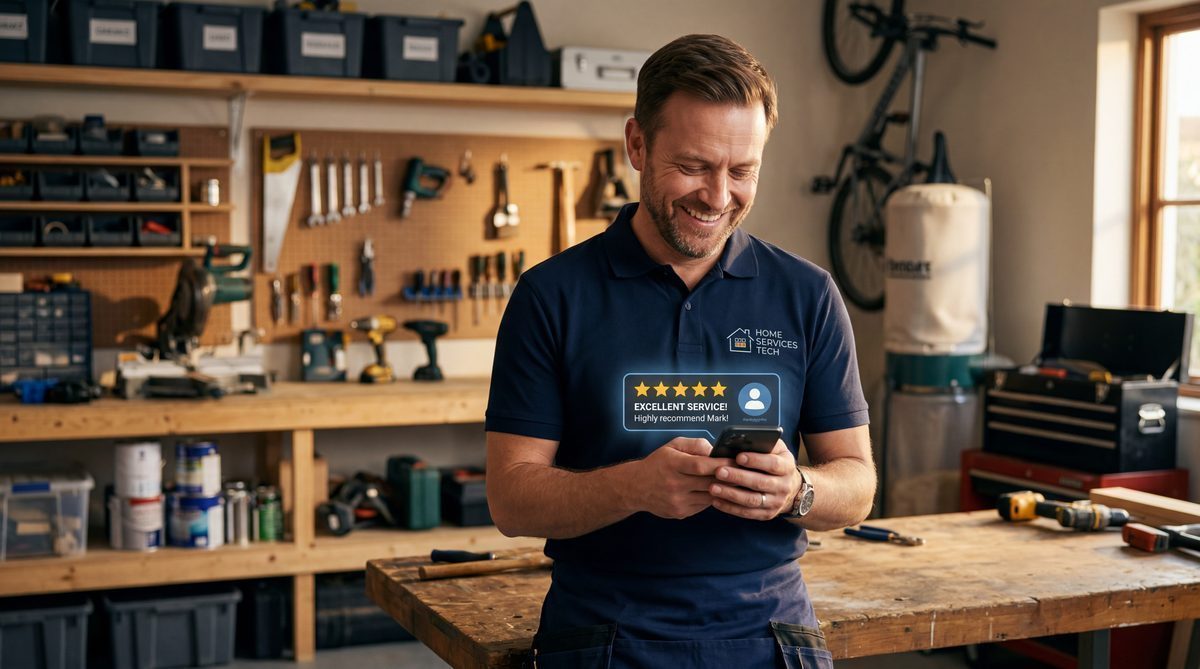
- Google reviews are a top ranking factor for local search — businesses with more reviews get more visibility, more clicks, and more calls.
- Timing is everything: asking within two hours of job completion via text message gets 3-5x more responses than email.
- A simple, personal text template with a direct Google review link outperforms generic email blasts every time.
- Automating review requests removes the awkwardness and inconsistency — turning every completed job into a potential five-star review.
Why Google Reviews Matter More Than Ever
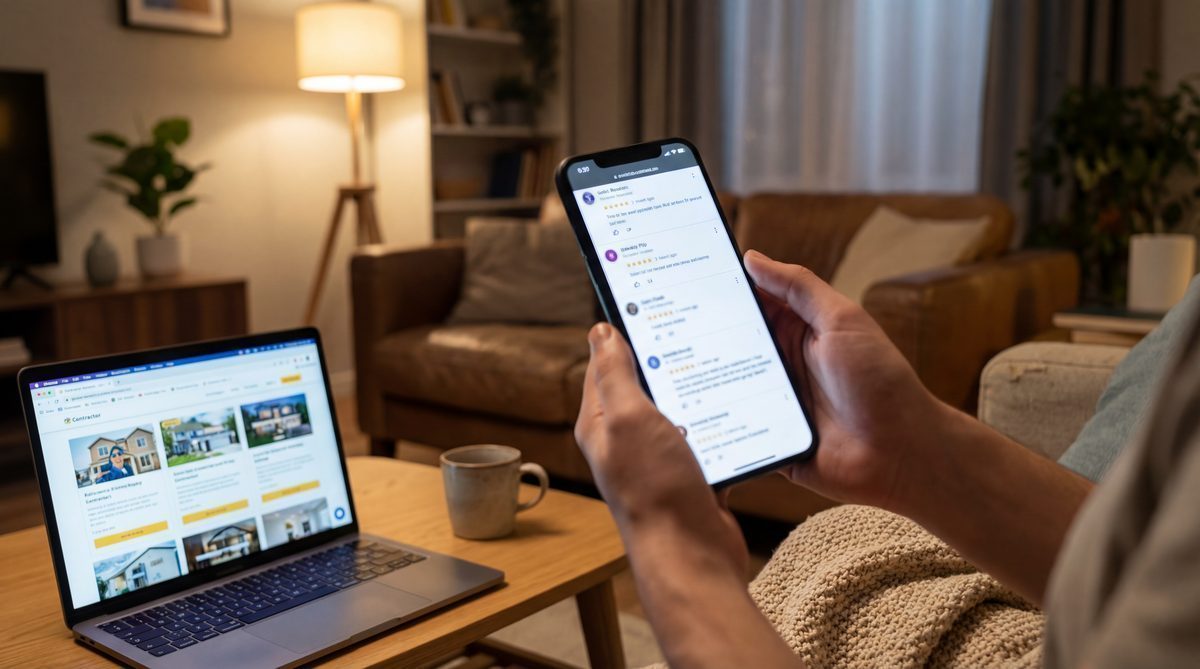
If you run a home service business, Google reviews aren’t a nice-to-have. They’re a revenue driver. When a homeowner searches “HVAC repair near me” or “best roofer in [city],” Google decides which three businesses show up in the local pack. According to Whitespark’s Local Search Ranking Factors study, review signals are one of the heaviest ranking factors in that decision — your review count, velocity, and average rating all play a role.
The numbers are hard to argue with. According to BrightLocal’s annual consumer survey, 93% of consumers read online reviews before choosing a local business. 87% won’t even consider a business with fewer than three stars. And businesses in the top three positions of the local pack get roughly 70% of all clicks.
More reviews also mean more trust. Research from Northwestern University’s Spiegel Research Center found that displaying reviews can increase conversion rates by up to 270%. A roofing company with 147 reviews at 4.8 stars will get the call over a competitor with 12 reviews at 5.0 stars — every single time. Volume signals legitimacy. It tells potential customers you’ve been doing this a while and your quality is consistent, not a fluke.
Reviews also compound. Harvard Business School research has shown that even a one-star increase in rating can lead to a 5-9% bump in revenue. More reviews means more Google trust, which means higher rankings, which means more people find you, which means more reviews. The businesses that figure out a repeatable review system early are the ones that dominate their local market for years.
Why Most Contractors Have So Few Reviews
Here’s the uncomfortable truth: most contractors do great work and have almost nothing to show for it online. Podium’s State of Online Reviews report found that 77% of consumers are willing to leave a review if asked — yet the average HVAC company or plumber has somewhere between 15 and 40 Google reviews. That’s years of work represented by a handful of ratings.
It’s not because their customers are unhappy. It’s three simple problems:
- • They forget to ask. You finish a job, pack up the van, drive to the next call. Asking for a review isn’t on your mind when you’re running between appointments all day.
- • They feel awkward asking. It feels transactional. You just did a great job for this person — now you’re gonna ask them for a favor? Most contractors would rather just move on.
- • They don’t have a system. Even contractors who occasionally remember to ask do it inconsistently. Maybe they ask one out of every ten customers. Maybe they hand out a business card with a QR code that nobody ever scans. Without a system, you’re relying on luck.
The result? Your happiest customers walk away without leaving a review, while the one unhappy customer out of a hundred goes straight to Google to vent. Your online reputation ends up being a distorted version of reality.
The Timing Rule: Ask Within Two Hours

Timing is the single biggest factor in whether a customer leaves a review. Ask at the right moment and your response rate jumps dramatically. Wait too long and it drops to nearly zero.
The sweet spot is within two hours of job completion. That’s when the customer is most satisfied. The problem’s solved. The house is cool again, the leak’s fixed, the new roof looks great. They’re feeling grateful and relieved. That emotional state is what drives someone to take 90 seconds out of their day to write you a review.
Wait until the next day and that feeling’s faded. Wait a week and they’ve completely moved on. The air conditioner is just… working. They’re not thinking about how happy they were when you fixed it.
The best time to ask for a review is when the customer is still feeling the relief of their problem being solved — not after that feeling has worn off.
See how your lead response stacks up
We’ll mystery-shop your business — submit a real quote request, call after hours — and show you exactly where leads are falling through. Free. Results in 48 hours.
Text vs. Email: One Clearly Wins
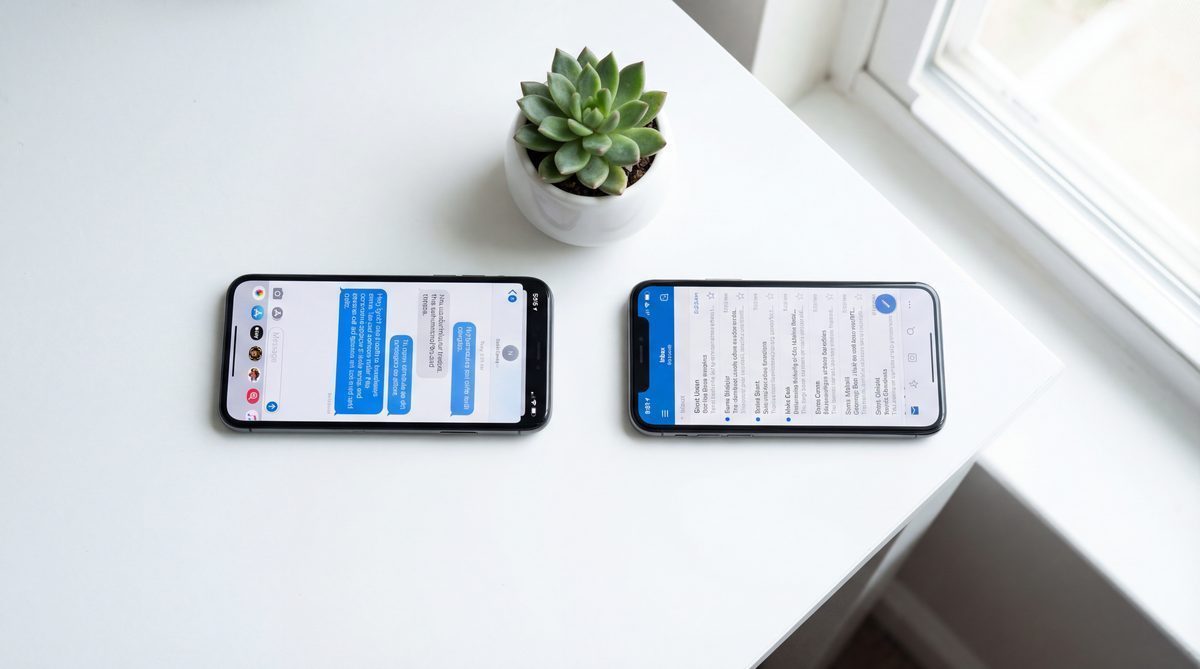
If you’re sending review requests by email, you’re leaving reviews on the table. The data’s clear: text messages get 3-5x higher response rates than email for review requests.
Why? Because people actually read texts. The average text message gets opened within three minutes. The average email sits in an inbox alongside 47 other unread messages — promos, newsletters, spam. Your review request gets buried.
Text also wins on friction. A customer gets your text, taps the link, and they’re on your Google Business Profile review page in seconds. No logging into email, no clicking through, no extra steps. One tap.
The key is including a direct link to your Google Business Profile review page — not your website, not a survey, not a feedback form. The direct Google review link. You can generate this from your GBP dashboard under “Ask for reviews.” It gives customers a one-tap path to leave a star rating and comment.
If you want to know how to get more Google reviews, this single change — switching from email to text with a direct link — will likely double your review volume on its own. And once reviews start coming in, Womply’s research shows customers spend up to 49% more with businesses that respond to their reviews.
Open Rate Comparison: Text vs Email
Text Message
98% open rate
3-5x higher response rate
~20%
Buried in crowded inboxes
The Perfect Review Request Template

Your review request text needs three things: short, personal, and a one-tap link. Here’s a template that consistently converts at 20% or higher:
“Hi [First Name], thanks for choosing [Company Name] today! If you were happy with the work, we’d really appreciate a quick Google review. It only takes 30 seconds: [direct Google review link]. Thank you! — [Tech Name]”
Hartwell Plumbing
Text Message
Today 2
PMHi Diane! Thanks for choosing Hartwell Plumbing today. If you were happy with the work, a quick Google review would mean the world to us:
⭐ Leave a Review
2
PMDelivered
Here’s why this works:
- Personal. It uses their first name and the tech’s name. Feels like a message from a real person, not a corporate blast.
- Low pressure. “If you were happy” gives them an out. You’re not demanding anything — you’re asking people who genuinely had a good experience.
- Sets expectations. “30 seconds” tells them it’s fast. Nobody wants to commit to a ten-minute task for someone else’s benefit.
- One-tap link. No instructions needed. They tap and they’re on the review page. Every extra step you add cuts your conversion rate in half.
Don’t overthink this. Avoid lengthy messages, multiple links, or asking them to “share their experience” in detail. Short, specific, easy.
Automate the Follow-Up
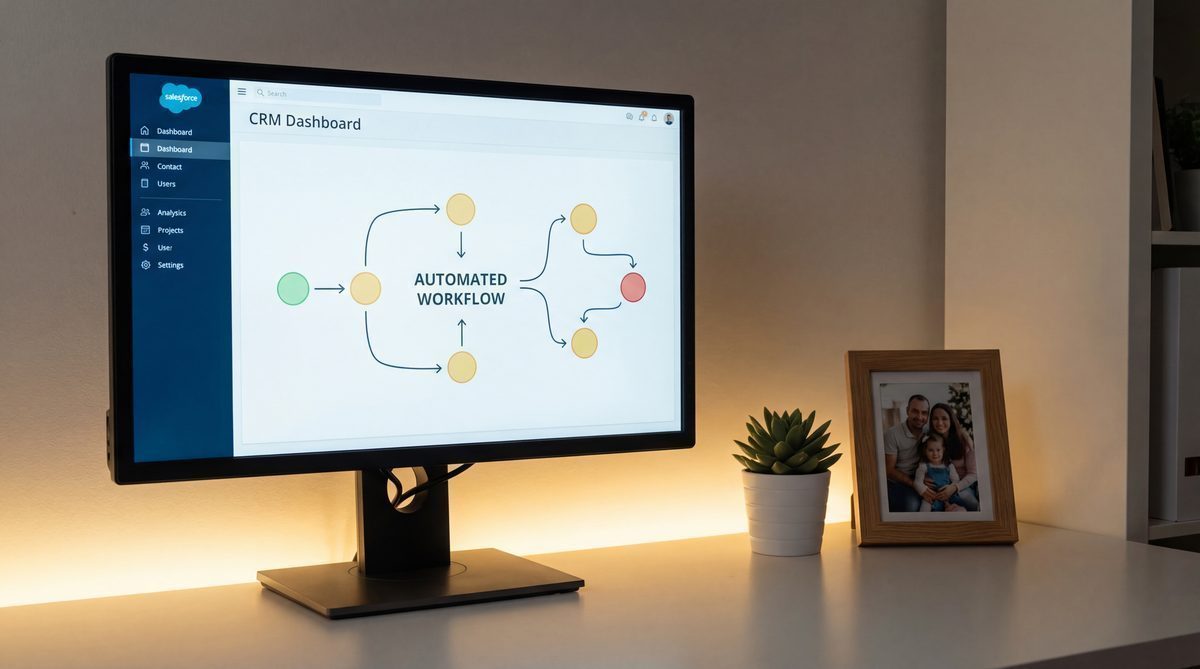
Even with perfect timing and a great template, not everyone’s going to leave a review after the first message. Life gets in the way. They see the text, intend to do it later, and forget. That doesn’t mean they’re unwilling — it means they’re busy.
A single follow-up 48 hours later recovers a significant percentage of these potential reviews. Research from Invesp confirms that timely follow-ups dramatically improve response rates across industries. Key word: “single.” One reminder is helpful. Two or three becomes annoying. You don’t want to be the contractor who texts customers five times asking for a Google review.
The follow-up should be even shorter than the original:
“Hi [First Name], just a quick follow-up — if you have 30 seconds, a Google review would mean a lot to our small team: [link]. No worries if not! Thanks again.”
This isn’t spammy. It’s what a good friend would do — a gentle nudge, followed by complete respect for their time. Between the initial request and the follow-up, you should expect a 15-25% conversion rate on automated review requests. That means if you complete 100 jobs a month, you’re adding 15 to 25 new Google reviews every single month — consistently, without lifting a finger.
What NOT to Do (Google Will Penalize You)

Before you build your review system, here are the landmines you need to avoid. These aren’t suggestions — violating Google’s review policies can get your reviews stripped, your listing suspended, or your business permanently removed from Google Maps.
- ✗ Don’t offer incentives for reviews. No discounts, no gift cards, no “leave a review and get $20 off your next service.” Direct violation of Google’s Terms of Service. Google’s algorithm is also getting better at detecting incentivized review patterns.
- ✗ Don’t buy reviews. Fake reviews are easy to spot — they come in clusters, use generic language, and come from profiles with no history. Google removes them and flags your listing. Third-party review purchasing services are a fast path to losing your Google Business Profile entirely.
- ✗ Don’t gate reviews. Review gating means asking customers if they had a good experience first, then only sending happy customers to Google while routing unhappy ones to a private feedback form. Google explicitly prohibits this. You’ve gotta send all customers the same review link, regardless of sentiment.
- ✗ Don’t ask employees or friends to leave reviews. If they’ve never used your services as a genuine customer, it’s a fake review. Google cross-references IP addresses, location data, and account relationships.
The right approach is simple: do great work, ask real customers at the right time, make it easy, and follow up once. That’s it. No tricks needed.
Review Automation: Set It and Forget It
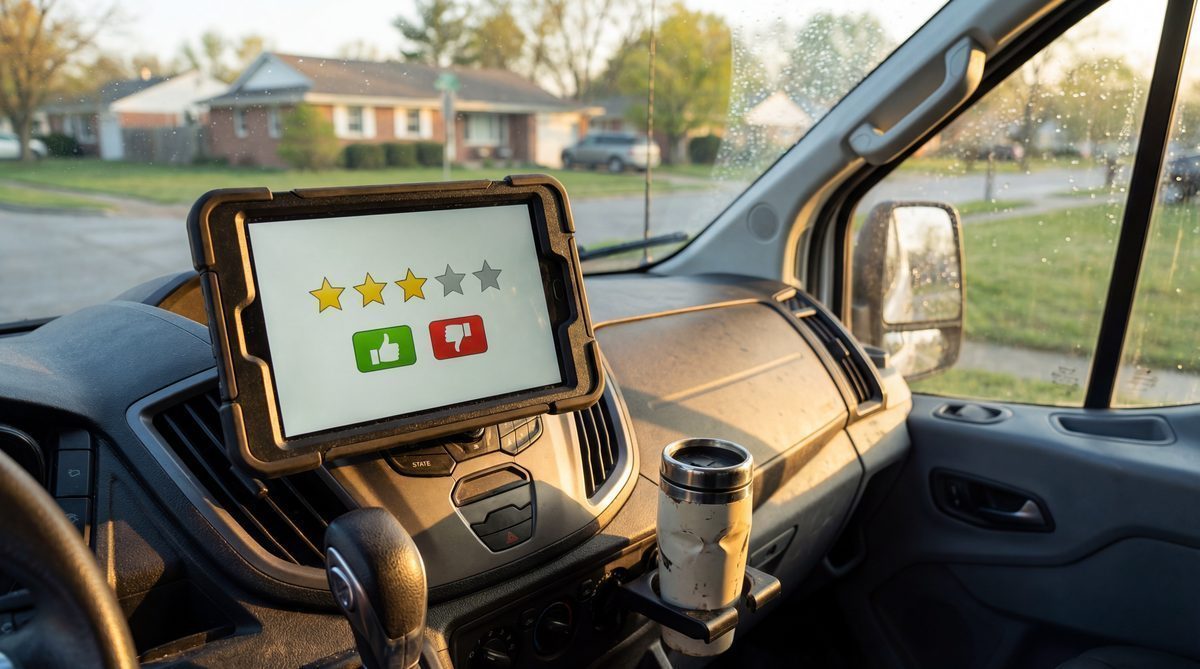
Everything above works. But it only works if someone actually does it — every time, for every customer, without exception. And that’s where most contractors fall apart. You know you should send review requests. You’ve got the template saved in your notes. But after a twelve-hour day in July heat, the last thing you’re gonna do is sit down and text 6 customers asking for reviews.
This is where Google review automation changes the game. A review automation system connects to your job management workflow and handles the entire process without any manual input from you or your team.
Here’s how it works end-to-end:
- Job completion triggers the sequence. When a job’s marked complete in your system, the automation fires. Nobody needs to remember. Nobody needs to press a button.
- A personalized text goes out within the timing window. Customer’s first name, your company name, and a direct Google review link — sent automatically while satisfaction is still high.
- If no review is left, one follow-up sends 48 hours later. The system tracks whether the customer clicked the link and acts accordingly. No redundant messages to people who already reviewed you.
- New reviews flow in consistently, month after month. You go from getting 2-3 reviews per month to 15, 20, or more — depending on your job volume. Your local ranking improves, your listing looks more trustworthy, and the phone rings more.
How Review Automation Works
Job Completed
Marked done
Auto Text Sent
Within 2 hours
Follow-Up
At 48 hours
Review Posted
5 ⭐
Ignitvio’s review automation handles this entire workflow. When a job closes, the system sends a personalized text with a direct Google review link, waits, follows up if needed, and tracks results — all without your team touching anything. It sits alongside the rest of the platform’s automation (AI answering, missed call text-back, lead follow-up, booking) so your entire customer lifecycle runs on autopilot.
The contractors who build a review machine early are the ones who own their local market a year from now. The ones who keep saying “I’ll ask for more reviews next week” are the ones who stay stuck at 30 reviews while their competitor crosses 300.
Stop Chasing Reviews Manually
Ignitvio’s review automation sends requests and follow-ups automatically after every job — so your Google reviews grow on autopilot. Book a free revenue audit and we’ll show you exactly how it works for your business.

Jake Melendy
Founder, Ignitvio
Jake Melendy is the founder of Ignitvio. He spent 12 years in enterprise sales and sales leadership, including at Oracle, before building Ignitvio, which runs done-for-you outbound appointment setting for commercial contractors and B2B service companies. He writes about pipeline, trigger-based prospecting, and lead response.