HVAC Lead Generation: 10 Strategies for 2026
Most HVAC businesses don’t have a demand problem. People need heating and cooling. Furnaces break. AC units die in July.
The demand is always there. What most HVAC companies actually have is a capture problem. The leads exist. They’re just slipping through the cracks before anyone on your team talks to them.
Most HVAC lead generation advice is noise. Buy leads from Angi. Run Google Ads. Maybe try some SEO. Some of it works. A lot of it burns cash.
These ten strategies are what the best HVAC companies actually do to fill their schedules. Ranked by impact. (For a deep dive on how an HVAC AI answering service handles every emergency call 24/7, or a vertical overview of AI for HVAC companies, start there.)
- Speed to lead is the single highest-leverage HVAC lead generation tactic. Responding within 60 seconds makes you 391% more likely to convert.
- Local SEO, review stacking, and problem-focused ads create a compounding flywheel that generates inbound leads without ongoing ad dependency.
- AI call answering, automated follow-up, and reactivation campaigns capture and convert leads 24/7, even past customers who haven’t booked in months.
- AI search tools like ChatGPT and Google AI Overviews are changing how homeowners find contractors. Optimizing for AI recommendations is the next frontier.
1. If You Can’t Answer in 60 Seconds, You’ve Already Lost
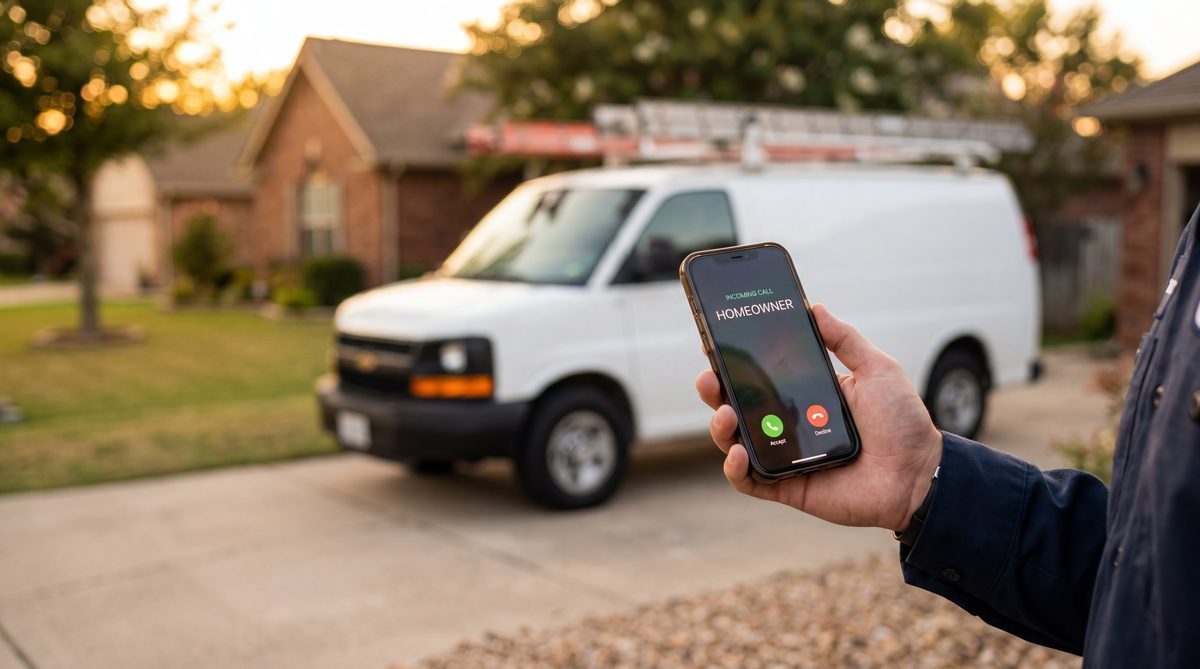
This is the single highest-leverage thing you can do. And it has nothing to do with getting more leads.
It’s about converting the ones you already have.
When a homeowner’s AC dies in the middle of summer, they don’t call one company and wait. They call two or three. The first to respond gets the job roughly 78% of the time, per Lead Connect research. An MIT study on lead response management found that contacting a lead within five minutes makes you 21x more likely to qualify them compared to waiting just 30 minutes.
The average HVAC company takes over 2 hours to respond to a new lead. The best companies respond in under a minute. That gap is where most revenue is lost.
The problem is obvious. Your techs are on jobs all day. Nobody’s sitting at a desk waiting for the phone to ring.
That’s why automated missed call text-back systems have become essential. When a call goes unanswered, the system fires an instant text message to the caller. Opens a conversation. Holds their attention until someone on your team can follow up.
The best platforms take this further. Every missed call triggers a text response, and an AI assistant continues the conversation, qualifies the lead, and books the appointment directly onto your calendar. No human intervention. Business hours or after.
How to implement: Start by measuring your current average response time. Pull your call logs for the last 30 days. Count the voicemails. Then set up an automated text-back system so every inbound call gets a response in under 60 seconds. Whether you answer it or not.
more likely to convert a lead when you respond within 60 seconds vs. waiting even 5 minutes.
Source: MIT Lead Response Management Study2. Own Your Local Market or Someone Else Will
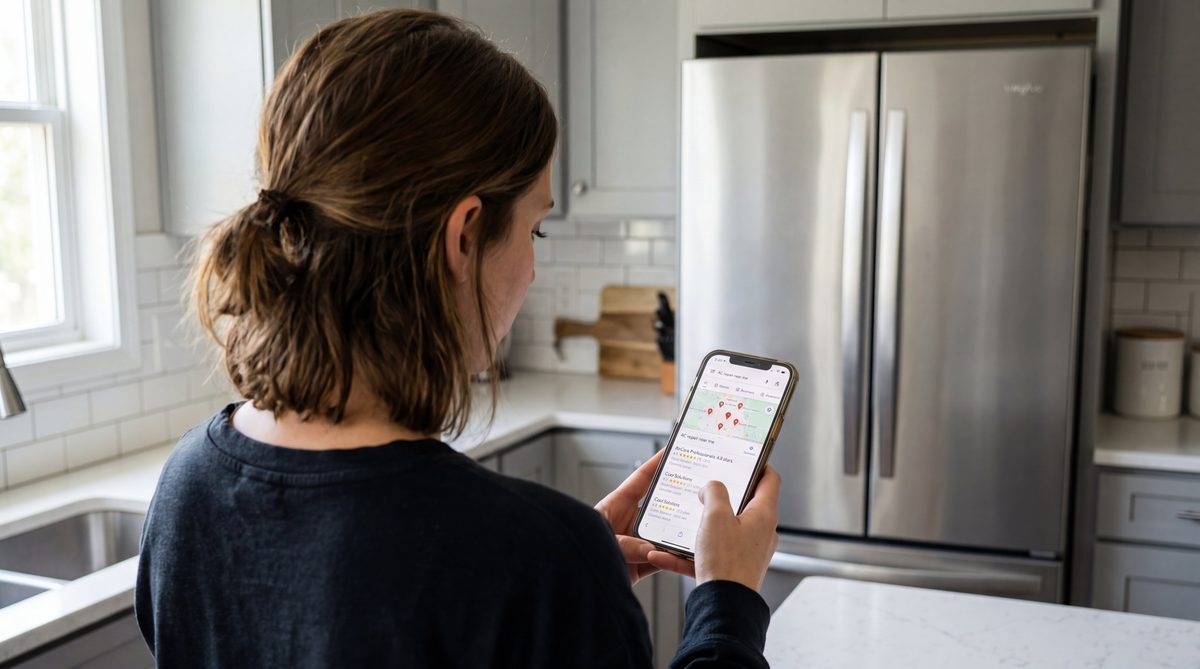
HVAC SEO lead generation is a long game. It’s also the most cost-effective lead source once it’s working.
Per Backlinko’s local search behavior research, 42% of local searchers click on a result in the Google Map Pack. Unlike paid ads where leads dry up the moment you stop paying, SEO compounds. A well-optimized Google Business Profile and website can pull in 30 to 50+ organic leads per month without ongoing ad spend.
Three pillars:
- Google Business Profile optimization. Complete every field. Add photos weekly. Post updates at least twice a month. Choose the right primary and secondary categories (HVAC Contractor as primary, then Air Conditioning Repair Service, Heating Contractor, etc.). Add your service area accurately.
- Citation consistency. Your Name, Address, and Phone number (NAP) needs to be identical across every directory. Yelp, BBB, Angi, Thumbtack, Yellow Pages, Apple Maps, Facebook, and at least 30 to 40 others. Inconsistencies confuse Google. Confusion hurts your rankings.
- On-page SEO. Create dedicated service pages for each offering (AC repair, furnace installation, duct cleaning, heat pump service). Location pages for each city or neighborhood you serve. Each page targets a specific keyword with unique content. Not the same template with a city name swapped in.
How to implement: Start with your Google Business Profile. Claim it if you haven’t already. Verify it. Fill in every field completely. Then audit your top 20 citations for NAP consistency using a tool like BrightLocal or Whitespark. For on-page work, start with service pages for your highest-revenue offerings and location pages for your top three service areas.
3. Why Your Review Count Is Killing Your Ranking
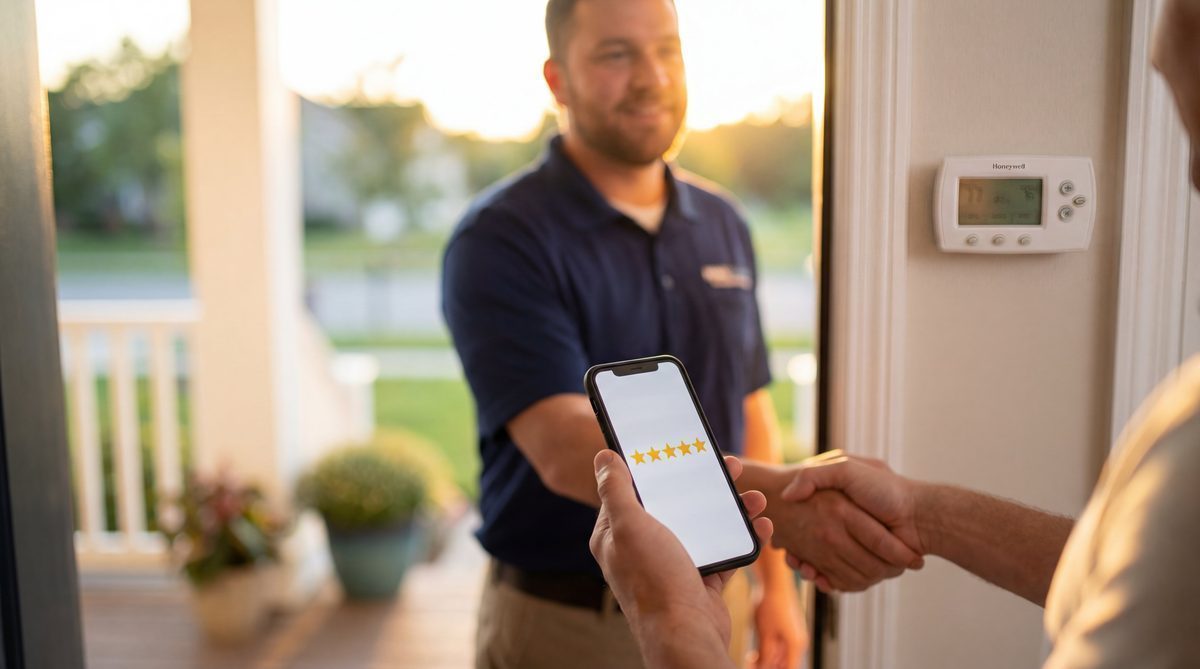
Reviews are the most powerful form of HVAC lead generation that most companies underinvest in. Seriously underinvest.
BrightLocal’s Local Consumer Review Survey found 87% of consumers read online reviews for local businesses. 73% only pay attention to reviews from the last month. Not last year. Last month.
For HVAC specifically, reviews do double duty. They influence whether a homeowner clicks on your Google Business Profile listing. They’re also a direct ranking factor in Google’s local pack algorithm. As Harvard Business School research has shown, reviews directly influence purchasing decisions.
More recent, high-quality reviews mean better visibility in the local 3-pack. The local 3-pack drives the majority of clicks for “AC repair near me” and similar searches.
The problem is consistency. Most HVAC companies get a burst of reviews after they first ask. Then it tapers off. Asking manually always falls through the cracks when you’re busy running jobs.
Businesses with above-average Google review counts earn 82% more in annual revenue than those below average, according to a Womply study on review volume and revenue.
Automate it. Send a text to every customer after their service is complete. Direct link to your Google review page. One tap to leave a review. Automated review platforms can also route negative feedback privately so you can resolve issues before they become public 1-star reviews.
How to implement: Set a goal for the number of reviews you want per month. Aim for at least 8 to 10 to maintain recency. Automate the ask so it happens after every completed job, every time, without exception. Respond to every review within 24 hours. Positive or negative. This signals to Google that your profile is active and engaged.
4. Stop Running “Call Now” Ads (They Don’t Work)
Most HVAC companies run ads that say the same thing. “AC Repair Near Me. Call Now. Licensed and Insured.”
That’s not advertising. That’s a business card with a budget.
The ads that actually generate high-quality HVAC leads in 2026 lead with the homeowner’s problem, not your credentials. Problem-aware advertising targets homeowners dealing with a specific pain point, even if they haven’t started searching for “HVAC repair” yet. They might be Googling why their energy bill spiked. Why one room is always hot. Whether their old system is worth fixing.
Those are the searches your competitors aren’t bidding on.
Hooks that actually stop the scroll:
- “Your AC might be costing you $200/month more than it should, and you’d never know”
- “We got a call at 6pm on a Friday. Most companies would’ve said Monday. We were there in 45 minutes.”
- “Your energy bill is $300/month? It should be $180. Here’s why.”
- “We saved this homeowner $1,400/year just by replacing their 12-year-old unit”
- “Every year we get 200 emergency calls the first week it hits 100 degrees. Don’t be one of them.”
Why these work: they lead with the homeowner’s problem or story. Not your service list. They create curiosity and urgency. A homeowner reading “your energy bill is $300/month? It should be $180” immediately wants to know more.
That’s the click. That’s the lead.
This works across platforms. Google Local Services Ads (LSAs) put you at the top of search results with a “Google Guaranteed” badge. Google Ads let you target problem-aware keywords like “high energy bill AC” or “AC running but house not cooling.” Facebook and Instagram with story-driven copy and before/after visuals reach homeowners who aren’t actively searching yet, but recognize their own problem when they see it.
The best-performing HVAC ads don’t sell a service. They describe a problem the homeowner already has and hint at the solution.
How to implement: Rewrite your top three ads to lead with a homeowner pain point instead of your service name. Set up Google LSAs if you haven’t already. They’re pay-per-lead, not pay-per-click. For Facebook and Instagram, create 3 to 5 story-driven posts (real job stories, energy savings breakdowns, before/after photos) and boost them to homeowners in your service area. Track which hooks generate the most calls. Double down on those.
See how your lead response stacks up
We'll mystery-shop your business, submit a real quote request, call after hours, and show you exactly where leads are falling through. Free. Results in 48 hours.
Get Your Free Audit5. The 9 PM Call That Pays Your Mortgage

Missed call text-back solves part of the problem. But what about the calls that come in at 9 PM on a Friday? During a holiday weekend? At 6 AM when a homeowner wakes up to a cold house?
Traditional answering services take messages. They don’t qualify leads. They don’t check your availability. They definitely don’t book appointments.
AI voice answering is a different category entirely. It answers calls in a natural-sounding voice. Asks the right qualifying questions (what kind of system, what’s the issue, when did it start, what’s the address). Checks your real-time calendar. Books the appointment on the spot.
ServiceTitan’s State of the Trades data shows 14.1% of inbound calls to residential HVAC shops arrived outside business hours in June 2025, the seasonal peak. If you’re not answering those calls, you’re handing that slice of your potential revenue to whoever is.
For the best HVAC lead generation results, you need 24/7 coverage that actually converts callers into booked jobs. Not a voicemail box that collects messages nobody listens to until Monday morning. AI answering platforms handle this around the clock. Qualifying each caller. Scheduling directly into your dispatch system. Without any human needing to pick up the phone.
How to implement: Audit your after-hours call volume first. Pull reports for the last 90 days. Look at calls before 8 AM, after 5 PM, and on weekends. Multiply that number by your average ticket value. That’s the revenue at risk. Then evaluate AI answering solutions that integrate with your scheduling software so booked appointments appear automatically.
6. Why 80% of Your Quotes Die Without a Fight

Here’s a stat that should keep every HVAC business owner up at night. 48% of salespeople never follow up after the first contact, per Invesp research. And 80% of sales require five or more follow-ups to close.
In HVAC, this plays out every day.
A homeowner calls about a new system quote. Your team gives them a price over the phone. The homeowner says they need to think about it. And then… crickets. Nobody follows up. Nobody sends a text two days later. Nobody checks in a week after.
That $8,000 to $15,000 install goes to the company that did.
Automated follow-up sequences fix this by taking the human bottleneck out of it. After initial contact, the system sends a series of well-timed messages over days and weeks. Thank-you text after the estimate. Check-in two days later. A nudge about seasonal pricing a week after that. A final value-driven message. Each touchpoint feels personal and natural.
Companies that automate lead follow-up see 10% or higher increase in revenue within 6 to 9 months, according to Strategic IC research on marketing automation ROI.
Good follow-up automation handles this for you. Once a lead enters the system, from a phone call, form submission, or text message, the platform manages the entire nurture sequence. It knows when to reach out, what to say, and when to stop. Your team only gets involved when the lead is ready to book.
How to implement: Map out your current follow-up process. If the answer is “we call them back once and that’s it,” you’re leaving money on the table. Build a minimum five-touch follow-up sequence across text and email, spaced over 14 days. Automate it. Don’t rely on anyone remembering.
7. Your Customer List Is a Goldmine You’re Ignoring
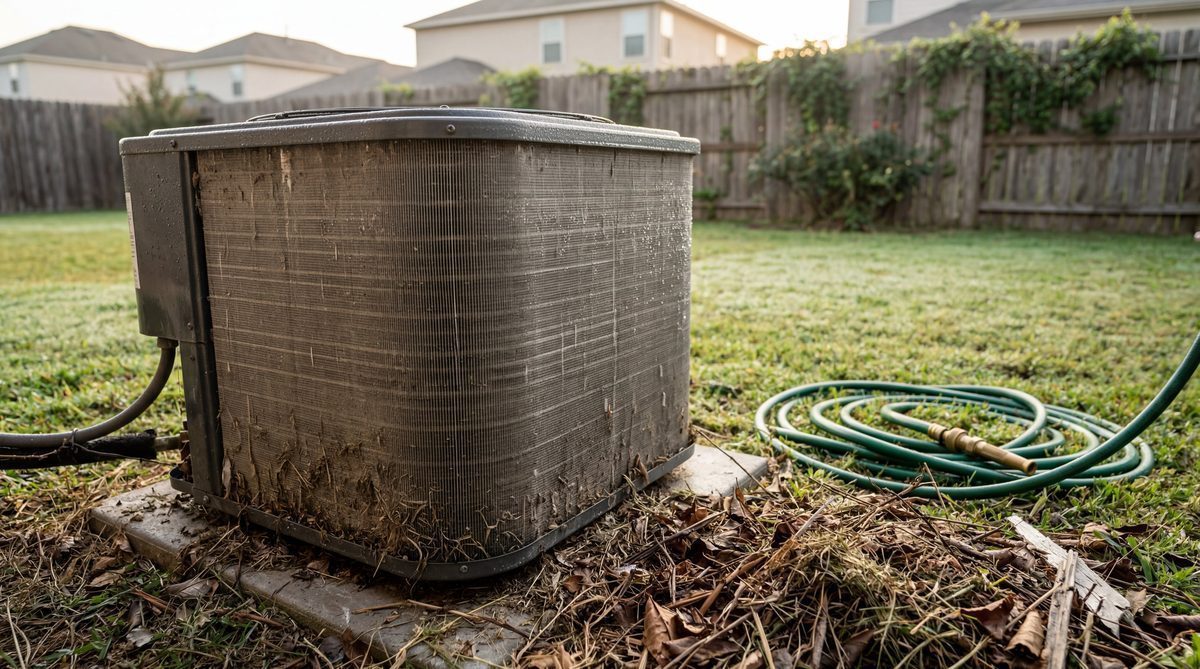
Most HVAC companies are sitting on a goldmine they never touch. Their past customer list.
If you’ve been in business more than a few years, you’ve got hundreds or thousands of previous customers in your CRM. Many haven’t booked in 6, 12, or 18+ months.
These people already know you. Already trust you. Already have HVAC systems that need maintenance. They just need a reason and a reminder to come back.
Reactivation campaigns are automated text and email sequences targeting past customers who’ve gone dormant. The messaging is simple. Remind them their system is due for maintenance. Offer a seasonal tune-up. Let them know about an upgrade incentive before peak season hits.
Acquiring a new customer costs 5 to 7 times more than retaining an existing one, as Harvard Business Review research has demonstrated. Reactivation campaigns let you generate revenue from customers you’ve already paid to acquire.
The seasonal angles make this especially powerful for HVAC. Early spring: “It’s been 12 months since your last AC tune-up. Want to get ahead of the summer rush?” Fall: “Your furnace hasn’t been serviced since last winter. Let’s make sure it’s ready before the first cold snap.” Before the first heat wave or cold front: “We book up fast the first week of triple-digit temps. Secure your spot now.”
The beauty of reactivation campaigns is they target warm leads. These aren’t strangers. They’re people who’ve already chosen your company once. Your close rate on reactivation is typically 3-5x higher than cold outreach. And the cost per acquired job is a fraction of what you’d pay for a new lead from Google Ads or a lead marketplace.
How to implement: Export your customer list. Segment it by last service date. Create three campaigns. One for customers who haven’t booked in 6 to 12 months. One for 12 to 24 months. One for 24+ months (with a “we miss you” angle). Use automated text and email sequences timed 4 to 6 weeks before each peak season. Include a clear call-to-action with easy online or text-to-book scheduling.
8. Referrals Are Great. Most HVAC Companies Don’t Earn Them Right.
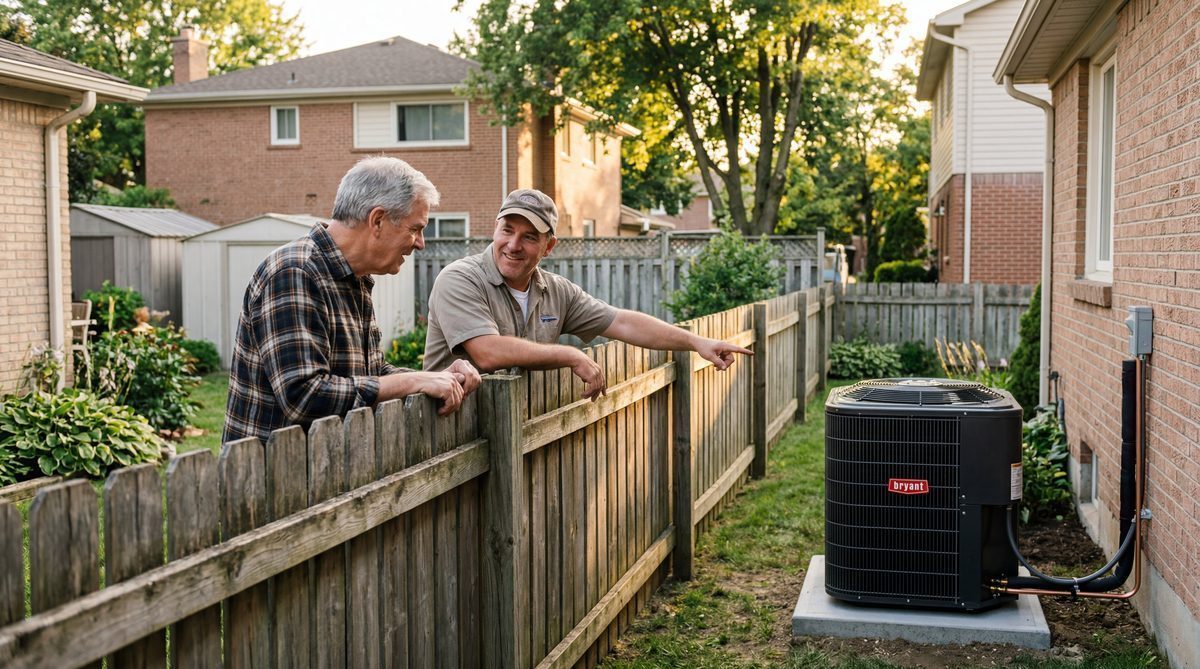
Referrals have always been the best leads in HVAC. They close at higher rates. A Nielsen study found people are 4x more likely to buy when referred by a friend. Shorter sales cycles. Less price-sensitive, because trust has already been established through the referring customer.
The problem for most HVAC companies isn’t quality. It’s volume and consistency.
You get them when you get them. Zero control over the flow. That changes when you build an actual referral system instead of just hoping people mention you to their neighbors.
A structured referral program gives customers a reason and a reminder to refer. The incentive doesn’t have to be large. Many successful HVAC companies offer $50 to $100 off the next service call. A free maintenance tune-up. A gift card for every referral that books.
The key is making it easy and reminding customers at the right moment. Which is right after you’ve delivered great service and they’re happiest with your company.
- Define the incentive. Keep it simple. A $50 credit or a free filter change works. Make sure the tech can explain it in 15 seconds.
- Ask at the right time. The moment the tech finishes the job and the customer is satisfied is the highest-probability window. Train your techs to mention the referral program during their wrap-up.
- Follow up with a text. Send an automated message after the job with a shareable referral link. Or a simple “Know anyone who needs HVAC service? Send them our way and you’ll get $50 off your next visit.”
How to implement: Create a one-page referral program with a clear incentive. Print referral cards for your techs to hand out. Set up a post-service text or email that reminds customers about the program with a trackable link. Track referral sources in your CRM so you know what’s working.
9. Catch Homeowners Before They Even Know They Need You
Content marketing for HVAC isn’t about writing blog posts that other HVAC companies read. It’s about creating content homeowners in your service area find when they’re searching for answers about their heating and cooling systems.
Those searches represent people who either need service now or will need it soon.
The content that drives the most HVAC leads falls into three categories:
- Problem-aware content. “Why is my AC blowing warm air?” “Furnace won’t turn on.” These searches come from people with an active problem, one step away from calling a contractor. A well-written guide that answers their question and ends with a clear call-to-action can convert at 5% to 10%.
- Comparison and cost content. “How much does a new AC unit cost in [city]?” “Heat pump vs. furnace: which is better?” These searches signal someone in the consideration phase, getting closer to a purchase decision.
- Seasonal and maintenance content. “Spring AC maintenance checklist.” “How to prepare your furnace for winter.” These attract homeowners before they have an emergency. A chance to build trust and capture their information for when they do need service.
The key is targeting keywords with local intent and reasonable competition. You don’t need to rank nationally. You need to rank in your city and surrounding areas.
How to implement: Start with five to ten articles targeting your highest-intent keywords. Use Google’s “People Also Ask” and autocomplete suggestions to find what homeowners in your area are searching for. Publish one to two articles per month, each 1,000 to 1,500 words, with a clear CTA to call or book online. Link each article to your relevant service pages.
10. Get Recommended by ChatGPT (Before Your Competitors Do)
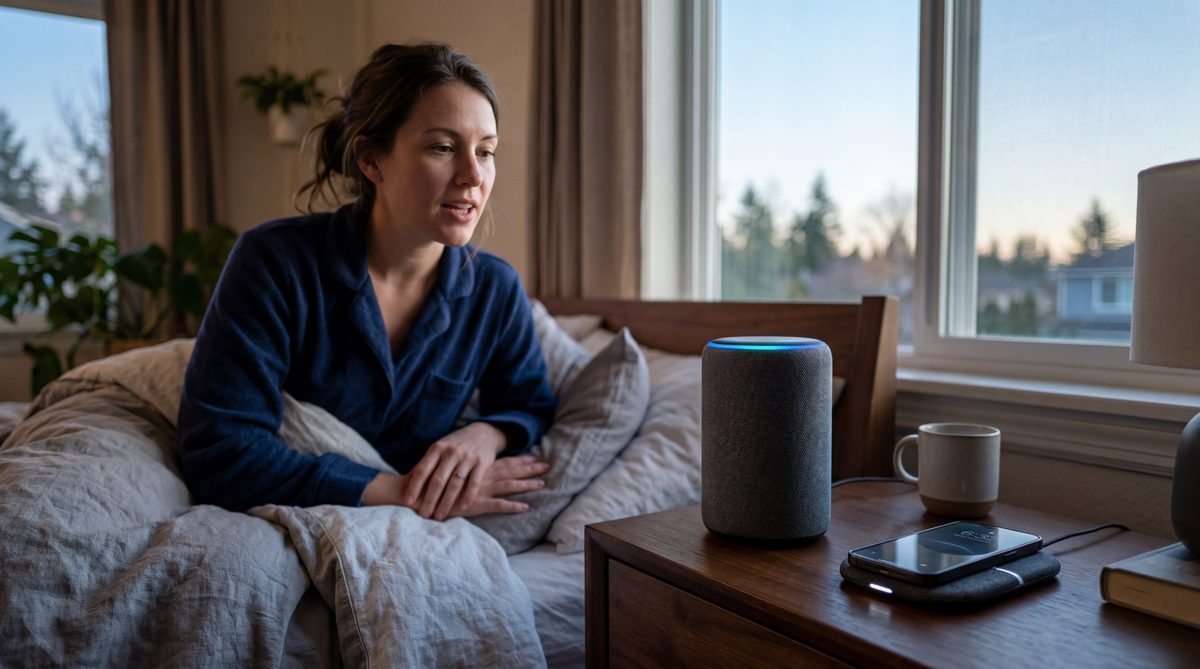
Here’s a shift most HVAC companies haven’t caught yet. A growing number of homeowners are finding local service providers through AI tools like ChatGPT, Perplexity, and Google AI Overviews. Not traditional search.
When someone asks an AI “who’s the best HVAC company in [city]?” or “I need emergency AC repair, who should I call?”, the AI recommends specific businesses. If you’re not one of them, you’re invisible to an entirely new channel of high-intent leads.
AI models decide which businesses to recommend based on a few key factors. Volume and quality of your online reviews. How often your brand gets mentioned across the web. Whether your website has structured data and schema markup AI can parse. The depth and authority of your content.
Basically, the same signals that help with traditional SEO also feed AI recommendations. But there are specific optimizations that give you an edge.
AI-powered search is projected to handle 25% or more of local service queries by 2027. The businesses that optimize for AI recommendations now will have a massive first-mover advantage.
Key optimizations:
- Add comprehensive schema markup (LocalBusiness, Service, FAQ, and Review schema) to your website so AI can easily understand what you offer and where you operate.
- Build detailed FAQ pages that directly answer the questions homeowners ask AI tools.
- Get cited in local guides, “best of” lists, and industry directories that AI models reference when forming recommendations.
- Maintain consistent, authoritative content across your website, blog, and social profiles.
This isn’t some future trend to keep an eye on. It’s happening right now. The HVAC companies showing up in AI-generated recommendations today are building brand awareness and capturing leads their competitors don’t even know exist yet.
How to implement: Start by adding LocalBusiness and Service schema markup to your website (use Google’s Structured Data Markup Helper if you’re not technical). Create a comprehensive FAQ page with 15 to 20 questions homeowners commonly ask about HVAC services in your area. Check if your business appears in AI recommendations by searching for your services in ChatGPT and Perplexity. Get listed in local “best of” guides and industry roundups. Publish authoritative, in-depth content regularly so AI models have quality material to reference when recommending local HVAC providers.
Putting It All Together

The best HVAC lead generation strategy isn’t any single tactic. It’s all ten working together.
Local SEO and content marketing bring leads to your door. Problem-focused ads reach homeowners before they even start searching for contractors. Speed-to-lead and AI answering make sure you capture every inquiry. Automated follow-up and reactivation campaigns convert the leads who aren’t ready to book yet and bring back past customers. Review stacking builds the social proof that makes everything else work better. Referral systems turn every happy customer into a lead source. And AI search optimization positions you for where things are heading.
The HVAC companies growing fastest in 2026 aren’t necessarily spending more on marketing. They’re capturing a higher percentage of the leads they already generate, reactivating past customers, and positioning themselves on emerging platforms. That’s where the real ROI lives.
If you’re investing in ads, SEO, or any other lead source but haven’t automated your speed-to-lead, call answering, follow-up, and reviews, you’re pouring water into a leaky bucket.
Fix the bucket first. Then pour more water in.
Running a different trade? The same system works there too: see the lead generation for plumbers and electrician marketing strategies breakdowns.
- ~10 missed calls per week
- Average job value: $500
- Revenue lost per year: $78,000
- 10 calls x $500 x 52 weeks x 30% close rate
- 30-50% of missed calls recovered
- 156-260 additional jobs per year
- Revenue recovered: $23K-$39K
- By answering & booking missed leads automatically
Ignitvio Automates the Hardest Parts for You
Speed-to-lead, AI call answering, automated follow-up, reactivation campaigns, and review automation. All running 24/7 without adding staff.
Get Your Free Lead Response Audit
Jake Melendy
Founder, Ignitvio
Jake Melendy is the founder of Ignitvio. He spent 12 years in enterprise sales and sales leadership, including at Oracle, before building Ignitvio, which runs done-for-you outbound appointment setting for commercial contractors and B2B service companies. He writes about pipeline, trigger-based prospecting, and lead response.