HVAC Lead Response Time: Why Speed Wins Jobs in 2026
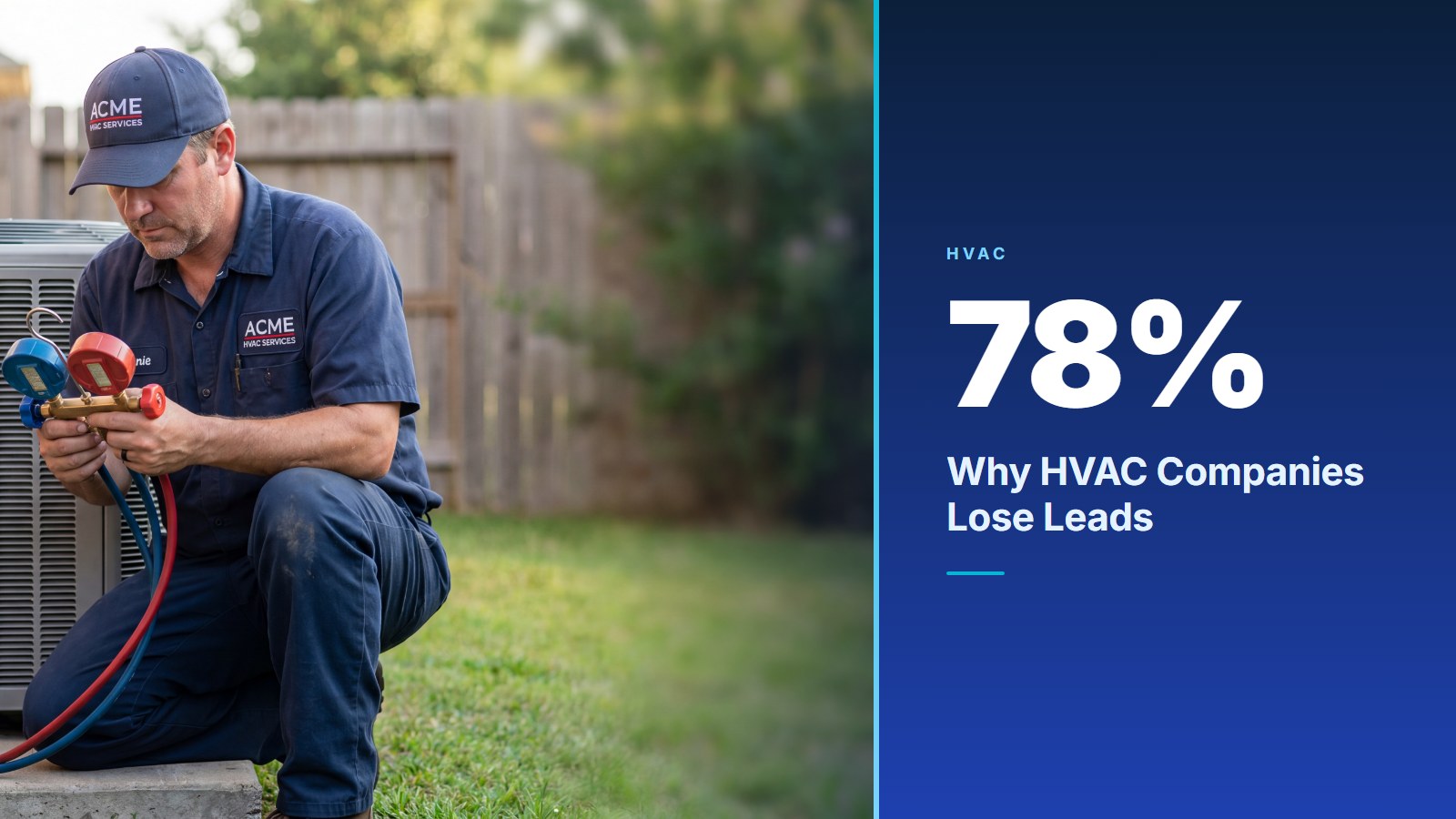
- 78% of customers hire the first company that responds — if you take longer than 5 minutes, you’re 21x less likely to close the deal.
- After-hours calls, peak season overload, and unmonitored web forms are the biggest gaps where HVAC leads fall through.
- A typical HVAC company losing 30% of leads to slow response is leaving $240K-$480K on the table annually.
- Automated text-back and AI booking systems deliver sub-60-second responses 24/7, recovering $20K+ per month at a fraction of the cost of extra staff.
The Speed-to-Lead Problem
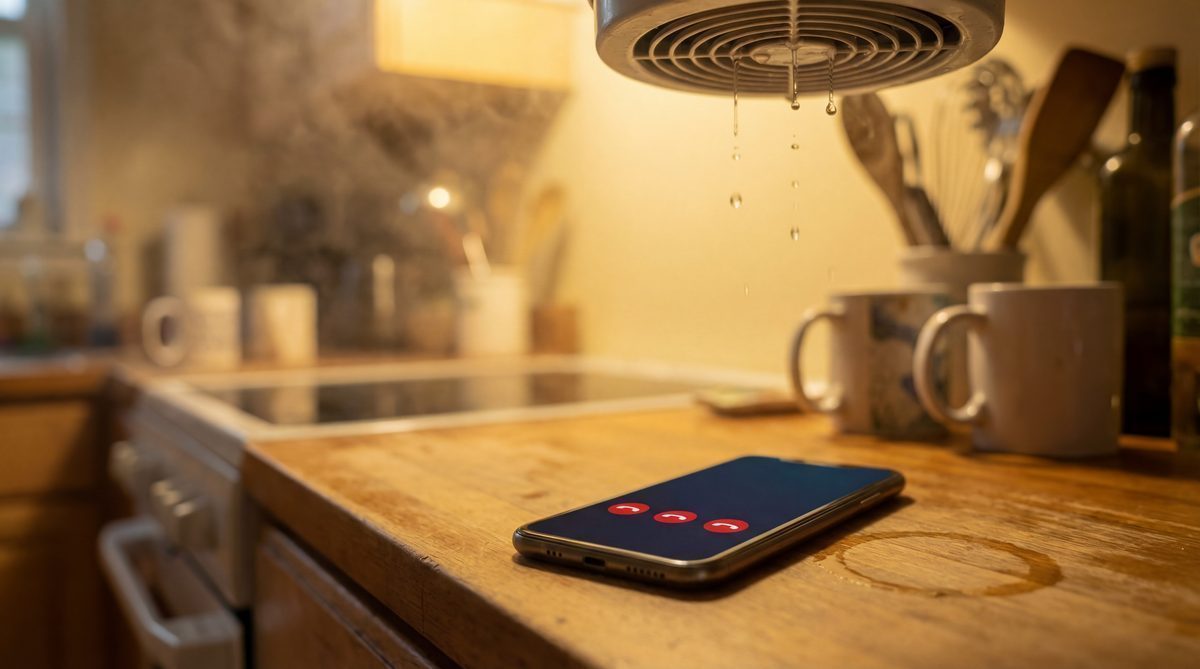
When a homeowner’s AC dies in July, they don’t wait around. They pull out their phone, search “HVAC repair near me,” and call the first three companies that show up. Whoever picks up — or responds fastest — gets the job. Everyone else gets forgotten.
This isn’t speculation. Research from ZoomInfo shows that the first company to respond wins the deal the vast majority of the time. The customer has a problem right now. They want it fixed right now. They’re going to hire whoever makes that feel possible first.
If you take 30 minutes to call back a lead, you’ve already lost. Not because your work is worse or your price is higher — just because someone else answered faster.
The Numbers Are Ugly
The data on speed-to-lead is brutal. And it’s been consistent across every study published in the last decade — from MIT’s original lead response study to more recent analyses by Drift.
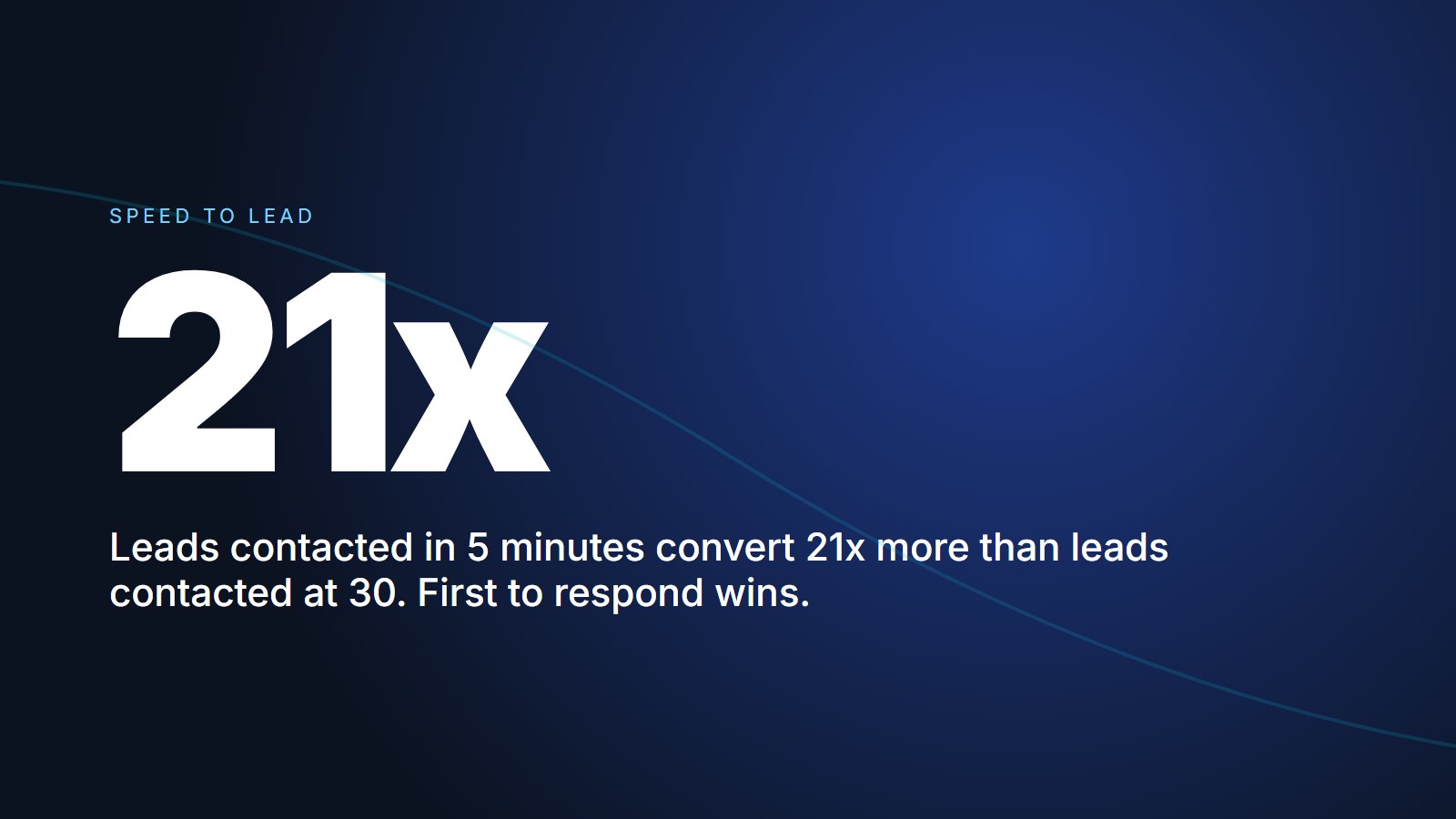
78% of customers buy from the company that responds first. You’re 21x more likely to qualify a lead if you respond within 5 minutes. After 30 minutes, lead qualification rates drop by 80%.
Let’s apply that to a real HVAC business.
The average HVAC job — including installs, replacements, and repairs — runs between $8,000 and $12,000. According to ServiceTitan’s industry data, a healthy HVAC company pulls in around 40 leads per month from Google, referrals, and its website combined.
If 30% of those leads go cold because you didn’t respond fast enough, that’s 12 lost leads every month. At a typical 35% close rate, that’s roughly 4 jobs you never booked. At an average ticket of $10,000? That’s $40,000 per month left on the table.
$40,000 per month. $480,000 per year. From slow response times alone.
Even if your numbers are half that, you’re still looking at $240,000 in annual revenue at risk. That’s not a rounding error. That’s the difference between growing and stalling out.
See how your lead response stacks up
We’ll mystery-shop your business — submit a real quote request, call after hours — and show you exactly where leads are falling through. Free. Results in 48 hours.
Diagnose Your HVAC Speed-to-Lead Problem in 15 Minutes

Before you can fix the leak, you need to know how big it is. Most HVAC owners underestimate their lead loss by 50-70% because the missed calls don’t show up on dashboards. They show up as “I never got that lead in the first place.”
Run this 5-question audit on your own business. Be honest with the answers, the math depends on it.
Question 1: How many calls went to voicemail in the last 30 days?
Pull your call logs from your phone provider. Count every voicemail. Then count every call that was missed entirely (rang to no answer, no voicemail left). Most HVAC shops are shocked to find this number is 25-40% of their total inbound call volume, and that’s before you count the leads who hung up before voicemail.
Question 2: Of those missed calls, how many got a callback within 5 minutes?
Spot-check 20 random missed calls from your logs. Did anyone on your team return that call within 5 minutes? Within 30 minutes? Within 2 hours? Within 24 hours? The Harvard Business Review study showed that callback time of 30+ minutes drops conversion to roughly 1/21 of what it would be at 5 minutes. Most shops we audit have median callback time of 4-12 hours.
Question 3: How many web form submissions came in last month, and how fast did your team respond?
Same exercise for web forms. Pull every form submission from the last 30 days. Look at the timestamp. Compare to when someone first responded. Anything over 30 minutes is essentially a lost lead. Anything overnight (form submitted at 9 PM, response Monday morning) is definitely lost.
Question 4: When did you last receive an after-hours emergency call, and what happened to it?
Did your team take the call? Did it route to a tech? Did it go to a generic answering service that took a message? Did it ring out to nobody? About 40% of HVAC inbound volume comes between 5 PM and 8 AM, your most valuable calls (no-heat in winter, no-cool in summer) are exactly the ones happening when you’re most likely to miss them.
Question 5: When was the last time you actually counted lost-lead revenue?
Most HVAC shops never put a dollar figure on missed calls. The exercise: take the missed-call count from question 1, multiply by your typical close rate (35-50% if reached fast), multiply by your average ticket. The number you get is what slow response is costing you per month. Most shops doing this audit honestly are looking at $15,000-$50,000/month in lost revenue.
If you score poorly on 3+ of these questions, you don’t have a marketing problem. You have a response problem, and no amount of additional ad spend will fix it. Until the leads you’re already paying to generate get answered, every dollar you put into Google Ads or HomeAdvisor is partially wasted.
The 4 Hidden Gaps Where HVAC Leads Fall Through

The problem isn’t that HVAC companies don’t care about their leads. As Harvard Business Review documented, the window for contacting a new lead is shockingly short — and the nature of the business makes it nearly impossible to respond quickly. Here’s where the gaps show up:
Gap 1: After-hours calls
ServiceTitan’s State of the Trades analysis of residential HVAC call records found 14.1% of inbound calls arrived outside business hours in June 2025, up from 9.8% in October: evenings, weekends, early mornings. If nobody’s answering, those leads go straight to whoever does have something in place. The same data shows after-hours volume actually increases during peak season because homeowners discover the problem when they get home from work and try to set the thermostat for the night.
The brutal math: for every after-hours call you don’t pick up, the homeowner is calling 2-4 other contractors before going to bed. By the time you call back at 8
AM Monday, they’ve already booked with whoever responded Saturday night. A purpose-built after-hours answering service running 24/7, not a message-pad service, is the only practical fix.Gap 2: Peak season overload (5-10x normal call volume)
Middle of summer. First polar vortex of the winter. Your techs are on rooftops, the office is slammed, and the phone rings nonstop. Even the best office manager drowns when call volume spikes 5-10x normal. ACCA contractor surveys consistently show that HVAC shops handle peak-season demand by accepting they’ll miss 30-50% of inbound calls, and treating that as the cost of doing business.
It doesn’t have to be. AI voice handles unlimited concurrent calls, 50 calls in an hour, all answered, all triaged, all booked. That’s the structural advantage AI has over human operators: it doesn’t queue and it doesn’t get tired during a heat wave.
Gap 3: Weekend and holiday inquiries
Homeowners don’t schedule their HVAC emergencies around your work calendar. A furnace that dies on Saturday night means someone’s searching for help Saturday night, not Monday morning. Weekend calls are also disproportionately emergency calls, which means they’re disproportionately your highest-ticket revenue. Per Housecall Pro, emergency tickets close at 2-3x the rate of planned work and command 30-50% emergency premiums.
Most HVAC shops solve weekend coverage with on-call rotations among the senior techs. That works for the tech who’s actually on call, but anyone calling who isn’t urgent enough to wake him up at 1 AM gets voicemail. AI sits in between: dispatches true emergencies to the on-call tech, books non-urgent next-business-day appointments, and sends a confirmation text either way.
Gap 4: Web form submissions and chat (the silent killer)
A lead fills out your website’s contact form at 9 PM. It sits in an inbox until someone checks email Monday morning. By then, they’ve already called two other companies and booked with one of them. Same dynamic with website chat widgets where nobody’s monitoring the inbox.
Web forms are the most missed channel because they don’t ring. A missed call is at least visible. A missed form submission is invisible, your team genuinely doesn’t know it came in until they happen to check that inbox. Studies cited by Drift show 27% of online leads never get contacted at all. In HVAC, where the homeowner is comparison-shopping in real time, that 27% gap is pure revenue handed to your competitor.
Gap 5 (the bonus): On-the-job calls
This one rarely gets called out but it’s the biggest leak for one-truck and 2-truck operations: when your tech is the one taking calls AND doing the work, every minute on a job is a minute the phone isn’t being answered. A 4-hour install means 4 hours of inbound calls going to voicemail. The bigger the job, the bigger the lost-lead window, which means installs and replacements (your highest-ticket work) are also when you’re most invisible to new leads.
What Fast Response Actually Looks Like
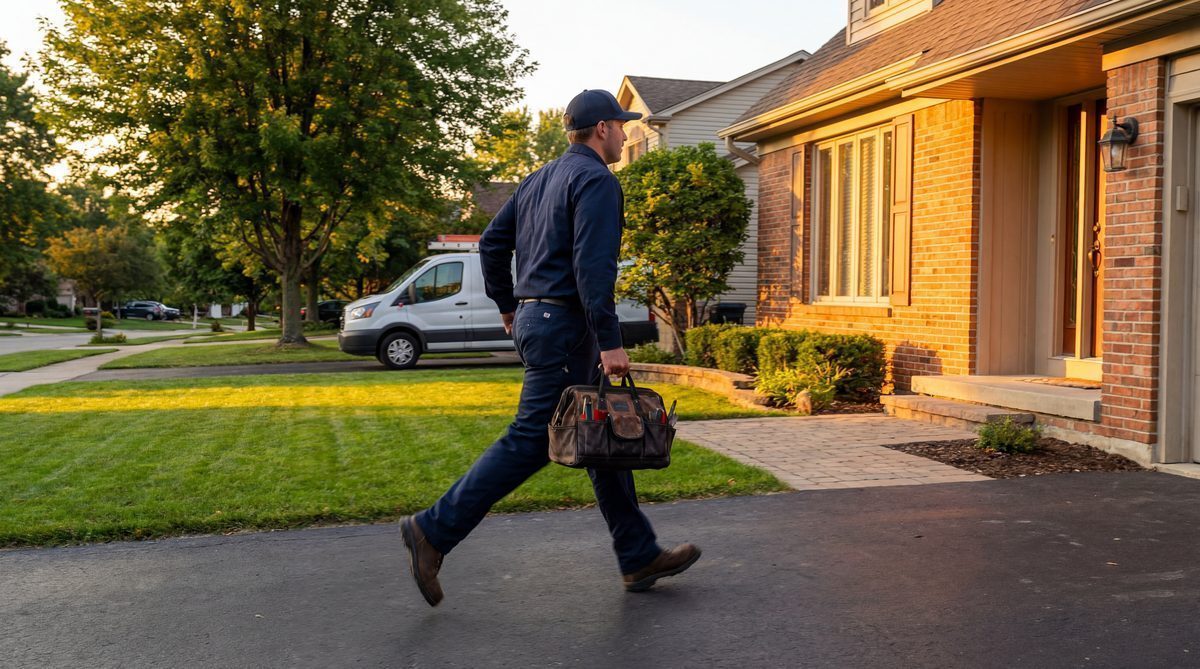
The fix isn’t hiring another person to sit by the phone. That’s expensive, inconsistent, and still doesn’t cover nights and weekends.
Fast response in 2026 means automation that does the heavy lifting without human intervention:
- Automated text-back within seconds. A missed call triggers an immediate SMS to the customer confirming you got their call and asking what they need help with.
- AI-powered chat that qualifies and books. Instead of just taking a message, an AI assistant asks the right questions, determines what service is needed, and books the appointment on your calendar.
- Follow-up sequences that run on autopilot. If a lead doesn’t respond to the first text, the system follows up at smart intervals — without you thinking about it.
Bottom line: every lead gets a response in under 60 seconds, 24/7. No extra headcount. No missed opportunities. And as Invesp’s research on follow-up shows, consistent multi-touch sequences dramatically increase conversion rates.
Real-World Math: What Lead Loss Looks Like by Job Type

Headline numbers ($240K-$480K/year) sound abstract until you break them down by what kind of jobs are actually walking out the door. Here’s the realistic damage by category, based on industry averages from ServiceTitan and Housecall Pro:
Scenario A: The lost emergency repair
A homeowner calls at 9 PM with a no-cool. Your team’s gone home. Voicemail catches it. Homeowner calls the next 2 contractors in their search results. One picks up at 9
PM and books for 7 AM the next morning.You don’t even know this lead existed. The full opportunity:
- Emergency diagnostic + repair ticket: $400-$800
- Plus 35% probability the homeowner becomes a maintenance plan customer: $300/year × 5-year retention = $1,500 LTV
- Plus 20% probability of system replacement within 12 months once the repair temporarily fixes it: $7,500-$12,000 (with 30% chance you’d be the contractor they call back for it)
Real expected value of one missed after-hours emergency call: $1,200-$3,500. Miss 8 of these per month and you’re at $10K-$28K/month in lost revenue from a single category.
Scenario B: The lost system replacement quote
Homeowner submits a web form at 8 PM Friday: “Looking for quotes on replacing my 18-year-old AC unit.” Your office sees it Monday at 9 AM and reaches out. By then, the homeowner has already had estimates from 2 other contractors over the weekend and is comparing prices.
You’re not even in consideration. The full opportunity:
- AC replacement ticket: $7,500-$12,000 average
- Plus financing markup if applicable: typically 5-15% extra margin
- Plus 5-year maintenance plan attachment: $300/year × 5 = $1,500
- Plus referrals from a happy install customer: industry average is 1.3 additional jobs per delighted homeowner over 3 years
Real expected value of one missed system replacement lead: $10,000-$18,000 when you account for downstream LTV. Miss 2 of these per month in peak season and you’re losing $20-$36K/month from one category.
Scenario C: The lost peak-season tune-up
Homeowner calls in early May about scheduling spring AC tune-up. Your office is slammed; rings out to voicemail; nobody calls back until Wednesday. Homeowner books with the next contractor on the list.
The full opportunity:
- Tune-up ticket: $150-$250
- Plus 60% conversion to maintenance plan: $300/year × 5-year retention = $1,500 LTV
- Plus 25% probability of repair callback within 6 months: $400-$800
- Plus 10% probability of replacement within 3 years from the relationship: $7,500-$12,000 weighted
Real expected value of one missed tune-up call: $800-$2,000. These look small but add up, most HVAC shops miss 20-40 of these per month during spring and fall transition seasons.
Stack all three scenarios at modest miss rates and a typical 5-truck HVAC shop is losing $40K-$80K/month in expected revenue. That’s not theoretical. That’s the math the shops actually growing have figured out, and the ones stuck have not.
What the Best HVAC Companies Do Differently
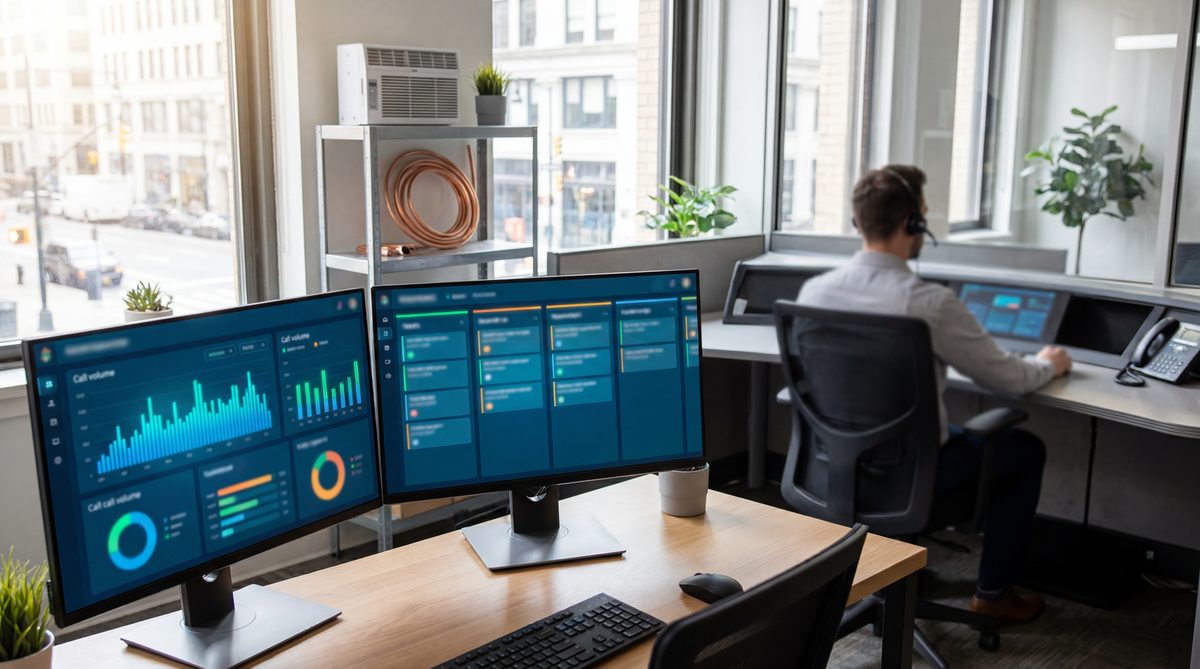
The HVAC shops that are 8-figure businesses didn’t get there by hiring more dispatchers. They got there by building structural call coverage that doesn’t depend on a person sitting at a desk. The pattern is consistent across every fast-growing shop we’ve audited:
They treat speed-to-lead as a tracked metric
The shops growing fastest measure their own median lead response time the same way they measure close rate or job profitability. They have a number, they review it weekly, and they intervene when it slips. The shops stuck measure neither, and as the saying goes, what doesn’t get measured doesn’t get managed.
They cover all four channels (phone, web form, chat, text)
Voice AI catches phone calls. Web chat handles form submissions. Missed-call text-back catches anything that slips through voice. Each channel has its own response system. The shops we see plateauing typically have one channel covered well (usually phone, during business hours) and three channels uncovered.
For the full breakdown of how these systems work together, see HVAC lead generation strategies.
They use AI for first contact, humans for closing
The structural insight: AI is great at the first 60 seconds (qualifying, booking, sending confirmation). Humans are great at the closing conversation (ride-along on the install quote, building the maintenance-plan relationship). The best shops use both, in that order. The shops that try to use humans for everything bottleneck on labor cost. The shops that try to use AI for everything bottleneck on conversion sophistication.
They invest in their dispatch software integration
A booking that lands in your dispatch software automatically is worth 10x more than a booking that requires manual data entry. ServiceTitan, Jobber, and Housecall Pro integrations turn your AI receptionist from “fancy voicemail” into “actual booking system.” The fastest-growing HVAC shops we work with have native two-way integration where the AI sees real-time tech availability and books accordingly.
They follow up on every quote
The single biggest revenue leak we see in HVAC isn’t even slow inbound response, it’s zero follow-up on quotes. Homeowner gets an estimate, says “let me think about it,” and most shops never contact them again. Top-performing shops automate 4-7 follow-up touches over 30 days on every system replacement quote. That single behavior change recovers 15-20% of quotes that would otherwise die.
The ROI Math
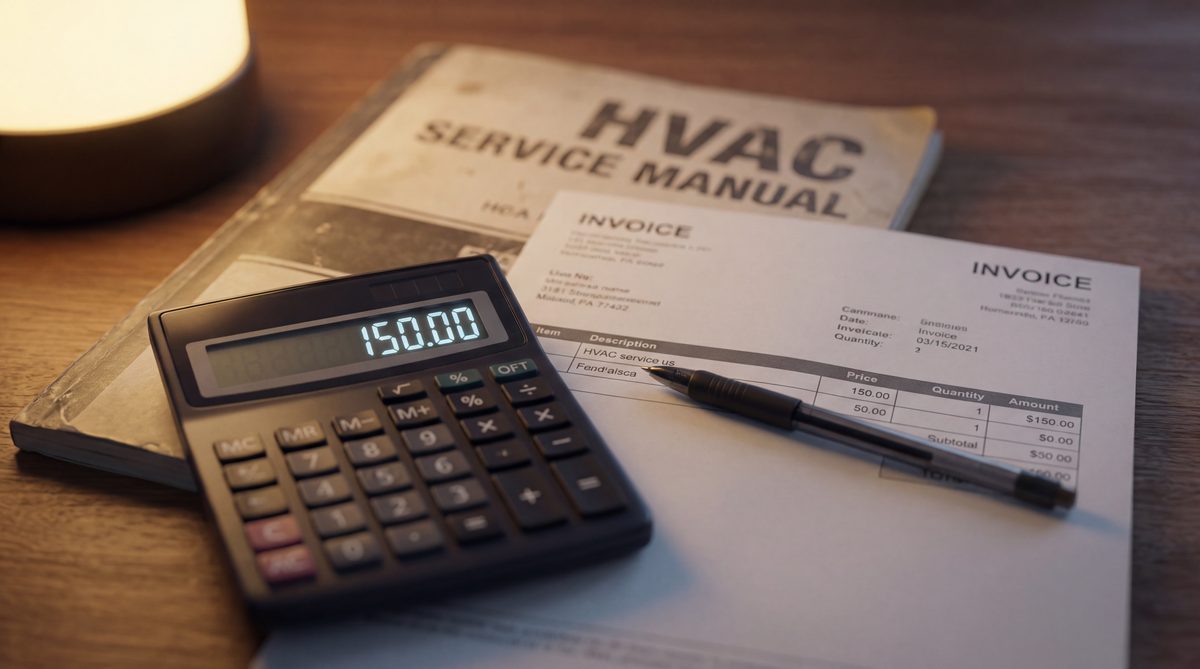
A done-for-you system like the ones we build at Ignitvio is priced on the pricing page, and that price covers the build, the management, the optimization — everything. Specifically, a purpose-built HVAC AI answering service handles emergency triage, qualifies the lead, and books directly into ServiceTitan, Jobber, or Housecall Pro. See the full AI answering setup for HVAC companies for what’s included.
Now look at the return. If that system captures just 2 additional jobs per month that you would’ve otherwise lost — at $10,000 each — that’s $20,000 in recovered revenue.
One month of platform cost in. $20,000 out. The return is not subtle.
And that’s the conservative estimate. Two jobs is one channel doing its job; once the full automation is humming — missed call text-back, after-hours booking, and multi-channel follow-up working together around the clock — there are more places for recovered jobs to come from.
Frequently Asked Questions
How much does an HVAC AI answering service actually cost?
How long does setup take for an HVAC AI answering service?
Will my customers know they're talking to AI?
What about emergencies, does AI know when to wake up the on-call tech?
Can I keep my existing answering service AND add this?
What's the fastest way to test this without a long contract?
Find Out What Slow Response Is Costing You
See exactly how much revenue your HVAC business is leaving on the table. Book a free revenue audit — we’ll run the numbers for your specific business and show you where the money’s going.

Jake Melendy
Founder, Ignitvio
Jake Melendy is the founder of Ignitvio. He spent 12 years in enterprise sales and sales leadership, including at Oracle, before building Ignitvio, which runs done-for-you outbound appointment setting for commercial contractors and B2B service companies. He writes about pipeline, trigger-based prospecting, and lead response.