Medical Offices

Medical Answering Service That Never Misses a Patient Call

Never Miss a Patient Call, Even After Hours

Your front desk is slammed. Phones ring constantly while your staff checks in patients, verifies insurance, and handles walk-ins. Meanwhile, new patients are calling, and hanging up when nobody answers. We make sure every patient call gets handled, 24/7.

Free Lead Audit
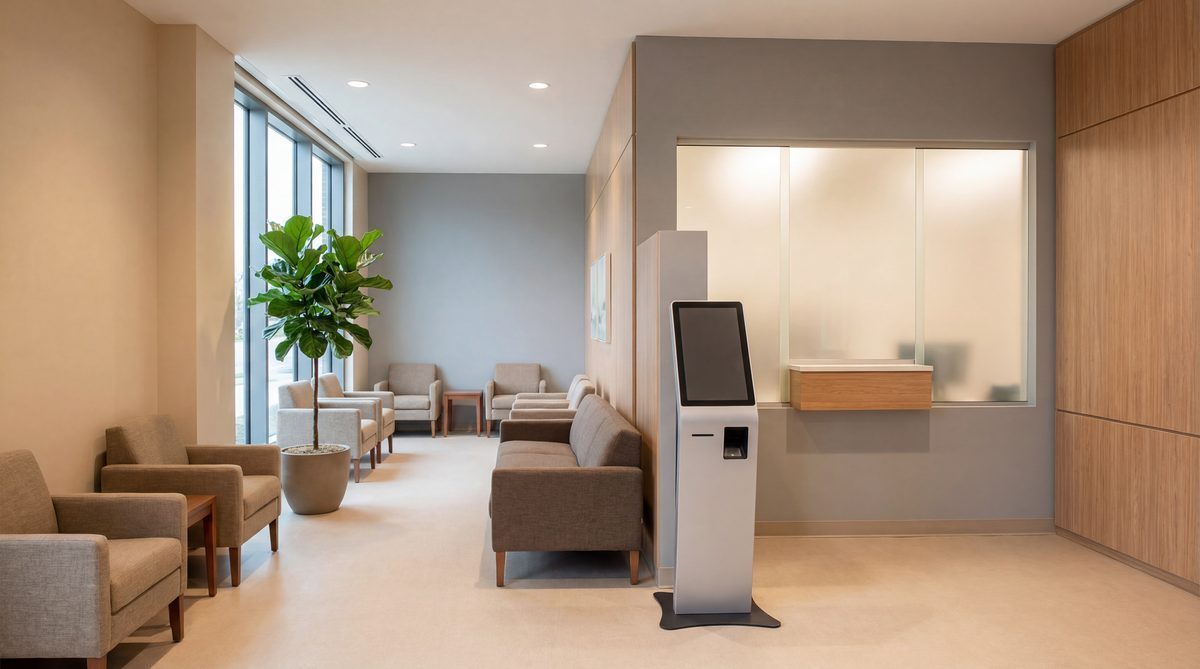
Modern medical office waiting room with check-in kiosk

The Problem

Your Front Desk Can’t Handle the Phone and the Waiting Room

Medical offices face a unique challenge: your busiest phone hours are also your busiest in-person hours. Staff can’t answer calls when they’re checking in patients, pulling charts, and managing the lobby.
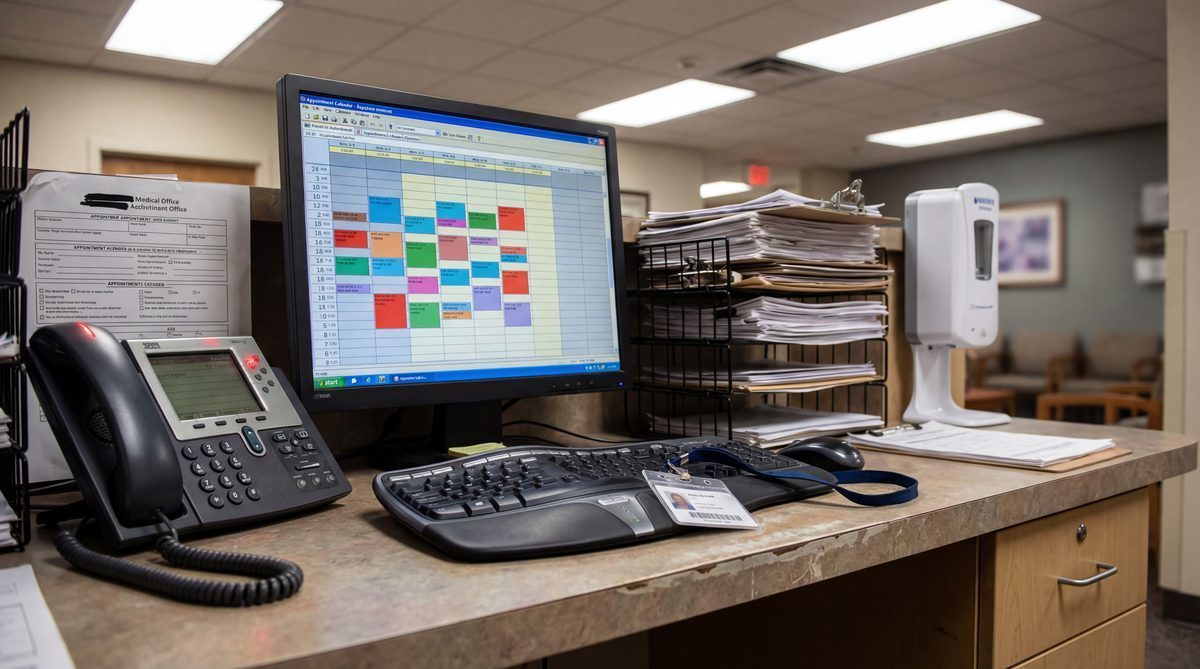
Medical office front desk overwhelmed with calls and patient forms

35%

Of patient calls go unanswered

Studies show that medical offices miss over a third of incoming calls. That’s appointment requests, prescription refills, and new patient inquiries, all going to voicemail or worse, nowhere.

$200+

Average revenue per new patient

A new patient isn’t just one visit. It’s annual checkups, referrals, lab work, and years of care. Every missed new patient call is hundreds or thousands in lifetime value walking to the practice down the street.

68%

Of patients prefer calling over online booking

Despite patient portals and online scheduling, the majority of patients still pick up the phone, especially older patients, those with complex needs, or anyone with an urgent question.

After 5 PM

Patients still need answers

Medication questions, symptom concerns, appointment changes, patients don’t stop needing help when your office closes. Without after-hours coverage, they either go to the ER or call another provider.

The Solution

How Ignitvio Handles Patient Calls Without Adding Staff

Four systems working around the clock to answer patient calls, schedule appointments, handle routine requests, and triage after-hours concerns, all with HIPAA-aware protocols.
Clean modern exam room ready for next patient visit

Automated Appointment Scheduling

Patients can book, reschedule, or cancel appointments via phone or text, 24/7. The AI checks your availability in real time, confirms the appointment, and sends reminders automatically. No hold time. No phone tag with your front desk.

  • Books directly to your practice management calendar
  • Handles reschedules and cancellations automatically
  • Sends appointment confirmations and reminders via text

After-Hours Triage

When patients call after hours, our AI determines urgency: Is this an ER situation? Can it wait until morning? Does the on-call provider need to be notified? Patients get clear guidance, and your on-call doctor only gets woken up when it truly matters.

  • Separates urgent from next-day concerns
  • Escalates emergencies to on-call provider immediately
  • Provides appropriate guidance (“call 911” vs. “call us in the morning”)

Prescription Refill Requests

Patients call for refills constantly, and it’s one of the biggest time drains on your front desk. Our AI captures the patient name, medication, pharmacy, and date of birth, then routes the request directly to the appropriate provider for approval.

  • Captures medication name, dosage, and pharmacy
  • Routes to the prescribing provider for approval
  • Confirms with the patient once the refill is processed

New Patient Intake

When a new patient calls, first impressions matter. Our AI answers professionally, collects their information, explains what to bring to their first visit, and books the appointment, all in one conversation. No hold time. No “call back during business hours.”

  • Captures demographics, insurance, and reason for visit
  • Explains what to bring and what to expect
  • Books the first available appointment immediately

Built for Healthcare

HIPAA-Aware Protocols from Day One

We understand that medical practices operate under strict regulatory requirements. Our system is designed with patient privacy and data security as foundational principles, not afterthoughts.

Secure Data Handling

Patient information is handled with encryption and access controls. No PHI is stored unnecessarily or shared with unauthorized parties.

Privacy-First Design

Conversations follow HIPAA-aware scripts. The AI never asks for unnecessary personal health information and routes sensitive matters to authorized staff.

Customizable Protocols

Every practice is different. We configure the AI to follow your specific call-handling protocols, escalation procedures, and compliance requirements.

Free Audit

Book Your Free Medical Office Audit

15 minutes. We’ll pull up your Google Business Profile, analyze your call flow, and show you exactly how many leads are slipping through the cracks. No pitch. Just math.

  • See how many leads you’re currently losing
  • Get a custom revenue recovery estimate
  • No commitment. No pitch deck. 15 minutes.

14 businesses audited this quarter

Medical Office Answering Service FAQ

Practice managers and office administrators ask these before evaluating an AI answering service.

Is your AI answering service HIPAA-compliant for medical practices?
Yes. We sign a Business Associate Agreement (BAA) with every medical practice we work with, and the platform meets HIPAA technical safeguards: end-to-end encryption in transit and at rest, audit logging on every call and data access event, role-based access controls for your team, and breach notification protocols. Always verify the BAA and the vendor's most recent HIPAA documentation before signing.
Can the AI handle patient triage (urgent vs routine)?
Yes, with configurable rules. Typical triage patterns: chest pain + shortness of breath = direct 911 instruction + immediate on-call provider page, sudden severe headache + neurological symptoms = same logic, refill request + non-controlled = scheduled callback, billing question = office hours callback. The AI applies the same logic on every call, which is more consistent than overworked front-desk staff.
Will it integrate with our EHR (Epic, Cerner, Athena, eClinicalWorks) for appointment scheduling?
Yes for Athena, eClinicalWorks, NextGen, Practice Fusion, DrChrono, AdvancedMD, and several others. Epic and Cerner integrations require interface engine routing (HL7 / FHIR) and typically run through a middleware partner. The AI confirms appointments to the patient's phone before they hang up; sync to the EHR happens via API in real time or queued every few minutes depending on the integration tier.
How does the AI handle after-hours emergency calls?
Practice-specific rules. Most practices configure: true emergency (defined by symptom triggers) = page on-call provider + read 911 instructions to caller, urgent same-day need = book first slot tomorrow morning + flag for triage review, routine = book next available appointment. The on-call doctor gets a transcript SMS so they know what the patient said before the callback.
Can the AI handle refill requests, lab result questions, and billing inquiries?
Yes for the structured ones. Refill requests get captured with medication, dose, pharmacy, and last fill date, then queued for prescriber review. Lab result questions are routed to a callback unless the patient explicitly wants to discuss with the provider. Billing questions are handled by an FAQ knowledge base for common topics and escalated to your billing team for anything outside that scope.
What if a patient is in active crisis (suicidal, chest pain, etc.)?
The AI is trained to recognize crisis language patterns (suicidal ideation, severe chest pain, stroke symptoms, anaphylaxis) and respond with: (1) immediate 911 instruction if appropriate, (2) crisis hotline numbers, (3) staying on the line while paging your on-call provider, (4) capturing location info if the patient can provide it. Escalation logic is reviewed during onboarding to match your practice's clinical protocols.
How much does this cost compared to hiring a medical receptionist?
Done-for-you AI answering for medical practices typically runs $500-$1,500 per month flat-rate depending on call volume, EHR integration complexity, and HIPAA documentation needs. A full-time medical receptionist costs $50-75K/year plus benefits (about $5-7K/month total). The AI covers 24/7 at less than 30% of one human's cost. Most practices use both, with AI handling inbound calls + scheduling and front-desk staff focused on in-person patient experience.

Resources for Medical Offices