Electrician Marketing: 8 Lead Gen Strategies
Most electrical contractors don’t struggle with demand. Homeowners need panel upgrades. Commercial buildings need code-compliant wiring. EV charger installations are surging. The work is out there. The problem is that most electrician marketing strategies either burn cash on leads that never convert, or they rely on word-of-mouth that’s impossible to scale.
If you’ve been searching for electrician marketing ideas that go beyond “post on Facebook more” or “buy leads from HomeAdvisor,” this guide is for you. These are the eight marketing for electricians strategies that top-performing electrical contractors are using right now to book more jobs, fill their schedules, and grow without overspending on advertising.
Whether you’re a one-truck operation figuring out how to get more electrical work or a multi-crew company looking to dominate your market, these tactics work. Here are eight electrician lead generation strategies ranked by impact. (If you’d rather see how a purpose-built AI answering service for electricians handles emergency calls 24/7, jump straight to the industry overview.)
- Google Business Profile optimization and review stacking are the highest-ROI electrician marketing tactics for local visibility.
- Electrician marketing in 2026 is about speed and availability — responding in under 60 seconds converts at 391% higher rates.
- AI call answering captures emergency electrical leads 24/7 — panel failures and outages don’t wait for business hours.
- Automated follow-up on open estimates recovers 15-30% of leads that would otherwise go to competitors.
1. Local SEO & Google Business Profile
Local SEO is the highest-ROI electrician marketing strategy over time. Unlike paid ads where leads dry up the moment you stop paying, a well-optimized Google Business Profile and website can generate 20 to 40+ organic leads per month without ongoing ad spend. For electrical contractors, the local 3-pack on Google is where most clicks happen when someone searches “electrician near me” or “electrical repair [city].” A Backlinko user behavior study found that 42% of local searchers click on a result in the Google Map Pack. And Think with Google reports that 76% of people who search on their smartphones for something nearby visit a business within a day. That makes local SEO non-negotiable for electricians.
Three pillars to local SEO for electricians:
Google Business Profile optimization
Complete every field. Choose “Electrician” as your primary category, then add secondary categories like “Electrical Installation Service,” “Lighting Contractor,” and “EV Charging Station Contractor.” Add photos of your team, your trucks, and completed jobs weekly. Post updates at least twice a month.
Citation consistency
Your Name, Address, and Phone number (NAP) needs to be identical across every directory: Yelp, BBB, Angi, Thumbtack, Yellow Pages, Apple Maps, Facebook, and at least 30 to 40 others. One wrong phone number or outdated address can tank your local rankings.
Service area pages
Create dedicated pages for each service (panel upgrades, EV charger installation, whole-home rewiring, ceiling fan installation, electrical inspections) and each city or neighborhood you serve. Each page should target a specific keyword with unique content — not just a template with a city name swapped in.
How to implement: Claim and verify your Google Business Profile if you haven’t already. Fill in every field. Then audit your top 20 citations for NAP consistency using BrightLocal or Whitespark. For on-page work, start with service pages for your highest-revenue services (panel upgrades and whole-home rewires are solid starting points) and location pages for your top three service areas.
2. Google Review Stacking
Reviews are the most underinvested electrician marketing asset. Period. BrightLocal’s 2025 Local Consumer Review Survey found that 87% of consumers read online reviews for local businesses, and 73% only pay attention to reviews from the last month. For electrical work — where homeowners are literally trusting you with their home’s safety — reviews carry even more weight than in other trades.
For electrician advertising, reviews do double duty. They influence whether a homeowner clicks on your Google Business Profile listing, and they’re a direct ranking factor in Google’s local pack algorithm. More recent, high-quality reviews mean better visibility when someone searches “electrician near me.” According to Womply’s review study, businesses with more reviews than the average of about 83 earn 82% more in annual revenue than businesses with below-average counts.
Review velocity matters more than total count. Google rewards businesses that consistently receive new reviews. Aim for 8 to 12 new reviews per month to stay competitive in your local market.
The best approach is to automate review collection. After every completed job, send a text message with a direct link to your Google review page — one tap to leave a review. The best platforms also route negative feedback privately, giving you a chance to resolve issues before they become public 1-star reviews. Read our full guide on getting more Google reviews for a step-by-step system.
How to implement: Set a goal of at least 8 to 12 new reviews per month. Automate the ask so it triggers after every completed job. Respond to every review within 24 hours — positive and negative. This signals to Google that your profile is active and engaged.
3. Targeted Advertising: Google LSA, Facebook & Instagram Ads
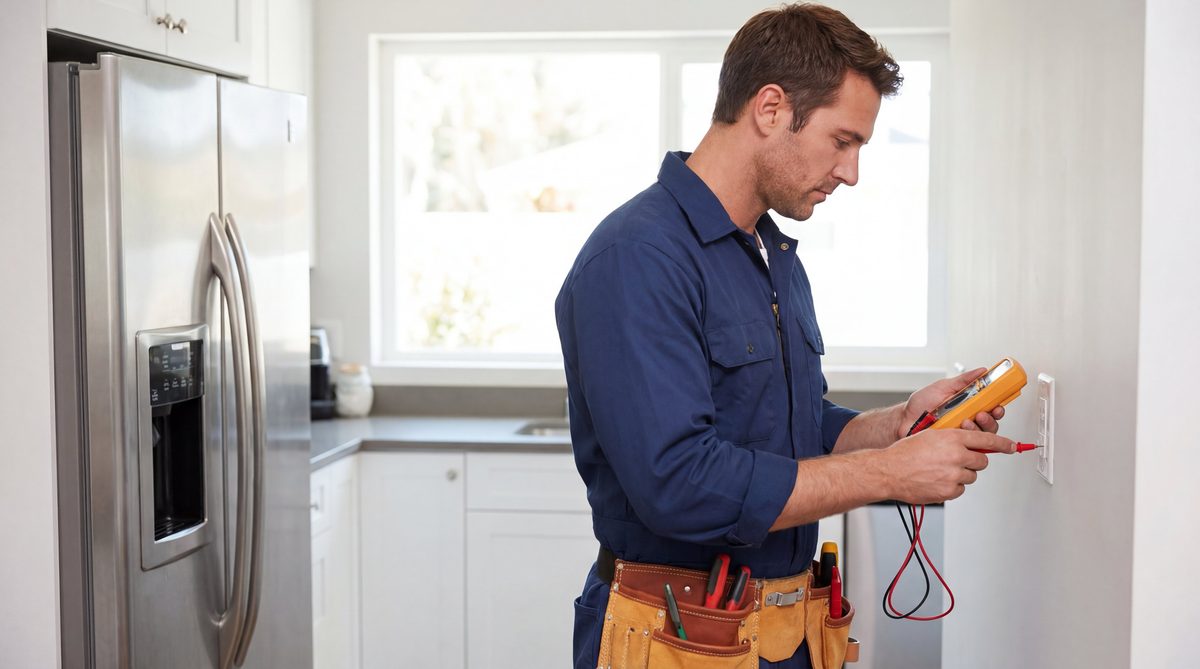
Most electrician advertising looks identical. “Licensed Electrician. Call Now. Free Estimates.” That’s not marketing — that’s a Yellow Pages ad with a Google budget behind it. The ads that actually generate electrician leads in 2026 lead with the homeowner’s problem, not your credentials.
Two ad channels worth prioritizing:
Google Local Services Ads (LSAs)
These put you at the very top of search results with a “Google Guaranteed” badge. You only pay per lead, not per click. According to WordStream, Google Local Services Ads have an average cost per lead of $6-$30 for home services. For electricians, LSAs are especially powerful because homeowners trust the Google Guaranteed seal for something as critical as electrical work in their home.
Problem-focused Google Ads
Instead of bidding on “electrician near me” where every competitor is fighting, target problem-aware searches: “lights flickering in house,” “breaker keeps tripping,” “burning smell from outlet,” “how much does a panel upgrade cost.” These searches have less competition and higher intent.
Ad hooks that actually work for electrician advertising:
Ad Hook Examples for Electricians
“Breaker keeps tripping? It might not be the breaker — here’s what most electricians miss.”
“Your home was built before 1985? Your wiring could be a fire hazard and you’d never know.”
“Got an EV but no Level 2 charger? You’re wasting 8+ hours on every charge.”
“We responded to an emergency at 11 PM on a Saturday. The family had no power and a newborn at home.”
How to implement: Set up Google LSAs if you haven’t already — they’re pay-per-lead with a Google Guaranteed badge. For Google Ads, rewrite your top campaigns to lead with homeowner pain points instead of service names. Target problem-aware keywords like “lights flickering house” and “panel upgrade cost” that your competitors aren’t bidding on.
Facebook & Instagram Ads for Electricians
Google catches people who are already searching. Facebook and Instagram let you reach homeowners before they have a problem — or before they realize the one they have is serious. According to WordStream’s Facebook Ads Benchmarks, Facebook lead ads convert at 12.5% on average, and home services contractors typically see a cost per lead of $15-$40 — significantly less than the $40-$150 range on traditional Google Ads.
The key to Facebook and Instagram ads for electricians is creative that stops the scroll. Before-and-after photos of panel upgrades, short videos showing a dangerous wiring situation you fixed, a customer testimonial filmed on an iPhone after you solved their emergency at 10 PM. Nosto’s Consumer Content Report backs this up — 79% of people say user-generated content in ads heavily impacts their purchasing decisions. Polished stock photos don’t work on social. Real job photos do.
Facebook & IG Ad Ideas for Electricians
“Your home was built before 1985? Here are 3 signs your wiring needs attention.” (carousel post with educational images)
Before/after video of a panel upgrade: “This 40-year-old Federal Pacific panel was a fire waiting to happen. Here’s what we replaced it with.” (Reels/Stories format)
Lead form ad: “Free electrical safety inspection for homes 20+ years old in [city]. Book in 30 seconds.” (targets homeowners in your service area)
Targeting that works: Start with a 15-25 mile radius around your service area. Target homeowners aged 30-65 with interests in home improvement, home renovation, or home safety. Use Facebook’s “homeowner” demographic filter. For retargeting, create a custom audience of people who visited your website but didn’t call. A budget of $20-40/day is enough to generate 10-20 leads per month for most electrical contractors.
The biggest mistake electricians make with Facebook ads: generating leads and then taking hours to respond. Social media leads go cold fast. If you’re not following up within minutes, you’ve basically lit that ad spend on fire. We’ll cover how to fix that in the next section.
What Every Electrical Lead Is Worth
Average job values for common residential and commercial electrical services
Panel Upgrade
$3,500 - $8,000
100/200 amp upgrade, subpanel installs
Whole-Home Rewire
$8,000 - $20,000
Older homes, aluminum wiring replacement
EV Charger Install
$1,500 - $3,000
Level 2 charger, dedicated circuit
Service Call
$200 - $500
Outlet repair, troubleshooting, GFCI issues
Every missed call could represent a $3,500+ panel upgrade or a $15,000 rewire. Speed to lead isn’t optional — it’s math.
See how your lead response stacks up
We’ll mystery-shop your business — submit a real quote request, call after hours — and show you exactly where leads are falling through. Free. Results in 48 hours.
4. Speed to Lead: Respond in Under 60 Seconds
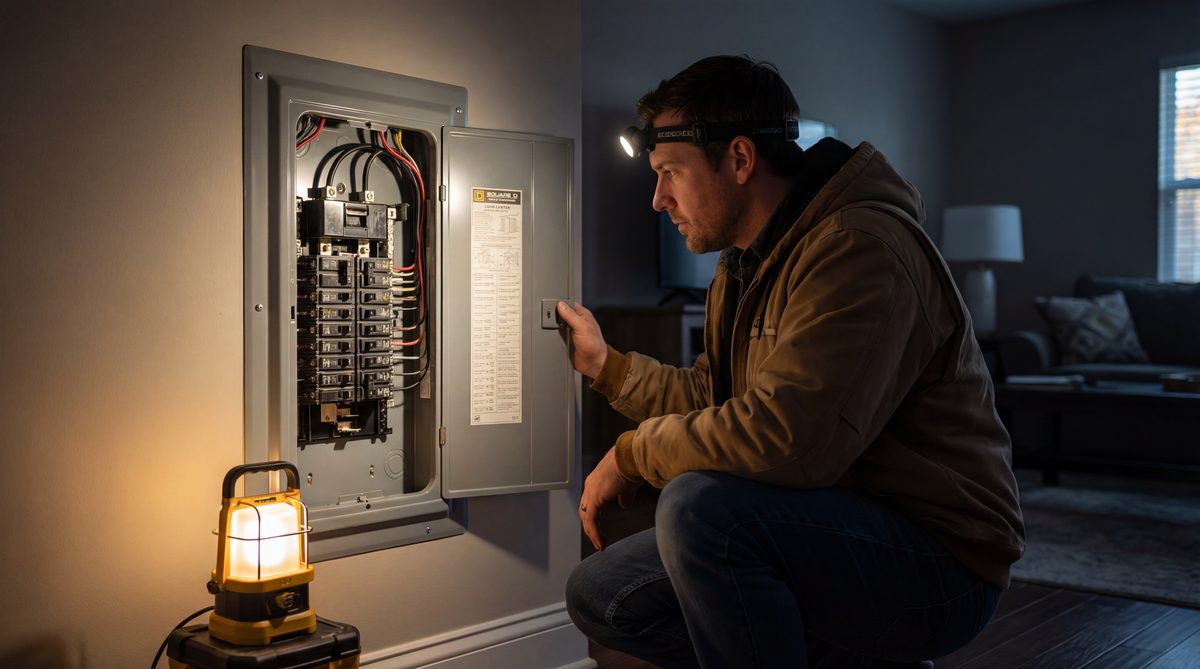
When a homeowner’s power goes out at 10 PM or they smell something burning from an outlet, they don’t call one electrician and wait around. They call two or three. The first one to respond gets the job roughly 78% of the time, per Lead Connect research. This is the single most important electrician marketing tactic you can implement, and it costs nothing except speed.
The numbers are brutal. Harvard Business Review found that following up within an hour makes you 7x more likely to qualify the lead, and responding within five minutes makes you 21x more likely compared to waiting 30 minutes. Yet the Drift Lead Response Report shows the average B2C lead response time is a staggering 47 hours. Most contractors are even worse. In electrical work, where emergencies are genuinely dangerous, that gap is even more costly. A homeowner with a tripped main panel or sparking outlet isn’t waiting around. They’re already calling the next electrician on Google.
The average electrical contractor takes over 2 hours to respond to a new lead. The best ones respond in under a minute. That gap is where most revenue is lost.
The problem is practical: your electricians are running wire in an attic or troubleshooting a panel. Nobody’s sitting at a desk waiting for calls. That’s why automated missed call text-back systems have become essential for electrician marketing. When a call goes unanswered, the system fires off an instant text: “Hey, this is [Your Company]. Sorry we missed your call — what can we help with?” That text holds their attention until someone on your team follows up.
The best platforms go further. An AI assistant continues the conversation via text, qualifies the lead by asking about the electrical issue, confirms the service address, and books the appointment directly onto your calendar. No human intervention needed.
How to implement: Pull your call logs for the last 30 days. Count how many calls went to voicemail. Multiply that number by your average ticket value. That’s the revenue at risk. Then set up an automated text-back system so every inbound call gets a response within 60 seconds, whether you answer or not.
Lead Conversion Drops Fast
Probability of converting an electrical lead decreases rapidly with response time
60 sec
95% conversion
5 min
40% conversion
30 min
18%
2+ hrs
~5% chance
Sources: Lead Connect, Harvard Business Review, Drift
5. AI Call Answering for Electrical Emergencies
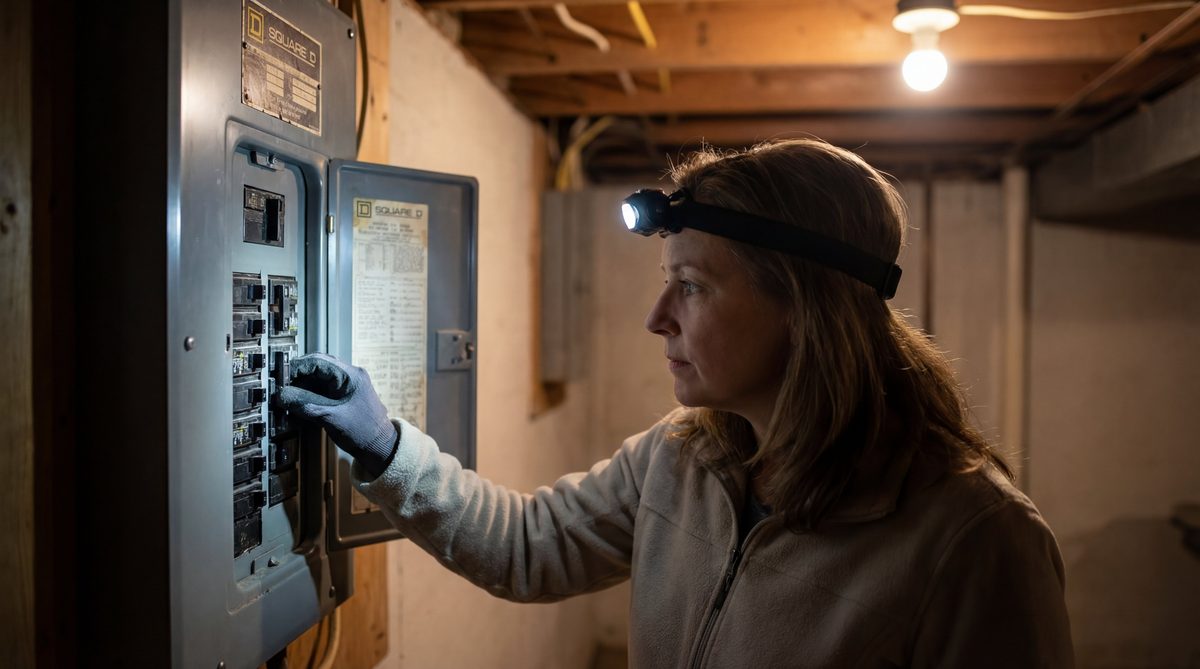
Electrical emergencies don’t happen on a schedule. A homeowner’s panel trips at midnight. A commercial client loses power on a Sunday. Sparking outlets happen at 6 AM. Per HomeAdvisor, the average electrical service ticket runs $150-$500 for repairs up to $3,000-$8,000 for panel upgrades. If you’re not answering those calls, you’re handing that revenue — often the highest-ticket emergency work — to whatever electrician is.
Traditional answering services take messages. They don’t qualify the lead, check your calendar, or figure out if it’s a genuine emergency that warrants after-hours dispatch versus a non-urgent request that can wait until morning. An AI answering service for home services handles all of it. It answers in a natural voice, asks the right questions (what’s happening, is there a safety concern, what’s the address), checks your real-time availability, and books the appointment on the spot.
Industry data shows that 30-40% of service calls to electricians come outside normal business hours. That’s nearly a third of your potential revenue going to whoever answers first.
For electrician marketing specifically, AI call answering solves a unique problem: electrical emergencies are genuinely dangerous. A homeowner with a burning smell or a tripped main breaker needs immediate reassurance and a clear next step. An AI answering system can triage the call — dispatching emergency service for safety concerns while scheduling non-urgent requests for the next available slot. This means fewer 2 AM wake-up calls for jobs that could wait, and zero missed opportunities for the ones that can’t.
How to implement: Audit your after-hours call volume for the last 90 days. Look at calls before 8 AM, after 5 PM, and on weekends. Multiply by your average ticket value. That’s the revenue at risk. Then evaluate AI answering services that integrate with your scheduling software so booked appointments appear automatically.
6. Automated Follow-Up on Open Estimates
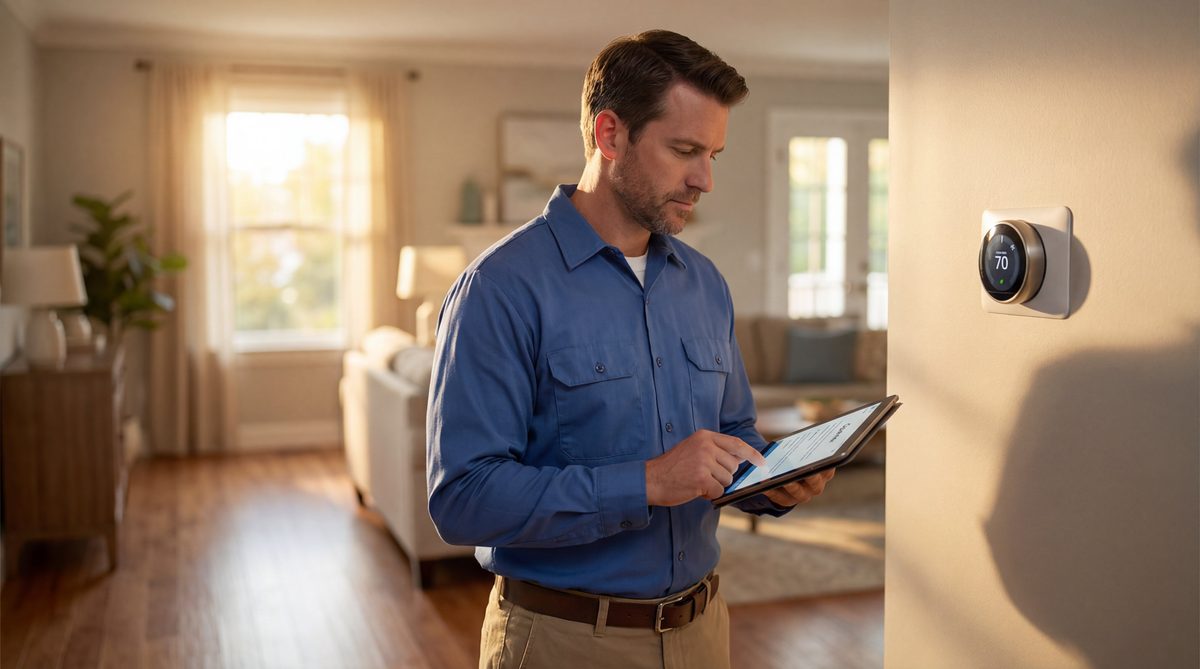
This is where most electrician marketing falls apart. A homeowner calls about a panel upgrade. You send your electrician out for an estimate. You quote $5,500. The homeowner says they need to think about it. And then… crickets. Nobody follows up. Nobody texts two days later. Nobody checks in after a week. That $5,500 job goes to the electrician who did.
Per HubSpot Sales Statistics, 44% of sales reps give up after just one follow-up. But Invesp research shows 80% of sales require five or more follow-ups to close. In electrical contracting, where panel upgrades and rewires are significant investments, homeowners almost always need time to think. The contractor who stays in touch wins the job.
Automated follow-up recovers 15-30% of estimates that would otherwise go cold. On a $5,500 panel upgrade, that’s the difference between losing a lead and booking a job.
Automated follow-up sequences take the human bottleneck out of it. After the initial estimate, the system sends a series of well-timed messages: a thank-you text the same day, a check-in two days later, a nudge about scheduling before the busy season hits a week after that, and a final “we’re holding your quote” message. Each touchpoint feels personal and natural — not spammy.
In working with electrical contractors across the country, we’ve found that follow-up sequences work especially well for high-ticket items: panel upgrades, whole-home rewires, generator installations, and EV charger installs. These are considered purchases that homeowners compare quotes on. Being the electrician who stays top-of-mind through that decision process is the difference between winning and losing the job.
How to implement: Map out your current follow-up process. If the answer is “we call them back once and that’s it,” you’re leaving money on the table. Build a minimum five-touch sequence across text and email, spaced over 14 days. Automate it so it runs without anyone on your team remembering.
7. Referral & Repeat Business Systems
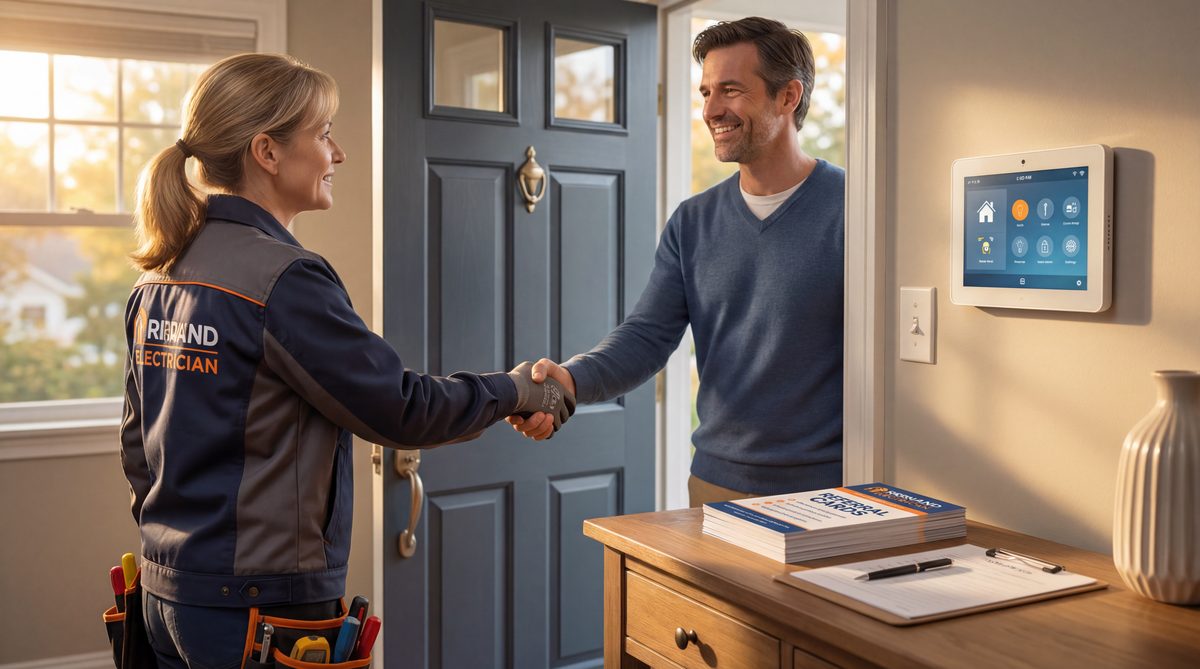
Referrals are the highest-converting leads in the electrical trade. A Nielsen study found that people are 4x more likely to hire when referred by a friend. For electricians, this effect is even stronger — homeowners are extremely cautious about who they let work on their home’s electrical system. A personal recommendation from a neighbor or friend cuts through that anxiety instantly.
The problem with referrals for most electrical contractors? Consistency. You get them sporadically, and you’ve got zero control over the flow. That changes when you build a system instead of relying on hope. A structured referral program gives customers a reason and a reminder to refer, and the incentive doesn’t need to be big. Many successful electricians offer $50 off the next service call, a free safety inspection, or a gift card for every referral that books.
Automated referral ask
Send a text after every completed job with a shareable referral link: “Thanks for choosing us! Know someone who needs an electrician? Share this link and you’ll both get $50 off your next service.” Make it one tap to share.
Maintenance reminders
Electrical systems need periodic attention — panel inspections, surge protector checks, smoke detector testing. Send automated reminders at 12-month intervals to past customers. This generates repeat business and keeps you top-of-mind when their neighbor asks for an electrician recommendation.
Seasonal campaigns
Before storm season, reach out to past customers about whole-home surge protection. Before summer, mention EV charger installations for the new electric vehicle they just bought. Timing these messages to real-world triggers makes them feel helpful, not salesy.
How to implement: Create a simple referral program with a clear incentive. Set up a post-service text that reminds customers about the program with a trackable link. Build a 12-month maintenance reminder sequence for past customers. Track referral sources in your CRM so you know which customers are your best advocates.
8. Content Marketing for Electricians
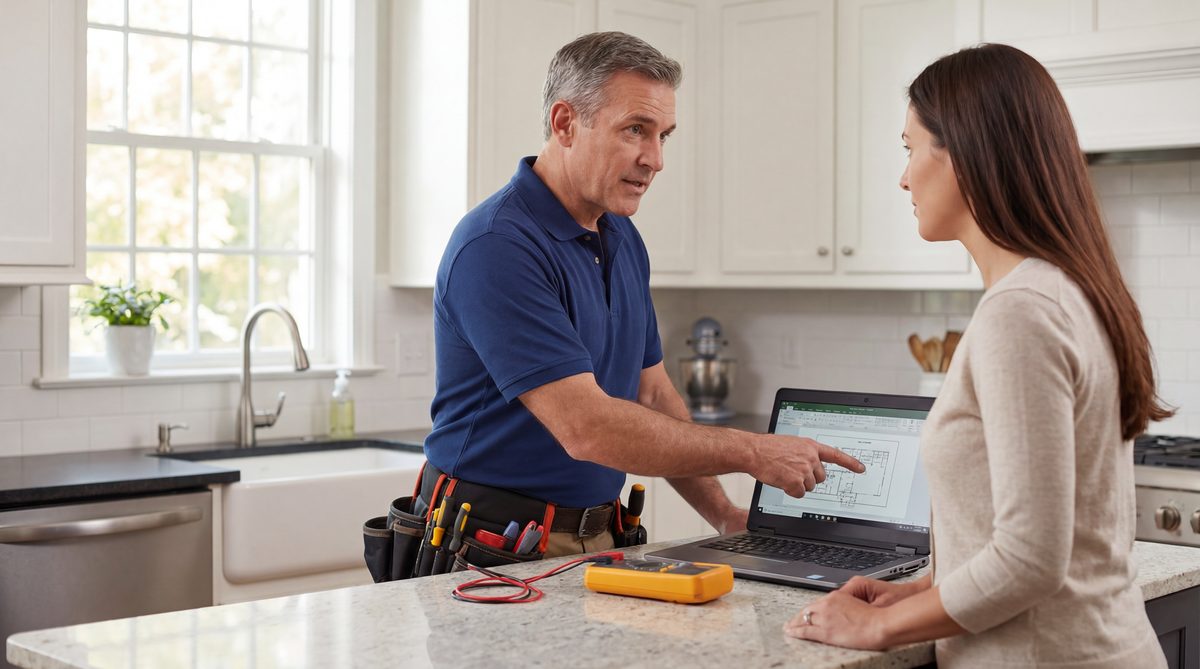
Content marketing for electricians isn’t about blogging for other electricians. It’s about creating content that homeowners and business owners find when they’re Googling symptoms of electrical problems. Those searches represent people who either need an electrician now or will need one soon.
The content that drives the most electrician leads falls into three categories:
Problem-aware content
“Why do my lights flicker?” “What causes a burning smell from an outlet?” “Is it normal for a breaker to trip?” These searches come from people with an active problem who are one step from calling an electrician. A clear guide that answers their question and ends with a call-to-action converts at 5-10%.
Cost and comparison content
“How much does a panel upgrade cost in [city]?” “EV charger Level 1 vs Level 2: which do I need?” “Do I need to rewire my house?” These searches signal someone in the consideration phase who’s getting closer to hiring.
Safety and educational content
“Signs your home has outdated wiring.” “Electrical safety checklist for homeowners.” “When to upgrade from 100 to 200 amp service.” These build trust and capture people before they have an emergency, positioning you as the expert they’ll call when they do.
The key for electrician marketing is targeting keywords with local intent. You don’t need to rank nationally for “panel upgrade cost.” You need to rank in your city and surrounding areas. Add your city name to your content, create location-specific guides, and link each article to your relevant service pages.
How to implement: Start with five to ten articles targeting your highest-intent keywords. Use Google’s “People Also Ask” section to find what homeowners are searching for. Publish one to two articles per month, each 1,000 to 1,500 words, with a clear CTA to call or book online. Link each article to your relevant service pages.
Putting It All Together
The best electrician marketing strategy isn’t any single tactic — it’s all eight working as a system. Local SEO and content marketing bring leads to your door. Problem-focused ads reach homeowners before they even start searching for “electrician near me.” Speed-to-lead and AI call answering make sure you capture every inquiry, especially the high-value emergencies that come in after hours. Automated follow-up converts the estimates that don’t close right away. Review stacking builds the social proof that makes everything else work better. And referral systems turn every happy customer into a lead source.
The electrical contractors growing fastest in 2026 aren’t necessarily spending more on electrician advertising. They’re capturing a higher percentage of the leads they already generate, following up on every open estimate, and making sure no call ever goes unanswered. That’s where the real ROI lives.
If you’re investing in ads, SEO, or any other lead source but haven’t automated your speed-to-lead, call answering, follow-up, and reviews, you’re pouring water into a leaky bucket. Fix the bucket first. Then turn the faucet up.
If plumbing is part of your book too, the plumbing lead generation playbook adapts this same system for the plumbing side.
The Revenue Impact of Missed Calls
What automation means for an electrical contractor’s bottom line
Without Automation
Missed calls/month
~35
Avg response time
2+ hours
Leads lost/month
~25
Revenue lost / year
$90,000
25 lost leads × $300 avg ticket × 12 months
With Ignitvio
Missed calls/month
~0
Response time
< 60 sec
Leads recovered
20—30/mo
Revenue recovered
$72K—$108K
Recovered by answering & booking missed leads automatically
Ignitvio Automates the Hardest Parts for You
Speed-to-lead, AI call answering, automated follow-up, and review automation — all running 24/7 for your electrical contracting business without adding staff. Book a free revenue audit and we’ll show you exactly how many leads you’re missing and what they’re worth.
Get Your Free Lead Response Audit
Plans start at $495/month

Jake Melendy
Founder, Ignitvio
Jake has helped hundreds of home service businesses automate their lead response, recovering an average of $4,200/month in missed-call revenue per client. Before founding Ignitvio, he spent years working directly with contractors on growth strategy. He writes about strategies that actually move the needle for service businesses, based on real data and real results.