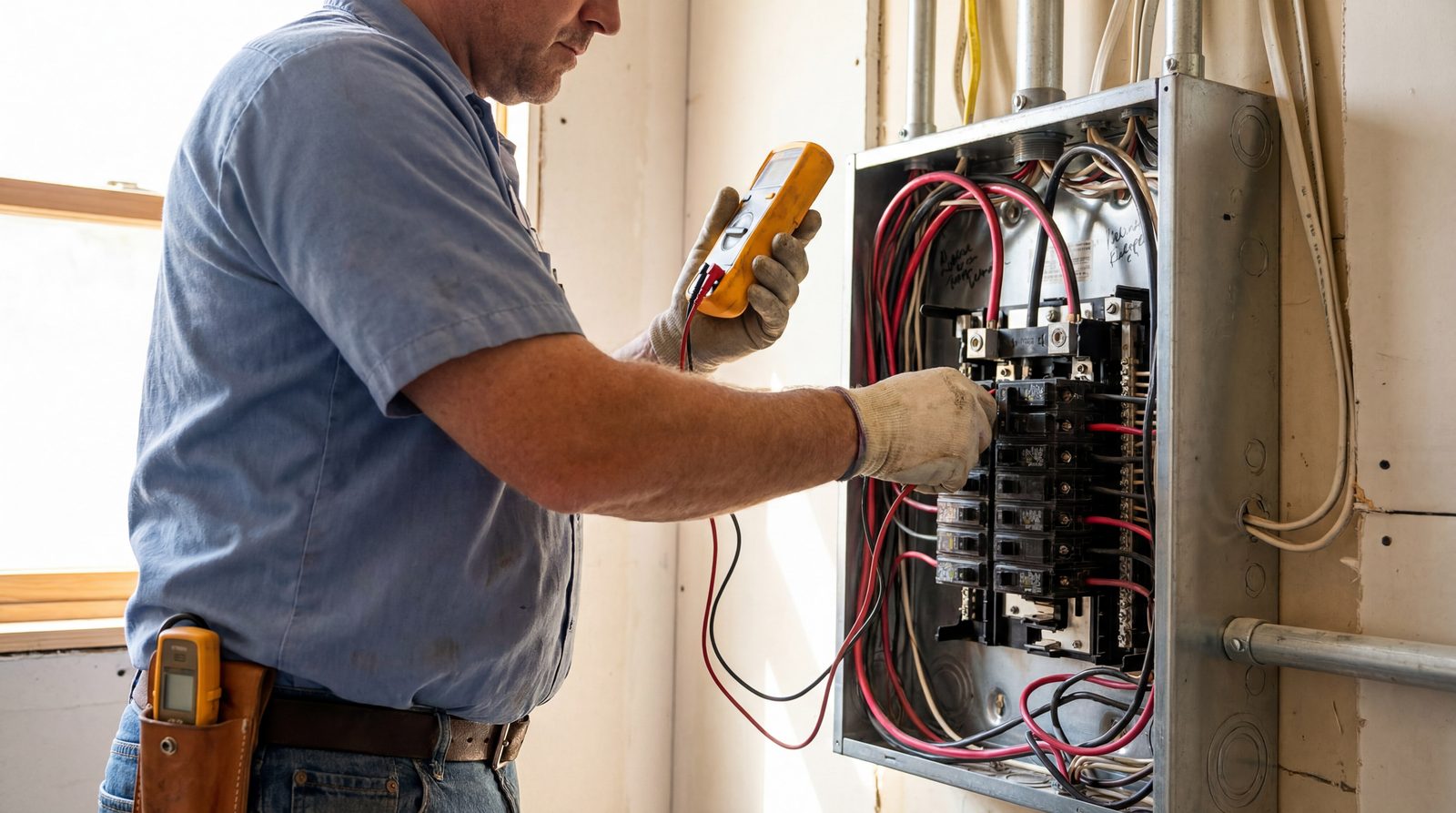
Best Marketing for Contractors: 10 Strategies That Fill Your Schedule
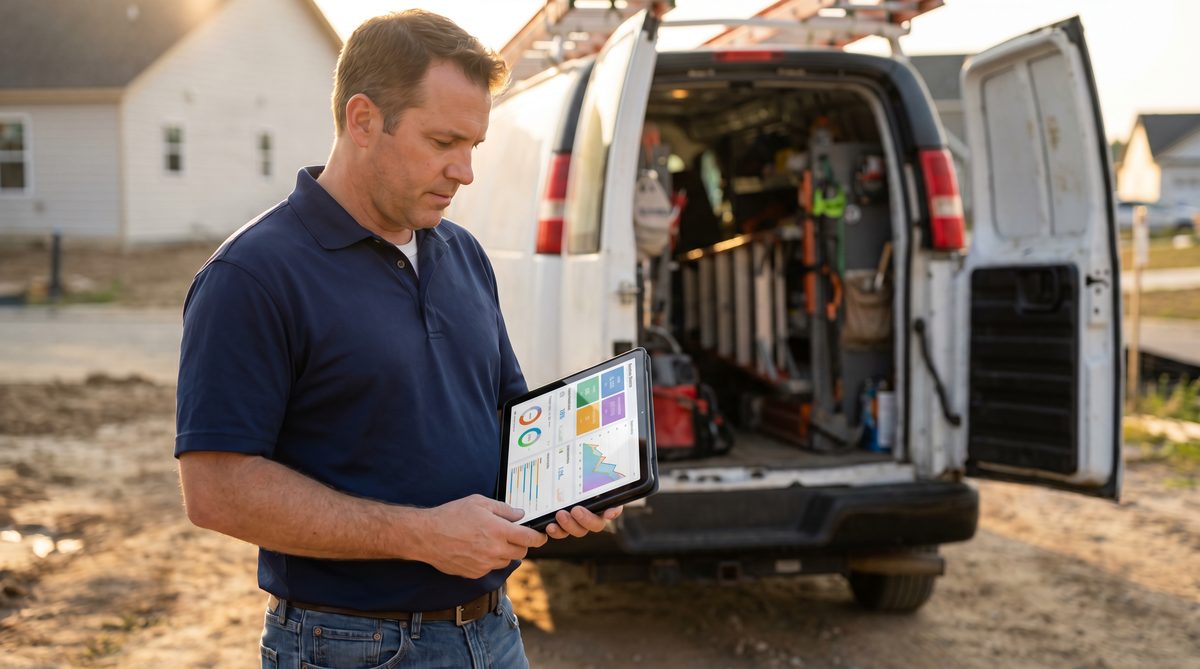
Most contractors aren’t short on work to be done. Roofs need replacing. HVAC systems fail. Pipes burst and panels need upgrading. The problem isn’t that homeowners don’t need your services, it’s that most contractor marketing investments either generate leads that never convert, or they fail to capture the leads that are already coming in. Either way, revenue walks out the door.
If you’re looking for the best marketing for contractors that goes beyond “run more ads” or “post on social media,” this is the guide. These are the ten strategies top-performing contractors use in 2026 to generate more leads, book more jobs, and grow without burning their budget on tactics that don’t deliver. Whether you’re a roofing company trying to dominate your local market or a general contractor looking to fill your pipeline for the next 90 days, these strategies work.
- Google Business Profile optimization is the highest-ROI contractor marketing investment, free to set up and compounds over time.
- Community presence (Chamber, BNI, local sponsorships) and online community engagement (Reddit, Facebook groups, Nextdoor) consistently outperform paid ads for established local contractors.
- Responding to a lead in under 60 seconds increases your conversion rate by 391%, faster response beats more leads every time.
- Google reviews directly impact both search rankings and revenue: a one-star rating improvement can lift contractor revenue 5-9%.
- The contractors growing fastest in 2026 treat marketing as a system, not a collection of disconnected tactics.
1. Where Contractor Marketing Budgets Go Wrong

According to HomeAdvisor, the average home services company spends $1,200 to $2,500 per month on lead generation, $14,400 to $30,000 per year before a single job is booked. And yet most contractors continue increasing their advertising budget instead of fixing the leaks draining the leads they already have.
The core problem is a focus on lead volume instead of lead conversion. Buying leads from Angi or HomeAdvisor feels like progress. Running Google Ads feels like marketing. But if you’re missing 40% of inbound calls, responding to quote requests two hours after they come in, and never following up on open estimates, you’re spending money to generate leads for your competitors.
of homeowners say response time is the #1 factor when choosing a contractor, ahead of price, reviews, and years of experience
Source: Angi Homeowner SurveyThat single data point reframes the entire contractor marketing conversation. The most important variable you control isn’t your ad creative or your targeting budget. It’s how fast you respond when a homeowner reaches out. A roofing contractor in Memphis was spending $3,000 per month on Google Ads and generating 80+ leads monthly. After tracking their actual conversion rate, they discovered they were reaching only 34% of inbound callers within the first hour. The other 66% had already called a competitor. The fix wasn’t more ads, it was faster response to the leads they were already buying.
Before you spend another dollar on lead generation: Audit your current conversion rate. Track how many inbound calls and form fills you’re actually reaching within 60 minutes. That number tells you more about your marketing ROI than any ad dashboard.
2. Local SEO: The Contractor Marketing Foundation That Compounds
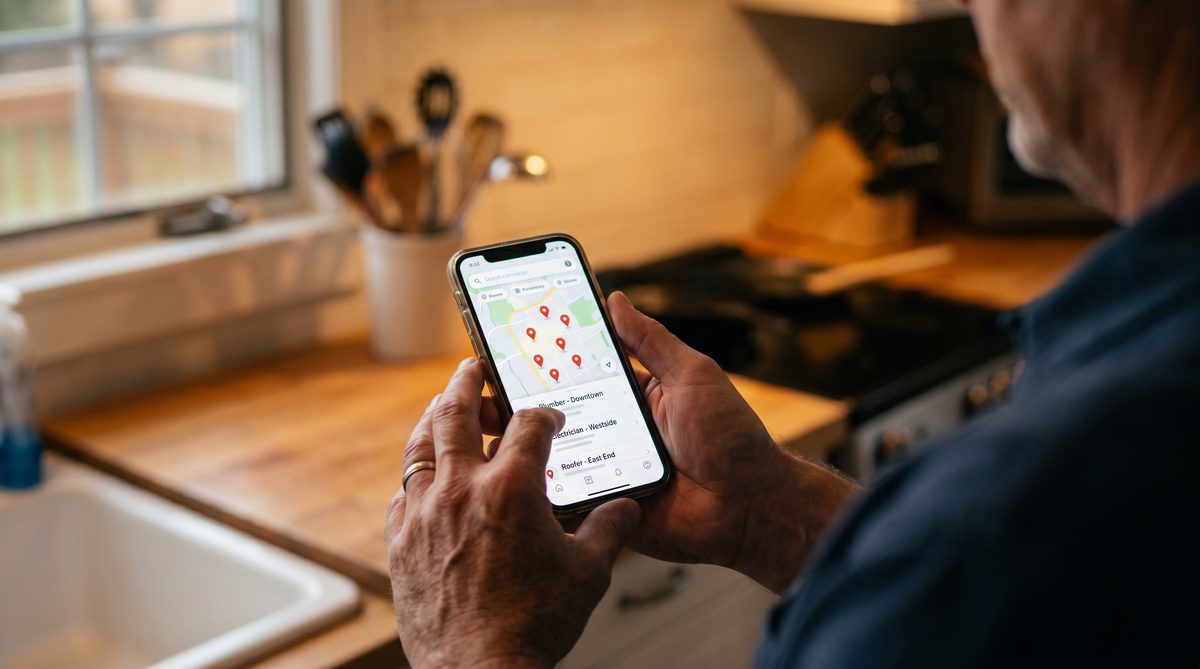
For long-term contractor marketing ROI, nothing beats local SEO. Unlike paid ads that stop working the moment you stop paying, a well-optimized Google Business Profile and website compound over time, generating leads month after month with no ongoing ad spend.
When homeowners search “contractor near me” or “roof replacement [city],” Google shows the local 3-pack: the three businesses at the top of results with a map. Getting into that 3-pack is worth more than almost any ad you can buy. Backlinko’s user behavior study found that 42% of local searchers click on a result in the Google Map Pack. And per Google’s own consumer research, 28% of local searches result in a purchase, making local visibility directly tied to booked jobs, not just brand awareness.
Three pillars of local SEO for contractors:
Google Business Profile optimization
Complete every field. Choose the most accurate primary category (Roofing Contractor, General Contractor, Electrician, HVAC Contractor, etc.) and add relevant secondary categories. Upload job photos every week, before-and-after shots of completed projects are the most powerful content you can add. Post updates at least twice per month. Google’s research with Ipsos found that businesses with complete, active profiles are 2.7x more likely to be considered reputable by consumers.
Citation consistency
Your name, address, and phone number (NAP) must be identical across every directory: Yelp, BBB, Angi, Thumbtack, Yellow Pages, Apple Maps, Facebook, and 30 to 40 others. A single inconsistency, a stale address, a differently formatted phone number, can suppress your local rankings. Use BrightLocal or Whitespark to audit your citation accuracy before you do anything else.
Service area pages
Create dedicated website pages for each service and each city or neighborhood you serve. A roofing company in Denver should have separate pages for “roof replacement Denver,” “roof repair Littleton,” and “commercial roofing Aurora”, not one page that tries to rank for all three. Each page needs unique content targeting its specific keyword. Per Whitespark’s Local Search Ranking Factors, your Google Business Profile and website relevance are the two most influential factors for local pack rankings.
How to implement: Claim and verify your Google Business Profile. Fill in every field. Set a recurring reminder to post photos twice a month. Audit your top 20 citations for NAP consistency. Then build out service pages for your three highest-revenue offerings and location pages for your three primary service areas.
3. Google Reviews: The Most Valuable Asset in Contractor Marketing
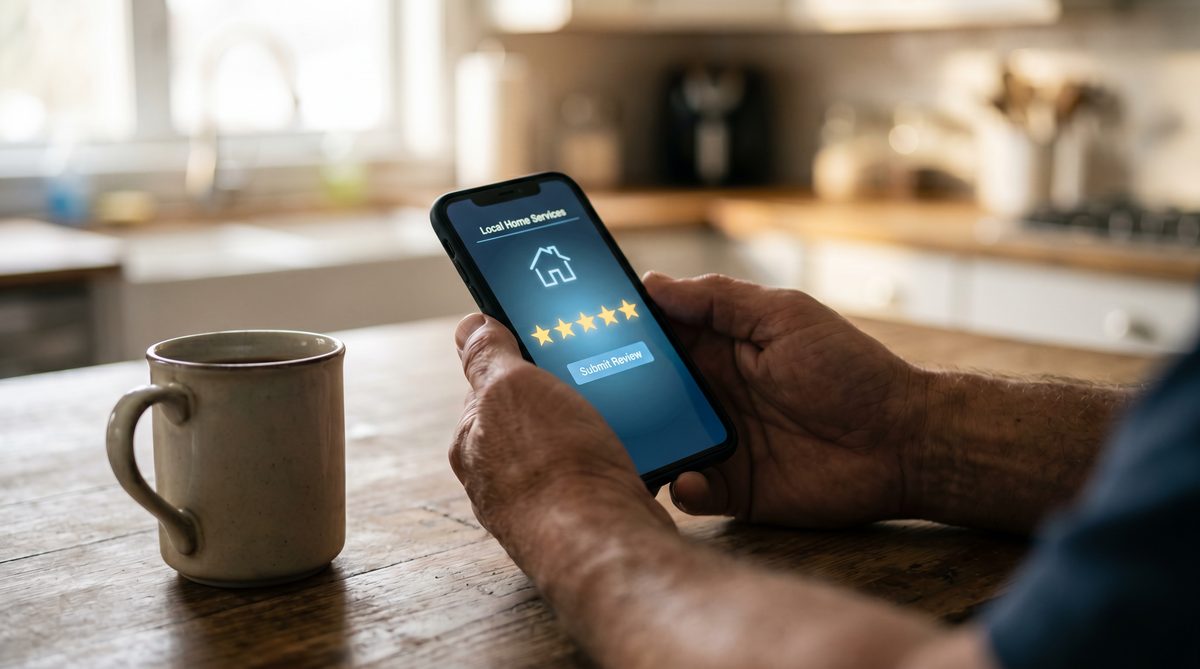
Reviews aren’t just social proof, for contractors, they’re a direct revenue driver and a local search ranking signal. Whitespark’s annual research consistently identifies Google reviews as the #1 local search ranking factor, ahead of website content and citation accuracy. The more recent and high-quality your reviews, the better your visibility when homeowners in your area search for your trade.
The revenue impact is measurable. Research by Harvard Business School professor Michael Luca found that a one-star increase in average rating translates to a 5-9% revenue increase. For a contractor doing $1.5M per year, moving from a 3.8 to a 4.8 star rating means $75,000 to $135,000 in additional annual revenue, from the same traffic, with no increase in ad spend.
And per BrightLocal’s 2025 Local Consumer Review Survey, star rating is the single most important factor consumers use to judge a local business. It outranks the text of reviews, the total number of reviews, and how recently you responded. Your rating number is the first thing a homeowner sees when they find you on Google, and it determines whether they click or keep scrolling.
The challenge for most contractors is review consistency. They collect reviews in bursts, a surge after first asking, then nothing for months. But review velocity matters as much as total count. Google (and homeowners) weight recency heavily. The best approach is automating the review ask so it fires via text after every completed job, every time, with a direct one-tap link to your Google review page.
Picture an HVAC contractor in Dallas going from 47 reviews to 190 reviews in 8 months by automating post-job review requests, and watching the Google Maps position for “HVAC near me” climb from 7 to 2 in the core service area. No ad spend. No agency. Just consistent review volume.
How to implement: Set a goal of 8 to 12 new reviews every month. Automate the request so it triggers after every completed job without anyone having to remember. Route any negative feedback to a private resolution flow before it goes public. Respond to every review within 24 hours, active, engaged profiles rank higher. For a step-by-step system, see our guide on getting more Google reviews.
4. Local Community Investment: The Lead Source No Software Can Replace
Most contractor marketing content skips this because it doesn’t fit in a software dashboard. But for established local contractors, being known in the community is often the cheapest and most durable lead source they have.
The contractors who dominate a service area aren’t always the ones with the biggest ad budget. They’re the ones whose name shows up when a homeowner asks a neighbor for a recommendation. That requires presence, not just advertising. Four community plays that actually move the needle:
Chamber of Commerce membership (used actively)
Joining is $400 to $800 per year. Half the contractors who pay never show up. The contractors who attend the monthly mixer, sponsor a quarterly happy hour, and serve on a committee book $30K to $80K in referred work annually from chamber connections alone. The chamber roster doubles as a lead list for B2B work (property managers, real estate offices, local franchises) that never shows up in residential funnels.
BNI or similar referral networking groups
BNI charges roughly $750 per year plus weekly attendance. The structure forces members to refer each other. The right BNI seat (one builder, one roofer, one plumber, one electrician, one realtor) compounds into a steady drip of warm referrals. BNI’s own member data puts the average membership at about $38K per year in revenue from roughly 28 tracked referrals, a self-reported average across all industries.
Realtor lunch-and-learns
Real estate agents drive a meaningful share of contractor leads: pre-listing repairs, post-inspection fixes, buyer punch-lists. Run a free 30-minute lunch-and-learn at a brokerage on “the five inspection items that kill deals” or “how to read an HVAC report.” Bring sandwiches. Cost: ~$200. Result: every agent in the office has your card and calls you on the next deal that needs work.
Local sponsorships with physical visibility
Little League jerseys, the church bulletin, the high school football program, the holiday parade float. Pick sponsorships where your name physically appears in front of the same homeowner repeatedly over a season. Google’s local visibility research consistently shows the third or fourth time a homeowner sees your name is when it converts to a call.
How to implement: Pick one community channel this quarter. Don’t try all four. Show up consistently for 90 days. Track every job that traces back to a community connection so you know which channel earned its slot for next quarter.
5. Online Community Engagement: Reddit, Facebook Groups, Nextdoor
Homeowners ask their neighbors and the internet before they call a contractor. If you’re not in those conversations, your competitor is. This is high-leverage organic marketing that costs nothing but time, and most contractors ignore it because it has no dashboard.
The contractors who do it well book three to eight jobs per month from a single hour of weekly engagement. Three channels worth the time:
Local Facebook groups
Every city of 50K+ has “[City] Buy Nothing,” “[City] Homeowners,” “[City] Moms,” and “Recommendations for [City]” groups with thousands of members. Find the active ones for your service area. When someone posts “anyone know a good roofer?” the first helpful, non-spammy reply usually books the job. The rules matter. Most groups ban self-promotion, so the move is to be genuinely helpful first (answer the question, share an opinion on the issue, comment on photos) and let your profile carry your business name.
Reddit subreddits
r/HomeImprovement, r/DIY, r/HVAC, r/Roofing, r/Plumbing, and city subreddits like r/Dallas, r/Phoenix, r/Atlanta are full of homeowners asking questions before they hire. A roofer who spends an hour a week answering “is this flashing installation correct?” or “should I be worried about these missing shingles?” builds visible expertise. Reddit allows pros to engage as long as the contribution is genuine. Tag your profile as “verified roofer in [city]” and let the value of your replies drive DMs.
Nextdoor business pages
Nextdoor is the most homeowner-dense platform in the US, organized by actual neighborhoods. The platform’s “Recommendations” feature lets neighbors vote on local businesses. Nextdoor’s own research reports that 90% of users have asked for a local recommendation. The pattern: claim your business page, post job photos with the address suppressed, comment helpfully on neighborhood threads, and accumulate recommendations slowly over time.
The single thing that kills contractor engagement on these channels is leading with sales pitches. Lead with useful answers. The work follows. A general contractor in Charlotte tracked 14 jobs in 2025 directly to Reddit replies and a Nextdoor presence, $190K in revenue from zero ad spend.
How to implement: Pick one platform. Block a 60-minute window each week. Spend it answering questions, not promoting. After 90 days, audit how many calls reference a forum reply or recommendation thread.
6. Paid Advertising for Contractors: LSA, Google Ads, and Facebook
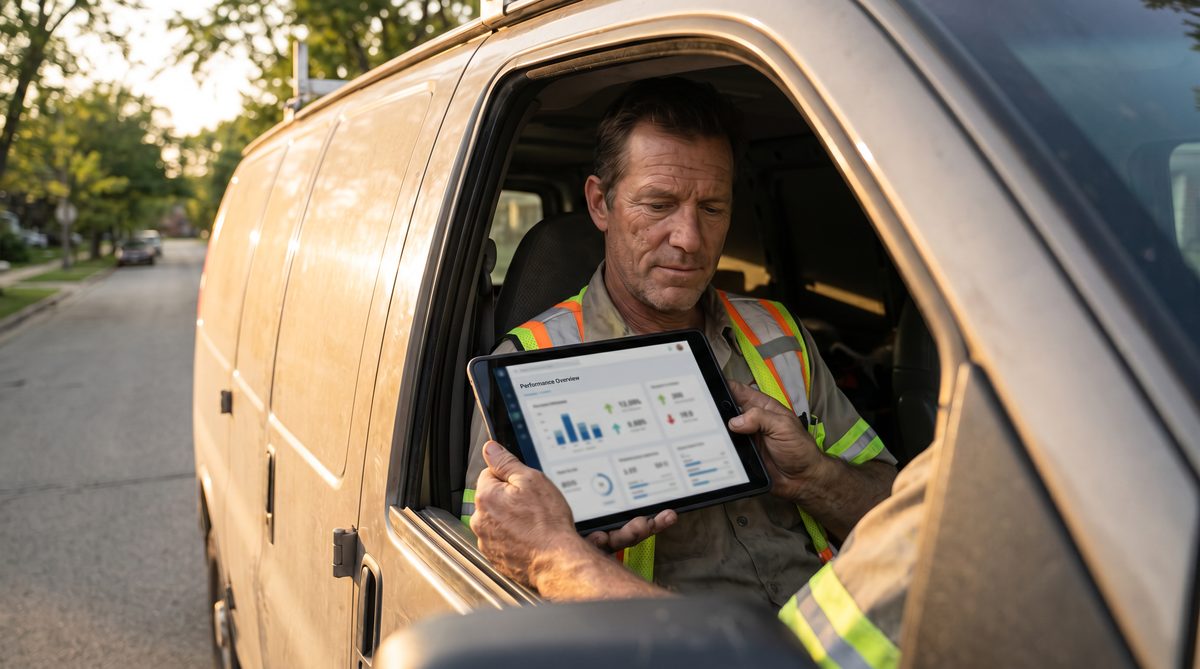
Paid advertising works for contractor marketing when it’s built around what homeowners are actually searching for and what they actually respond to. Most contractor ads fail because they lead with credentials (“Licensed & Insured. 20 Years Experience. Free Estimates.”) instead of the homeowner’s problem. Credential-based ads are wallpaper. Problem-based ads get clicked.
Two channels worth prioritizing:
Google Local Services Ads (LSA)
LSAs appear at the very top of Google search results, above regular Google Ads, with a “Google Guaranteed” badge. You pay per qualified lead, not per click, making your cost predictable and tied to outcomes. Per WordStream and LOCALiQ benchmarks, Google LSA cost per lead for home services ranges from $6 to $30 depending on trade and market, a fraction of the $40 to $150 typical for traditional Google Ads. For high-trust services like electrical, HVAC, and roofing, the “Google Guaranteed” badge meaningfully increases conversions because homeowners know Google has verified and insured the company.
Problem-focused search ads
Instead of bidding on “contractor near me” where every competitor is fighting for the same clicks, target problem-aware searches. A roofer should bid on “roof leak after rain,” “water stain on ceiling after storm,” and “how much does a new roof cost in [city].” An HVAC contractor should bid on “AC not cooling house” and “furnace making noise.” These keywords have lower competition and dramatically higher conversion intent, the homeowner already has the problem and is looking for a solution.
Facebook and Instagram ads
Search ads capture demand that already exists. Facebook and Instagram let you create demand by reaching homeowners before they realize they have a problem. Before-and-after job photos, 30-second “day in the life on a job site” videos, and customer testimonials filmed on a phone after a completed project consistently outperform polished ad creative on social platforms. See our full guide to Facebook ads for contractors for targeting, budgets, and creative strategy.
The single biggest reason contractor paid ads fail: generating leads and then taking hours to respond. Social media leads go cold within minutes. If your team isn’t following up within the first hour, you’ve essentially wasted the ad budget that got them to reach out. Faster response is what converts paid traffic into booked revenue, which brings us to the next strategy.
7. Speed to Lead: Your Highest-Leverage Marketing Variable
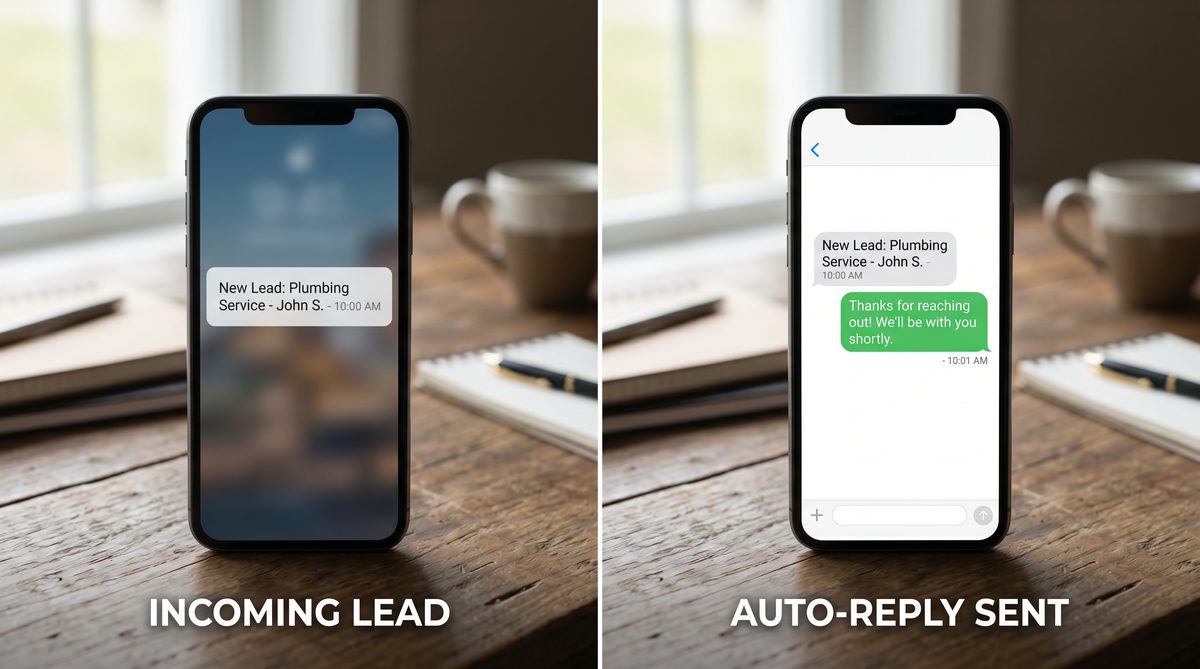
Every marketing dollar you spend, on SEO, ads, or anything else, drives traffic toward a moment of intent: a phone call, a form fill, a text message. What happens in that moment determines whether you book the job or hand it to a competitor. Most contractors treat lead response as an operational detail. It’s actually the single most important marketing variable they control.
ZoomInfo’s sales follow-up research found that 35-50% of sales go to the vendor that responds first, not whoever is cheapest, not whoever has the most reviews, not whoever has the most polished website. Whoever responds first. And per Velocify research, responding within the first 60 seconds increases conversions by 391% compared to average response times. The lead decay curve is steep: after 5 minutes, you’ve already lost most of your conversion probability.
The practical challenge for contractors is obvious: your crew is on rooftops, under sinks, and running between jobs. Nobody’s sitting at a desk monitoring an inbox. That’s why automated lead response systems have become a core part of the best marketing strategies for contractors. When a call goes unanswered, an instant text fires to the caller: “Hi, this is [Company]. Sorry we missed you, what can we help with?” That message holds the lead’s attention until someone on your team follows up. Our guide on missed call text-back for contractors walks through the full implementation.
The average contractor takes over two hours to respond to a new lead. The best contractors respond in under 60 seconds. The revenue difference between those two numbers, multiplied across every lead you generate each month, is usually the difference between a growing business and a stagnant one.
How to implement: Pull your call logs for the last 30 days. Count how many calls went to voicemail or went unanswered entirely. Multiply that number by your average job ticket. That’s the monthly revenue at risk. Then set up an automated response system so no inbound inquiry goes more than 60 seconds without a reply.
8. After-Hours Call Capture: Stop Letting Emergency Leads Walk
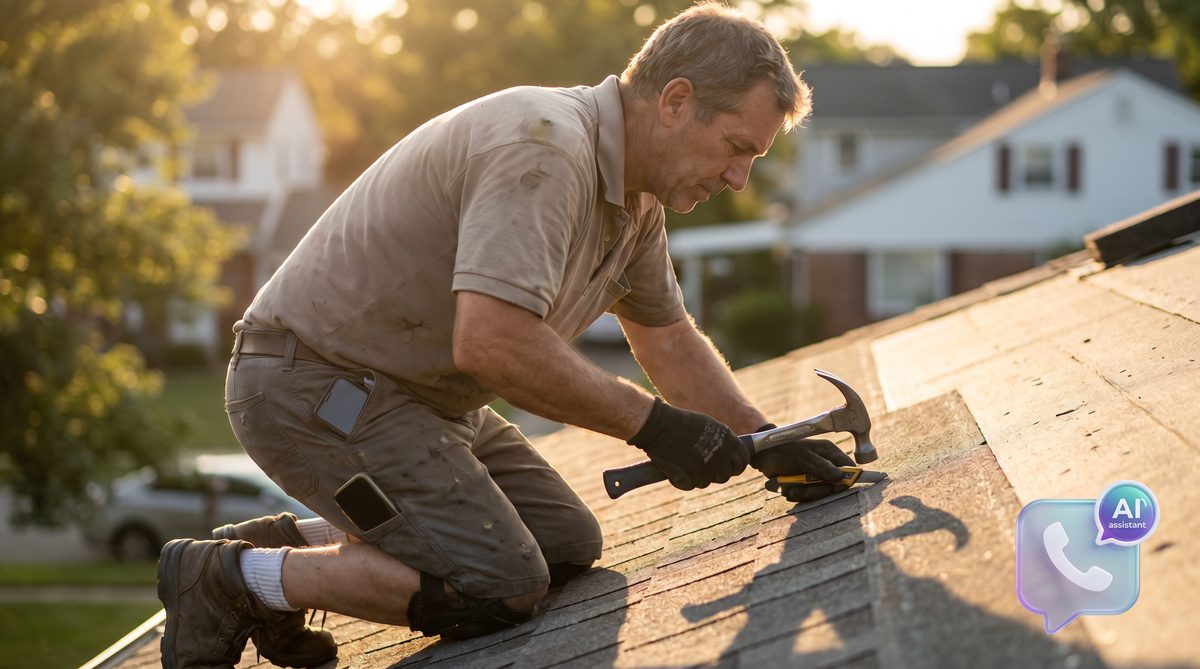
Emergency calls don’t follow your business hours. A homeowner notices a roof leak at 8 PM after a thunderstorm. An HVAC system fails on Saturday morning in July. A main breaker trips at midnight. These are often the highest-value jobs a contractor receives, and if nobody answers, the homeowner calls the next result on Google within 30 seconds.
There are three legitimate ways to solve this, each with different economics:
Dedicated dispatcher or office manager
Hiring someone to cover phones during extended hours is the simplest answer. Fully loaded cost runs $35K to $55K per year for a part-time evening dispatcher, or $60K to $90K for a full-time office manager. For contractors doing $1.5M+ per year with strong after-hours call volume, this often pencils out and gives you the human relationship homeowners prefer.
Traditional answering service (per-minute)
Services like AnswerConnect, PATLive, and Ruby Receptionists charge $1.20 to $2.50 per minute or $250 to $1,000 per month for tiered minute plans. They take messages and route urgent calls. The trade-off: they rarely book the job, so you still need someone on your team to call back the next morning, and the lead is often already gone.
AI call answering (flat-rate)
AI-powered answering platforms answer in a natural voice, ask qualifying questions (what’s the issue, how urgent, what’s the address), check your real-time availability, and book the job directly into your scheduling software, whether it’s 2 PM or 2 AM. Pricing is flat-rate ($200 to $1,500 per month) regardless of call volume, which is the right shape for contractors with surge call patterns.
The economics are straightforward to calculate. If your average job is worth $900 and you’re missing 15 after-hours calls per month, that’s $13,500 per month flowing to competitors. Whether you solve it with a person, a per-minute service, or an AI answering platform, the answer to “do nothing” is almost always the wrong one.
For contractors evaluating AI answering solutions specifically, look for four core capabilities: 24/7 availability with no per-minute charges, scheduling integration with your existing software (ServiceTitan, Jobber, Housecall Pro), emergency triage that distinguishes same-day from next-day calls, and natural conversation quality so callers don’t feel like they’re talking to a phone tree. See how an AI answering service for home services works in practice.
9. Follow-Up and Referrals: The Free Channels Most Contractors Ignore

Two of the highest-ROI contractor marketing strategies cost almost nothing to run, yet most contractors ignore both. Automated follow-up and structured referrals work on leads and customers you’ve already invested in acquiring.
Automated follow-up on open estimates
A homeowner asks for a quote on a deck replacement. You send a detailed estimate. They say they’re “thinking about it.” Most contractors follow up once and move on. That’s a significant revenue leak. Per HubSpot’s Sales Statistics, 44% of sales reps give up after just one follow-up, yet high-ticket home improvement decisions almost always require multiple touchpoints before a homeowner commits.
An automated follow-up sequence removes the human bottleneck entirely. After you send the estimate, the system triggers a series of well-timed messages: a thank-you text the same day, a check-in two days later asking if they have questions, a value-add message a week after (a relevant article or a seasonal timing note), and a final reminder before the quote expires. No one on your team has to remember. The sequence runs automatically.
An automated sequence works every estimate that goes quiet, which is where the money is. On a $5,000 deck or a $7,000 roof repair, recovering even one cold estimate a month is thousands in revenue from leads you’d already paid to generate.
Referral programs that generate consistent leads
According to research published by Texas Tech University, 65% of new business comes from referrals. Yet most contractors either don’t ask for referrals or ask inconsistently. A structured referral program, a simple incentive, an automated post-job ask, and a trackable link, turns your customer base into a reliable lead source that runs on autopilot.
Wharton School research confirms that referred customers have 16% higher lifetime value than customers acquired through advertising. They’re less price-sensitive, close faster, and refer others at higher rates. A roofing company doing $2M per year that converts 10 more referrals monthly adds $160,000 in incremental lifetime value annually, from leads that cost nothing to generate.
The implementation path depends on your stack. Contractors already on a CRM like Jobber, Housecall Pro, or ServiceTitan can configure follow-up sequences inside the existing software, no new vendor needed. Contractors without a CRM can run a simple text-based sequence through a tool like Podium, Hatch, or Ignitvio. The point isn’t the tool, it’s that the sequence runs every time without anyone remembering.
10. Building a Contractor Marketing System That Runs Itself

The best marketing for contractors isn’t any single tactic, it’s all ten strategies working as a unified system. Local SEO and review stacking build long-term organic visibility. Community presence (Chamber, BNI, sponsorships) and online community engagement (Reddit, Facebook groups, Nextdoor) earn referrals that compound. Paid ads generate fast inbound traffic. Speed to lead and after-hours call capture ensure you actually book the leads you’re already generating. Follow-up automation converts the estimates that don’t close immediately. Referral programs turn satisfied customers into a lead source that runs on its own.
The contractors growing fastest in 2026 aren’t necessarily outspending their competitors. They’re capturing a higher percentage of the leads they already generate. They’re not missing after-hours calls. They’re following up on every open estimate without needing someone to remember to do it. They’re collecting 10 to 15 new reviews every month without manually asking. And every new customer is automatically prompted to refer someone else.
Full disclosure: Ignitvio is our company. The first nine strategies above stand on their own and don’t require our product, any contractor can implement them with free tools and consistent effort. This section is where we honestly believe our software earns its monthly fee, so read it with that bias in mind.
Ignitvio is the automation layer that makes the capture-and-follow-up parts of the system run: AI call answering, instant lead response, automated follow-up sequences, and review and referral automation, all connected to your existing scheduling software. Here’s what the difference looks like in practice:
- 40-60% of inbound calls go unanswered
- Lead response time: 2+ hours on average
- Open estimates close at less than 30%
- Reviews collected inconsistently, 1-3/month
- Referrals come in by chance, no system
- Every call answered or followed up within 60 seconds
- Lead response in under 60 seconds, 24/7
- Automated follow-up runs on every open estimate until it closes or the customer opts out
- Review request sent to every customer automatically after every job
- Referral program drives consistent inbound from happy customers
Find Out How Many Leads You're Missing
We'll mystery-shop your business, call after hours, submit a quote request, and show you exactly where revenue is falling through. Free. Results in 48 hours.
Book a Free Revenue Audit
Jake Melendy
Founder, Ignitvio
Jake Melendy is the founder of Ignitvio. He spent 12 years in enterprise sales and sales leadership, including at Oracle, before building Ignitvio, which runs done-for-you outbound appointment setting for commercial contractors and B2B service companies. He writes about pipeline, trigger-based prospecting, and lead response.