Veterinary Answering Service: Catch Every Sick-Pet and Emergency Call
- Veterinary practices are drowning in inbound calls, sick-pet questions, appointment requests, prescription refills, after-hours emergencies, new-client inquiries, and most front desks can’t keep up even at full staffing.
- The average general-practice veterinary clinic misses 18-25% of inbound calls during business hours, and significantly more after hours. With new-client lifetime value averaging $1,500-$3,000 per pet and emergency visits running $300-$1,500 each, missed calls cost most practices $15,000-$40,000 per month.
- Front-desk burnout is a category-wide crisis. Practices can’t hire enough CSRs to keep up, and the ones they have are quitting from call-volume stress.
- A real veterinary answering service handles the routine calls (refill requests, appointment booking, basic triage) so the front desk can actually be present with the human and animal in the lobby, and so emergency calls never go to voicemail.
The Veterinary Phone Crisis Nobody Talks About
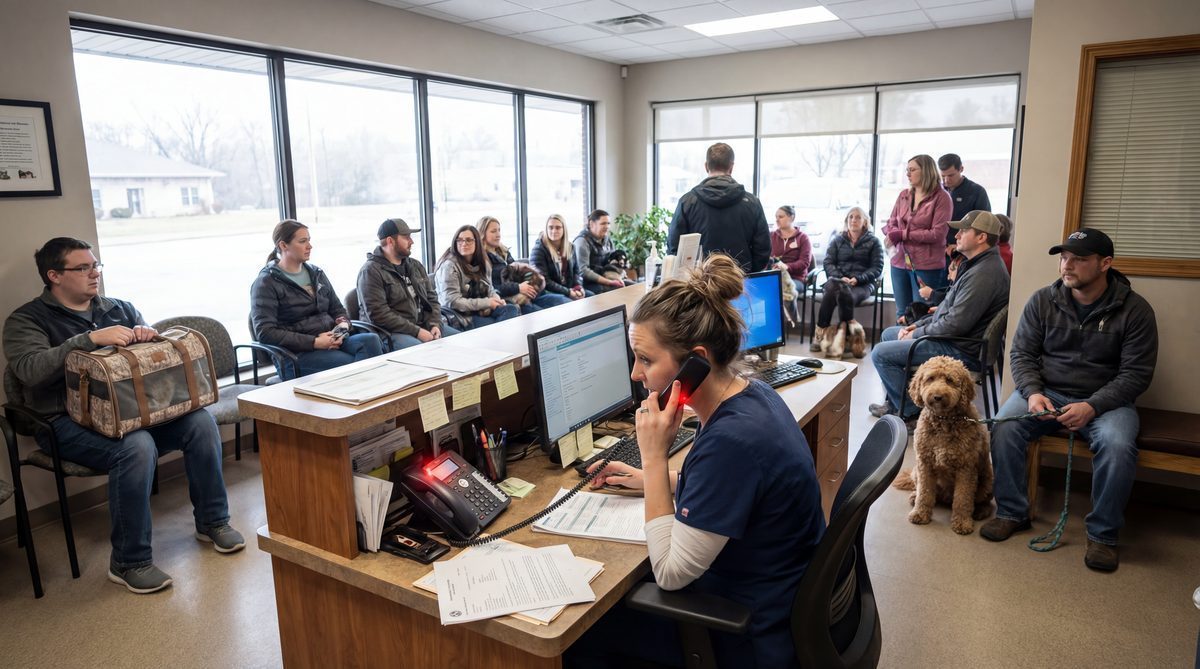
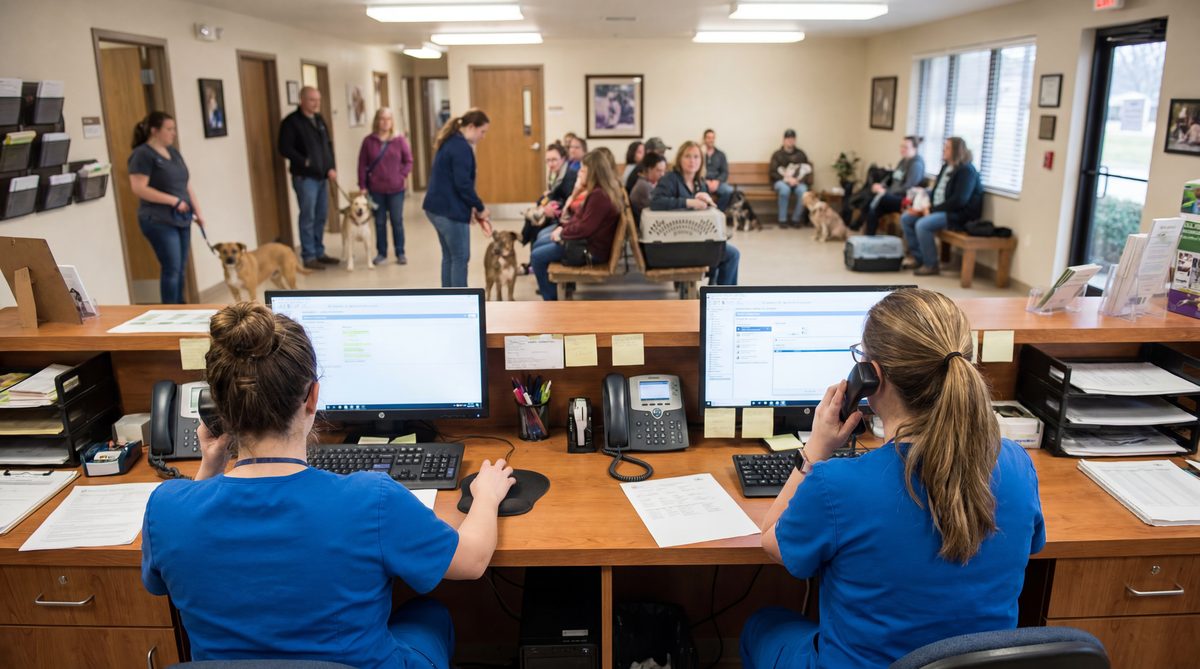
Walk into almost any veterinary practice during a Tuesday morning rush and you’ll see the same scene. Two CSRs at the front desk, three phone lines lit up, a client at the counter trying to check in for a 9 AM, a tech needing a chart pulled, and a dog vomiting in the corner. Someone is going to wait. Someone always waits. And whoever just dialed the second time because they didn’t get through on the first try is about to call the next clinic instead.
The veterinary industry is in a staffing crisis that gets less press than the human-medicine one but is arguably worse. AVMA reporting documents it consistently, practices can’t hire enough credentialed veterinary technicians, can’t hire enough CSRs, and the ones they have are leaving the profession at unprecedented rates from burnout. The phone is at the center of that burnout story. DVM360 surveys consistently rank “managing call volume” as the top stressor in practice operations, ahead of difficult clients and even compassion fatigue.
Call volume keeps climbing while staffing shrinks
Pet ownership in the US grew dramatically through the early 2020s, and that growth never reversed. American Pet Products Association data shows roughly 70% of US households now own a pet, the highest rate ever recorded. Each of those households generates an average of 15-30 vet-related phone calls per year, refills, appointments, questions, emergencies. The total call volume hitting the average practice has roughly doubled in the past decade. The number of veterinarians has grown maybe 15% in the same window.
After-hours calls have no good destination
Most clinics close at 6 or 7 PM weekdays and don’t open Saturday afternoons or Sundays. But pets don’t get sick on a schedule. A dog who starts vomiting at 8 PM, a cat who stops eating Saturday morning, a puppy with diarrhea Sunday afternoon, those calls need somewhere to go. The current default is “leave a message and we’ll call you back Monday”, which sends the panicked pet owner to the emergency hospital across town instead. Worse, it sometimes sends them to whichever competing clinic has any after-hours phone coverage at all.
Front-desk attrition compounds the problem
The CSRs who can’t keep up with the call volume quit. The remaining staff have to absorb the workload, which makes the burnout worse, which causes more turnover. DVM360’s industry surveys regularly cite CSR turnover above 50% annually at general practices. Every replacement starts at zero, doesn’t know the regulars, doesn’t know the protocols, doesn’t know which calls to triage as urgent.
Annual front-desk CSR turnover at the average general-practice veterinary clinic. Every replacement starts at zero and the burnout cycle continues.
Source: DVM360 industry surveysThe combination is a structural problem the industry hasn’t solved with hiring because it can’t be solved with hiring. The math doesn’t work, there aren’t enough humans willing to do front-desk veterinary work for what the practices can pay. Something has to absorb the routine call volume so the humans can do the human work.
The Calls Veterinary Practices Lose Most Often
The pattern of which calls get missed is predictable, and so is the cost.
Sick-pet triage calls
A pet owner whose dog just threw up three times in 20 minutes is in panic mode. They want a human voice immediately to confirm whether to drive to the clinic or wait it out. AAHA’s practice-management resources show that triage calls have one of the highest “first-answered-wins” rates of any call type, owners aren’t comparison shopping, they’re calling whoever picks up.
After-hours emergency calls
The cat who collapses Saturday night. The dog who got into a chocolate bar at 9 PM. The puppy who ate something he shouldn’t have on Sunday morning. Veterinary Practice News reports show these calls represent disproportionate revenue, emergency visits run $300-$1,500 versus a $75-$200 routine wellness visit. Miss them and you’ve lost both the high-margin visit and often the entire client relationship if the pet ends up at a competing emergency clinic.
New-client inquiry calls
A new pet owner researching clinics, a family that just moved to town, an existing pet owner unhappy with their current vet, all calling to “feel out” your clinic before booking. AAEP and AVMA market research consistently shows new-client lifetime value at $1,500-$3,000+ per pet over the relationship lifespan. A missed new-client call is almost never recovered, they call the next vet on the search results page.
Prescription refill calls
The most repetitive call type, and the one most likely to consume CSR time without generating revenue. Yet refill requests left unhandled produce angry clients who find a different clinic willing to handle the refill. The mundane calls matter for retention even if they don’t add revenue directly.
Appointment booking and reschedule calls
Wellness exam scheduling, vaccine clinic booking, dental cleaning appointments, surgery follow-ups. These should be the easiest calls to handle, but during busy lobby hours they wait on hold and many callers hang up. Per AAHA practice-management benchmarks, 30-40% of “callers who hang up during hold” never call back.
What Pet Owners Actually Need on the Call
Generic phone-answering advice misses what veterinary callers specifically need. The expectations are different from any other small-business category because the customer’s emotional state is different.
Someone to pick up fast, within 2 rings
A panicked pet owner won’t navigate “press 1 for appointments, press 2 for refills, press 3 for emergencies.” They want a voice. BrightLocal’s consumer surveys show response speed is the single biggest factor in conversion across all local services, but for veterinary specifically, the urgency is amplified because the caller is emotionally invested in the patient.
Someone to ask the right triage questions calmly
Is your pet conscious? Breathing normally? Bleeding? When did the symptoms start? What did they eat? Are there any pre-existing conditions? Triage questions matter both clinically and emotionally, they signal that you’re treating the situation seriously and they help the owner feel less helpless.

Someone to give a real answer about cost expectations
“What does it cost to see the vet for [issue]?”, the call most front desks dread because pricing is complex. But the caller needs at least a range. “Office visits run $75-$95, and any diagnostics or treatment will be on top of that, we’ll always estimate before doing anything” is a reasonable answer. “I can’t quote pricing over the phone” loses the caller.
Someone to book the appointment without escalation
Same-day sick visits, next-week wellness, next-month dental, the call should end with a real appointment time on the calendar, not “we’ll call you back.”
Someone to handle prescription refills without a callback
Refills should be the most automatable interaction, pet name, prescription, last fill date, pharmacy preference, done. Yet most clinics still queue refill requests for callback because the front desk is too busy. A good answering setup handles refills end-to-end without involving humans.
Someone to confirm via text
A 30-second confirmation SMS, “Confirmed for tomorrow 10
AM with Dr. Patel for Bella’s annual exam. Please bring stool sample. Office is at [address]”, keeps the appointment from no-showing and reassures the pet owner.How many sick-pet calls is your practice missing during busy hours?
We’ll mystery-shop your clinic, call during a Tuesday morning rush, call after-hours about a vomiting dog, call from a new-pet-owner perspective on a Saturday, and show you exactly where the calls are slipping. Free. Results in 48 hours.
How Veterinary Answering Services Actually Work
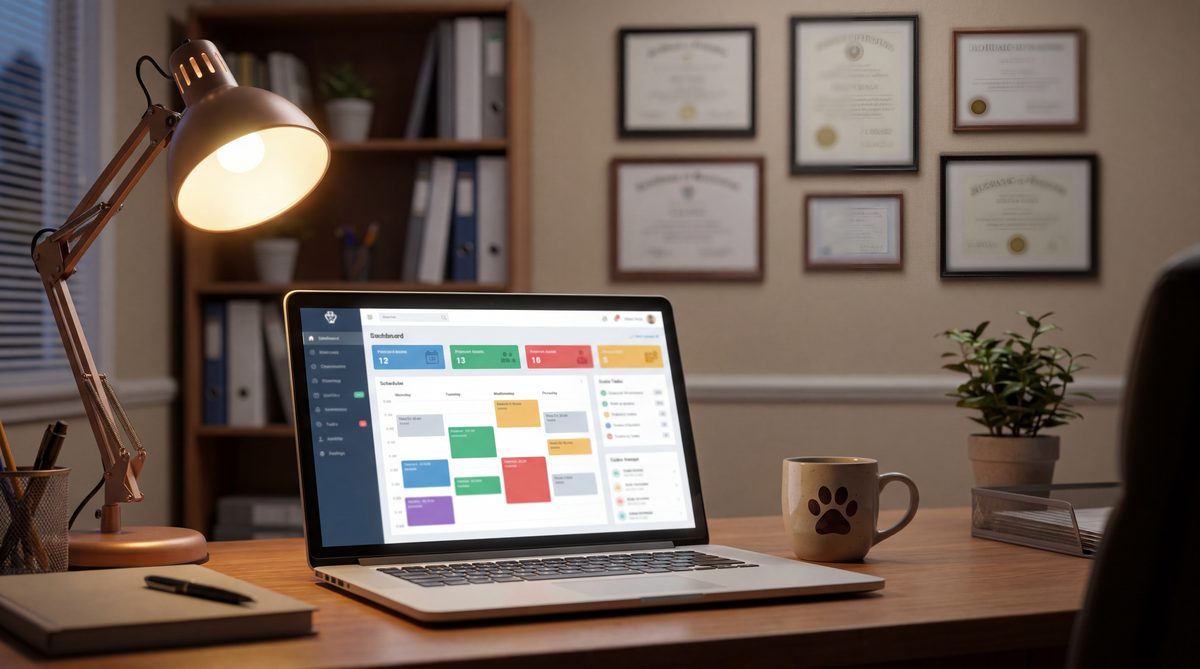
A veterinary practice manager shopping for an answering service in 2026 faces three categories with very different fits.
Traditional live answering services (Smith.ai, Ruby, AnswerConnect) employ remote human operators who pick up your calls and follow a basic script. The vast majority don’t integrate with veterinary practice management software (ezyVet, Cornerstone, AVImark, IDEXX Neo, Provet Cloud), they take a name and reason for calling and email it to your front desk to handle in the morning. The clinical context, patient history, vaccine schedule, prior diagnoses, medication history, they can’t access. Pricing typically runs $200-$600/month with per-minute overages that hurt during peak weeks.
Veterinary-specific answering services are a small category, operators who specialize in veterinary call handling and train staff on basic triage protocols. Better than generic, but still bottlenecked by human capacity, and they typically still don’t have direct PIMS integration. They handle peak-day surges by adding hold queues, which works for non-urgent calls but loses the panicked owner of a vomiting puppy who won’t wait 4 minutes.
AI-powered veterinary answering services work fundamentally differently. The AI picks up, asks the appropriate triage questions, accesses your patient database to recognize existing clients and pet history, books the appointment directly into your PIMS, handles routine refill requests end-to-end, and routes true emergencies based on rules you set. Modern AI answering services handle the natural conversation flow of “I think Buddy ate part of a chocolate bar maybe an hour ago, he’s a 40-pound lab” without forcing the caller into a rigid menu. The same intake-first approach applies on the human-medicine side: our best medical office answering service breakdown covers HIPAA-aware booking into Athena, Epic, and eClinicalWorks.
Pricing typically runs $300-$1,200/month flat, peak weeks cost the same as slow weeks. For a practice category where staffing is the #1 cost concern, this is the only model that doesn’t penalize call volume growth.
Live Humans vs. AI for Veterinary Specifically
Coverage during peak hours and after-hours
Tuesday-Thursday morning rushes plus the entire weekend window are the hardest call hours for vet practices. Human services charge premium rates for after-hours coverage and weekend coverage. AI runs 24/7 at one rate.
Triage knowledge
A good veterinary AI is configured with a triage decision tree (chocolate ingestion, suspected bloat, suspected GDV, hit-by-car, ocular emergencies, breathing distress) that distinguishes a true emergency from a wait-til-tomorrow situation. Generic human operators don’t have this knowledge and tend to either escalate everything or escalate nothing.
Practice management software integration
ezyVet, Cornerstone, AVImark, IDEXX Neo, Provet Cloud, modern PIMS support API integration that lets the AI book directly into your appointment schedule and pull patient history live. Generic human services almost never integrate, which means double-entry by your front desk for every booked call.
Prescription refill automation
A trained AI can handle the entire refill workflow, verify the prescription is current, check the last fill date, confirm pharmacy preference, queue the refill for the vet to authorize. Human services typically take a message and pass it to your team to call back, which doubles the work.
Quality consistency
Every human operator has good days and bad days, and the answering service industry averages 30-40% annual turnover (which mirrors the front-desk turnover problem). AI doesn’t turn over and follows your triage protocols the same way on call 1 and call 1,000.
Where humans still win: very high-acuity emergency hospitals where every call requires nuanced clinical judgment, specialty referral practices with extremely complex case routing, and equine or exotic-animal practices with highly specialized terminology. For 90%+ of small-animal general practice and feline-only practices, AI is the obvious answer.
What to Look for Before You Sign Up
Five capabilities that actually matter for veterinary practices specifically:
PIMS integration with patient history access
The AI must integrate with ezyVet, Cornerstone, AVImark, IDEXX Neo, or Provet Cloud, not just write appointments, but pull existing patient records so it can recognize “this is the Wilsons, with their cat Pickles, last seen for vaccines in November” without making them re-explain their history.
Veterinary triage protocols
Configurable triage trees for the most common emergencies (chocolate ingestion, GDV, urinary obstruction, breathing distress, lethargy in seniors, neonatal puppy/kitten issues) that route appropriately based on species, weight, age, and reported symptoms.
After-hours emergency routing
A clear handoff to the nearest emergency hospital for true emergencies, with the AI providing the address, hours, and stay-on-the-line option for the panicked owner. The system shouldn’t pretend to be a 24-hour clinic if it isn’t.
Refill workflow automation
End-to-end handling of routine refill requests so they never hit your front-desk queue. The AI verifies the prescription, checks last fill, confirms pharmacy, queues for vet authorization, and SMSes the client when it’s ready.
Missed call text back
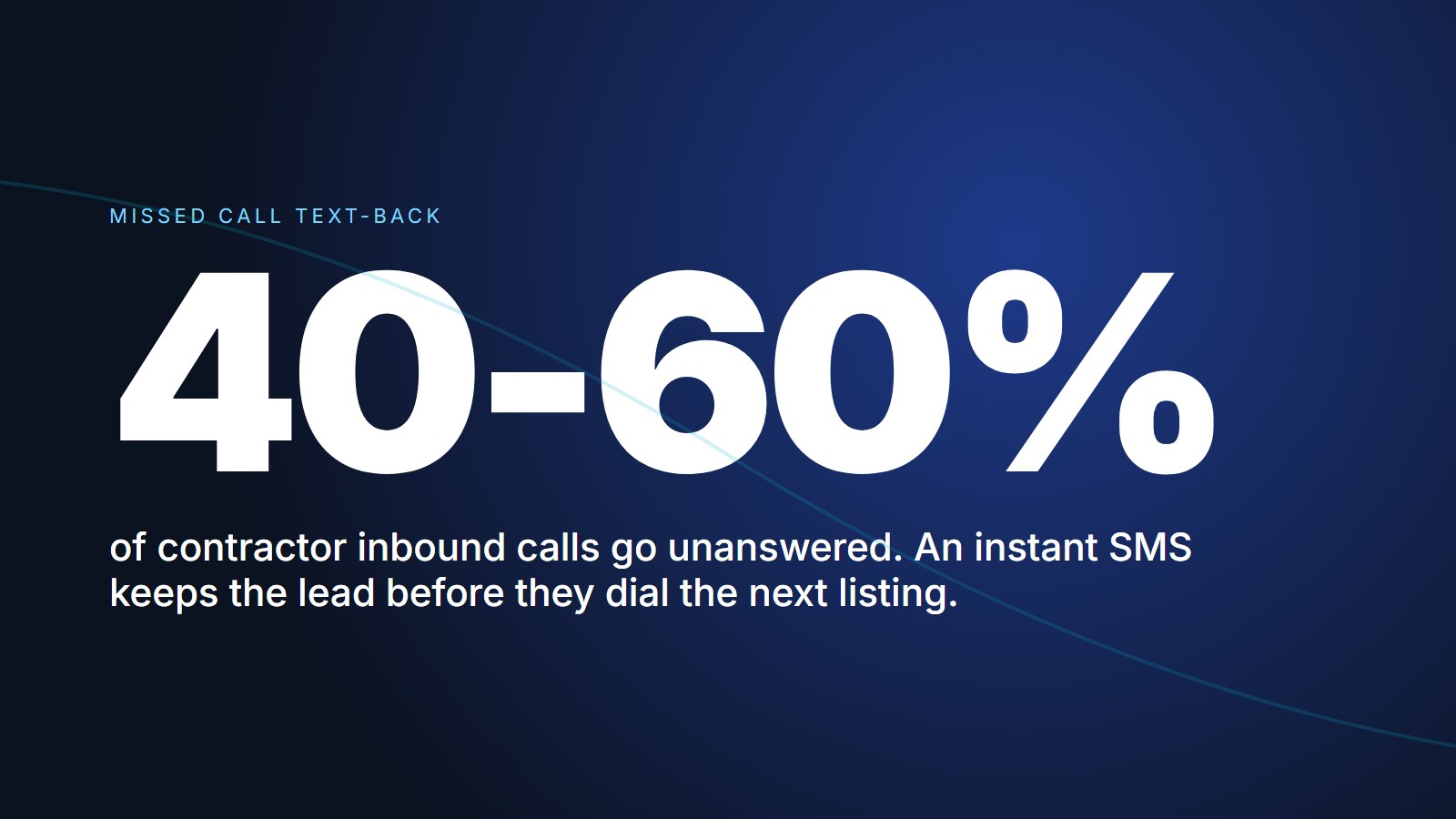
For calls the AI can’t handle (oddly framed questions, callers who insist on a human, network drops), automatic SMS catches the lead before they dial a competitor. See missed call text back for service businesses for the mechanics.
How Ignitvio Handles Veterinary Calls
Ignitvio is a done-for-you AI answering system built for veterinary practices that are losing new clients and burning out CSRs but can’t justify hiring two more receptionists to fix it.
Here’s what it does for a veterinary practice:
- Voice AI answers every call, during the Tuesday morning rush when both CSRs are with lobby clients, after hours when the practice is closed, and during the weekend window when most general practices have no phone coverage at all. Picks up within 2 rings, sounds natural, and handles the call end-to-end.
- Triage protocols built for small-animal general practice, chocolate ingestion, suspected GDV, urinary blockage, breathing distress, ocular emergencies, neonatal issues. The AI distinguishes true emergencies (route immediately to your on-call protocol or nearest emergency hospital) from urgent-but-stable situations (book same-day) from routine concerns (book next available).
- Native PIMS integration, ezyVet, Cornerstone, AVImark, IDEXX Neo, Provet Cloud. The AI recognizes existing clients, pulls patient history, books directly into your real appointment schedule, and never double-books. New clients land in your PIMS as new records with all captured info.
- End-to-end refill handling, the AI verifies the prescription is active, checks last fill date, confirms the client’s pharmacy preference, queues the refill for vet authorization, and SMSes the client when ready. Your front desk never touches the refill workflow for routine cases.
- New-client capture with full context, pet name, species, breed, age, weight, presenting issue, prior vet history, insurance status, geographic location. The new client is fully captured before the call ends, with a confirmed first appointment.
- After-hours emergency routing, for true emergencies outside your hours, the AI provides your protocol (call your emergency line, route to the nearest 24-hour hospital, etc.) with addresses and directions, and stays on the line if the owner needs help getting there.
- Missed Call Text Back catches anything that slips. Bad signal? AI handoff issue? Instant SMS: “Sorry we missed you, what’s going on with your pet?” The AI picks up the text conversation and books the appointment or routes the question.
- Automated follow-up chases every new-client inquiry that didn’t book and every “I want to think about it” call. Gentle reminders at 1, 3, 7, 14, and 30 days, until they book or opt out. You recover the new clients who would otherwise vanish into a competitor’s roster.
The highest-impact change for most practices is freeing your CSRs from routine calls so they can be present for the human and animal at the front desk. The CSR who isn’t constantly on hold can actually do client onboarding properly. The practice manager who isn’t covering reception can do the management work. The vet who isn’t pulled to triage on the phone can stay in the exam room.
Without Ignitvio vs. With Ignitvio
- 18-25% of calls go to voicemail during rush hours
- Sick-pet triage calls wait on hold while CSRs check in clients
- After-hours emergencies have no destination except a recorded message
- New-client inquiries on weekends go to whichever clinic has phone coverage
- Refill requests pile up on the callback list and frustrate clients
- CSR turnover stays above 50% from call-volume burnout
- Every call answered within 2 rings, 24/7/365
- Triage protocols handle sick-pet calls without escalation
- After-hours emergencies routed appropriately with the right protocol
- Weekend new-client inquiries captured and booked for Monday
- Refills handled end-to-end with no front-desk touch
- CSRs spend their time with clients in the lobby, not on hold
Illustrative comparison of the two operating models, not a measured client result.
The math is clear. If you capture even 4 new clients per month who would have gone to a competitor, at $2,000 average lifetime value per client, that’s $8,000/month in recovered revenue from a single channel. Add the operational savings from refill automation and the retention gains from same-day refill turnaround, and the ROI compounds quickly.
Setup runs under a week. We configure it for your practice (small-animal GP, feline-only, mixed practice, exotic), your PIMS, your appointment templates, your triage protocols, your emergency hospital handoff, your refill workflow, your new-client onboarding script, and your standard follow-up cadence. You tell us how you want each call type handled. We build it in. Then it runs.
Stop Losing New Pet Owners and Burning Out Your Front Desk
See how many sick-pet calls and new clients you're missing right now
We'll mystery-shop your practice, including a panicked sick-pet call during your morning rush, an after-hours emergency inquiry, and a new-client research call on Saturday, and show you exactly how many calls are slipping and what they're worth. Free. No pitch.
Get Your Free Revenue Audit
Jake Melendy
Founder, Ignitvio
Jake Melendy is the founder of Ignitvio. He spent 12 years in enterprise sales and sales leadership, including at Oracle, before building Ignitvio, which runs done-for-you outbound appointment setting for commercial contractors and B2B service companies. He writes about pipeline, trigger-based prospecting, and lead response.