Answering Service for Single-Truck Plumbers (Under 5 Employees)
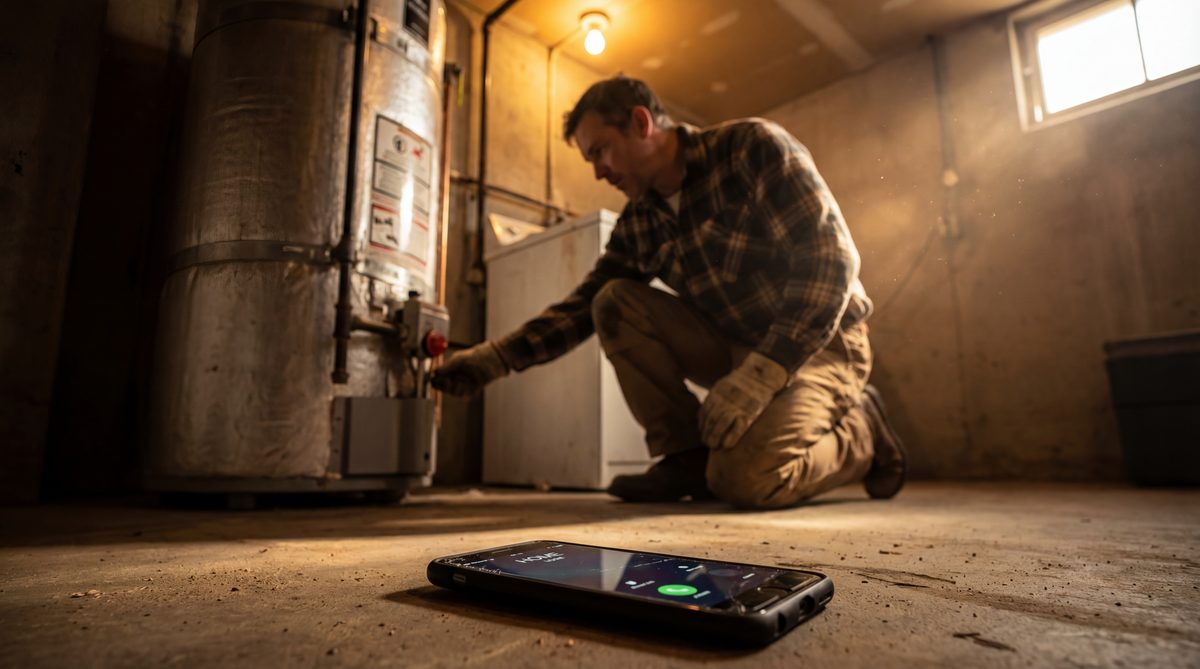
You are flat on your back under a kitchen sink, half-soaked, wrench in your right hand, vise grips between your teeth, when the phone in your hip pocket starts buzzing.
It is the third call of the afternoon. You cannot answer. You finish the joint, slide out, dry your hands, check the missed call. Unknown number. No voicemail. You call back. No answer. You text. No reply.
That call was a water heater. $1,200 ticket. They called the next plumber on Google. You will never know.
This is the owner-operator problem in one paragraph. A single-truck plumbing business has exactly one person who can both finish the work AND answer the phone, and that person is you. The math gets ugly fast.
- Under-5-employee plumbing shops lose more revenue to missed calls than any other failure mode. The owner is in the truck, not the office.
- Solo plumber economics: 30 hours a week wrench-in-hand, 10 hours on the phone, 5 missed calls per week at $400 to $800 a ticket. That is roughly $2,000 to $4,000 in weekly walked revenue.
- An answering service for a 1-truck shop does three things: answer in your business name, capture name and address and problem, drop the job on your calendar or text you the qualified lead.
- Flat-rate AI answering service plans cost less than one missed water heater per month. Per-minute human services punish you on the busy weeks.
- Five financial realities only solo plumbers face are covered below. They are the reason a 20-truck shop’s playbook does not work for a 1-truck shop.
Why Single-Truck Plumbers Need This More Than Anyone Else
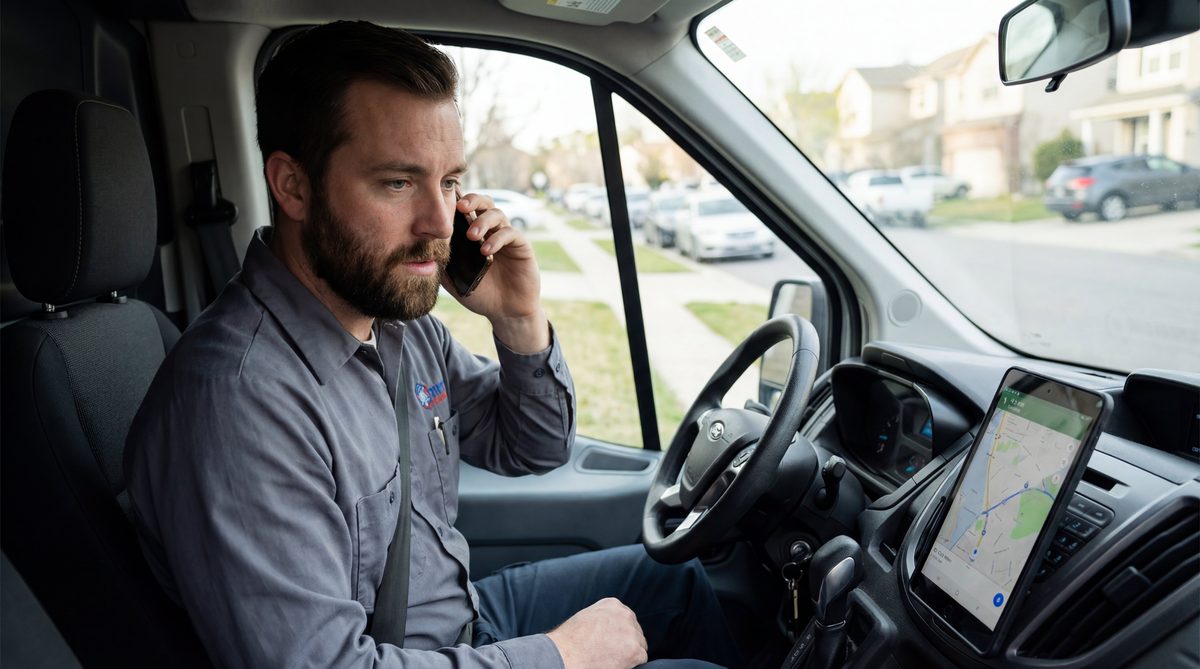
A 20-truck plumbing operation has a front-desk person, a dispatcher, and a CSR queue. When the phone rings, somebody picks up by ring three. The owner does not even hear it.
A 1-truck shop has you. You are the dispatcher AND the technician AND the bookkeeper AND the marketing department.
The cost of that structure shows up in one place: the phone. Industry data from ServiceTitan and similar field-service platforms suggests contractors miss 40 to 60 percent of inbound calls during business hours, and the number gets worse after 5 PM. For a small plumbing shop, every one of those missed calls is a job you would have closed if a human had picked up.
Larger shops can absorb the loss. They have 12 trucks running. A missed call here or there gets averaged out across volume.
You cannot. One missed water heater is your Tuesday. One missed re-pipe is your week. The smaller the shop, the higher the dollar impact of a single dropped call.
That is the entire case for an answering service at this scale. Not productivity. Not professionalism. Revenue protection.
of inbound calls to residential HVAC shops arrived outside business hours at the June 2025 peak. The plumbing version of that number is whatever share of your calls lands after 5 PM, and for a single-truck shop with no after-hours coverage, every one of those goes to voicemail and then to your competition.
Source: ServiceTitan State of the TradesWhat an Answering Service Actually Does for a 1-Truck Shop (vs a 50-Truck Operation)
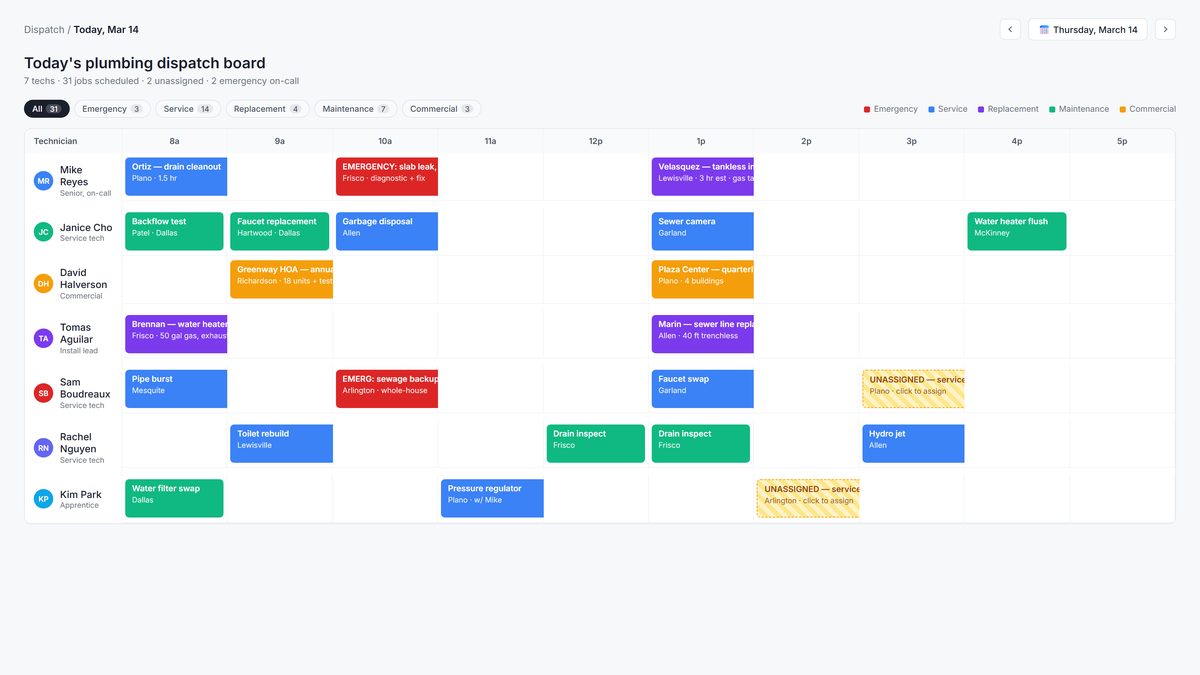
The phrase “answering service” gets used by everyone from a $19-a-month voicemail upgrade to a $3,000-a-month enterprise call center. The product you need depends entirely on the size of your operation.
For a 50-truck operation, an answering service is an overflow system. The primary CSR team handles 90 percent of calls. The answering service catches the spillover during shift changes, lunch rush, and the 30 minutes after 8 AM when 14 customers all dial at once. It is a backstop.
For a 1-truck shop, an answering service is the primary call coverage. There is no CSR team to overflow from. The “answering service” IS the dispatch desk. It is the first voice every customer hears, every time.
That distinction matters because it changes what good looks like.
A backstop answering service can be slow. Two-minute pickup times, message-only handling, and a 30-minute callback are tolerable when 90 percent of calls already got answered live by your own team.
A primary answering service for a single-truck shop has to do four things well:
- Answer fast. Two seconds, not two minutes. If the caller hits voicemail or hold music, you have lost the speed-to-lead game already.
- Answer in your business name. Not “ABC Answering Service, what is the name of the business you are trying to reach?” The caller should think they are talking to your front office.
- Capture the right information. Name, address, phone, type of problem, when they need someone there. Enough that you can decide whether it is a today-job or a tomorrow-job before you even pick up the lead.
- Either book the appointment or text you the qualified lead inside 60 seconds. The slowest acceptable handoff is an SMS with the customer’s name, problem, and callback number while they are still warm.
If the service cannot do those four things, it is not solving the 1-truck problem. It is just running a slower voicemail box.
AI vs Human Pricing Math at Solo-Plumber Scale
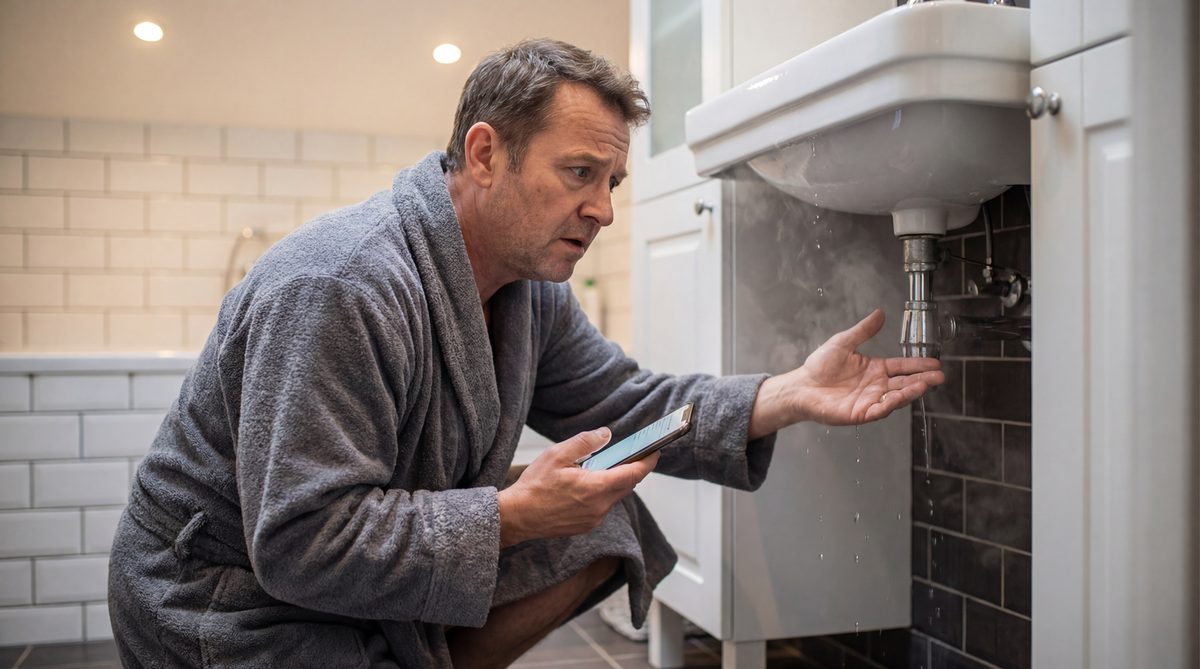
This is where the per-minute pricing model collapses for small shops.
Traditional human answering services (Ruby, AnswerConnect, ReceptionHQ, Nexa, AnswerForce) bill by the minute. Most plans start around $1.50 to $2.25 per minute, with bundled-minute packages that look cheap on paper.
The problem is variance.
A slow week, you use 80 minutes. A storm week with frozen-pipe calls, you use 600. The bundled plan covers the slow week. The busy week blows past your minute bucket and triggers overage rates of $1.75 to $3.00 per minute. The weeks where you most need coverage are the weeks where the bill spikes.
For a single-truck shop running at $30,000 to $80,000 a month in revenue, that variance can mean an answering service bill that swings from $250 in March to $1,400 in February. Hard to budget around.
AI answering service plans use flat monthly pricing instead. Ignitvio’s plans are flat-rate (structure on the pricing page), and the price does not move based on call volume. A storm week costs the same as a slow week.
Run the math at solo-plumber scale:
- One missed water heater ticket: $1,200 to $2,000
- One missed re-pipe lead: $4,000 to $12,000
- One missed sewer line replacement: $3,500 to $9,000
A flat monthly plan pays for itself the first time it catches one job your old voicemail would have lost. The break-even is roughly one captured call per month. Everything after that is margin.
The per-minute model can absolutely make sense at higher volumes when call patterns are predictable. At 1-truck scale, predictability does not exist. Flat pricing wins.
See What Your Missed Calls Are Costing You
No-pitch, 15 minutes. We map your last 30 days of missed calls and put a dollar figure on the leak.
Book a 15-Minute AuditThree Concrete Scenarios Where the Service Pays for Itself
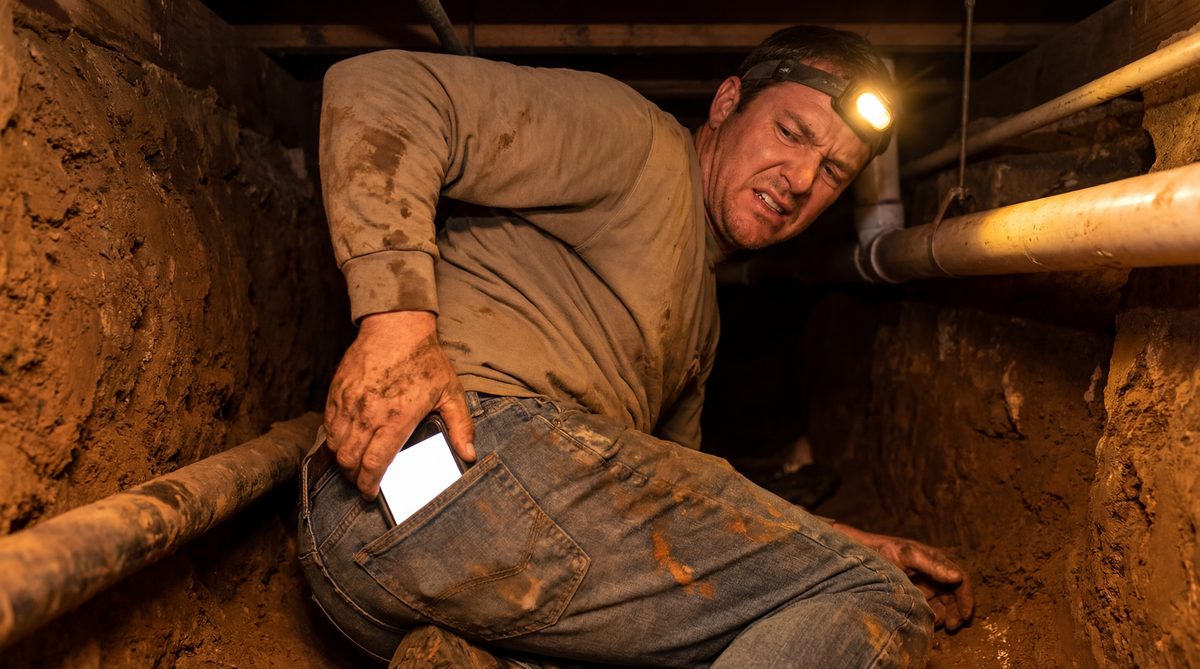
Theory is useless. Here are three real situations that decide whether your week ends green or red.
Scenario 1: Water Heater Leak, Saturday at 2 PM
You are at a Little League game with your kid. Phone rings, unknown number, you let it go because you are batting third inning.
The caller is a homeowner in your service area whose 40-gallon tank just split a seam. There is half an inch of water on the garage floor and rising. He found you on Google because you ranked third for “plumber near me.” He hits your voicemail. He calls the next plumber in the list 11 seconds later.
That guy answers on the second ring. He is at the customer’s house in 90 minutes. You see the missed call between innings and dial back. The homeowner already paid the deposit.
With an answering service handling that call: caller greeted in your business name within two seconds, problem categorized as urgent water-leak emergency, address captured, your “Saturday afternoon emergency” rate confirmed, SMS sent to your phone with name, address, phone, and a one-line summary. You decide if you can leave the game. You either book it or refer it to your backup. Either way, the customer feels handled. They do not dial the next plumber.
Scenario 2: Frozen Pipe, Sunday at 6 AM
It is 14 degrees outside. A pipe has burst in a customer’s crawl space. She is standing in her kitchen at sunrise, water shooting through her ceiling, calling every plumber in a 20-mile radius.
You are asleep.
Voicemail catches it. By the time you wake up and check at 8 AM, three other plumbers have already responded. One is at her house cutting drywall.
With an answering service: AI answers within two seconds at 6
AM. Customer says “burst pipe, water in the ceiling.” The service captures her address, asks if water is still flowing, recommends she shut off the main valve, sends you an immediate SMS marked URGENT. You wake up to a text, not a voicemail. You are on her porch by 7 AM. The competitors arrived later. You got the job.Scenario 3: Clogged Drain Call at 7 PM Tuesday
You are eating dinner with your family. You promised your kid you would not look at your phone during dinner.
It rings. You honor the promise. The caller is a tenant in a 12-unit apartment complex whose property manager just told her to find a plumber for an overflowing kitchen sink. The property manager would have paid your invoice tonight, then made you the preferred vendor for the whole building. 12 units. Recurring work. Two-year average customer value of $14,000 to $22,000.
She leaves a voicemail. You hear it at 9 PM. You call back. It goes to her voicemail because she has already booked someone else and she is asleep. You email the property manager the next morning. He never opens it.
With an answering service: call answered at 7
PM, problem classified, address captured, property manager flagged as a B2B opportunity (because the caller mentions “I am calling on behalf of the property manager”), appointment booked for tomorrow morning at 8 AM with a confirmation SMS sent to the tenant. You finish dinner. You start tomorrow with a booked job and a new B2B relationship.In all three scenarios, the difference between winning and losing the job is the first 12 seconds after the phone rings. That is what the service buys you.
Common Mistakes Solo Plumbers Make When DIYing Call Coverage

Most owner-operators do not start out paying for an answering service. They try to cover their own calls and hit one of these failure modes first.
Mistake 1: “I’ll just answer it on the way to the truck.” You will not. When you are mid-cut on a copper line, you cannot pick up. When you are under a sink, you cannot pick up. When you are crawling out of a slab, you cannot pick up. The math of physical plumbing work is incompatible with answering a phone live.
Mistake 2: Forwarding to your spouse. This works for about three months and then becomes a marriage problem. Your spouse is not trained on your scheduling, your pricing, or your service area, and she is now answering questions about hydrostatic pressure tests during dinner. Stop.
Mistake 3: Hiring a part-time CSR at 20 hours a week. $18 to $25 an hour, $1,400 to $2,000 a month, only available 20 hours a week. Your peak call volume is at 7 AM and at 6 PM. Her shift is 10 AM to 2 PM. Mismatch.
Mistake 4: Setting up an aggressive voicemail with a “for emergencies press 1” tree. Customers in a real emergency do not navigate IVR trees. They dial the next number. Voicemail with phone trees underperforms a clean answering service every single time.
Mistake 5: Relying on missed-call text-back as the only coverage. A missed-call text-back is a great backstop, but it does not book the appointment. The customer has already moved on by the time they read your SMS. Use missed-call text-back AS a layer, not AS your dispatch.
The pattern across all five is the same. Owner-operators try to plug the leak with the cheapest available option, and end up with a system that fails on exactly the calls that matter most: high-value emergencies, after-hours, weekend work.
The 5 Financial Realities Only Solo Plumbers Face
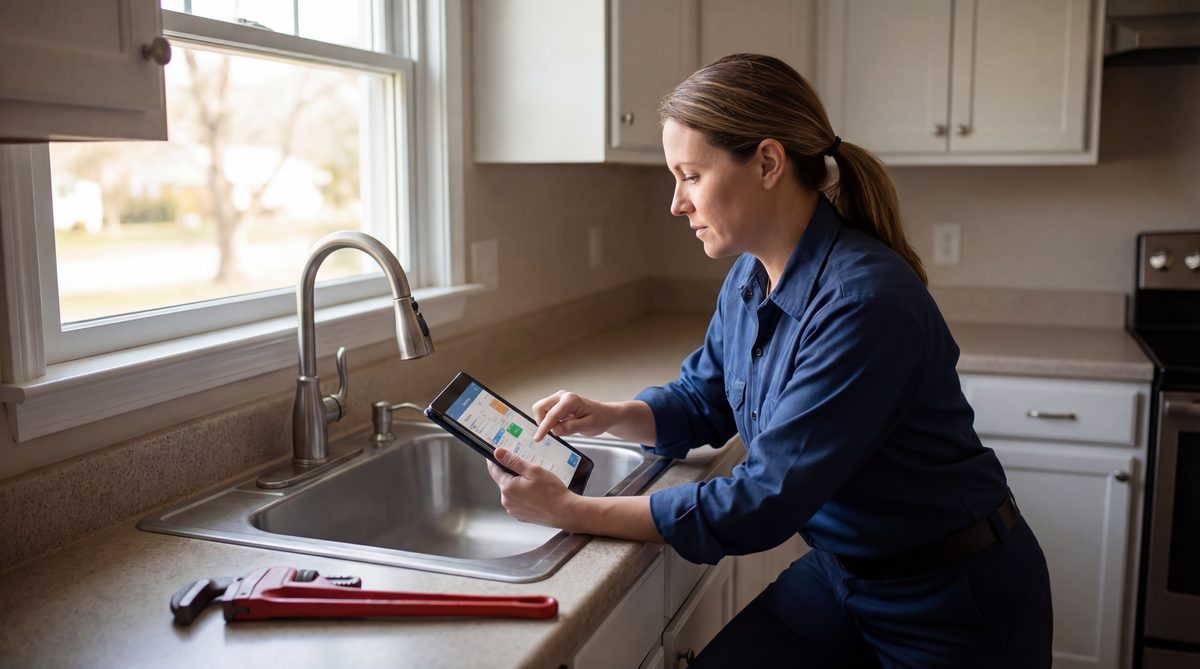
This is where the under-5-employee shop is structurally different from any larger operation.
Reality 1: Your time costs more than your CSR’s time, but you are doing both jobs. A 5-truck shop pays its CSR $20 an hour. The owner bills out at $185 an hour. If the owner spends 10 hours a week answering phones, the shop just paid $1,850 a week to do $200 a week of work. Solo plumbers do this constantly because there is no CSR to delegate to.
Reality 2: Variance hurts more. A 20-truck shop with a missed call loses 5 percent of one week’s revenue. A 1-truck shop with three missed water heaters loses 30 percent of one week’s revenue. Same percentage of missed calls, very different impact.
Reality 3: You cannot scale up coverage when you scale up marketing. When you ramp Google Ads or LSAs to push more leads, a larger shop adds CSR shifts to handle the increased call volume. You cannot. If you double your ad spend and you are the only person answering the phone, you double the missed calls, too. The cost-per-acquired-customer math gets worse, not better.
Reality 4: After-hours is most of your money. Plumbing emergencies happen on weekends, holidays, and at 6 PM. A 20-truck shop runs a dispatcher overnight. You go to bed. The answering service is what makes you “open” without keeping you awake.
Reality 5: Cash flow gaps from missed jobs hit your personal bank account. A missed $4,000 sewer line lead is not “the company’s lost revenue.” It is your house payment. When you are owner-operator scale, the company’s P&L is your household budget. The downside of a missed call is fully personal.
These five realities are why a small plumbing operator should not benchmark answering-service spending against a large shop. The ROI math is different at this scale. Cheaper coverage is more expensive, because missing one job costs you more.
How to Pick the Right Service for a 1-Truck Shop
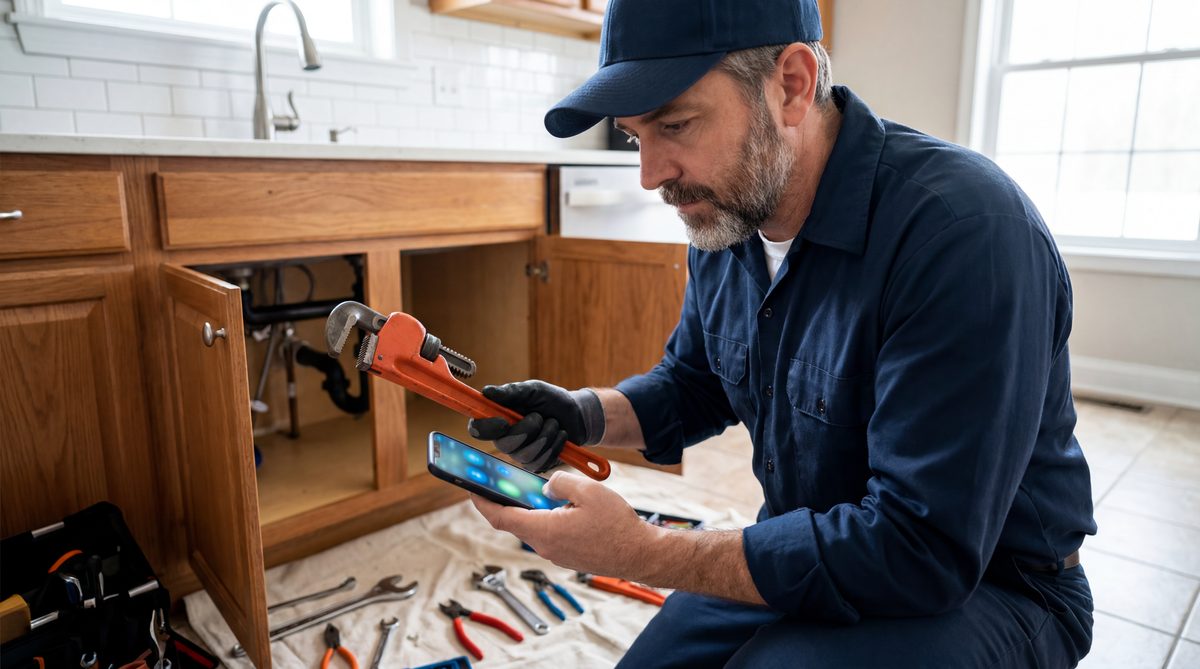
Three questions, asked in this order, will get you to the right vendor.
Question 1: Does pricing scale with call volume or stay flat? Flat pricing wins for solo shops. Variance kills budgeting.
Question 2: Does the service book directly into a calendar, or does it just take messages? Message-only services lose the speed-to-lead race. You want booking. If the service cannot put the appointment on your calendar while the caller is still on the line, the next plumber will.
Question 3: How fast is the pickup? Anything over 5 seconds is failure. Two to three seconds is the floor for AI. Human services typically run 8 to 30 seconds depending on staffing. Ask for a recorded sample call before you sign.
A few additional filters that matter at 1-truck scale:
- Bilingual coverage if your service area includes Spanish-speaking households. Important in Texas, California, Florida, Arizona.
- Integration with your scheduling tool. Google Calendar, Jobber, Housecall Pro, ServiceTitan. The service should drop the appointment directly there.
- After-hours rate awareness. You charge more on weekends. The service needs to quote your weekend price, not your weekday price.
- SMS confirmation to the customer. The caller should get a text within 60 seconds that confirms their appointment, your name, and your phone. Reduces no-shows.
A good rule of thumb. If you cannot test the service with three live calls of your own before signing, do not sign.
Frequently Asked Questions
Is an answering service worth it for a 1-truck plumbing shop?
What is the difference between an answering service and a virtual receptionist?
Will customers know they are talking to an AI?
Can the answering service handle pricing questions?
What happens if I am on a job and the customer is also calling me directly?
How does this compare to hiring a part-time CSR?
Stop Losing Jobs to the Next Plumber on Google
Flat-rate, predictable, scales with you.
Book a 15-Minute AuditThe Short Version
You cannot answer the phone with both hands holding a wrench. That is the entire problem. The rest of this post is just math around that one physical fact.
A single-truck plumbing shop loses more money to missed calls than to any other failure mode. Voicemail does not solve it. Phone trees do not solve it. Forwarding to your spouse does not solve it for long. A part-time CSR only covers 20 hours of a 168-hour week.
A flat-rate AI answering service does solve it. Two-second pickup, your business name on the greeting, appointment booked while the caller is on the line, SMS confirmation to the customer, SMS alert to you. Same monthly cost on a slow week as on a storm week.
At under-5-employee scale, that is the highest-ROI software dollar you can spend. It pays for itself the first month it catches one water heater.
If you want to see exactly how many calls your shop is currently missing and what they are worth, book a 15-minute audit. We pull the data, you decide what to do with it.

Jake Melendy
Founder, Ignitvio
Jake Melendy is the founder of Ignitvio. He spent 12 years in enterprise sales and sales leadership, including at Oracle, before building Ignitvio, which runs done-for-you outbound appointment setting for commercial contractors and B2B service companies. He writes about pipeline, trigger-based prospecting, and lead response.