Bilingual Answering Service: Serve Every Caller
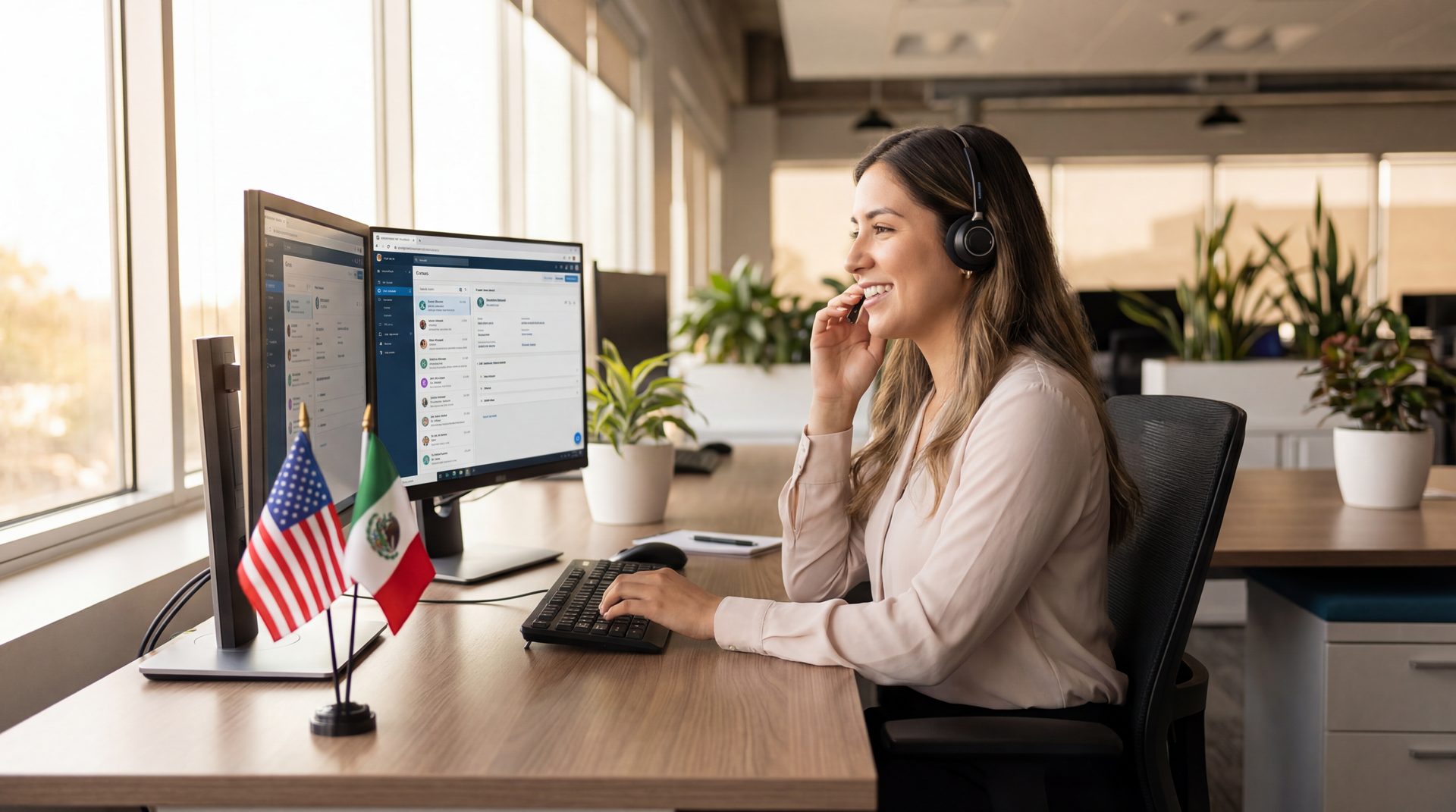
The Spanish-speaking market in the United States isn’t a niche. It’s one of the fastest-growing consumer segments in the country, and service businesses that can’t communicate with these callers are leaving real revenue on the table every single day.
A bilingual answering service closes that gap. Every caller — whether they speak English or Spanish — gets a professional response, their questions answered, and their appointment booked. No language barrier. No lost lead.
This post breaks down the size of the opportunity, what it costs you to ignore it, and how to pick a bilingual answering service that actually converts callers into customers.
- 41.8 million native Spanish speakers live in the US (US Census Bureau), that is 13.5% of the total population.
- 76% of consumers prefer to buy in their native language (Common Sense Advisory). If you cannot serve them in Spanish, someone else will.
- Hispanic buying power has passed $3.4 trillion (Nielsen). Service businesses in bilingual markets are competing for a massive share.
- A bilingual answering service captures callers that monolingual competitors lose by default.
1. The Market Opportunity You Can’t Afford to Ignore

The numbers aren’t subtle. According to the US Census Bureau, 41.8 million people in the United States speak Spanish as their native language, making it the second most spoken language in the country by a wide margin. That’s 13.5% of the population, and the number’s climbing.
The US Census Bureau projects the Hispanic population will reach 111 million by 2060. This isn’t a temporary trend. It’s a structural demographic shift that’s already reshaping local economies from Miami to Phoenix to Charlotte.
For service businesses, the takeaway is pretty straightforward. A plumbing company in Houston where 44% of the population speaks Spanish at home isn’t operating in an English-only market. An HVAC contractor in Los Angeles, a landscaping crew in Dallas, a roofing company in San Antonio — these businesses serve communities where Spanish is the primary language for millions of potential customers.
Nielsen puts Hispanic buying power at $3.4 trillion. That’s not a rounding error. That’s a consumer base larger than the GDP of most countries, and a huge chunk of that spending goes to home services, auto repair, medical care, and the trades.
in Hispanic buying power per Nielsen. Service businesses that can't communicate in Spanish are competing for a shrinking slice of their local market.
Source: Nielsen2. The Language Barrier Problem

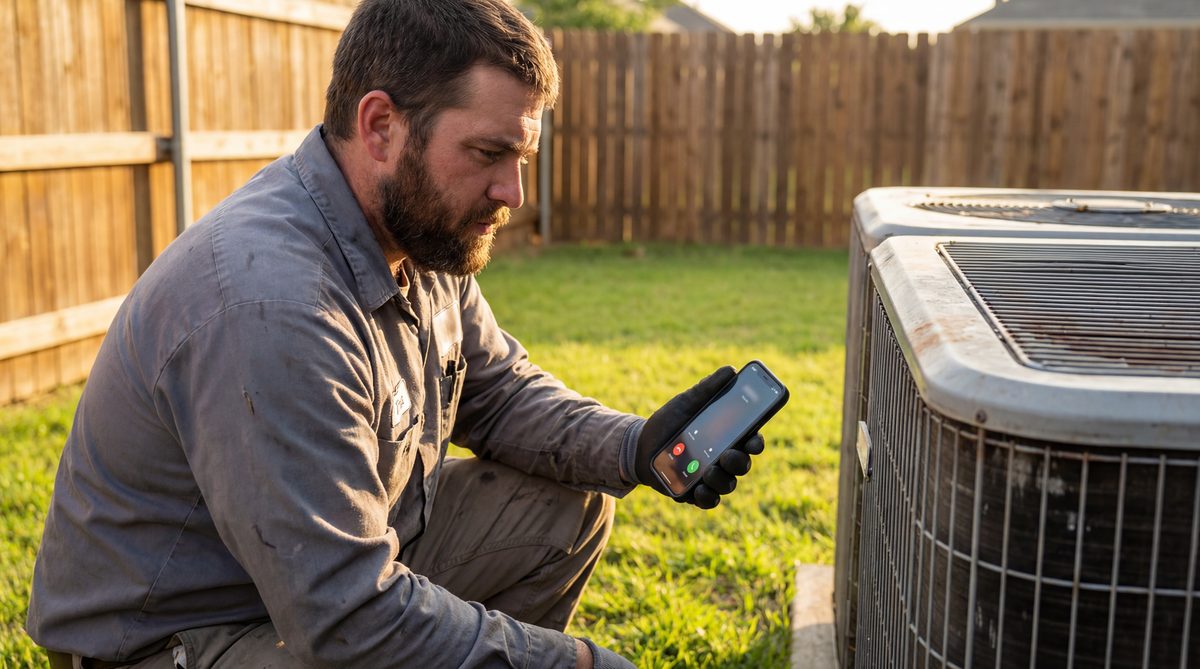
When a Spanish-speaking homeowner calls a service business and hears only English, the call ends. Not because they don’t need the service. Because they can’t communicate the problem. That’s a lost customer, and it happens silently — you never see it in your call logs as a missed opportunity because the caller simply hangs up or never calls in the first place.
Research from CSA Research found that 40% of consumers won’t buy from a website or business that doesn’t communicate in their language. A separate study by Common Sense Advisory puts the preference even higher: 76% of consumers prefer to buy products and services in their native language.
Take a pest control company in Miami. A homeowner finds termites in their kitchen. They Google “control de plagas cerca de mi.” They call the first result. If nobody on the line speaks Spanish, that homeowner isn’t leaving a voicemail in a language they’re not comfortable with. They hang up and call the next company.
Same pattern for an electrician in Phoenix, a dentist in El Paso, or an auto repair shop in Chicago. The caller has an urgent need, money to spend, and they’re ready to book right now. The only barrier is language — and it’s entirely within the business’s control to remove it.
According to Think with Google research, Spanish keyword searches on Google grew as much as 200% across key categories in just three years. The demand isn’t just growing in person. It’s growing in how people search for and find local services online.
3. Revenue You’re Leaving on the Table

The financial impact here isn’t abstract. A home services business in a market with a 30% Hispanic population that can’t serve Spanish-speaking callers is functionally operating at 70% capacity. Not because they turned anyone away on purpose, but because a big chunk of potential customers self-selected out the moment they couldn’t communicate.
Let’s make it concrete. A roofing contractor in San Antonio averages $8,500 per job. ServiceTitan data shows the average home services business misses 27% of inbound calls. For a company fielding 100 calls a month in a market where 35% of callers may prefer Spanish, that’s roughly 35 Spanish-preference callers. If even half of them can’t get service in their language and hang up, that’s 17 lost leads per month.
At a 25% close rate and an $8,500 average job, those 17 lost leads translate to roughly $36,000 in lost revenue per month. Over a year, that number approaches half a million dollars. The exact figures vary by market and trade, but the direction’s always the same: language barriers cost real money.
And the problem compounds — because these callers don’t just disappear from the market. They call a competitor. A landscaping company in Dallas that answers in both English and Spanish isn’t just capturing its own leads. It’s capturing the leads that monolingual competitors are losing by default.
Find out how many Spanish-speaking callers you're missing
We'll analyze your call data and local demographics to show you exactly what language barriers are costing your business. Free. Takes about 10 minutes.
Get Your Free Revenue Audit4. How Bilingual Answering Services Work
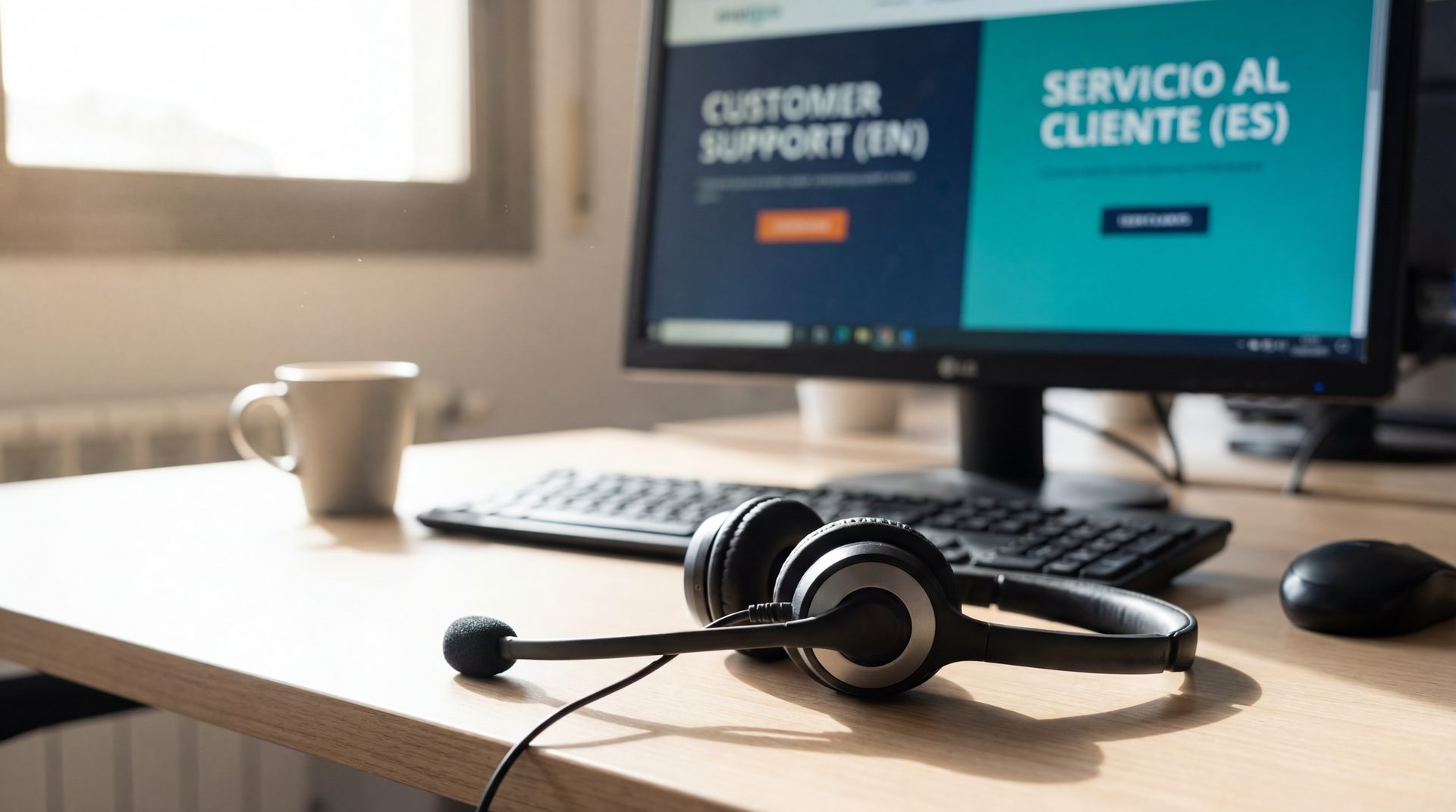
A bilingual answering service answers your business phone in both English and Spanish, either through live bilingual agents or AI-powered voice technology. The caller hears a greeting in their preferred language and the conversation continues naturally from there — qualifying the lead, gathering job details, and booking the appointment.
There are two main approaches. Traditional bilingual answering services staff live agents who speak both languages. The caller gets routed to an available Spanish-speaking agent, who takes a message or transfers the call. The limitation? Availability. Bilingual agents are in high demand, and during peak hours or after hours, the Spanish-speaking agent may not be available — which defeats the entire purpose.
AI-powered bilingual answering services handle language detection automatically. The system identifies the caller’s language within the first few seconds and switches instantly. No routing delay, no “please hold while we find a Spanish-speaking representative,” and no coverage gaps at 9 PM on a Saturday when the bilingual agent’s off shift.
When you’re evaluating a bilingual answering service, here are the differentiators that actually matter:
- Language detection speed. The system should identify the caller’s language within seconds, not minutes. Any delay frustrates the caller and increases hang-ups.
- Conversation quality in both languages. Being technically bilingual isn’t the same as being conversational. The service needs to handle industry-specific terminology in Spanish — “fuga de agua,” “sistema de aire acondicionado,” “inspección de techo” — not just generic phrases.
- Live booking in both languages. If the service can book appointments in English but only take messages in Spanish, Spanish-speaking callers still get a worse experience. The goal is parity.
- After-hours coverage. According to ZoomInfo’s sales follow-up research, 35-50% of sales go to the vendor that responds first. If your bilingual coverage disappears after 5 PM, you’re losing the callers who need you most.
5. AI vs. Human Bilingual Operators

The choice between AI and human bilingual operators comes down to three things: consistency, availability, and cost.
Human bilingual agents bring warmth and cultural nuance. A live Spanish-speaking agent can pick up on tone, handle emotional callers (a homeowner dealing with flood damage, for example), and build rapport in ways that feel personal. The trade-off? Human agents have shifts, call in sick, take breaks, and cost significantly more per minute — especially for overnight and weekend coverage.
AI bilingual answering services offer something human-staffed services simply can’t: guaranteed availability in both languages at every hour. There’s no scenario where “the Spanish agent is on another call” or “our bilingual staff is only available Monday through Friday.” The AI answers every call, in the correct language, immediately.
And the technology’s gotten to the point where callers often can’t tell they’re speaking with an AI. Modern voice AI handles natural conversation, understands context, and responds in fluent, industry-appropriate Spanish. It doesn’t translate English scripts word-for-word — it carries on an actual conversation in the caller’s language.
For most service businesses, the practical answer is AI-powered bilingual answering with human escalation for complex situations. The AI handles the volume — the 80% of calls that are straightforward qualification and booking — while true edge cases get routed to a person.
6. How Ignitvio’s Bilingual AI Handles Every Call
Ignitvio’s Voice AI is built to serve bilingual markets from the ground up. It detects the caller’s language within the first few seconds and conducts the entire conversation in that language — not a translated script, but a natural, fluent interaction in Spanish or English.
Picture a contractor in South Florida whose Spanish-speaking callers hang up at an English greeting a few dozen times a month. With bilingual answering live, the system answers in two to three seconds, qualifies the caller, and books the appointment directly to the contractor’s calendar. The contractor wakes up to booked jobs from callers who would previously have been lost completely.
The platform also connects to missed call text back in both languages. If a call doesn’t connect for any reason, the caller gets an immediate SMS follow-up in their language. Combined with review automation that sends review requests in the customer’s preferred language, the entire customer experience stays consistent from first call to five-star review.
- Spanish-speaking callers hang up or struggle through English
- After-hours = zero bilingual coverage
- Bilingual staff unavailable on weekends and holidays
- Message-taking only; callback required in both languages
- No visibility into how many Spanish-speaking leads you lose
- Every caller served fluently in their preferred language
- 24/7/365 bilingual coverage, no gaps
- Instant language detection, no hold times
- Live booking to your calendar in English and Spanish
- Full transcripts and analytics by language
7. Getting Started with Bilingual Answering
Setting up bilingual answering with Ignitvio takes less than a week. You provide your business details, service area, and any specific terminology your callers use. The AI gets configured to handle both languages with your business name, your services, and your scheduling preferences.
The demand in bilingual markets is already calling; the language gate is what filters it out. Every Spanish-speaking caller who previously went to voicemail or to a competitor who could answer in Spanish becomes a captured lead, and at property-management contract values, a handful of those per month is meaningful recurring revenue.
The ROI math is simple. If you operate in a market where even 15% of your potential callers prefer Spanish, and your average job’s worth $500 or more, a single recovered lead per week pays for the service several times over. Most businesses in bilingual markets recover far more than one.
Want to see what bilingual answering would look like for your specific market? Start with a free audit. We’ll analyze your service area demographics, estimate your Spanish-speaking call volume, and show you exactly what those missed connections are costing you.
Stop Losing Spanish-Speaking Leads
41.8 million native Spanish speakers in the US. Find out how many are calling your business and hanging up. No commitment required.
Get Your Free Revenue Audit
Jake Melendy
Founder, Ignitvio
Jake Melendy is the founder of Ignitvio. He spent 12 years in enterprise sales and sales leadership, including at Oracle, before building Ignitvio, which runs done-for-you outbound appointment setting for commercial contractors and B2B service companies. He writes about pipeline, trigger-based prospecting, and lead response.