How to Find Shippers as a Freight Broker: The 2026 Direct-Shipper Playbook

- Loads and shippers are two different hunts. Load boards (DAT, Truckstop) keep your trucks moving, but they put you in a margin race against every other broker pulling the same posting. Direct shippers are where durable margin lives.
- The best shipper data is public and underused. FMCSA carrier records, U.S. Census import/export filings, and bill-of-lading data tell you who is moving freight, on what lanes, and how often, before a single load ever hits a board.
- Niche down before you scale out. Brokers who own one lane or one commodity close faster than generalists, because a shipper trusts the broker who already understands their freight.
- Cold outreach still works when it is fast and specific. Email, LinkedIn, and phone all convert, but the sequence that wins names the shipper’s exact lane and follows up five to eight times. Most brokers quit after one.
- The broker who responds first wins the account. Speed to lead is the single biggest predictor of who books the shipper, and no human desk answers every call, text, and form fast enough on its own.
Finding Shippers Is a Different Game Than Covering Loads
Walk any freight brokerage and you will hear two words used as if they mean the same thing: loads and shippers. They are different hunts entirely.
A load is a single shipment that needs to move today. You find loads on boards like DAT and Truckstop, you cover them, you collect a margin that the spot market sets, and tomorrow you start over. A shipper is the company that generates loads, week after week, lane after lane. Land a shipper and you are not closing one transaction. You are opening a relationship that can feed your trucks for years.
The reason this distinction matters for anyone searching how to find shippers is economics. On a load board, you compete with every broker who can see the same posting. The party with leverage sets the price, and your margin gets squeezed from both sides. When you source a shipper directly, you control the lane, you set the terms, and your margin stops being a daily knife fight.
Go read what brokers actually say about this. The r/FreightBrokers subreddit repeats the same hard-won lesson: the operators who survive their first two years are the ones who stop living on the boards and start building a direct book. The math is consistent, so the advice is consistent.
This guide walks the seven channels that actually surface direct shippers, in roughly the order most successful brokers add them, and then closes on the thing that decides who wins the account once you have found it.
Channel 1: Use Load Boards for Recon, Then Get Off Them
Load boards get a bad reputation in shipper-sourcing conversations, and that is unfair. Using them is fine. Living on them is the mistake.
DAT and Truckstop are the two dominant boards in North American trucking, and both carry far more than load postings. Used as a reconnaissance tool, a board tells you which companies are pushing freight on the lanes you want, how frequently, and at what rates. When you see the same freight posted on the same lane every week, you are looking at a shipper with a recurring need and, often, a broker relationship that is not serving them well.
The move is to work backward. Identify the freight, identify the company generating it, then take that relationship off the board and direct. Tools that surface rate trends and lane history, including offerings from DAT, Truckstop, and analytics platforms like TransVirtual and Truckertools, let you walk into a shipper conversation already knowing their freight. Treat the board as the first ring of a funnel: it keeps your trucks earning while you build the direct book that eventually replaces it.
The U.S. trucking industry moved more than $700 billion in freight in a recent year, and roughly three-quarters of all domestic freight tonnage moves by truck. The shippers behind that volume are the addressable market every broker is competing for.
Source: American Trucking AssociationsChannel 2: Mine FMCSA and Import/Export Data Before Your Competitors Do
This is the channel most brokers know exists and almost none work systematically. It is also the highest-signal source of direct shippers available, and most of it is free.
Start with the FMCSA. The Federal Motor Carrier Safety Administration publishes a public registry of carriers, brokers, and the companies tied to them. You can filter by location, authority type, and operating status to build lists of active freight operators in a region. It will not hand you a shipper’s procurement contact, but it tells you who is real, who is active, and where they sit.
The richer vein is trade data. Every ocean import into the United States generates a bill of lading, and U.S. Customs makes much of that data available. Services that aggregate it, along with the U.S. Census Bureau’s own trade statistics, let you see which companies are importing what, in what volume, and through which ports. An importer moving forty containers a month through Long Beach has drayage and inland freight needs that a broker can serve. That is a shipper with a known, measurable volume, and you found them before they ever posted a load.
Pair the two. FMCSA tells you the operating landscape. Import and export data tells you who has freight and how much. Cross-reference, and you have a prospecting list that is verified, lane-specific, and almost nobody else on the spot market is working.
Channel 3: Pick a Lane or a Commodity and Own It
Here is the counterintuitive part. The fastest way to find more shippers is to stop trying to serve all of them.
A generalist broker walks into a cold call knowing nothing specific about the prospect’s freight. A specialist walks in already speaking the language. If you have decided you broker refrigerated produce out of California’s Central Valley, you know the seasonality, the lane congestion, the equipment, the appointment headaches at the receivers. A produce shipper hears thirty seconds of that and treats you differently than the tenth generalist who called that week.
Niching works for finding shippers for three reasons:
Your prospect list gets sharper
When you target one commodity or one lane, your FMCSA and trade-data filters get precise. You are no longer building a list of everyone. You are building a list of the few hundred companies that move your freight.
Your outreach lands
A cold email that names the prospect’s exact lane and a real pain on it gets opened and answered. A generic email about capacity gets deleted. Specificity is the whole game in cold outreach, and a niche gives you specificity for free.
Referrals compound
Shippers in the same vertical talk to each other. Become the reefer broker that three produce shippers trust, and the fourth arrives as a warm introduction.
You can always expand later. Most durable brokerages started by owning something small and defensible, then widened from a position of strength.
Channel 4: Run Cold Outreach That Names the Lane
Once you have a sharp list, you have to reach the people on it. Cold outreach is where most shipper-sourcing efforts die, not because the channel is broken, but because brokers run it lazily.
Three channels carry the load, and they work together:
Email is your volume channel. It scales, it documents, and it lets you lead with the one thing that earns a reply: the prospect’s exact lane and a specific reason you are worth ten minutes. Skip the capacity boilerplate. Open with their freight.
LinkedIn is your warmth channel. A connection request and one relevant comment before you pitch turns a cold contact into a recognized name. Logistics and supply-chain managers live on LinkedIn, and a broker who shows up there with lane-specific insight stands out from the inbox crowd.
Phone is your close channel. Email and LinkedIn open the door. The phone is where you book the conversation. Brokers who only email plateau, because the highest-intent prospects want to talk before they trust you with their freight.
The number that decides everything is follow-up. Industry sales research has found for years that most sales require five or more follow-up touches, while the large majority of salespeople give up after one or two. The brokers who win shippers run sequences of five to eight touches across all three channels over two weeks, then circle back a month later. Persistence is the unglamorous edge.
Roughly 80% of sales require five or more follow-up touches to close, yet a large share of salespeople stop after the first. The gap between those two numbers is where most shipper relationships are won or lost.
Source: Invesp sales follow-up researchChannel 5: Work Referrals and Reactivation Before Cold Lists
The cheapest shippers to find are the ones already connected to you. Brokers chasing cold lists while ignoring their own network are leaving the easiest wins on the table.
Referrals are the highest-trust channel in freight. A happy shipper knows other shippers, often in the same vertical with the same freight. Carriers know shippers too, because they deliver to them every week. A direct request to a satisfied customer or a reliable carrier for one introduction outperforms a hundred cold emails, and referrals travel inside a vertical, which is one more reason niching pays.
Reactivation is the most overlooked source of all. Every brokerage has a graveyard of shippers it quoted and lost, served once and never heard from again, or stopped following up with when a contact left. Those companies still move freight. A structured effort working back through old quotes, dormant accounts, and lapsed contacts surfaces shippers who already know your name. It is the warmest cold list you will ever build.
For a deeper look at the discipline of staying in front of leads long enough to convert them, our breakdown of why following up automatically beats following up manually applies the same idea to inbound calls.
Channel 6: Build a Web Presence Shippers Can Actually Find
Outbound finds shippers. A web presence makes shippers find you. The strongest brokerages run both, because inbound leads arrive pre-qualified and pre-trusting in a way cold prospects never do.
Shippers research before they reach out. A logistics manager with a recurring reefer headache will search for a specialist, read a few pages, and contact the broker who clearly understands that exact problem. A generic site that just says you move freight is invisible to that search. A focused page on your lane or commodity, written for the shipper who has that pain, shows up in the research and wins the click. You do not need to outrank DAT or Truckstop on broad terms. You need to own the narrow searches your niche shippers actually type.
If you want the broader framework for turning a logistics website into a lead source, the canonical resource is our 3PL and freight brokerage growth hub, which covers how the inbound and capture side fits together for logistics operators specifically.
See where your brokerage is losing shippers
We'll map where inbound shipper inquiries are leaking from your phone, forms, and follow-up, and show you what it's costing in lost accounts. Takes about 10 minutes.
Run the Free AuditThe Channels Compared: Where to Spend Your Hours
No single channel finds enough shippers on its own. The right mix depends on where your brokerage is today: a new desk needs fast wins, an established book needs durable ones. Here is how the six stack up.
- Load boards (DAT, Truckstop) as recon
- FMCSA + import/export data
- Niching by lane or commodity
- Cold outreach (email, LinkedIn, phone)
- Referrals and reactivation
- Web presence and SEO
- Day one. Keeps trucks earning and reveals which companies post freight repeatedly.
- Highest-signal cold source. Verified, lane-specific shippers almost no one else is working.
- Before you scale outreach. Makes every other channel sharper and your close rate higher.
- Your volume engine. Wins on specificity and relentless five-to-eight-touch follow-up.
- Highest trust, fastest close. Mine your own network and dormant accounts first.
- Compounding inbound. Slow to build, but pre-qualified shippers arrive ready to talk.
There is a pattern in that table worth naming. The channels at the top of the trust ladder, referrals and inbound, deliver shippers who are already leaning toward yes. The channels at the bottom deliver volume but demand speed and persistence to convert. Most brokers over-invest in the bottom and under-invest in the top.
And every one of these channels ends at the same chokepoint: a shipper reaches out, and someone has to respond before a competitor does.
The Part Almost Every Broker Gets Wrong: The Broker Who Responds First Wins
You can run every channel above flawlessly and still lose the shipper. Here is how it happens.
A logistics manager finally decides to test a new broker. They fill out a form on three brokerage sites, or they call two numbers from a quick search. Whoever engages first, with a real human conversation rather than a voicemail, gets the first quote, sets the anchor, and builds the relationship before anyone else picks up. By the time broker number two calls back the next morning, the freight is already moving with someone else.
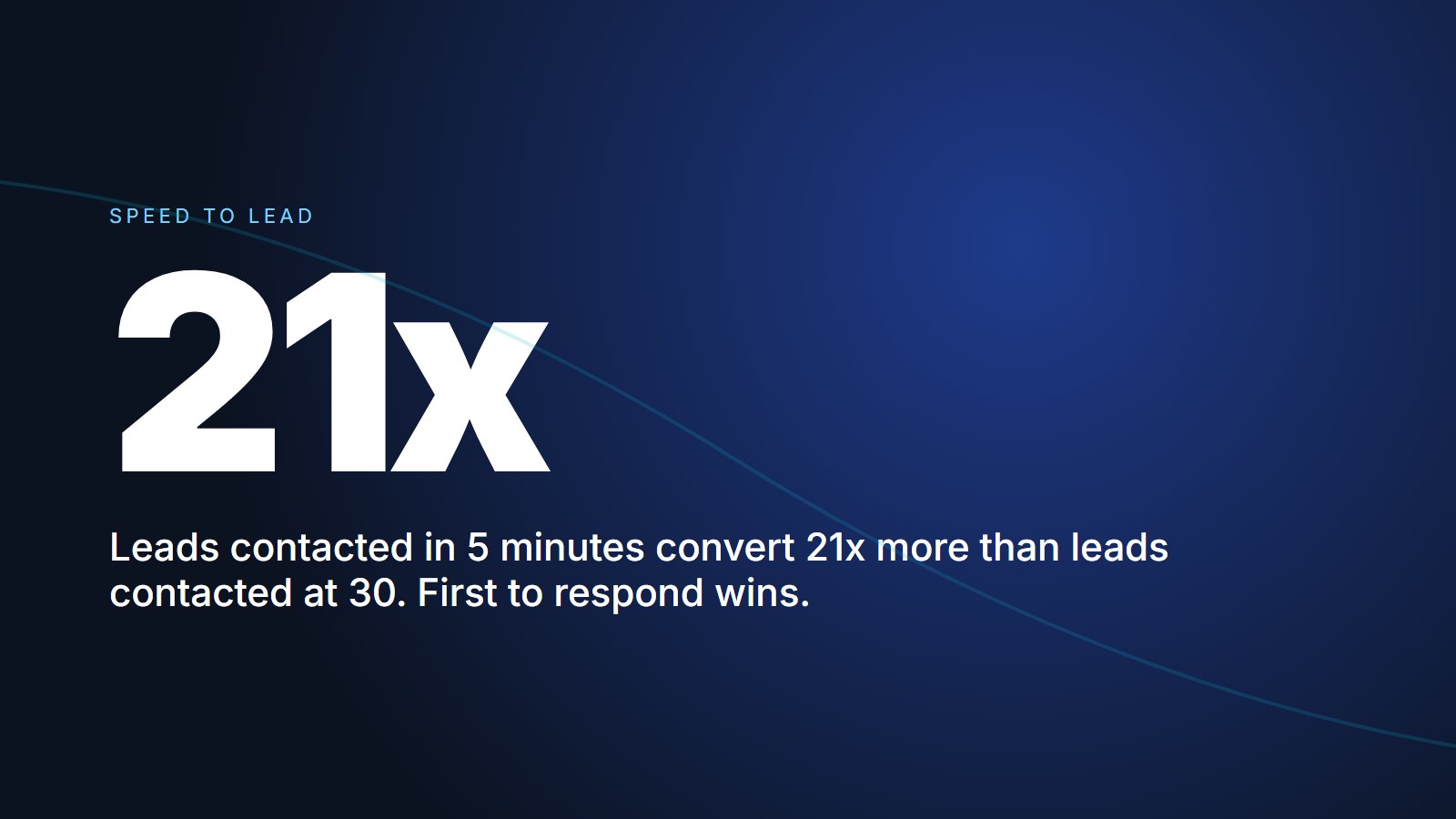
This is the speed-to-lead principle, and the data behind it is brutal. A widely cited lead-response study found that responding to an inbound inquiry within five minutes makes you many times more likely to qualify and win that lead than waiting even thirty minutes. After the first few minutes, the odds fall off a cliff. We covered the full math and the research behind it in our complete guide to speed to lead for service businesses, and the dynamic is identical in freight: the shipper is shopping, and first contact usually wins.
Inbound leads contacted within five minutes are roughly 21 times more likely to qualify than leads contacted at thirty minutes. For a shipper comparing brokers, the first real conversation usually sets the relationship.
Source: Lead Response Management Study (Oldroyd / MIT)The problem is structural. A broker is on the phone covering a load when the next shipper inquiry comes in. A form fills out at 6 p.m. after the desk has gone home. An importer you found in trade data finally calls back, and the call goes to voicemail because everyone is on the line. Each of those is a found shipper, sourced through real work, lost at the finish line to a slow first response.
You cannot out-hustle this with willpower. The shipper inquiries do not arrive evenly. They cluster, they come after hours, and they land while your team is already busy. The reliable fix is a system that answers, qualifies, and follows up the instant a shipper reaches out, no matter what your desk is doing.
Where Ignitvio Fits: The Response and Follow-Up Layer
Ignitvio does not find shippers for you. The channels above do that. What Ignitvio does is make sure the shippers you find actually become accounts, by handling the response, the booking, and the follow-up that decide who wins the relationship.
When a shipper inquiry comes in, by phone, web form, or text, an AI voice agent answers in your brokerage’s name in seconds, qualifies the freight, captures the lane and the contact, and either books the next conversation or routes a hot lead to your team. No voicemail. No “we’ll call you back tomorrow” while a competitor closes the account tonight.
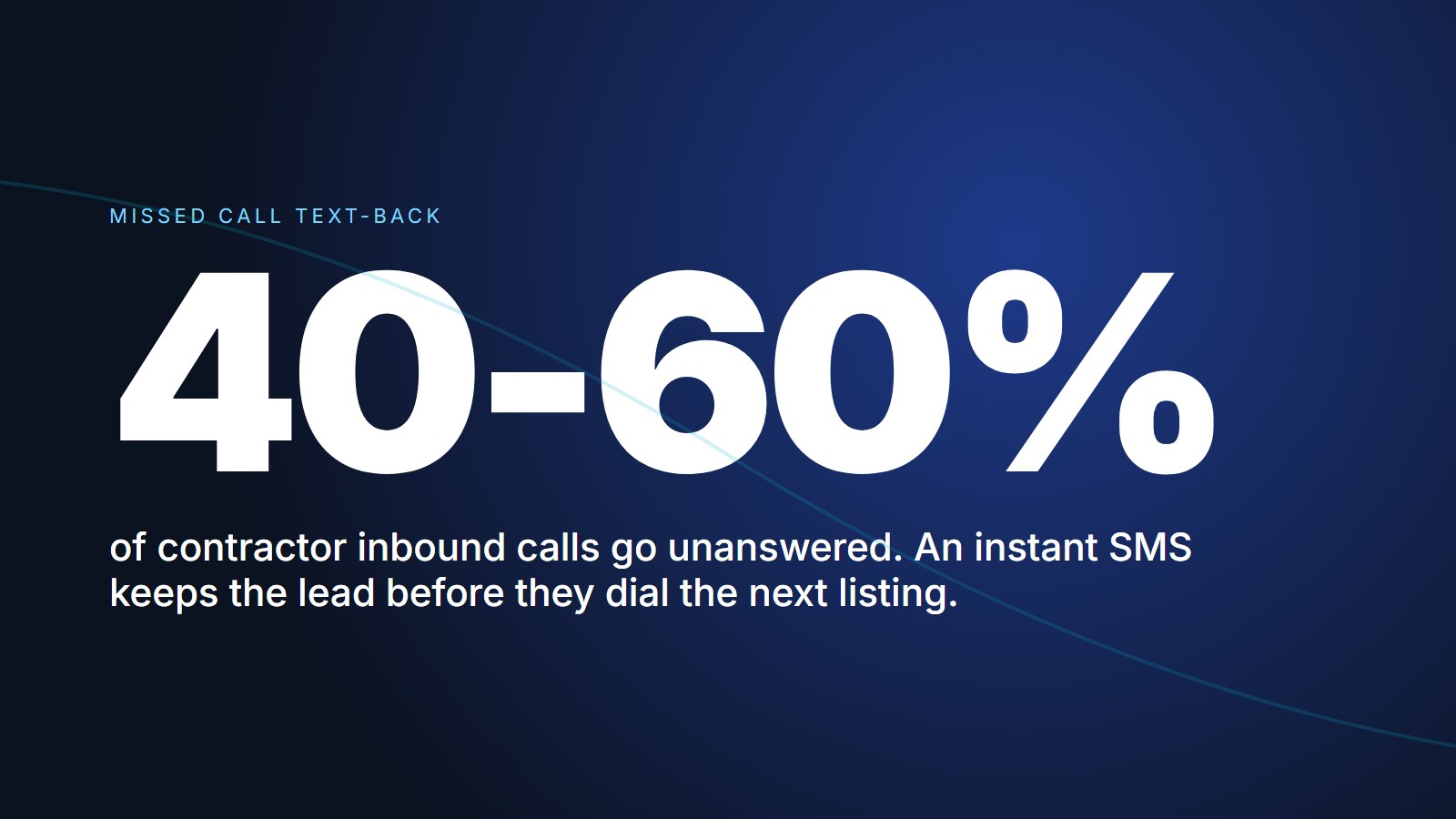
The same system catches the leaks. A shipper who calls after hours and hangs up gets an instant text back continuing the conversation. A form fill that would otherwise sit in an inbox triggers an automated follow-up cadence across text, email, and outbound voice, the same five-to-eight-touch persistence that wins cold outreach, run automatically on every inbound shipper lead. The platform scales by the modules you turn on, so you start with response and add follow-up and reactivation as your book grows.
For the full picture of how this works for logistics operators specifically, including how it connects to your existing systems, the 3PL and freight brokerage growth hub lays out the complete capture-and-conversion side. The sourcing is your job. Making sure no found shipper slips through is where the response layer pays for itself.
Stop losing found shippers to a slow first response
We'll show you exactly where shipper inquiries are leaking from your phone, forms, and follow-up, and what closing those gaps is worth.
Get Your Free AuditHow to Find Shippers: Frequently Asked Questions
What is the fastest way for a new freight broker to find shippers?
Are load boards like DAT and Truckstop useless for finding direct shippers?
How do I get a shipper's contact information from FMCSA or trade data?
How many follow-ups does it take to land a shipper?
Why does response time matter so much when finding shippers?
Found the shippers. Now make sure you win them.
See where your brokerage loses inbound shipper inquiries today, and what a faster response and follow-up layer would change. No commitment.
Run the Free Audit
Jake Melendy
Founder, Ignitvio
Jake Melendy is the founder of Ignitvio. He spent 12 years in enterprise sales and sales leadership, including at Oracle, before building Ignitvio, which runs done-for-you outbound appointment setting for commercial contractors and B2B service companies. He writes about pipeline, trigger-based prospecting, and lead response.