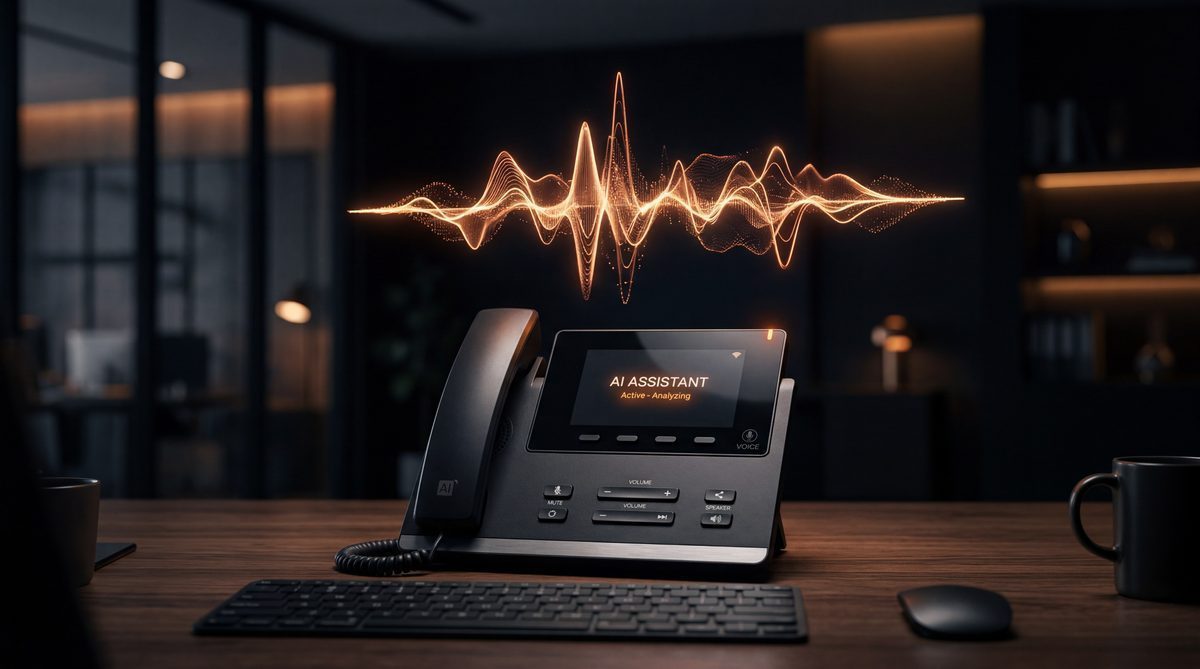
Medical Answering Service: 24/7 Call Handling
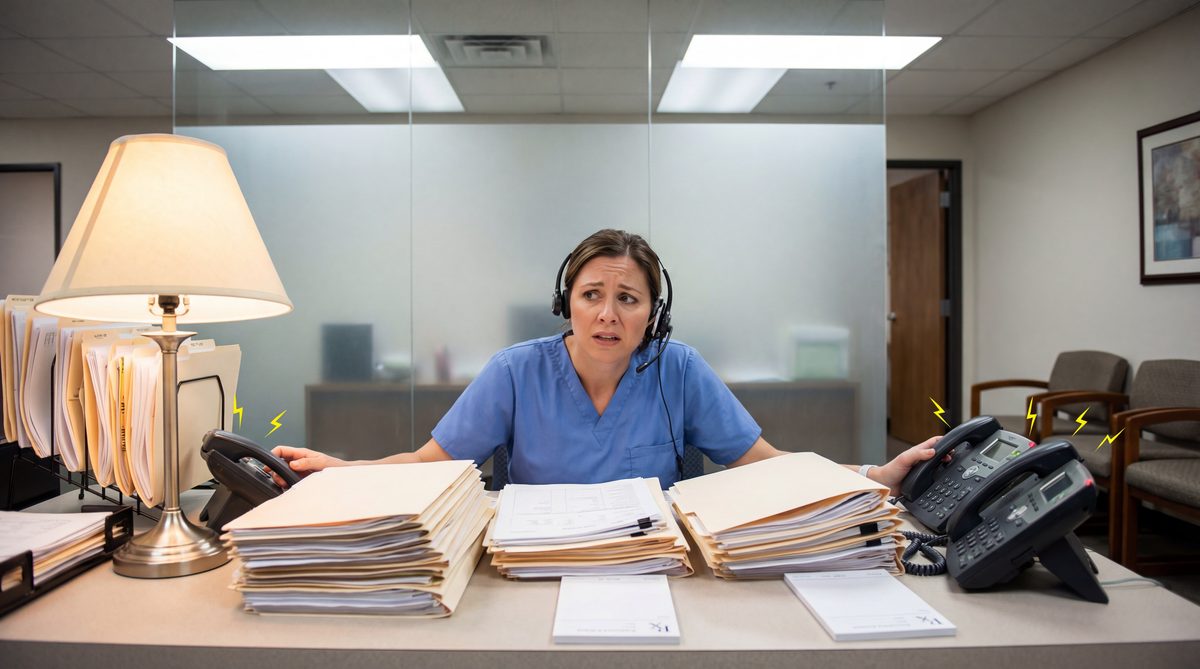
- The average medical practice receives 50+ patient calls per day, and up to 30% go unanswered during peak hours — each one a potential lost patient worth $2,000+ per year.
- After-hours calls represent 35% of total patient call volume, and most practices have no system to handle them beyond voicemail.
- AI-powered medical answering services can schedule appointments, triage urgency, and answer common patient questions — all while maintaining HIPAA compliance.
- Practices using automated answering recover an average of $4,200 per month in revenue that would have been lost to missed and abandoned calls.
The Medical Office Call Crisis
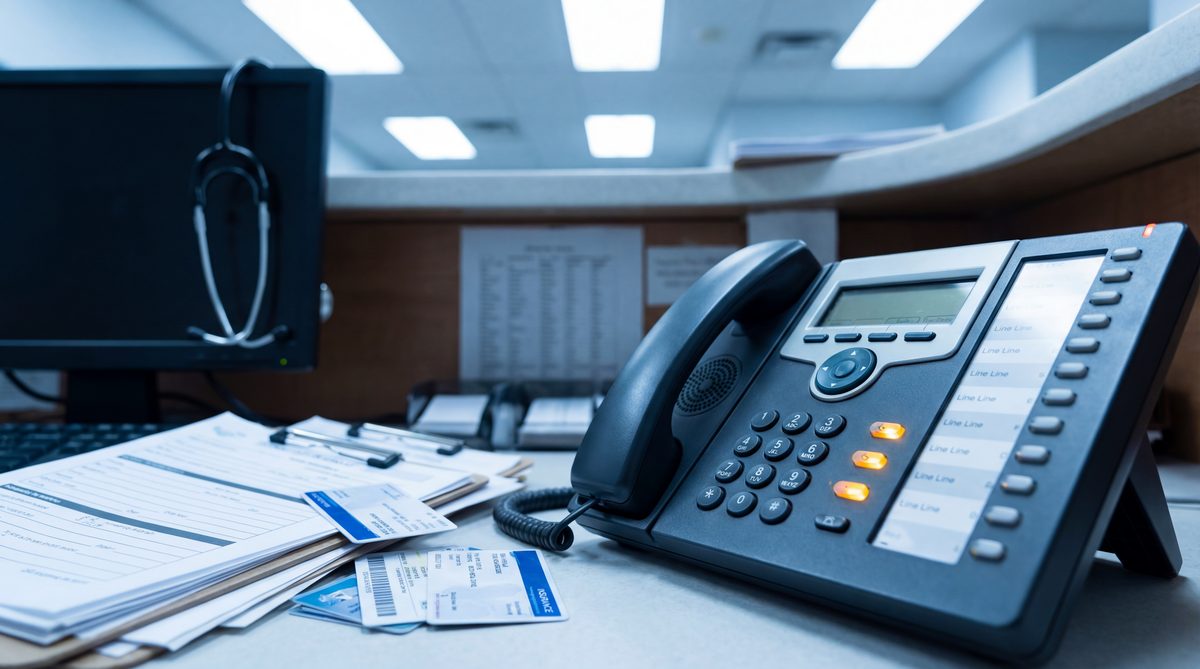
A typical primary care practice with three to five physicians handles between 200 and 400 inbound patient calls per week. That’s from MGMA’s practice operations data, and it only counts calls that actually get answered. The real demand is higher.
Those calls break down pretty predictably: appointment scheduling and rescheduling (roughly 40%), prescription refill requests (15-20%), insurance and billing questions (15%), test result inquiries (10%), and the rest split between referral coordination, pre-visit instructions, and general questions. Every call type has different urgency, different info requirements, different resolution paths. And a front-desk team of two or three people is supposed to triage all of them at once while also checking in the patients standing right in front of them.
No surprise what happens next. According to a Becker’s Hospital Review analysis, the number one patient complaint about medical offices is difficulty reaching someone by phone. The Medical Group Management Association found that practices miss up to 30% of inbound calls during peak morning hours (8 AM to 11 AM), when overnight voicemails, early-morning cancellations, and same-day appointment requests all slam into the same window.
Take a family medicine clinic in Dallas with four providers. They get an average of 53 calls per day. During the Monday morning surge, their two front-desk staff are handling check-ins for 30+ patients while the phones ring nonstop. By 10 AM, they’ve got 14 missed calls in the queue. Some of those callers will try again. Most won’t. They’ll call the practice down the road that picks up on the first ring.
It compounds across the week. Monday and Friday are the highest-volume days for most practices — Monday from weekend symptom buildup and Friday from patients trying to squeeze in before the weekend. Lunch hours create another dead zone: staff rotate out for breaks, coverage drops to one person, and hold times double. Do the math. If your practice handles 250 calls per week and misses 30% during peak windows, that’s 75 patients per week who reached out and got nothing back.
Seasonal spikes make it worse. Flu season, allergy season, and back-to-school physicals can spike call volume 40-60% for weeks at a time. Hiring temporary reception staff for these surges? Impractical. By the time you recruit, train, and onboard someone, the surge is half over. Most practices just absorb the pain: longer hold times, more voicemails, more patients who give up and call elsewhere.
What Happens When Medical Office Calls Go Unanswered

The financial hit from missed calls isn’t theoretical. Physicians Practice estimates that the average patient is worth $2,000 to $3,500 per year in revenue when you factor in regular visits, preventive screenings, lab work, and referrals. Lose one patient per day to a missed call and you’re looking at $730,000 to $1.3 million in lifetime patient value walking out the door every year.
But revenue’s only part of the damage. Unanswered calls create a pile of operational problems:
- • Schedule gaps. Patients who can’t reach you to book leave empty slots in your schedule. Those slots represent fixed overhead — provider time, room availability, staffing — generating zero revenue.
- • Negative online reviews. According to Software Advice’s patient survey, 72% of patients use online reviews as their first step when searching for a new doctor. “I could never get through on the phone” is one of the most common 1-star complaints for medical practices.
- • Compliance exposure. When a patient calls about a potential adverse drug reaction or a post-surgical complication and hits voicemail, you’ve got both a patient safety issue and a liability risk on your hands. Documented response time to clinical calls is a factor in malpractice reviews.
- • Staff burnout. Front-desk staff in a constant state of triage — answering phones, checking in patients, fielding walk-in questions — burn out fast. Medical receptionist turnover averages 30-40% annually, and each replacement costs the practice $3,000 to $5,000 in recruiting and training.
An internal medicine practice in Atlanta tracked their missed calls over a 90-day period and found that 23% of first-time callers who reached voicemail never called back. Those were new patients — the highest-value acquisition a practice can make — and they were lost before they ever walked through the door.
There’s also a downstream effect that practice managers rarely think about: referral loss. A patient who can’t reach your office doesn’t just fail to book their own appointment. They also don’t refer their spouse, their kids, their coworkers. The average satisfied patient refers 2-3 new patients over their lifetime with a practice. A dissatisfied patient — or one who never became a patient because they couldn’t get through — generates zero referrals and may actively steer others away. One missed call costs you way more than just that one visit.
And the competitive landscape has shifted. Patients are used to instant digital interactions — booking restaurant reservations, ordering groceries, scheduling haircuts — all without a phone call. When they call your medical office and get a busy signal or voicemail, they don’t shrug it off. They think your practice is behind the times. The practices that answer instantly, book seamlessly, and follow up automatically are setting the new baseline. That’s what your patients are comparing you to now.
What Good Medical Call Handling Looks Like
Before you evaluate any medical answering service, it helps to know what excellent call handling actually looks like in a medical context. The bar is higher than most industries because patient calls carry clinical, legal, and emotional weight.
Response time
The benchmark is under 30 seconds. Accenture’s healthcare consumer research found that 63% of patients will switch providers over a single poor access experience — and not being able to reach the office by phone is the most common example. Every ring past the fourth drops the odds of the caller staying on the line by about 10%.
HIPAA compliance
Any system handling patient calls has to meet HIPAA requirements. That means encrypted call handling, secure message storage, Business Associate Agreements (BAAs) with all vendors, and strict protocols around what info can be shared over the phone and with whom. A physician after-hours answering service that stores patient messages on an unencrypted email server? That’s a HIPAA violation waiting to happen. Penalties range from $100 to $50,000 per violation, with a max of $1.5 million per year for repeated violations of the same provision. Even a single data breach involving patient phone messages can cost a small practice six figures in fines, legal fees, and remediation.
After-hours triage
The gold standard is the Schmitt-Thompson triage protocol, used by nurse triage lines across the country. Calls get categorized into three tiers: emergencies (redirect to 911), urgent (page the on-call provider), and routine (schedule a callback or appointment for the next business day). Any answering service handling medical calls after hours has to be able to tell the difference between “my child has a 99-degree fever” and “my child is having trouble breathing.”
Integration with practice systems
The best medical office answering services plug directly into your scheduling system, EHR, or patient portal. A call that results in an appointment should just appear on the provider’s schedule — no one re-entering data manually. A refill request should route straight to the right workflow. According to athenahealth’s practice efficiency research, manual data re-entry from phone messages eats up 45 minutes of staff time per day in the average practice. That’s time producing no revenue and introducing transcription errors.
Empathy and tone
Medical calls aren’t like a plumbing inquiry or a roofing estimate request. A patient calling about a suspicious mole, a parent calling about their kid’s persistent cough, an elderly patient confused about their medication instructions — these conversations carry real emotional weight. The answering service, whether human or AI, needs to communicate with warmth, patience, and clarity. Rushing through a script or using overly clinical language pushes patients away. The best medical answering services sound like what a patient would expect from a well-run office: professional but human, efficient but never dismissive.
How many patient calls is your practice missing?
We will mystery-shop your practice — call after hours, submit a web inquiry, test your hold times — and show you exactly where patients are falling through. Free. Results in 48 hours.
How AI Answering Services Work for Medical Offices

Traditional medical answering services use human operators who answer calls, take messages, and forward them to the practice. The model hasn’t changed meaningfully since the 1980s. The operator doesn’t have access to your schedule. They can’t book appointments. They can’t answer patient questions about office hours, accepted insurance plans, or prep instructions for upcoming procedures. They take a name, a number, and a reason for calling — and then your staff still has to do the actual work of returning the call and resolving the request.
The typical cost runs $300 to $1,200 per month depending on call volume, with many charging per-minute overage fees that add up fast during busy periods. And for that cost, your practice still carries the full labor burden of returning calls, re-entering data, and following up with patients who were told “someone will call you back.” The answering service absorbs the ring but not the work.
AI-powered medical answering services operate differently. They integrate with your practice management system, understand the context of each call, and resolve requests in real time. This is where AI answering services fundamentally change the economics of patient communication.
Here’s what that actually looks like:
- A patient calls to schedule an appointment. The AI checks provider availability, confirms the patient’s insurance, and books the slot — all within the call. No message. No callback. Done.
- A patient calls about a prescription refill. The AI captures the medication name, pharmacy preference, and patient ID, then routes the request directly to the provider’s refill queue in the EHR.
- A new patient calls with questions. The AI answers questions about accepted insurance plans, office hours, directions, and available appointment types — information that accounts for roughly 25% of all inbound calls and requires zero clinical judgment.
- A caller has a clinical concern. The AI identifies urgency using structured triage questions, then routes the call appropriately — 911 for emergencies, the on-call provider for urgent issues, or a next-day callback for routine clinical questions.
In working with hundreds of service businesses, we’ve seen that the practices gaining the most ground are the ones that stop treating their phone system as a message pad and start treating it as a patient conversion engine. The gap between “we’ll call you back” and “you’re booked for 2 PM Thursday with Dr. Patel” is the difference between keeping and losing a patient.
The tech has come a long way in the past two years. Early AI phone systems sounded robotic and frustrated callers. Current-generation voice AI is conversational, context-aware, and handles multi-turn interactions — “I need to reschedule my Thursday appointment to next week, but it has to be in the morning because I work afternoons.” That kind of nuance was impossible for AI even 18 months ago. Now it’s standard.
What does that mean practically? An AI answering service can handle 60-80% of all inbound calls without any human involvement. Your front-desk staff can actually focus on the patients in the waiting room instead of juggling three phone lines while trying to check in a nervous new patient.
And to be clear — AI answering doesn’t replace your staff. It takes the repetitive stuff off their plate. Your front-desk team still handles complex situations, insurance disputes, and patients who need a human touch. The AI handles the high-volume calls that eat up most of their phone time: scheduling, rescheduling, cancellations, refill requests, directions, office hour inquiries. Your best people get to do higher-value work. Your patients get faster answers. Everybody wins.
After-Hours and Emergency Call Triage for Medical Offices
After-hours calls are where most medical practices are most exposed. The physician after-hours answering service market exists for exactly this reason: patients don’t schedule their emergencies between 8 AM and 5 PM. According to American Medical Association practice data, 35% of all patient calls come in outside standard office hours, and after-hours callers are 2.5x more likely to have an urgent concern than daytime callers.
A 24/7 medical answering service must handle three distinct scenarios:
Tier 1: Emergency
Chest pain, difficulty breathing, severe bleeding, signs of stroke. The answering service must immediately direct the caller to call 911 or go to the nearest emergency room. No appointment scheduling. No message taking. Immediate, clear instructions.
Tier 2: Urgent
High fever in a child, possible fracture, worsening infection symptoms, medication reactions. The answering service pages the on-call provider with the patient’s information and a summary of the concern. The provider calls the patient directly within 30 minutes.
Tier 3: Routine
Prescription refill requests, non-urgent symptom questions, appointment scheduling. The answering service confirms that the request has been logged and will be handled first thing the next business day — or, if using an AI system, books the appointment or routes the refill request immediately.
The critical difference between a basic answering service and a true AI-powered answering solution is what happens with Tier 3 calls. A human operator takes a message and the patient waits until the next day. An AI answering service resolves the request in real time — the patient hangs up with an appointment booked or a refill request confirmed, even at 10 PM on a Saturday.
That distinction matters because Tier 3 calls make up roughly 60-70% of all after-hours volume. If your after-hours medical answering service can only take messages for those calls, you’re creating a backlog that your morning staff has to clear — on top of the next day’s scheduled patients and incoming calls.
Picture Monday morning again. Your front desk walks in to 18 voicemails from the weekend — refill requests, scheduling calls, a couple of non-urgent symptom questions. Meanwhile, the phones are already ringing with live callers. Your staff now has to return Saturday and Sunday calls while handling Monday’s real-time demand at the same time. That’s a structural bottleneck, and no amount of “work harder” fixes it. You either add headcount (expensive and slow to hire) or deploy a system that resolves those after-hours calls in real time so the morning queue is empty when your staff walks in.
There’s also a patient experience angle that directly hits your online reputation. A patient who calls on Saturday with a question and gets an immediate, helpful response — even from an AI — thinks your practice is responsive and patient-centered. A patient who calls on Saturday and hears “Our office is closed, please call back Monday” feels dismissed. That perception shows up in Google reviews, in Net Promoter Scores, and in whether they recommend your practice to friends. After-hours call handling isn’t some back-office operational detail. It’s a patient experience touchpoint that shapes your reputation.
What to Look for in a Medical Office Answering Service
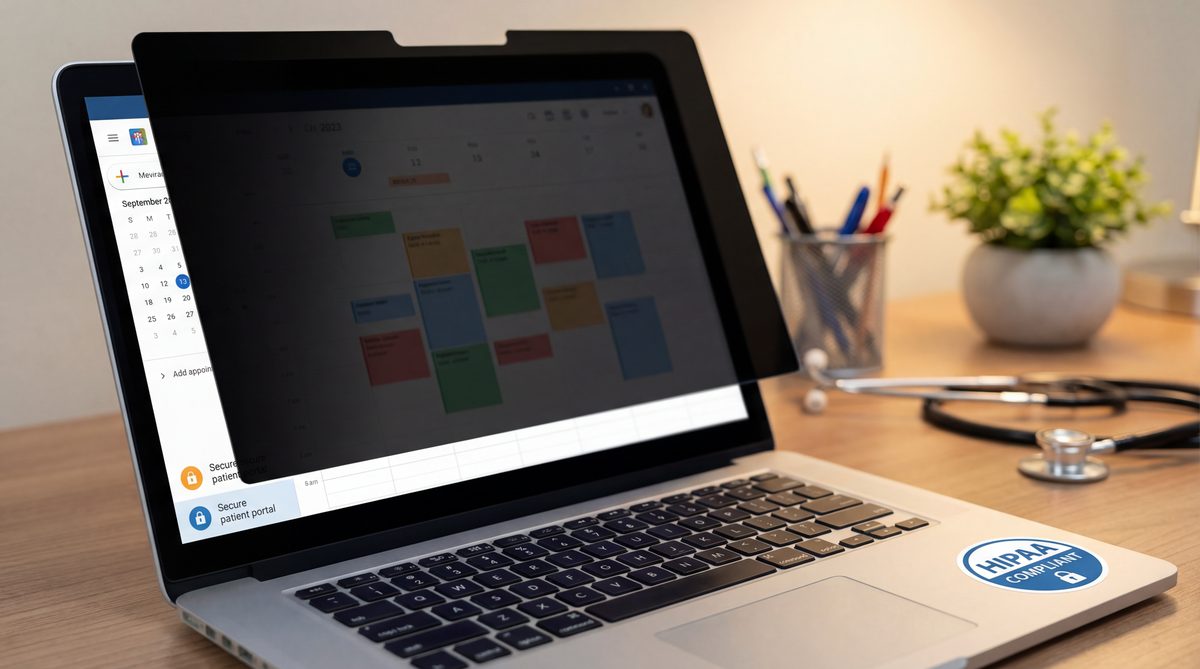
Not every answering service is built for medical. If you’re evaluating options, here’s what separates a service that actually helps your practice from one that creates more problems than it solves:
-
- HIPAA compliance with a signed BAA. Non-negotiable. The service must encrypt all call data in transit and at rest, maintain audit logs, and execute a Business Associate Agreement with your practice. Ask to see their BAA template before signing anything. If they hesitate, walk away.
-
- EHR and scheduling integration. The answering service should connect to your practice management system — whether that’s athenahealth, eClinicalWorks, Epic, or another platform. If it can’t book directly into your schedule, you’re paying for a middleman that still requires manual work from your staff.
-
- Structured triage protocols. For after-hours calls, the service needs documented escalation paths. Who gets paged for what? How quickly? What happens if the on-call provider doesn’t respond within 15 minutes? These protocols should be customizable to your practice’s specific needs and specialty.
-
- Bilingual capability. Depending on your patient population, Spanish-language support may be essential. Over 41 million people in the United States speak Spanish at home, per U.S. Census data. If your answering service can’t communicate with a significant chunk of your patients, you’re excluding them from access to care — and from your revenue.
-
- Transparent call analytics. You need to see how many calls are coming in, when they peak, what percentage are getting answered versus going to voicemail, and what the resolution rate is. An answering service that can’t provide this data is a black box you’re paying for on faith.
-
- Scalability without per-minute billing surprises. Many traditional medical answering services charge per minute of call time. A busy flu season or a public health advisory can spike your call volume 200-300% — and your bill right along with it. Look for flat-rate or predictable pricing that doesn’t penalize you for patient demand.
One thing we see across every industry: practices settle for a service that merely answers the phone instead of one that actually resolves patient needs. The gap between “answered” and “resolved” is where patient satisfaction — and revenue — live.
The right medical office answering service should feel invisible to patients. They should not know whether they spoke with your front desk or an AI — they should only know that their call was answered quickly, their question was resolved, and their appointment is on the books.
If you’re evaluating medical answering services right now, use this list as your scoring rubric. Any service that checks all six boxes will improve your patient experience and your bottom line. A service that only checks one or two — answering the phone and taking a message — is a cost center, not a growth tool.
Putting It All Together
Here’s the full picture. Your medical practice is losing patients and revenue to three problems that compound on each other: peak-hour call overflow your front desk can’t absorb, after-hours calls that go to voicemail and never get returned, and routine requests (scheduling, refills, insurance questions) eating up staff time without generating any direct revenue. Fixing any one of these helps. Fixing all three with a single system changes the trajectory of your practice.
An AI medical answering service tackles all three at once. It handles overflow during peak hours so your front desk isn’t drowning. It resolves after-hours calls in real time so there’s no Monday morning backlog. And it automates the routine work — scheduling, refill routing, FAQ answering — so your staff can focus on the patients standing in front of them instead of the ones on hold.
Most practice managers think the choice is “answer every call with a human” (expensive) or “send overflow to voicemail” (cheap but costly). There’s a third option. Automated, intelligent call resolution eliminates the trade-off entirely. You get 100% answer rates at a fraction of the cost of additional full-time staff, and the quality of each interaction stays consistent regardless of call volume, time of day, or whether it’s flu season.
The difference between a practice that relies on voicemail and manual callbacks versus one using an automated answering system is stark:
Without Automation
- 30% of peak-hour calls go to voicemail
- After-hours callers wait until the next business day
- 23% of new patient callers never call back
- Staff spends 45+ min/day on manual message callbacks
- Negative reviews cite “impossible to reach by phone”
With Ignitvio
- 100% of calls answered within seconds, 24/7
- Appointments booked in real time, even at midnight
- Urgent calls triaged and routed to on-call provider
- Front-desk staff freed from phone triage to focus on in-office patients
- Recovers an average of $4,200/month in missed-call revenue
Source: Average results from practices using AI-powered answering and scheduling automation.
The revenue recovery number isn’t hypothetical. If your practice misses 10 calls per day, and even 20% of those callers would’ve booked a visit worth $150-$300, that’s $300 to $600 per day in lost revenue — $6,600 to $13,200 per month. An answering service that captures even half of those lost appointments pays for itself on day one.
The question isn’t whether you can afford an AI medical answering service. It’s whether you can afford to keep running without one. Every day you operate with voicemail as your overflow strategy, you’re basically donating patients to the practice down the street that picks up on the first ring.
How Ignitvio Works for Medical Offices
Ignitvio is a done-for-you AI answering and patient communication platform built for practices that can’t afford to miss calls — or add headcount to handle them. We deploy a complete system that handles inbound calls, after-hours triage, appointment scheduling, and automated follow-up without requiring any action from your front-desk team.
Unlike generic answering services that treat every industry the same, Ignitvio is purpose-built for practices where missed calls directly translate to lost revenue and compromised patient care. Every component of the system is designed to resolve patient requests in real time rather than create callbacks for your team.
Here’s what the system does for a medical office:
- Voice AI answers every call — during business hours when your staff is overwhelmed, and after hours when no one is in the office. It sounds natural, follows your practice’s protocols, and handles scheduling, refill routing, and common patient questions.
- Missed Call Text Back sends an instant SMS to any patient whose call isn’t answered within your set threshold. The text opens a conversation where the patient can describe their need, and the AI resolves it via text — no phone tag required.
- Automated follow-up sequences re-engage patients who don’t book during the initial call. If a patient calls about an annual physical but doesn’t schedule, the system follows up at smart intervals until they book or opt out — recovering appointments that would’ve been lost.
- Review automation sends a review request to every patient after their visit, building the online reputation that drives new patient acquisition. Practices using this feature see their Google review count increase by 3-5x within 90 days.
The entire system is deployed and managed for you. No software to learn. No staff training required. No per-minute charges that spike during flu season. You get a flat monthly rate and a dedicated team that configures the system to match your practice’s specialty, protocols, and scheduling rules.
Setup takes less than a week. We configure your call flows, triage rules, scheduling logic, and follow-up sequences based on your practice’s specialty and patient population. A pediatric practice has different triage protocols than an orthopedic clinic. A multi-location family medicine group has different scheduling rules than a solo practitioner. All of that gets built into the system before it goes live.
We test the system with your team, run simulated calls across all common scenarios, and adjust until the call handling matches your standards exactly. Once it’s running, we monitor performance weekly, adjust scripts based on real call data, and optimize continuously — so your medical answering service gets better every month, not stale.
The practices that see the fastest results are the ones that were already losing patients to unanswered calls and knew it. If you’ve ever looked at your missed call log on a Monday morning and felt that pit in your stomach — this is the system that makes it go away. Your phones get answered. Your patients get booked. Your staff gets breathing room. And your revenue stops leaking through the cracks.
See How AI Answering Would Work for Your Practice
Book a free revenue audit and we will show you exactly how many patient calls your practice is missing, what those calls are costing you, and how Ignitvio recovers that revenue automatically. Plans start at $495/month.

Jake Melendy
Founder, Ignitvio
Jake has helped hundreds of home service businesses automate their lead response, recovering an average of $4,200/month in missed-call revenue per client. Before founding Ignitvio, he spent years working directly with contractors on growth strategy. He writes about strategies that actually move the needle for service businesses, based on real data and real results.