Dental Answering Service: Never Miss a Patient Call

- A single missed new-patient call costs the average dental practice $5,000-$15,000 in lifetime value, and most practices miss 30-40% of inbound calls during peak hours.
- Dental patients call most heavily during hygiene blocks, lunch breaks, and Monday mornings, exactly when your front desk is least available.
- Practices that respond to inquiries within one minute see 391% higher conversion rates than those that wait even five minutes.
- AI-powered dental answering services book appointments in real time, handle after-hours emergencies, and recover an estimated $3,800+ per month in revenue from calls that would otherwise go to voicemail.
What a Single Missed Call Actually Costs Your Dental Practice
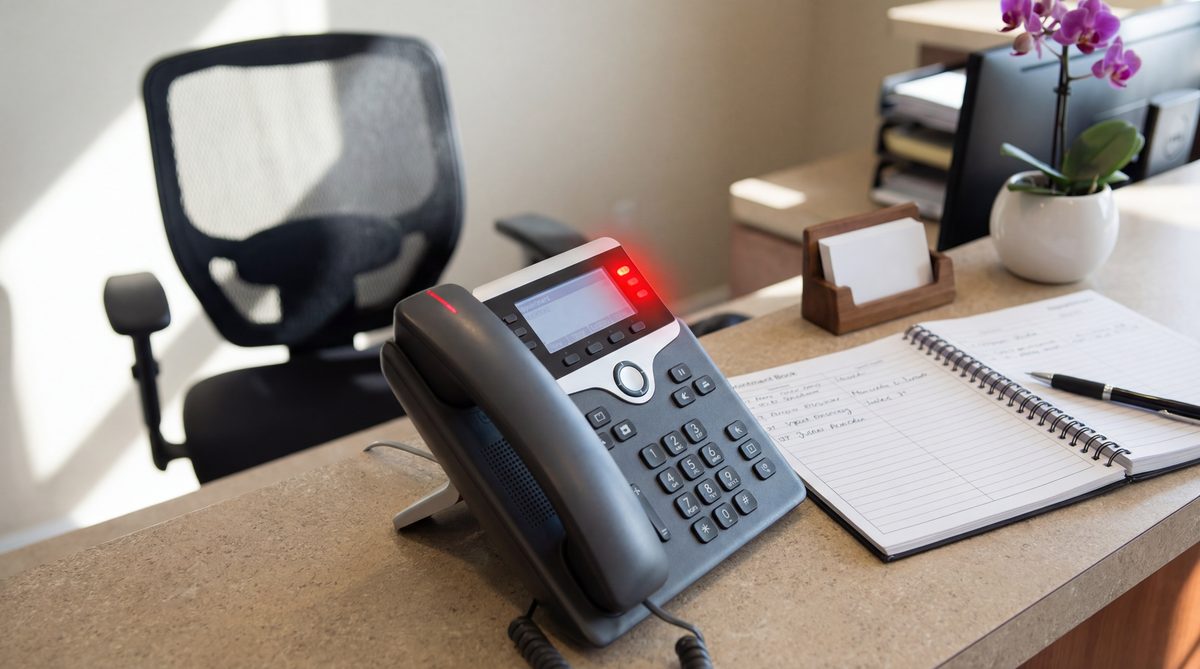
Most dental practice owners shrug off a missed call. Someone’ll call back. The voicemail will get returned. It works itself out. Right?
Run the numbers and it stops feeling minor pretty fast. The average dental patient generates between $5,000 and $15,000 in lifetime revenue, hygiene visits, restorative work, cosmetic procedures, referrals. A family of four that stays with your practice for a decade? That’s $20,000 to $60,000. One missed call isn’t an inconvenience. It’s a relationship that never starts.
And you probably paid to make that phone ring in the first place. PatientPop’s dental acquisition data puts the average cost to acquire a new patient at $200 to $300, Google Ads, SEO, direct mail, referral programs. So when that $200 investment turns into a voicemail and the patient calls the practice down the street, you’ve basically lit that money on fire.
Here’s what that looks like in practice. A general dentistry office in Tampa, two hygienists, one associate dentist, spends $4,000 a month on marketing. That generates about 20 new-patient calls. The front desk misses 8 of them during busy periods. Half those callers book somewhere else. That’s $800 in marketing spend wasted, and four patients worth $30,000 in lifetime revenue who’ll never walk through the door.
It gets worse. Salesforce found that 50% of consumers go with whoever responds first. In dentistry, where every practice within five miles offers basically the same services at basically the same prices, it doesn’t matter if you’re the better dentist. It matters if you’re the one who picks up the phone.
When Dental Patients Call, And When Your Front Desk Can’t Answer
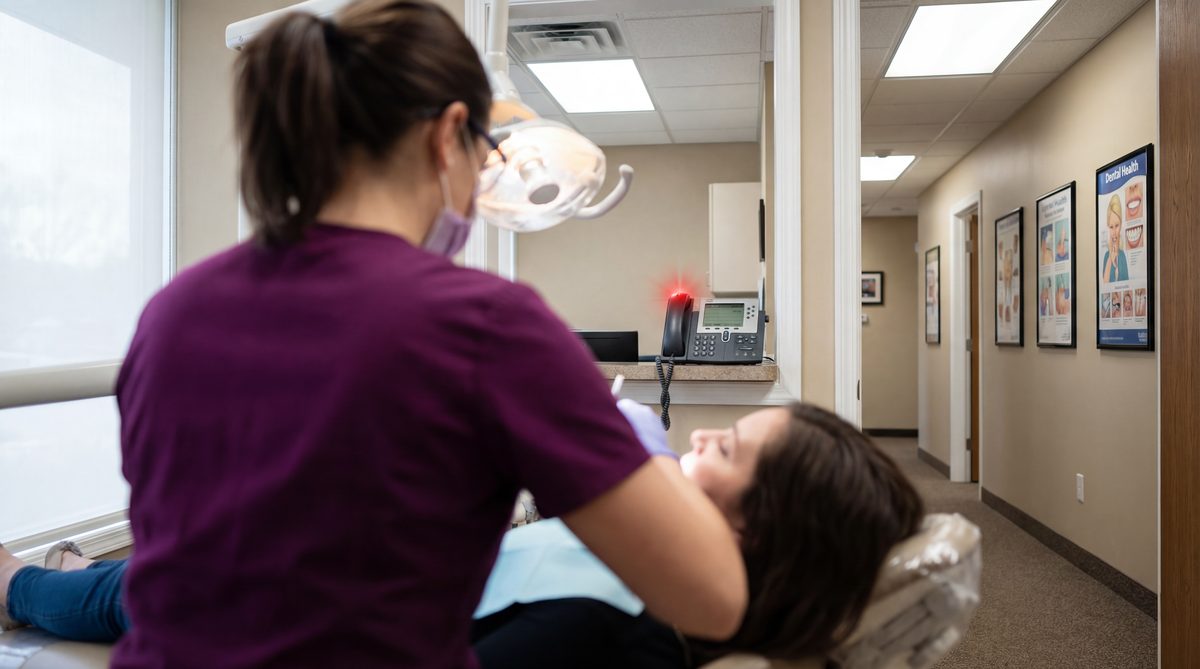
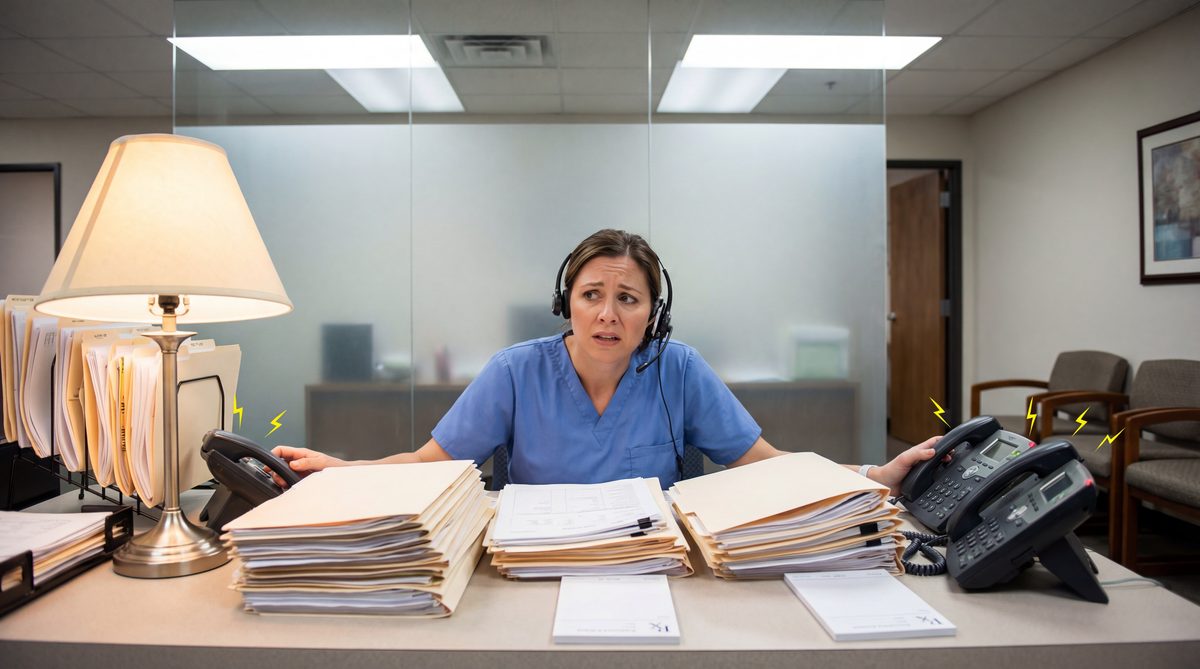
Your phone rings most when your team is least available to answer it. The timing is almost comically bad.
Monday mornings (8:00-10
AM), the weekly avalanche. Weekend toothaches, broken crowns from Saturday night popcorn, patients who decided Sunday evening they should finally schedule that cleaning. They all call Monday morning. A practice getting 40 calls a day might see 15 of them before 10 AM. Meanwhile, the front desk is checking in hygiene patients, pulling insurance verifications, and putting out the first fires of the week.Hygiene blocks, the sneaky dead zone. Both hygienists are with patients, and the front desk is processing checkouts, scheduling recalls, explaining treatment plans. The phone rings. But there’s also a patient at the counter holding their credit card. The person standing in front of you wins every time. The caller gets voicemail.
Lunch hours (12:00-1
PM), staff rotates for breaks, coverage drops to one person or zero. This is also when office workers, teachers, and parents finally have a free minute to call. Your staffing bottoms out exactly when a chunk of your patients are picking up the phone for the first time all day.After 4
PM, ADA Health Policy Institute data shows a significant share of appointment calls come in late afternoon when people get off work. Most practices stop answering at 4 or 5. Those callers go straight to voicemail.A pediatric dental practice in Phoenix tracked their calls over 60 days. The numbers were ugly: 38% of inbound calls hit during windows when the front desk was busy with in-office patients. Of those, 71% went to voicemail. Of the voicemails, only 44% actually connected on a returned call. The rest? Phone tag. And Drift’s data shows that 27% of leads caught in phone tag never get contacted at all.
Bottom line: about one in three new-patient calls at this practice ended with no appointment booked. Not because they didn’t want those patients. Because nobody was free to pick up the phone when it rang.
The Booking Experience That Wins New Patients

By the time someone picks up the phone to call a dental practice, they’ve already done the research. They Googled dentists in their area, read reviews, maybe poked around your website. The call isn’t the start of their decision, it’s the end. They’re ready to book. The only question is whether you make it easy or blow it.
Practices that convert the most callers into booked patients do three things consistently:
Pick up fast, no phone tree, no hold music
The caller hears a voice within two rings: “Good morning, thank you for calling Bright Smile Dental, how can I help you?” That’s it. No “press 1 for appointments, press 2 for billing.” Velocify’s research found that responding within one minute increases conversion rates by 391%. After that first minute, every second costs you.
Confirm availability on the call
The worst thing you can say to a new patient is “let me check and call you back.” You’ve just introduced delay, created phone tag risk, and told the patient your office is disorganized. What works: “We have an opening Thursday at 2 PM or Friday at 10 AM, which works better for you?”
Handle the insurance question upfront
“Do you accept my insurance?”, it’s the first thing most new patients ask. If you can answer it on the call, even with a general “yes, we accept most PPO plans and we’ll verify your specific coverage before your visit,” you’ve removed the biggest reason callers hesitate. If you say “you’ll need to call your insurance company first,” you’ve lost them.
None of this is complicated. The problem is that it requires someone who’s available, focused, and free to give the caller their full attention. In most dental practices, that person is also checking patients in, verifying insurance, presenting treatment plans, and processing payments. The phone is one of six things they’re juggling, and it’s the one that gets dropped when the lobby fills up.
How many new-patient calls is your practice actually missing?
We’ll mystery-shop your practice, call during peak hours, call after hours, submit a web inquiry, and show you exactly where patients are falling through. Free. Results in 48 hours.
How Growing Dental Practices Handle Call Overflow Without Adding Staff
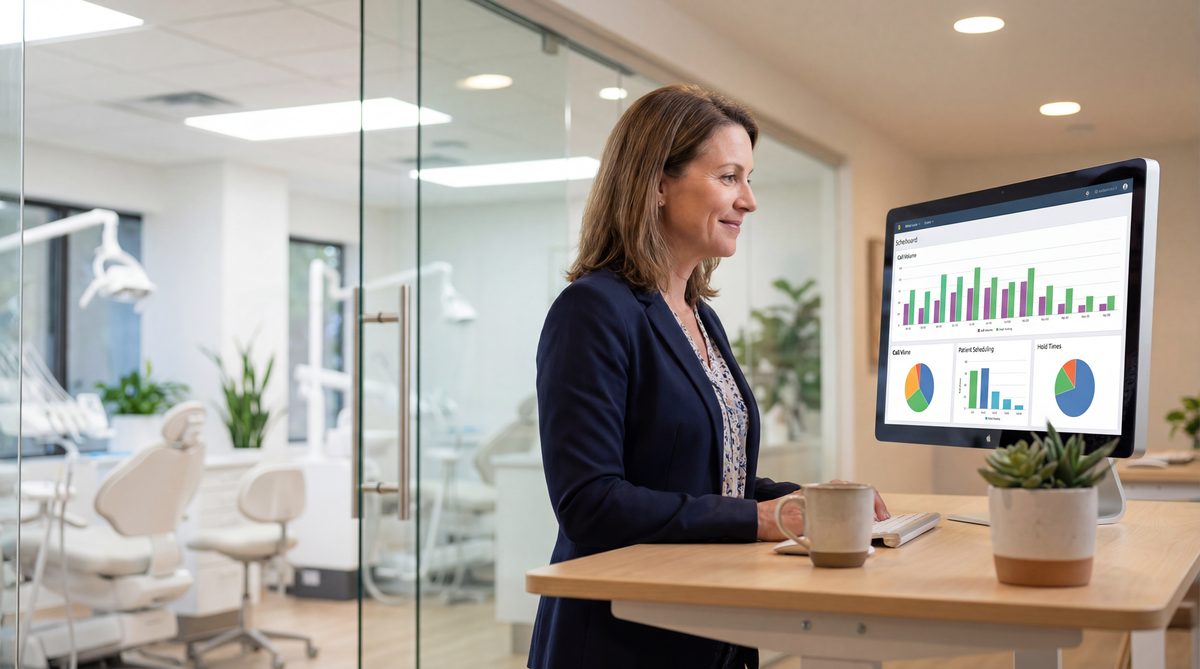
The obvious fix is hiring another front-desk person. It’s also the wrong one for most practices. A full-time receptionist runs $35,000 to $45,000 a year in salary, plus benefits, training, and management time. And that person still takes lunch breaks, still calls in sick, and still can’t answer two phones at once. You’ve added headcount without fixing the actual problem: phones ring when people are busy.
The practices that have actually solved this went a different direction. Instead of adding staff to handle phones, they added systems, freeing their existing team to focus on the patients already in the office.
AI answering services are what’s changing the math here. Traditional answering services take messages and create callbacks. AI systems resolve the call in real time. Patient calls to book a cleaning, the system checks the schedule, finds an opening, books it. Patient calls after hours with a broken tooth, the system triages the urgency, provides emergency guidance, or schedules the first available slot. No message pad. No phone tag. No “someone will call you back.”
The technology’s gotten good enough that callers genuinely don’t realize they’re talking to an AI. It handles pauses, follow-up questions, conversational flow, all the things that make a phone call feel like a real interaction. In working with dental practices, we’ve seen patient satisfaction scores on AI-handled calls match or beat staff-handled calls. Mostly because the AI never sounds rushed, never puts people on hold, and never says “can I call you back?”
Even if you’re not ready for a full AI system, basic follow-up improvements can recover real revenue. Forrester’s research shows that companies with strong lead nurturing generate 50% more sales-ready leads at 33% lower cost. Translation: a practice that actually follows up with patients who called but didn’t book will capture way more appointments than one waiting for the patient to call back on their own.
After-Hours Dental Emergencies: The Calls That Can’t Wait Until Morning

Dental emergencies don’t care about office hours. A crown falls out during dinner. A kid chips a tooth at Saturday morning soccer. A patient wakes up at 2 AM with an abscess that’s been building for days. These calls are urgent, emotional, and high-value, and most practices send them straight to a voicemail box nobody checks until Monday.
After-hours dental calls fall into three buckets, and each one needs different handling:
True emergencies, uncontrolled bleeding, jaw fractures, knocked-out permanent teeth. These need an ER or oral surgeon, fast. A voicemail saying “if this is an emergency, please hang up and dial 911” technically covers you legally, but it’s a terrible patient experience. A system that can actually talk through the situation and give specific guidance (“keep the tooth moist in milk and get to the nearest ER with a dental department”), that builds loyalty for years.
Urgent but not emergency, severe pain, lost fillings, broken crowns, post-procedure complications. This is the bulk of after-hours calls. These patients want two things: reassurance that they’ll be okay tonight, and an appointment for tomorrow morning. A system that gives home-care guidance (“take ibuprofen 600mg, cold compress, don’t chew on that side”) and books the first available emergency slot does everything they need. No callback. No lying awake wondering if the office even got the message.
Routine after-hours calls, people who just couldn’t call during business hours. They want to schedule a cleaning, ask about whitening, or check if you take their new insurance plan. Not urgent, but valuable. Marketing Donut’s research shows 63% of people requesting information won’t make a purchase for at least three months. If you lose that first contact to voicemail, the entire nurture opportunity vanishes.
Here’s the thing about after-hours calls that most practices miss: they’re referral engines. A patient who calls at 9 PM about a toothache, hears a knowledgeable voice, gets home-care guidance, and has an 8 AM appointment booked before hanging up, that patient tells their spouse, their coworker, their neighbor. Wharton’s research found referred customers have 16% higher lifetime value. A great after-hours experience generates referrals. A voicemail box generates nothing.
What to Look for in a Dental Answering Service
If you’re evaluating dental answering services, ignore the per-minute pricing comparison most vendors want you to focus on. These five things actually matter:
Real-time appointment booking
It needs to connect to your practice management system, Dentrix, Eaglesoft, Open Dental, whatever you run, and book directly into the schedule during the call. If a service just takes a message and passes it back to your staff, it hasn’t solved the problem. It’s just moved it.
Dental-specific knowledge
A generic answering service doesn’t know the difference between a crown and a bridge. Can’t explain what to expect during a root canal. Fumbles basic insurance questions. Whatever’s handling your calls should understand dental terminology, common procedures, and the questions patients actually ask. When someone calls and asks “do you do Invisalign?”, the answer needs to be confident, not “let me take a message.”
After-hours emergency triage
It has to tell the difference between a true emergency (avulsed tooth, uncontrolled bleeding) and an urgent but manageable situation (severe pain, broken restoration). Sending every after-hours caller to the ER wastes their time. Telling every caller “we’ll call you back in the morning” fails the ones who need help now.
HIPAA compliance
You’re handling protected health information on every call. Any answering service needs encrypted communications, secure storage, proper access controls, and a signed Business Associate Agreement. Non-negotiable. Verify it before you sign anything.
Automated follow-up
The best systems don’t stop when the call ends. Patient calls about veneers but doesn’t book? They should get a follow-up text at smart intervals. Patient finishes a procedure? Automated review request. Harvard Business Review puts it bluntly: acquiring a new customer costs 5 to 25 times more than keeping an existing one. Follow-up isn’t a nice-to-have, it’s what turns a single appointment into a patient who stays for a decade.
How Ignitvio Works for Dental Practices
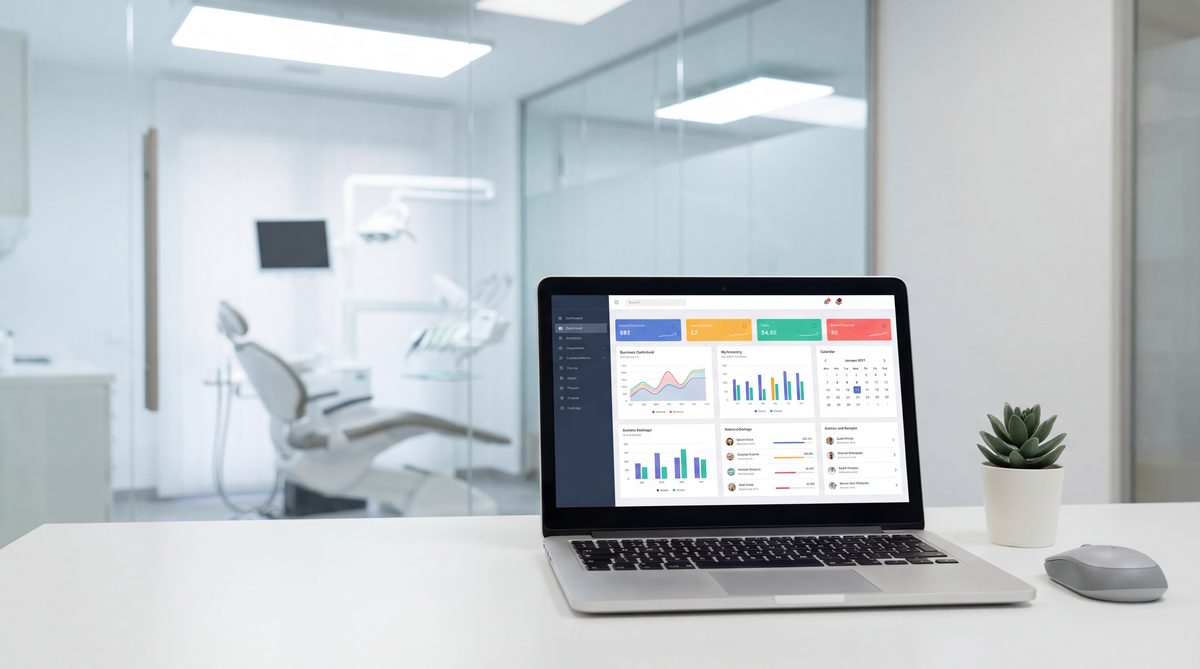
Ignitvio is what we built for practices that are bleeding patients to missed calls but can’t justify another $40,000 salary to fix it. It’s a done-for-you AI answering and patient communication system, answers every call, books appointments in real time, handles after-hours emergencies, follows up automatically. Your team doesn’t have to do anything.
Here’s what it does for a dental practice:
- Voice AI answers every call, during hygiene blocks when your front desk is buried in checkouts, during lunch when nobody’s at the desk, and at 9 PM when a patient’s crown falls out at dinner. It sounds natural, understands dental terminology, and follows your practice’s protocols.
- Missed Call Text Back fires an instant SMS when a call isn’t answered within your threshold. The patient describes what they need via text and the AI handles it, books an appointment, answers an insurance question, provides post-procedure guidance. No phone tag.
- Automated follow-up re-engages patients who inquired but didn’t book. Someone calls about teeth whitening but doesn’t schedule? They get followed up at smart intervals. Patient overdue for their six-month cleaning? Recall reminder goes out automatically. These sequences recover appointments that would otherwise just… disappear.
- Review automation sends a request after every completed visit, building the online reputation that drives new patients through the door. Practices using this see their Google review count jump 3-5x within 90 days, and reviews are the number one thing patients look at when choosing a new dentist.
Without Automation vs. With Ignitvio
Without Automation:
- 30-40% of new patient calls go to voicemail during peak hours
- After-hours calls hit a generic greeting, no booking, no triage
- Patients who call but don’t book? Nobody follows up
- Staff remembers to ask for reviews maybe 1-2 times a day
- 2-3 new Google reviews per month if you’re lucky
With Ignitvio:
- Every call answered within 2 rings, 24/7, including holidays
- After-hours patients get emergency triage and next-day appointments booked on the spot
- Every unconverted inquiry gets automated follow-up until they book or opt out
- Review request goes out after every single visit, automatically
- 10-15 new Google reviews per month
Source: Average results from dental practices using Ignitvio.
The math on this is simple. Say your practice misses 8 new-patient calls a month and Ignitvio captures half of them. That’s 4 extra patients. At $7,500 average lifetime value, you’re looking at $30,000 in revenue from patients who would’ve called the next practice on the list. The system pays for itself in the first week.
We handle all the setup. We configure it to match your specialty mix, scheduling rules, insurance panels, and emergency protocols. A general practice runs differently than a pediatric office. An ortho practice has different scheduling patterns than an oral surgery clinic. We build all of that in before anything goes live. Setup’s under a week, and we keep optimizing based on real call data, so it gets better every month, not stale.
Start Capturing Every Patient Call
Book a free revenue audit and we’ll show you exactly how many patient calls your practice is missing, what they’re costing you, and how Ignitvio recovers that revenue automatically. Plans start at $495/month.

Jake Melendy
Founder, Ignitvio
Jake has helped hundreds of home service businesses automate their lead response, recovering an average of $4,200/month in missed-call revenue per client. Before founding Ignitvio, he spent years working directly with contractors on growth strategy. He writes about strategies that actually move the needle for service businesses, based on real data and real results.