Freight Broker Lead Generation: The Systems Guide for 2026

- Freight broker lead generation runs on two systems: sourcing and conversion. Sourcing shipper leads (load boards, FMCSA and import-export data, cold email, LinkedIn, referrals, a real web presence) is the half everyone teaches. Capturing and converting those leads is the half that moves your book.
- The pages that rank for this keyword stop at sourcing. Almost none explain the speed-to-lead and follow-up engine that turns a sourced lead into a covered lane.
- Speed wins lanes. Shippers shop multiple brokers on the same load. Whoever responds first with a real answer books the freight far more often than the cheapest quote that lands an hour late.
- Most follow-up dies after one touch. Sales research shows 80% of sales need five or more follow-ups, while 44% of reps quit after one. A new broker’s pipeline leaks at exactly that gap.
- The fix is a capture-and-follow-up layer on top of your sourcing. Answer every inbound call and form, qualify the shipper, and run a persistent multi-step cadence automatically. That layer is what this guide builds.
Freight Broker Lead Generation Is Two Systems Most Guides Treat as One
Search “freight broker lead generation” and you get a consistent answer. Load boards. FMCSA data. Cold email. LinkedIn. Maybe a CRM. The posts that rank are good at one thing: telling you where shipper leads live.
Here is the problem. Sourcing is only half of a freight broker lead generation system. The other half, the part almost nobody writes about, is what happens in the first five minutes after a shipper raises their hand, and the seven days after that. A shipper who fills out your form is also calling two other brokers. Whoever answers first, with a real qualified response, usually wins the lane. The rest leave a voicemail.
This guide spends its weight on capture and conversion, where new brokers actually leak revenue. We are building a companion piece on lane sourcing; here, sourcing gets one section, then we get to the part the ranking guides leave out.
Where Freight Broker Leads Come From (The Short Version)
Six sources cover most of how freight brokers and 3PLs find shippers, and they are well documented everywhere: load boards like DAT and Truckstop, FMCSA and import-export data, cold email, LinkedIn outreach to logistics managers, referrals and carrier introductions, and a web presence that ranks for your niche. Niching down to a lane type, commodity, or region makes every one of them convert better.
None of these is wrong. The mistake is treating any single one as a strategy. Every one feeds the same bottleneck: warm inbound dies on voicemail just as fast as a cold call. That is the bridge into the half that decides outcomes.
The Conversion Gap: Sourced Leads Die in the First Five Minutes
A shipper with a load to move is in active buying mode. They are not researching one broker and waiting politely. They are emailing and calling several, and they commit to whoever gives them a confident answer first.
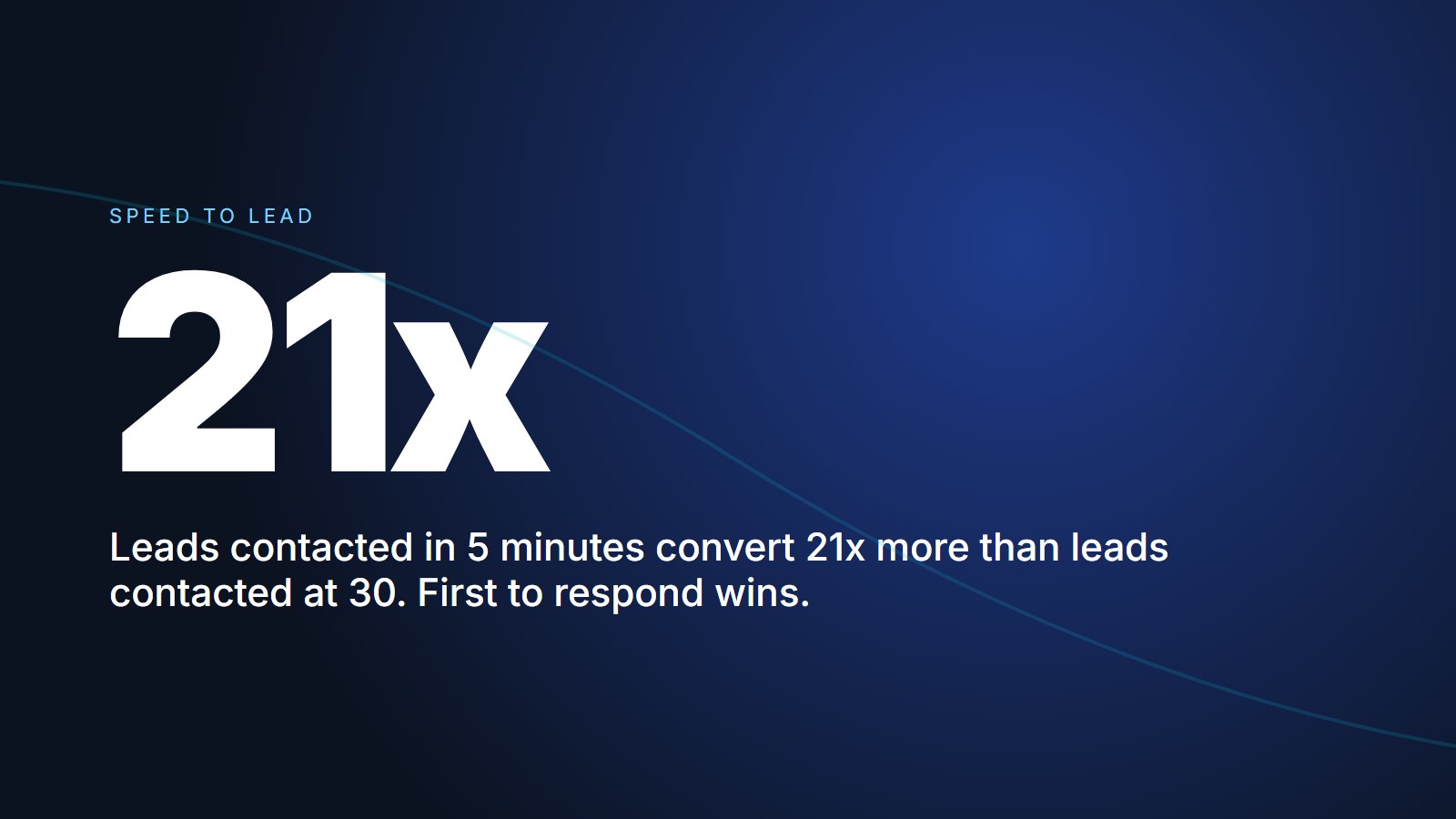
The foundational research predates freight and applies cleanly to it. The Lead Response Management Study found that contacting an inbound lead within five minutes makes you 21 times more likely to qualify it than waiting 30 minutes. The earlier Harvard Business Review analysis of online sales leads found companies that responded within an hour were nearly seven times more likely to qualify the lead than those that waited an hour longer.
Inbound leads contacted within five minutes are 21 times more likely to qualify than leads contacted at 30 minutes. In freight, where a shipper is calling several brokers at once, that gap decides who covers the lane.
Source: Lead Response Management StudyTranslate that into a broker’s day. A logistics manager pings three brokers Tuesday afternoon. Broker one answers in two minutes, asks two smart questions, and quotes. Broker two calls back Wednesday; broker three leaves a Thursday voicemail. Broker one books the lane, and very often the next three, because the relationship started with competence and speed.
The uncomfortable truth for new brokers: you can run the sourcing section perfectly and still lose, because your sourcing fills a bucket that leaks at the bottom. We covered the deeper mechanics in the complete speed-to-lead guide, and the math transfers directly to freight.
Why Brokers Lose Lanes They Already Sourced
The conversion gap is structural. It is not a discipline failure. A freight broker, especially a new one or a small 3PL, cannot answer every inbound while working active loads and chasing carrier check calls. The phone rings while you are on the phone. The form fills at 9 PM. The cold-email reply lands on Saturday.
Three realities make the gap worse in freight than in most industries:
Inbound arrives while you are heads-down
Brokering is phone-intensive. You are negotiating a rate when the next shipper calls. No one-person or five-person desk answers every inbound in under five minutes by willpower alone.
Shippers compare brokers in parallel
A shipper rarely commits to the first broker they think of. They line up two or three and pick whoever responds with confidence first. Slow response hands the deal to a competitor.
Follow-up is where pipelines die
Most sourced leads are not ready on first contact. The shipper is mid-contract, the load is two weeks out, the timing is off. Invesp’s research on sales follow-up found 80% of sales require five or more touches, while 44% of reps give up after one. A broker juggling live freight forgets the shipper who said “check back next month,” and that shipper becomes a competitor’s customer.
Stack those three and you get the pattern every busy broker knows: a sourcing engine producing leads faster than the desk can capture them. More leads do not fix it. A capture layer does.
Find out how many shipper leads your desk is dropping
We will look at your inbound call, form, and follow-up flow and show you where leads leak before they become covered lanes. About 10 minutes.
Run the Free Lead AuditThe Freight Broker Lead Conversion System (Built in Three Layers)
Brokers who consistently convert sourced leads are not faster typists. They built a system that handles first response and follow-up automatically, so their attention stays on covering freight. It has three layers, and each closes a gap the other two cannot.
Layer 1: Instant answer on every inbound
Every inbound call and form gets a real, immediate response. The caller is greeted in your company name, the basics are captured (lane, commodity, equipment, timing, volume), and the qualified inquiry is routed to you before the shipper calls the next broker. No hold music, no voicemail, no “we will get back to you.”
Layer 2: Missed-inquiry recovery
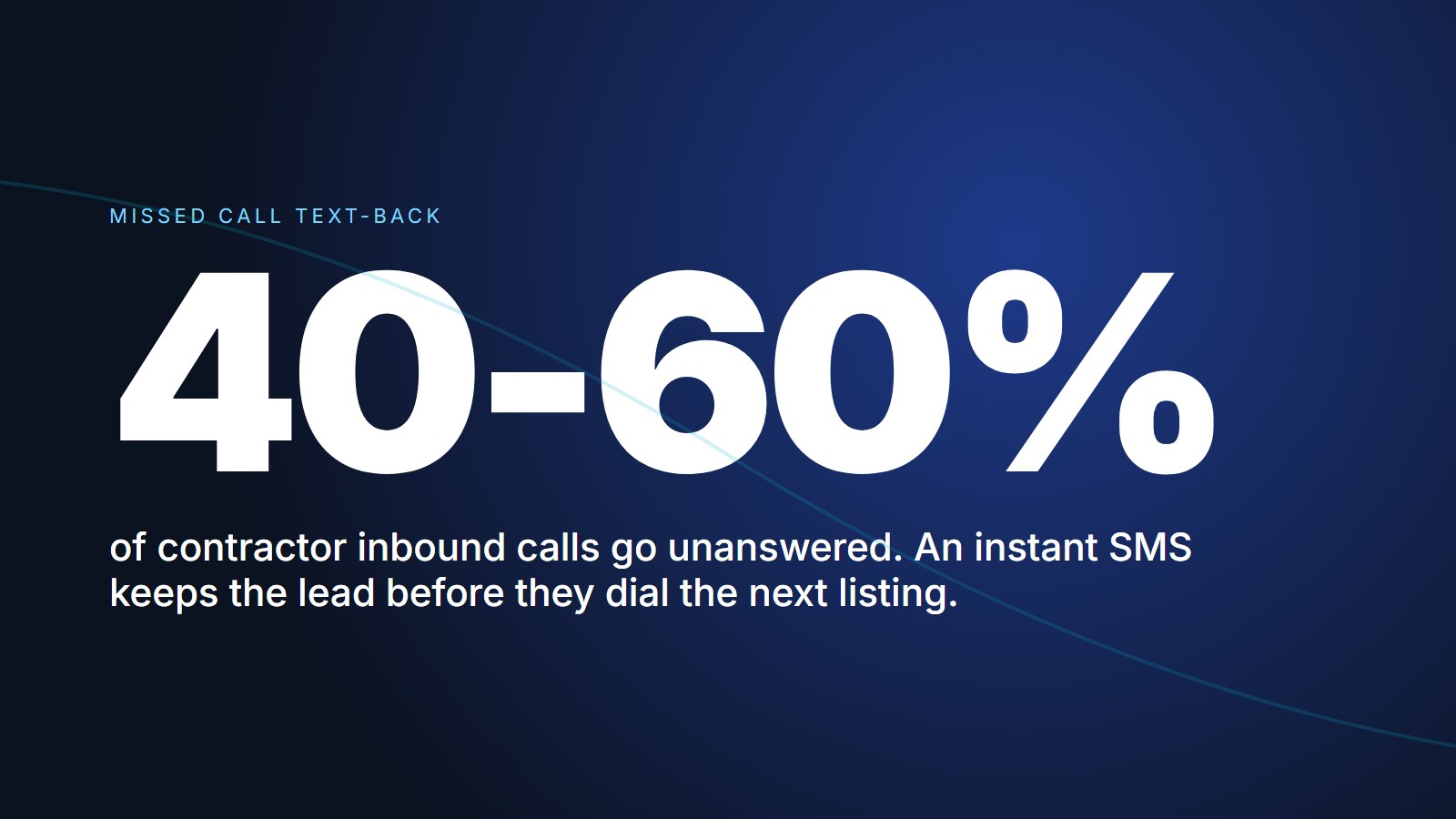
Some shippers will not wait, and some inquiries arrive when no one is free. The instant a call goes unanswered or a form sits idle, an automatic text goes out: a short, human message that keeps the conversation alive. This is the same missed-call text-back pattern that recovers dropped service calls, applied to freight.
Layer 3: Persistent multi-step follow-up
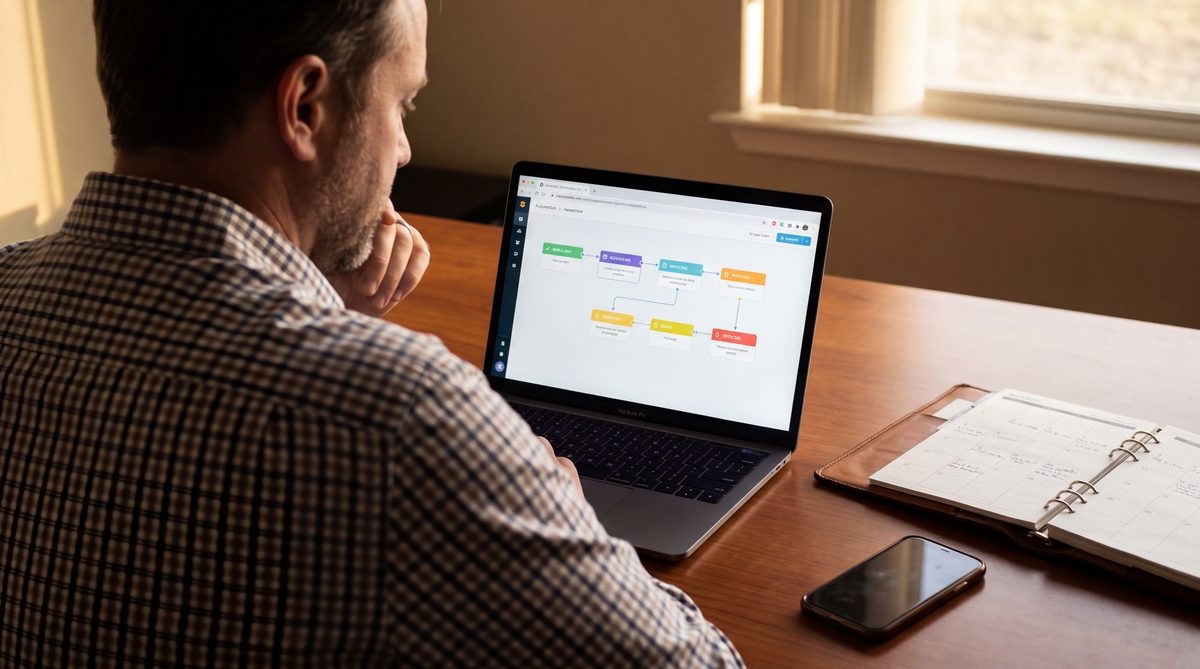
The shipper who said “not right now” is the most valuable lead you have, because almost no broker follows up correctly. A structured cadence runs automatically: text, then email, then a call reminder, spaced over days, until the shipper engages or opts out. This closes the 44%-give-up-after-one gap, and it is one of the highest-ROI small-business automation workflows a broker can turn on.
Put the three together and every sourced lead, from a load-board contact to a cold-email reply to a 9 PM form fill, gets a fast first response and a follow-up sequence that never forgets. That is the engine the ranking guides skip.
What the Top-Ranking Freight Broker Lead Resources Cover
It helps to see where the popular resources stop, because the gap is the opportunity. Each is good at its job, and most never claim to be a capture-and-follow-up layer.
| Resource | Genuinely useful for | Where it stops |
|---|---|---|
| Load boards (e.g. DAT, Truckstop) | Finding freight, market rates, early shipper relationships | Indirect sourcing; no lead capture |
| Freight TMS platforms [verify] | Running the freight once it is booked | Built for operations; no speed-to-lead |
| B2B prospect-list providers [verify] | Building a cold-outreach target list fast | Raw lists; conversion is on you |
| Freight-focused CRMs [verify] | Keeping deals organized and visible | Tracks the pipeline; does not answer the phone |
| Broker communities (e.g. r/FreightBrokers) | Real sourcing and negotiation advice | Community wisdom; never an automated system |
| AI capture layer (Ignitvio’s category) | Answering every inbound fast, nurturing not-ready shippers | Not a load board, TMS, or list provider |
The pattern is clear. Load boards and data providers source, CRMs track, the community shares tactics, and a capture layer answers every inbound in seconds and runs the follow-up cadence. You need several working together, and most brokers skip the last row, which is exactly where sourced leads quietly leak.
Where Ignitvio Fits (and Where It Does Not)
Plain disclosure: Ignitvio is our product, so read this section with that in mind. Ignitvio is not a load board or a TMS. We do not match freight, vet carriers, or manage loads; for those, a load board and a freight TMS are the right tools. Ignitvio is one option in the AI capture-layer category, and it is far from the only one.
What it is: the AI lead-capture, speed-to-lead, and follow-up layer that sits on top of whatever sourcing you run. It implements the three-layer system above on one stack.
- Inbound calls hit voicemail while you work a load
- Form fills at 9 PM sit until tomorrow morning
- Cold-email replies get one follow-up, then nothing
- The shipper who said 'check back next month' is forgotten
- You compete on price because you lost the speed race
- Every call and form answered immediately, in your company name
- After-hours inquiries captured and qualified on arrival
- A persistent multi-step cadence runs on every lead automatically
- Not-ready shippers nurtured until they are ready, hands-off
- You win lanes on speed, then negotiate from strength
Here is the stack a broker turns on:
Voice AI answers every inbound call in seconds, in a natural voice, captures the shipper’s lane and timing, qualifies the inquiry, and routes it to you around the clock, with no per-minute billing.
Missed-inquiry text-back fires the instant a call goes unanswered, continuing the conversation over text so the shipper does not move on.
Lead follow-up runs the multi-step cadence across text, email, and call reminders on every form fill, cold-email reply, and not-yet-ready shipper until they book or opt out.
Ignitvio pricing scales by the modules you turn on; the structure is on the pricing page. We are a young company, every client is in their first few months, and we will not invent results we do not have. The honest part is the structure: brokers who win sourced leads pair sourcing with a capture-and-follow-up engine, and that second engine is what most desks are missing.
To map that capture layer to your inbound flow, see AI lead capture for 3PLs and freight brokers, or read our 3PL and logistics lead-capture overview for how the layers fit a brokerage.
Freight Broker Lead Generation FAQ
Why am I generating leads but not closing them?
How fast do I need to respond to a shipper inquiry?
Is Ignitvio a load board or a TMS?
How many follow-ups should a freight broker send to a cold shipper lead?
Stop losing sourced leads to slow response and weak follow-up
See exactly where your shipper leads are leaking, from first response to follow-up, and what a capture layer would change. No commitment.
Run the Free Lead Audit
Jake Melendy
Founder, Ignitvio
Jake Melendy is the founder of Ignitvio. He spent 12 years in enterprise sales and sales leadership, including at Oracle, before building Ignitvio, which runs done-for-you outbound appointment setting for commercial contractors and B2B service companies. He writes about pipeline, trigger-based prospecting, and lead response.