MSP Marketing: What Actually Fills a Pipeline
- One in three MSPs call acquiring new customers their biggest challenge, and 29% rank competition as their top concern. Waiting on referrals is how you lose that fight.
- Ranked by realistic CAC and time to first deal, outbound is the only channel that is both fast and scalable for an MSP at $3M and up, and at that size it belongs with someone whose whole job is outbound.
- Directories and generic blog content are where MSP marketing budgets go to die: shared leads, price shoppers, and pages nobody reads.
- A workable plan runs without eating the owner’s week: one direct channel someone else operates, one compounding channel, 90 days, measured in qualified meetings per quarter.
Owners of B2B service shops tell us the same story on nearly every call, and it maps onto a $3M MSP without changing a word: there is no time to make the phone calls, and the few hours that do go to selling get spent driving out to meet with somebody and coming back with nothing. A good share have already paid a vendor to fix that and got the other version of the problem: a meeting where the controller did not know who they were, had said yes to get the caller off the phone, or could not sign anything anyway, and the invoice arrived regardless. What they want is simple to say and hard to build. Get in front of somebody who can sign, without doing the hunting personally, and have it pay back in months rather than years.
Now look at how your last three clients actually arrived. Somebody’s controller knew somebody’s office manager, a lunch happened, and six weeks later you were migrating their tenant. Great business. Zero acquisition cost. Also zero control. That is the quiet problem with MSP marketing once a shop crosses $3M. Every logo on the wall came in warm, so nobody knows what a new client costs to acquire, and the only person positioned to find out is the owner, who is also running escalations, vendor renewals, and the Tuesday QBR. The honest answer so far has been “nothing but time and good work,” and the time ran out somewhere around the second million.
Then the referral well goes dry for two straight quarters. Or an anchor client gets acquired and 150 seats walk out the door, and there is no faucet to turn. I have watched that stall play out for shops in Grand Rapids, Tampa, and Plano, and it traces to the same root every time: not one pipeline channel the owner controls, and no sales bandwidth to build one.
So let’s rank them all. Referrals, vendor MDF, cold outreach, LinkedIn, Google Ads, SEO, directories. Each judged on the two numbers that matter when the owner is still the sales department: what a client realistically costs to acquire, and how long until the first signed agreement.
The Referral Ceiling Is Real
The industry data backs the stall story. In Kaseya’s 2025 Global MSP Benchmark report, one in three providers said acquiring new customers is their biggest challenge this year. An earlier Datto State of the MSP survey of 1,800 MSPs found 29% rate competition as their top concern.
Translation: everyone is fighting over the same 25-seat law firms and 40-seat dental groups. And most are fighting with the same weapon. Waiting.
MSPs say acquiring new customers is their single biggest challenge this year, ahead of hiring and profitability.
Source: Kaseya 2025 Global MSP Benchmark ReportHere’s the thing. Referrals deserve their reputation. Highest close rate you will ever see, shortest sales cycle, basically free.
So systematize the ask: quarterly business reviews, project wrap-ups, any week a client praises your help desk. Happy clients refer when prompted and almost never think to do it on their own.
But run the ceiling math. Eighty clients, each producing a warm introduction every couple of years, gives you maybe 35 to 40 referrals annually. Some are too small. Some run software you refuse to touch. Some ghost after the first call. You net a dozen real opportunities a year. None arrive on your schedule, and almost none arrive in the vertical you decided to grow.
A referral pipeline is a thermostat you do not control. Some quarters the house is warm. Some quarters it freezes, and you find out in the P&L.
Six MSP Channels, Ranked by Real CAC
Two stats worth pinning above your desk before we rank anything. Ahrefs studied roughly 14 billion pages and found 96.55% of them get zero traffic from Google. And WordStream’s 2025 Google Ads benchmarks put the average cost per lead at $70.11, before anyone has qualified that lead.
Both numbers point the same direction: the default advice, “write blog posts and boost some ads,” burns months and cash in exactly the wrong order. Here is my ranking for an MSP at $3M and up.
1. Referrals: unbeatable CAC, zero control
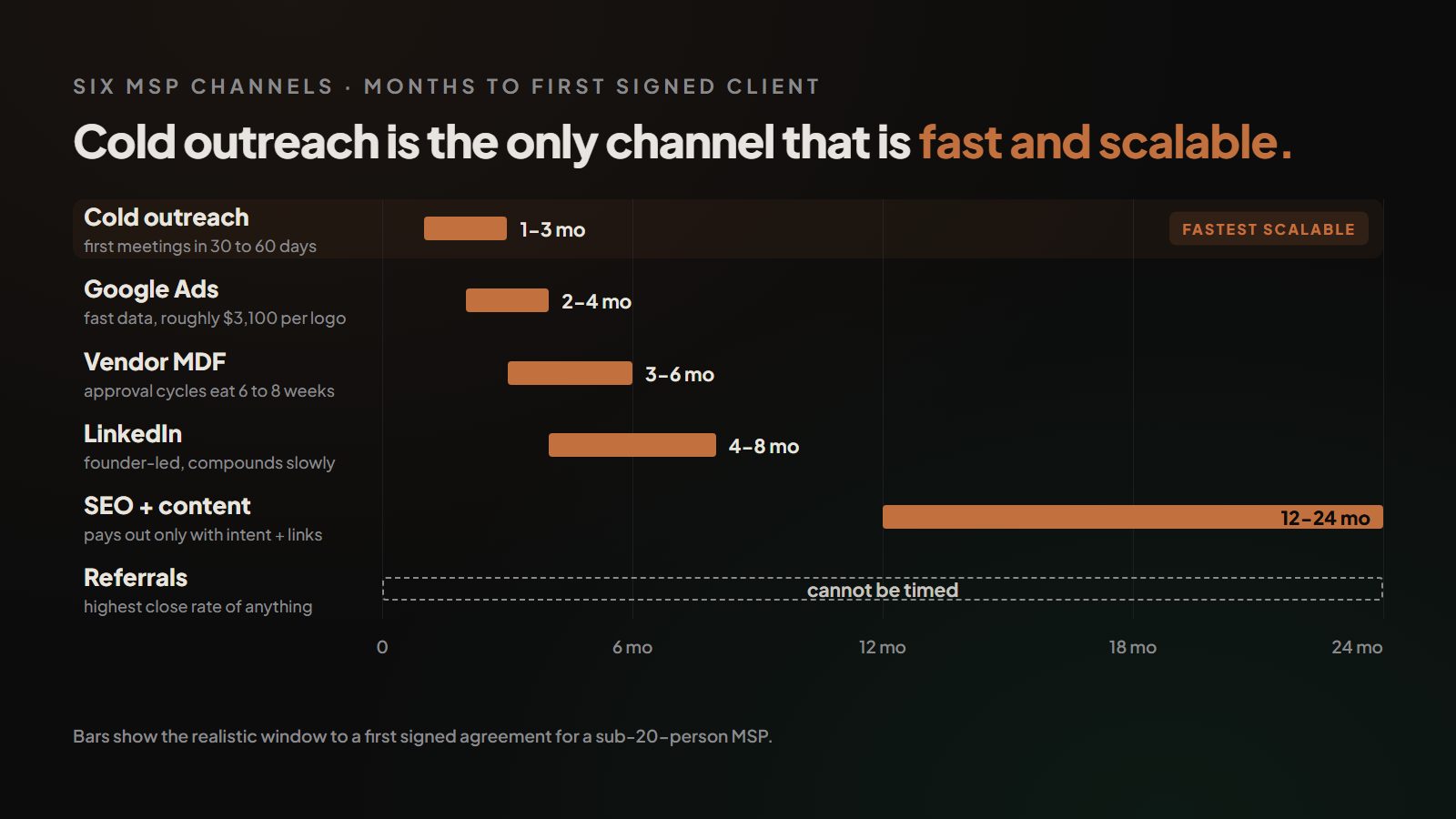
Covered above. Near-zero cost, coin-flip timing, and a hard cap tied to your client count. Keep it and work it, but treat it as the bonus channel: it compounds with everything else on this list and stalls out on its own.
2. Vendor MDF: cheap money with strings
Your vendors want you selling more licenses, and many will fund co-branded webinars, event sponsorships, and campaign kits to make that happen. Partnering is the norm here: in CompTIA’s IT Industry Outlook, 90% of channel firms answer yes to partnering.
Take the money. Read the strings. MDF campaigns promote the vendor’s product first and your shop second, leads often route through the vendor’s CRM before they reach you, and approval cycles eat 6 to 8 weeks before anything ships.
Realistic time to first deal: 3 to 6 months. Good supplement. Bad backbone.
3. Cold outreach: the fastest way to get in front of somebody
Cold email has a math problem and a skill problem, and both are fixable. Backlinko and Pitchbox analyzed 12 million outreach emails and found only 8.5% get any reply. Sounds grim. Now read the rest of the study: a single follow-up message boosts replies by 65.8%, and personalized subject lines lift response 30.5%.
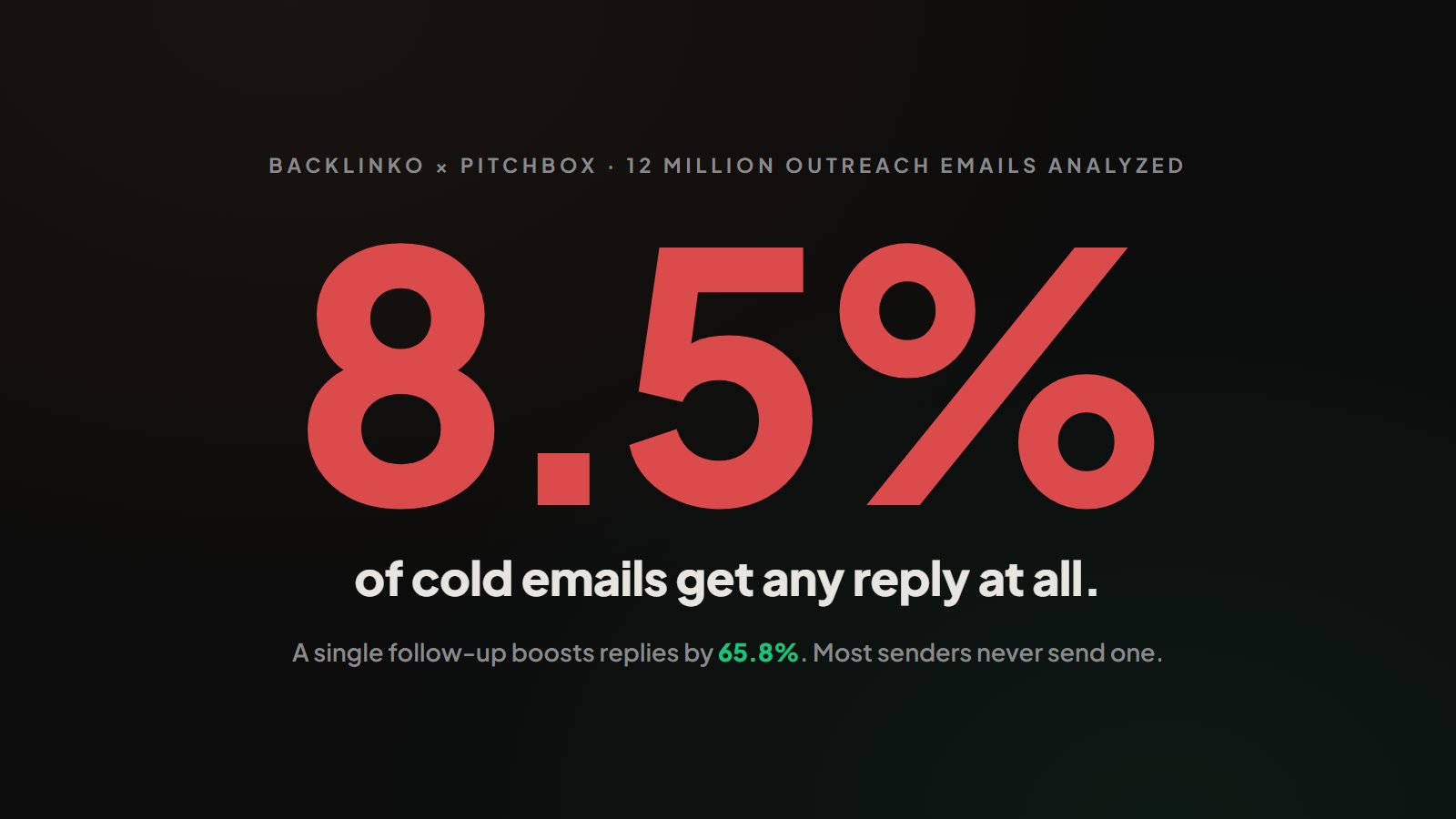
Generic blasts to bought lists earn the grim number. Tight lists of companies that genuinely match your ICP, opened with something true about the prospect, followed up four or more times, earn multiples of it. List quality is the lever.
This is the one channel where an MSP can realistically create first meetings inside 30 to 60 days, because it requires a list, a message, and someone working the phone rather than domain authority or ad budget. It scales linearly with list quality, and it rewards the shop that knows its vertical cold.
4. LinkedIn: free, slow, and founder-shaped
LinkedIn costs no cash and roughly 4 to 5 owner-hours a week, and it takes months of consistent posting before a stranger books a call. When it works, it works through the founder’s voice: specific stories about ransomware cleanups, migration horror shows, an invoice line item explained in public.
If you hate writing, this channel quietly dies in week three. Budget 4 to 8 months to the first attributable deal and run it as compounding trust alongside a direct channel, never instead of one.
5. Google Ads: fast data at a painful price
WordStream’s Business Services category, the closest benchmark bucket to managed IT, runs $5.58 per click, $103.54 per lead, and a 5.14% conversion rate.
Run the math with me. Say a strong funnel turns 1 in 10 leads into a proposal and closes 1 in 3 proposals. That is 30 leads per signed client, or roughly $3,100 in ad spend per new logo before management fees, landing pages, or a single wasted click from someone googling how to start their own MSP. Miss those funnel ratios and CAC doubles fast.
The deeper issue: searches like “managed IT services near me” are thin in most metros, and national players and aggregators bid the clicks up anyway. Ads make sense once you have 30-plus clients and the cash flow to feed the meter while you learn. As a first channel? Brutal.
6. SEO and content: the two-year channel
Remember the 96.55%. A DR-teens MSP site publishing “what is phishing” posts is competing against security vendors with six-figure content teams. Those pages join the zero-traffic pile.
Local SEO is the exception worth funding early: your Google Business Profile, service-area pages, and reviews, because “IT support” plus a city name carries real buying intent. The rest of content marketing pays out in 12 to 24 months, and only if you pick keywords with intent and earn links. Do it for the compounding. Fund it with something faster.
Why MSP Directories Underdeliver
Every MSP owner has taken this call: a directory rep with a “top 10 MSPs in your city” list and a placement fee. Here is how those lists actually work.
You pay for position. So does everyone above and below you. The visitor is a price shopper by design, comparing five near-identical profiles sorted by who paid the most. The “leads” that come through are frequently shared with several providers at once, so you enter a bake-off you did not schedule, against competitors the directory picked, judged mostly on price.
A paid directory listing rents you a lane in someone else’s race. Your money. Their rules. Their leads to share.
Bottom line: a tidy free profile is worth 20 minutes for the citation and the validation click, because a prospect who already heard your name will go check it. The $400-a-month premium placement is a tax on hope.
Owners describe the rest of their inbound in the same tone. A website that rings every few weeks. A web vendor who has been paid every month for a year and delivered bills. A lead marketplace where the spend added up faster than the signed agreements did. None of it was built to reach a specific controller at a specific company in the month they are ready to change providers, so none of it fills the gaps in the calendar.
Generic content marketing underdelivers for the same root cause: it speaks to nobody in particular. A 900-word post on password hygiene has no buying intent behind it and reads identical to 40,000 other MSP blogs fed by the same white-label content mills. If you are weighing outside help instead of DIY, I broke down how to vet the vendors in best MSP marketing companies.
Your MSP Marketing Strategy: Pick Two Channels
An MSP marketing strategy at $3M and up is a subtraction exercise. The revenue says you are a real company. The org chart says sales is still the owner, plus maybe a service manager who tolerates it, working prospects in the gaps between an escalation queue and the quarterly renewals. That is a sales-bandwidth problem, and no amount of channel advice fixes it until you decide who is actually going to do the selling.
That bandwidth runs two channels well. At most. So pick two, and decide who owns each one:
- One direct channel that creates conversations this quarter. For most MSPs that is outbound, and at this size it belongs with someone whose whole job is outbound, whether that is a dedicated hire or a vendor. For cash-rich shops it can be Ads.
- One compounding channel that builds trust over quarters. LinkedIn if the owner likes writing, local SEO if not. This is the one the owner keeps, because it runs on the founder’s voice and a couple of hours a week.
Then pick a vertical and a metro. “IT support for anyone within 50 miles” positions you against every generalist in the book. “IT support for construction firms in DFW running Sage and Procore” wins deals before the bake-off starts, because specificity reads as experience.
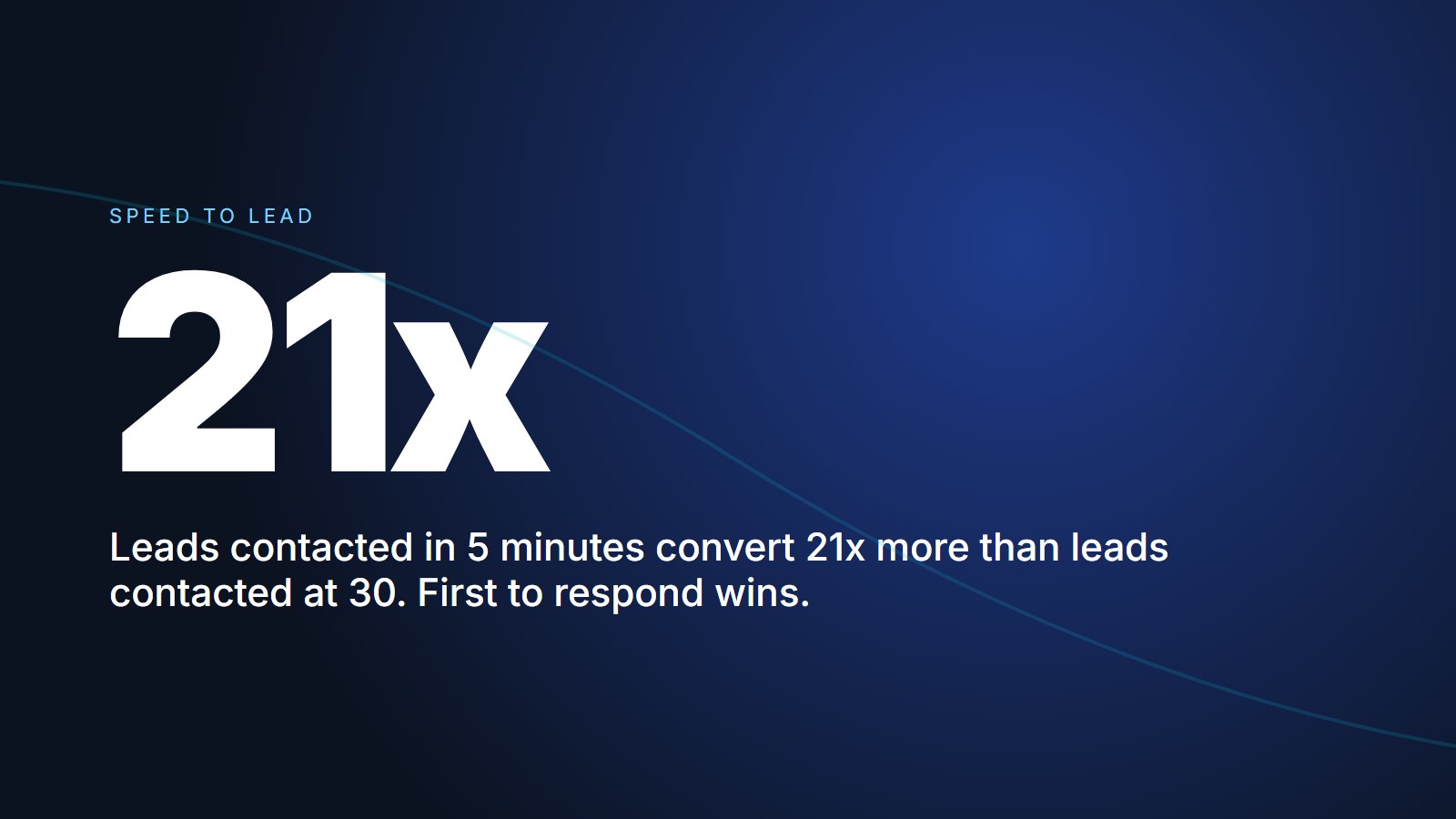
One more input, and it argues for the direct channel harder than any CAC figure. ZoomInfo’s follow-up statistics put it plainly: 48% of reps never send a second follow-up at all, and 35 to 50% of sales go to the vendor who responds first.
Half the vendors competing for your prospect’s attention quit after one touch. The account goes to whoever shows up first and keeps showing up.
Same lesson for MSP owners. The businesses you want as clients are surrounded by vendors who go quiet, miss calls, and follow up never. A provider who shows up proactively, the same week a prospect signs a lease or posts nine job openings, is competing against silence. That is the whole case for speed to lead as a sales weapon, and it counts double in a trust business like managed IT.
- A paid directory profile that shares every lead with four competitors
- A blog updated whenever someone remembers, read by nobody
- $1,500 in Google Ads spread too thin to learn anything
- Referrals treated as the plan instead of the bonus
- LinkedIn posts three weeks apart, then silence
- One vertical and one metro named in your positioning
- Trigger-timed outreach to 300 named accounts that fit your ICP
- One compounding channel fed weekly, LinkedIn or local SEO
- Sequences that run five or more touches before quitting
- A meetings-per-quarter number tracked like MRR
A 90-Day MSP Marketing Plan Your Vendor Should Be Running
Here is the MSP marketing plan I would hold any appointment-setting vendor to, phase by phase. Ninety days. Three phases. If you would rather build than buy, it doubles as the job description for the internal hire, held to the same numbers.
Days 1 to 14: lock the lane, the list, and the definition of a meeting
The vendor locks the vertical and metro with you, then builds a named list of 300 to 500 accounts that fit: 20 to 250 seats, an industry you already serve well, inside your coverage area. They draft one page of positioning for your approval: who you serve, the three outcomes you deliver, and the proof. That page becomes the email copy, the call script, and the LinkedIn message.
The other thing that gets written down in this window is what counts as a qualified meeting: the decision-maker titles, the seat range, the service area, and the fact that you approve each one before it counts. Write down who holds the veto, too. An office manager who takes the meeting to be polite cannot sign a three-year agreement, and a meeting with someone who has to go ask somebody else is a second cold call, held on your calendar and at your expense. If a vendor cannot put that on paper by day 14, you have learned what you needed to know.
Days 15 to 45: launch the direct channel
Secondary sending domains, warmed up before a single message goes out. Never bet your primary domain’s reputation on outbound, and never let a vendor do it either.
A five-touch email sequence spread over three weeks, where the first line references something true and specific about the account: the new office, the hiring spree, the software they run. A dedicated caller working the same list by phone, because a controller who ignores four emails will still pick up for a specific, well-timed call. LinkedIn touches to the same names, so the prospect has seen your shop three ways before the meeting request lands.
Every reply gets an answer inside the hour on business days, and every meeting is screened against the criteria from week two before it reaches your calendar. Speed reads as competence. So does not spending your afternoon on a six-seat bookkeeping firm.
Days 46 to 90: follow up and measure
This is where nearly everyone quits, and the data on quitting is embarrassing. Per ZoomInfo’s follow-up research, 44% of salespeople give up after a single follow-up attempt, while 80% of sales require at least 5 follow-up contacts.
of salespeople give up after a single follow-up attempt, while 80% of sales take at least five follow-up contacts. Most MSP outreach dies at touch two, long before the prospect ever said no.
Source: ZoomInfoPersistence is the free upgrade, and it is the first thing to check on a vendor’s reporting. Meanwhile, the owner feeds the compounding channel: two LinkedIn posts a week, or one local landing page a month.
Track three numbers the way you track MRR: qualified meetings booked per 100 accounts, proposals sent, agreements signed. Kill any list segment still at zero after six weeks. Double whatever books meetings. And hold the vendor to the number they wrote down in week two. By day 90 it is either hit or it is not, and the agreement should already say what happens if it is not.
If you take the build route instead, run the same plan with the same three numbers and the same day-90 checkpoint. The honest math is that one salaried rep plus data, tooling, and ramp time costs more than most owners expect, and the rep is usually the one deciding what counts as a meeting. That is the vetting question either way: who, exactly, is putting meetings on your calendar, and who decides that they count.
Where Trigger-Based Outreach Beats Everything
Outbound ranks first among scalable channels in this guide for one reason: timing is controllable. And timing is the whole game in managed IT, because businesses change providers around events, and the events are visible weeks in advance if you watch for them.
That mechanism is what we built the Ignitvio offer around. We run MSP lead generation as done-for-you outbound appointment setting for MSPs above $3M, and it follows the 90-day plan above because that plan is ours:
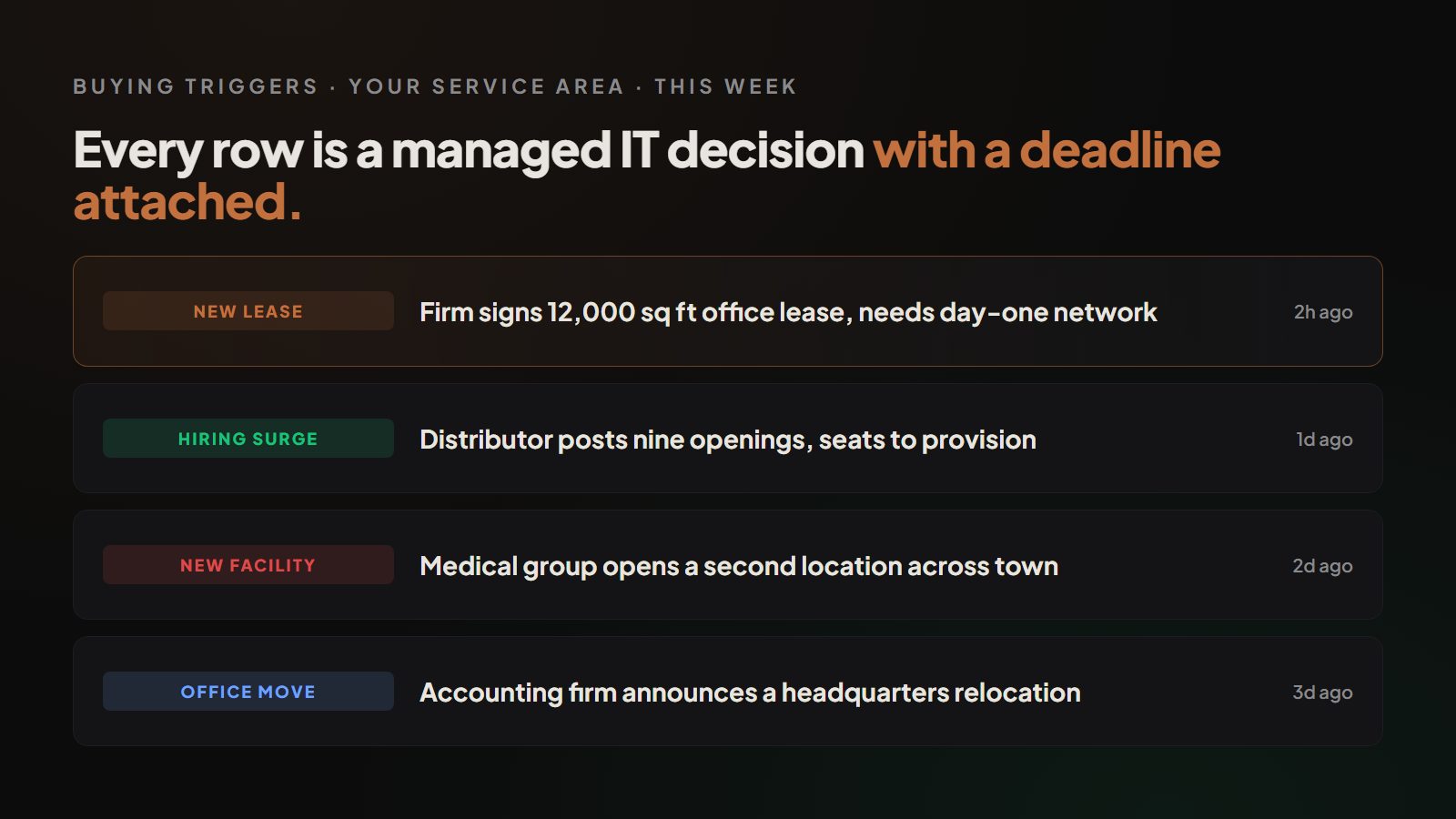
- We watch the triggers in your service area. Permits and zoning approvals for new facilities, building sales and lease events, personnel changes such as a new controller or a departed in-house IT lead, expansions and hiring surges, and contract renewal dates. A firm signing a 12,000 square foot lease needs cabling, network, and working endpoints on day one, and that project has a deadline attached.
- A dedicated human caller works the list, alongside cold email and LinkedIn. One person assigned to your shop, never a call center and never an AI dialer, calling the owners, controllers, operations managers, and practice administrators who actually sign managed services agreements, with email and LinkedIn touches running to the same names.
- Every meeting is qualified against criteria we agree on with you, then approved by you. Right decision-maker, right seat range, inside your coverage area, and a person who genuinely agreed to the call knowing what it is about. A meeting counts toward the minimum only after you sign off on it. Never a webinar signup rebranded as a lead.
- The qualified-meeting minimum goes in writing before we start. If we miss it, we keep working at no charge until it is hit. We never guarantee revenue or closed contracts, and you should sprint away from anyone who does.
Who is making the calls, and who decides a meeting counts
Those are the two questions owners ask first, usually because a previous vendor got both wrong. The caller is a person: one dedicated, US-based caller assigned to your shop, trained on your services, your stack, and your objections before the first dial, and never shared with another MSP. No AI dialer, no rotating call-center seat.
Whether a meeting counts is never the honor system. Before anything lands on your calendar you see the account, the contact, and the caller’s notes, and you pick one of three options: approve it, send the caller back for more information, or cancel it at no charge. No-shows are not billed. Our callers earn commission only on meetings that met the criteria or got your approval, so they are paid to disqualify. The refund on the build fee is written into the contract along with the gate it triggers at, so nobody is arguing about it from memory later. And we take one client per vertical per metro, which means the MSP across town cannot buy the same list and the same caller.
Done-for-you outbound
Where done-for-you outbound fits
Ignitvio runs outbound for you: a dedicated human caller (never a call center, never AI dialing) working alongside cold email and LinkedIn, armed with trigger data such as permits, zoning approvals, personnel changes, building sales, lease events, and contract renewal dates. Every meeting is qualified against criteria we agree on up front and approved by you before it counts. The qualified-meeting minimum goes in writing, and if we miss it we keep working at no charge until it is hit.
-
We qualify
Every prospect is screened against criteria we agree on with you up front.
-
You approve
A meeting counts toward the minimum only after you sign off on it.
-
You close
Your team runs the meeting and the deal. We keep the calendar full.
Built for MSP companies above $3M.
The one result we put in print is a commercial roofing client whose first closed deal from our meetings landed inside 45 days, which put them past 100% ROI before the second milestone payment came due. Different trade, same mechanism. Your close rate does the closing, and seat counts decide what each agreement is worth.
The same trigger machinery books meetings in other B2B trades too. Commercial cleaning companies use it to reach facility managers the month a building changes hands; that playbook is in how to get commercial cleaning contracts. And for the wider view of how we think about pipeline, start with our lead generation overview.
If you want to see the data before you see a calendar, the Free Pipeline Audit builds a sample prospect list and trigger map for your metro, the accounts sitting in a buying window right now, and includes a lead response check on your own inbound line and form.
See what a trigger-based pipeline looks like for your MSP
Bring your target vertical and metro. We will tell you inside 15 minutes whether the trigger volume there supports a written meeting minimum.
Book a 15-Minute Fit CallFrequently Asked Questions
What is MSP marketing?
How do MSPs get their first clients?
How much should an MSP spend on marketing?
What is the best marketing channel for MSPs?
Do MSP directories actually generate leads?
What counts as a qualified sales meeting?
Is it a person cold calling, or is it AI?
What if I show up and the prospect did not know who I was, or only said yes to get the caller off the phone? Do I still pay?
Will you work with my competitor in the same city?

Jake Melendy
Founder, Ignitvio
Jake Melendy is the founder of Ignitvio. He spent 12 years in enterprise sales and sales leadership, including at Oracle, before building Ignitvio, which runs done-for-you outbound appointment setting for commercial contractors and B2B service companies. He writes about pipeline, trigger-based prospecting, and lead response.