Appointment Setting Answering Service: 8 Platforms Scored on Same-Call Booking

An appointment setting answering service does one thing: it turns inbound calls into confirmed bookings before the caller hangs up. A confirmed time slot, written to your calendar, texted to the caller the moment it books. That’s the standard. Most services marketed under the “appointment setting” label don’t meet it.
The market has blurred this definition. A growing number of vendors advertise appointment setting and deliver message-taking with a callback step attached. The distinction between real same-call booking and callback-queue scheduling is where most service businesses lose revenue that never appears on any report.
This guide covers what a real appointment setting answering service looks like, how to test one before signing, and what separates the category leaders from message-taking services with better marketing copy.
8 Platforms Scored: Head-to-Head on Same-Call Booking
The category includes everything from per-minute human services that have answered calls since the 1990s to flat-rate AI platforms that book appointments inside a 60-second call. The eight platforms below are the names that show up most often in service-business buying conversations, scored on the four dimensions that actually decide whether a call becomes a booked job: live human versus AI, real same-call calendar booking, after-hours booking capability, and starting price.
A score of “Booking” means the platform writes appointments to your calendar during the live call. “Message-only” means the platform takes a message and leaves the booking step for your office. “Limited” means booking works in narrow conditions only, usually during business hours with one or two specific calendar integrations.
| Platform | Live vs AI | Same-call booking | After-hours booking | Starting price |
|---|---|---|---|---|
| ReceptionHQ | Live | Limited (basic calendar only) | Message-only after hours | $39/mo + $0.99/min |
| AnswerConnect | Live | Limited (HubSpot, ServiceTitan) | Booking, premium tier | $325/mo (200 min) |
| AnswerForce | Live | Limited (10 integrations) | Booking, premium tier | $279/mo (150 min) |
| Smith.ai | Hybrid AI + Live | Booking (Clio, HubSpot, Salesforce) | Booking | $293/mo (30 calls) |
| Posh Virtual Receptionist | Live | Message-only | Message-only | $189/mo (100 min) |
| MAP Communications | Live | Limited (basic Google Calendar) | Limited | $43/mo + $1.39/min |
| Ruby Receptionists | Live | Limited (Clio, Rocket Matter) | Message-only after 9 PM ET | $354/mo (100 min) |
| Davinci Virtual | Live | Message-only | Message-only | $129/mo (50 min) |
A few patterns stand out. First, four of the eight platforms operate as message-taking or “limited booking” after hours, which is when the highest-urgency calls arrive for trades and medical practices. Second, the per-minute pricing layer attached to most live human services means a busy week or a long intake call quickly outruns the base plan. Third, only Smith.ai books appointments during the live call across most major integrations, and even that is delivered through a hybrid model where the AI handles intake and a live agent confirms.
The flat-rate AI category sits outside this list deliberately. The eight names above are the ones service business owners compare when shopping the “appointment setting answering service” category. The buyer’s guide that follows lays out the five standards that separate real booking platforms from message-taking with prettier marketing.
The Term Your Vendors Swapped for Marketing Copy
Appointment setting started as a sales term. In B2B circles, it describes outbound calling: hired reps dialing prospect lists, qualifying them, and scheduling discovery calls for a company’s sales team. Cold outreach with a specific goal.
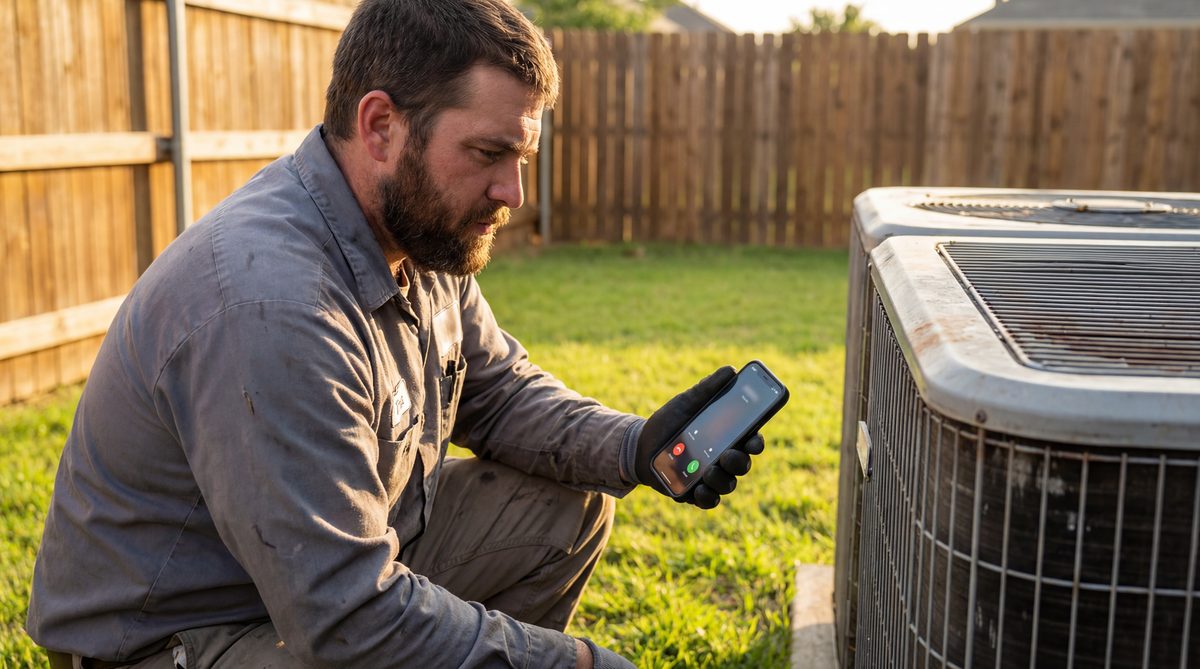
For service businesses (HVAC companies, dental practices, plumbing shops, law firms) the term took on a different meaning. When a home services owner searches “appointment setting answering service,” they usually want the inbound version: a system that answers calls from customers already ready to hire them and books the job before the call ends.
The problem is that vendors in both categories use the same label. A Phoenix HVAC company looking for a service that handles Tuesday-evening calls and books Wednesday service slots might spend weeks evaluating outbound B2B appointment setting agencies before realizing they are in the wrong category entirely. Or they sign with an answering service that claims appointment setting capability but operates as a message-taking service with better wording on the pricing page.
The real test is simple. Call the actual phone number callers would reach on a weeknight after 7 PM and try to book an appointment. The demo line is rehearsed. The live number is the product. If you hang up without a calendar confirmation and a text message, you have the service’s real capability.
For a detailed breakdown of how same-call booking workflows actually operate from first ring to confirmation text, see the live answering service appointment scheduling walkthrough below.
For service businesses, appointment setting means one thing: the caller hangs up with a confirmed slot. Everything else is message-taking under a different label.
What Answering Service Appointment Scheduling Sounds Like on a Real Call
Here’s what a real scheduling call sounds like. Tuesday, 9
PM. A homeowner in Plano, TX, just realized their AC compressor is dead. They Google “HVAC repair near me” and dial the first listing.AI: “Thanks for calling Peak HVAC. Sounds like you’ve got an AC issue. Is the unit running and not cooling, or completely off?” Caller: “Completely off. I just got home and the house is 84 degrees.” AI: “Got it. Single story or two story?” Caller: “Two story. The outdoor unit is on the side of the house.” AI: “I have a tech who can be there tomorrow at 8 AM or 11 AM. Which works better?” Caller: “8 AM.” AI: “Confirmed. I’m texting you the appointment confirmation now. Tech name is Marcus, he’ll text 30 minutes before arrival. Anything else?”
That whole exchange takes 80 seconds. The slot is written to ServiceTitan, the confirmation text fires, and Marcus’s morning route picks up a $400 same-day repair call that the next four contractors on the SERP missed because they sent it to voicemail.
The traditional answering service version of the same call ends with a message in someone’s inbox, a callback at 8
AM, and a homeowner who already booked with someone else.The Revenue Gap Between “We’ll Call You Back” and “You’re on the Calendar”
The cost of a callback queue accumulates without appearing on a report. It shows up in conversion rates, in competitors who captured the weekend calls, in quote requests that went cold while waiting two business days for a return call.
For trades businesses, the math is straightforward. According to Housecall Pro’s industry research, emergency service calls close at 2 to 3 times the rate of planned work. The caller with a burst pipe in Austin, TX, at 10 PM on a Friday is not comparing quotes. They are hiring whoever books them on the first call.
Angi’s service cost data puts average plumbing repair tickets at $175 to $450. HVAC service calls run $150 to $450, with system replacements reaching $5,000 to $10,000. At those ticket sizes, one missed Friday-evening call is not a $200 loss. A service call that converts to a system replacement is worth $7,000 more than the original emergency ticket.
A message-taking answering service answers the call, captures a name and number, and sends an email. Your team sees it Saturday morning. They call back. Voicemail. They try again at noon. The homeowner already booked with the first company that picked up, the one that confirmed the appointment at 10
PM Friday.Every callback queue is a revenue leak with no alarm on it. The calls arrive. The messages accumulate. The bookings that did not happen never appear on any report.
Five Non-Negotiable Standards for an Appointment Setting Answering Service
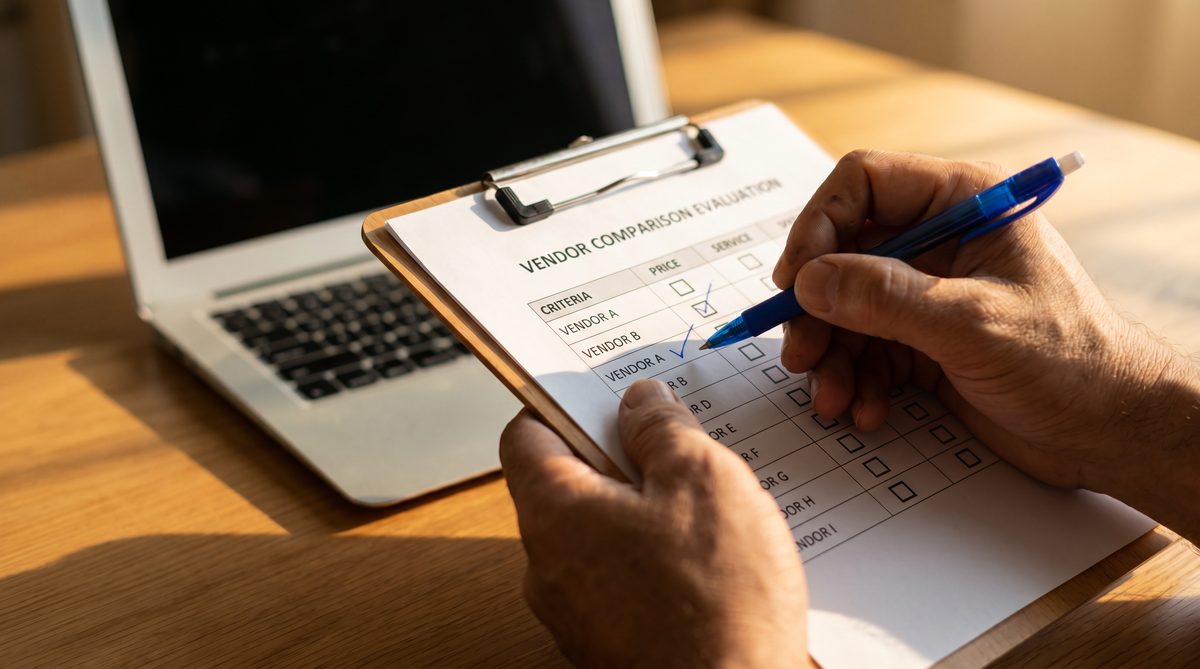
Not every service that claims appointment setting delivers it. Five standards separate real booking services from message-taking operations with a different name.
1. Live, two-way calendar sync. The answering system needs to see your actual schedule and offer only slots that are genuinely open. If two callers want the same slot, the system must catch the conflict in real time. This requires a live connection to Google Calendar, Outlook, ServiceTitan, Jobber, or your practice management platform, with changes flowing both directions.
2. Intake scripts configured for your appointment type. Booking an HVAC service call requires different information than booking a dental cleaning. An HVAC intake needs: service address, problem description, water or gas involvement, and whether the homeowner will be on-site. A dental intake needs: insurance carrier, new-patient status, and reason for the visit. Generic “name, number, reason for calling” scripts produce messages that do not prepare your team for anything.
3. Confirmation sent the moment the slot books. The appointment exists only in the caller’s memory until they receive something concrete. A confirmation text fires the moment the slot writes: date, time, address, prep instructions. The caller adds it to their phone. No-shows drop. A systematic review of 29 appointment-reminder studies found reminders cut no-show rates by roughly a third compared to unreminded appointments.
4. Full booking capability after hours. Most answering services genuinely book during business hours and degrade to message-taking after 6 PM and on weekends. That is exactly when the highest-urgency calls arrive. For trades businesses, evening and weekend calls skew toward emergency work, which converts at the highest rate and carries the largest average ticket. Verify after-hours capability with a live test: call the number on a Sunday morning and try to book.
5. Missed-call SMS recovery. Every system drops a call occasionally. A recovery layer texts any missed caller within 30 seconds: “Sorry we missed you. What can we help with?” Most missed callers who receive a timely recovery text complete a booking during the same text session. The text catches what the call dropped.
increase in conversion rate when a business calls a new lead in under one minute. Same-call booking is the most direct implementation of that principle.
Source: Velocify, The Ultimate Contact Strategy studyHow AI Rewired the Appointment Setting Answering Service Market
For most of the last three decades, appointment setting answering services operated on one model: human operators billing by the minute. Per-minute pricing creates a structural incentive toward short calls. A message-taking call costs $0.90 to $1.50 per minute and runs 90 seconds. A full intake-and-booking call runs 4 to 7 minutes. The economic pressure pushes operators toward getting off the call fast, which means taking a message instead of booking the appointment.
AI appointment setting services operate on a different model. Flat monthly rates. No per-minute clock. No per-call escalation during surge hours or on holidays. The system handles calls at the same cost regardless of volume, call length, or time of day.
What this means practically: the after-hours surge on the first hot week of June, the Monday morning backup when three callers want the same window, the holiday weekend calls. All handled at the same rate as a Tuesday afternoon. Services built on per-minute billing either degrade to message mode during those surges or cost far more than the base plan implied.
For a full comparison of how pricing structures stack up across providers, the answering service pricing breakdown covers the complete model spectrum from per-minute live services to flat-rate AI.
The shift to AI also expanded what appointment setting can do. An AI system handles unlimited simultaneous calls. No busy signals. No hold queues. It checks your live calendar before offering a slot. It fires the confirmation text the instant the appointment writes. It follows your intake script every call, without variation, regardless of how many calls came in before it or how late it is.
According to G2 buyer reviews for virtual receptionist services, hidden fees around after-hours calls and surge pricing are among the most common negative findings from businesses that switch providers. Per-minute models are the structural source of those surprises. Flat-rate models are not.
What the Best Operators Actually Do at 11 PM on a Saturday
The after-hours story separates services that book from services that describe booking.
A consistent pattern shows up in conversion audits: the gap between “calls answered” and “appointments booked.” A business runs what looks like a fully operational answering service. It answers calls. It captures intake information. It sends the office a morning summary. The owners believe they are covered.
Then a test call goes out at 11 PM on a Saturday, attempting to book. Message mode. Or voicemail. Or a live operator who cannot access the calendar, so the appointment sits in a queue for the office to confirm Monday morning.
The Saturday night test: call your own number from a personal phone on a weekend evening and attempt to book. What happens is exactly what your callers experience.
The businesses with the highest inbound conversion rates treat after-hours calls as their highest-priority lead type. Those callers are in active need, often with a problem that cannot wait until Monday.
According to Harvard Business Review’s lead response research, following up within one hour makes you 7 times more likely to qualify a lead than waiting longer. For businesses where “following up” means calling back the next business day, that window closed before the office opened. The after-hours virtual receptionist guide covers what genuine 24/7 booking coverage requires at the operational level.
How to Verify an Appointment Setting Service Before You Sign
The evaluation process has one reliable test and a set of supporting questions that surface what the marketing page does not show.
The reliable test: call the live number callers actually reach, on a weekend evening, and try to book. The demo line is rehearsed. The live line is the product.
Questions that surface the gaps:
On calendar access: Which systems do you integrate with? Is it live two-way sync, or a static availability document? Can the system see same-day cancellations in real time? A service that books from a static “available windows” list will double-book the moment two callers want the same slot.
On after-hours capability: Do you book appointments after 6 PM and on weekends, or take messages? What exactly happens when a caller wants to book at 9 PM on Sunday? “We take messages after hours” often comes dressed in more comfortable language.
On intake scripting: Is the intake script built for my specific business and appointment types, or is it a generic call handling script? For a trade business, generic scripts collect too little to prepare the team. For a medical practice, they may capture information that should not be collected.
On pricing during surge: What is the actual cost during a high-volume week? Per-minute and per-call models escalate fast during the first hot week of summer for an HVAC company, or during a Monday-morning surge for a dental practice. Flat-rate models do not.
On confirmation and follow-up: Does the appointment confirmation go to the caller immediately after booking, or does your office send it? Does the system handle pre-appointment reminders automatically, or is that a manual task for your staff?
The answers tell you whether you are evaluating an appointment setting service or a message-taking service with better copy on its website.
The Compound Effect of Getting Every Call to a Confirmed Booking
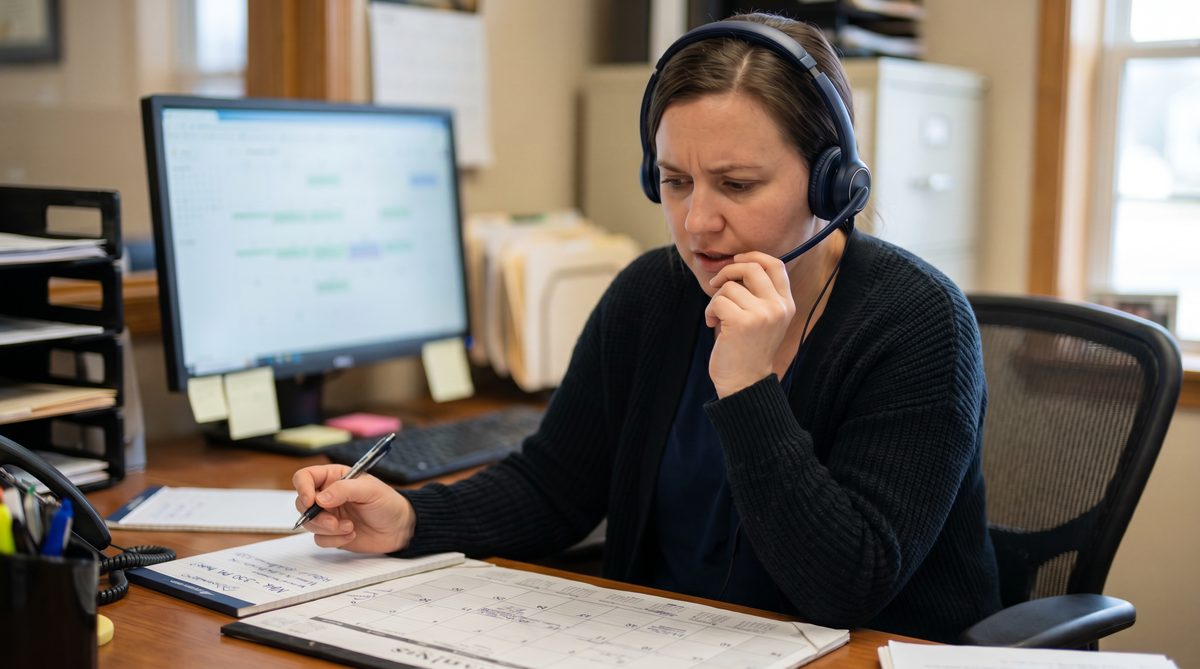
The revenue impact of moving from message-taking to same-call booking does not arrive as a single visible change. It accumulates call by call.
Model a Dallas, TX HVAC company running 31 inbound calls per week through a traditional message-taking answering service. Its Monday-morning callback queue averages 14 items. The team reaches roughly 60% of those callers on callback; the other 40% have already booked elsewhere or gone cold. Most bookings come from calls that reach someone live during business hours.
Move the same company to a same-call booking system: 31 calls per week, 27 confirmed during the call regardless of time, 4 missed and recovered via text within 30 seconds. The callback queue drops to zero. In this model, monthly booked jobs increase by roughly 40%. Marketing spend unchanged. Call volume unchanged. Conversion rate changed.
At $350 average ticket: 12 additional converted calls per week × $350 × 52 weeks = $218,400 in annual revenue recovered from the same inbound call volume.
- Calls answered, information captured, office notified by email or text
- After-hours callers reach message mode or voicemail, no booking capability
- Calendar bookings require manual staff coordination, double-booking is common
- No-shows go unrecovered until staff notices and manually rebooks
- Appointment confirmations sent by office staff, or not sent at all
- Callback queue grows overnight and on weekends, Monday mornings are overloaded
- Per-minute or per-call pricing spikes during your busiest weeks
- Every call ends with a confirmed appointment booked before the caller hangs up
- 24/7 booking at full capability, after-hours calls convert at the same rate as daytime
- Live two-way calendar sync prevents double-booking on the call
- Missed-call SMS recovery fires in 30 seconds, no-show reminders fully automated
- Confirmation text fires the instant the slot writes, no staff action required
- No callback queue, every call resolves during the call around the clock
- Flat monthly rate covers surge volume, after-hours, and holidays at the same price
Which Industries Get the Biggest Revenue Lift From Same-Call Booking
Not every service business loses equally when calls end in messages. In these four verticals, the gap between message-taking and same-call booking has the largest revenue impact.
Home services and trades
HVAC, plumbing, electrical, and roofing businesses field calls from customers who have a problem right now. The urgency is high, the booking timeline is short, and tolerance for “someone will call you back” is close to zero. Same-call booking is the most direct expression of fast response: the call ends with a confirmed appointment instead of a callback queue. See the after-hours virtual receptionist breakdown for the trades-specific deep dive.
Medical, dental, and veterinary practices
New patient acquisition via phone is high-stakes and time-sensitive. Practices that answer with live scheduling convert at dramatically higher rates than practices that collect callback information and follow up the next business day. For a caller trying to book an urgent visit, “someone will call you back in the morning” sends them to the next provider who answers. A confirmed appointment resolves the scheduling need immediately.
Legal offices and professional services
Solo practitioners and small law firms, where the attorney handles active matters all day and fields intake calls in whatever gaps exist, are at the highest risk of message-mode losses. A scheduling service that books consultations live keeps the intake pipeline moving regardless of what is happening in the office.
Wellness, fitness, and personal services
Salons, gyms, massage therapists, and similar businesses run almost entirely on booked sessions. A caller who cannot book live calls the next provider who answers. Same-call booking is table stakes in this category, which is why the shift to AI scheduling has been fastest here.
How Ignitvio Handles Appointment Setting for Service Businesses
Ignitvio’s AI answering platform runs the complete appointment setting workflow for home services companies, medical and dental practices, legal firms, and other appointment-driven service businesses. The system answers calls, runs industry-configured intake, checks your live calendar, books the appointment, fires the confirmation text, and manages the reminder sequence, all before the caller hangs up.
The booking platform connects directly to Google Calendar, Outlook, ServiceTitan, Jobber, Housecall Pro, Acuity, and Calendly. Intake scripts are configured during setup for your specific appointment types, not a generic call-handling script applied to your account. Setup takes under a week. The system handles your call volume 24/7 at a flat monthly rate.
Beyond booking, the platform handles:
- Missed-call SMS recovery within 30 seconds of any dropped call
- Two-touch reminder sequence at 24 hours and 2 hours before each appointment
- No-show recovery automation that rebooks missed appointments without staff involvement
- Post-appointment review request to build your Google rating over time
The businesses that see the fastest return are those already running an answering service but who discover through a conversion audit that “answered calls” and “booked appointments” are very different numbers. The call volume does not change. The booked percentage does.
Find out how many of your calls are actually converting to booked jobs
We mystery-shop your current setup, including after-hours and weekend calls, and show you exactly what is booking versus going to a callback queue. Free.
Book a Revenue AuditFrequently Asked Questions
What's the difference between appointment setting and appointment scheduling?
Can a traditional answering service really book appointments, or just take messages?
Will an AI answering service actually book the appointment, or just hand off to a human?
What happens if the calendar is full when someone calls?
How does the AI know what intake questions to ask for my specific business?
Does same-call booking actually reduce no-shows?
What about HIPAA for healthcare practices?

Jake Melendy
Founder, Ignitvio
Jake Melendy is the founder of Ignitvio. He spent 12 years in enterprise sales and sales leadership, including at Oracle, before building Ignitvio, which runs done-for-you outbound appointment setting for commercial contractors and B2B service companies. He writes about pipeline, trigger-based prospecting, and lead response.