Commercial Roofing Marketing: 8 Proven Strategies
Owners of commercial roofing companies tell us the same story. Somebody sold them meetings. An estimator drove across the metro for a walkthrough, and the person at the building either did not know who he was, had only said yes to stop the calls, or could not sign anything. The invoice came anyway. Back at the shop, the owner is still the only one selling, the website brings a commercial inquiry every few weeks at best, and the crew needs backlog before the busy season ends.
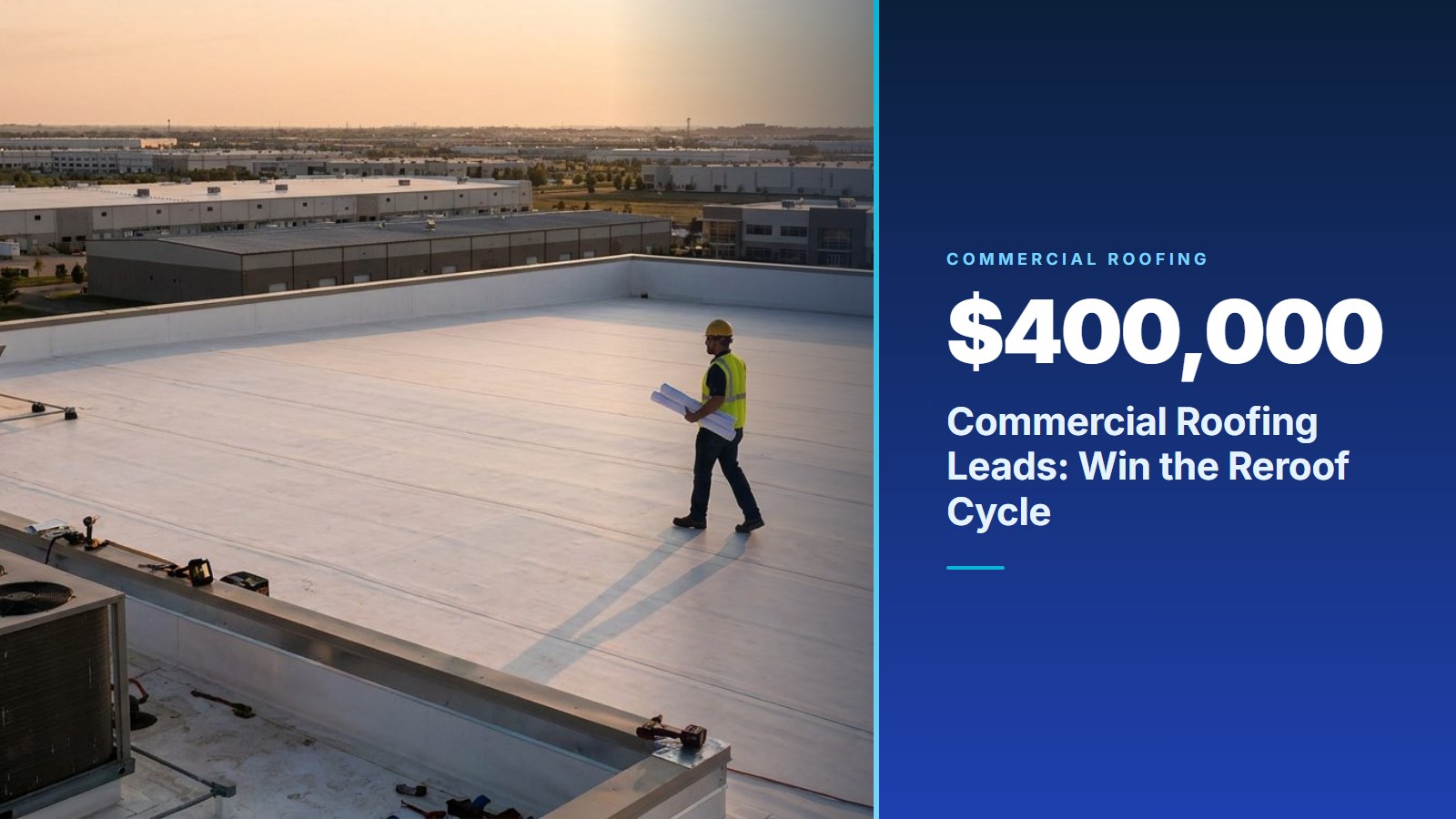
The property manager who signs a $400,000 re-roof contract did not find her roofer on Google. She hired the company that had been patching leaks across her portfolio for two years, the one whose estimator she already had in her phone.
That is the part most contractors miss. They market commercial the way they market residential: storm door hangers, search ads, a wrap on the truck. Different buyer. Different game.
Roofing in the US is a $92.5 billion industry in 2026, per IBISWorld, and the commercial side gets bought by a surprisingly small group of people: property managers, facility directors, and building owners. You can list them by name. Most of your competitors never will.
- The people who sign commercial roofing contracts are a short, public list: property managers, facility directors, owners. Go to them directly.
- Leak repair is the entry point. Maintenance agreements are the moat. The re-roof goes to the incumbent.
- Fast response to inbound inquiries is the cheapest win on this list, because most competitors never respond at all.
- Generic email blasts earn replies under half a percent. Outreach timed to a buying trigger is a different sport.
Here are eight commercial roofing marketing strategies, ranked by return for a commercial roofing contractor at $3M and up. Number one pays back fastest. Each comes with a first step you can take this week.
1. Go Direct to the People Who Own the Roof Budget
Every commercial building in your service area has one person responsible for its roof. A property manager juggling 14 buildings. A facility director at a distribution center. An owner with a strip mall and a leak she has been ignoring since March.
That list is small, it is public, and almost nobody mails it anything but invoices.
Your entire commercial buyer universe might be 600 names. Marketing to them is a spreadsheet problem, and spreadsheet problems are winnable.
Direct outreach, email plus a phone call, is the highest ROI play in commercial roofing because you do not need to be famous. You need to be specific: name their building, name the roof system on it, name the thing about to go wrong.
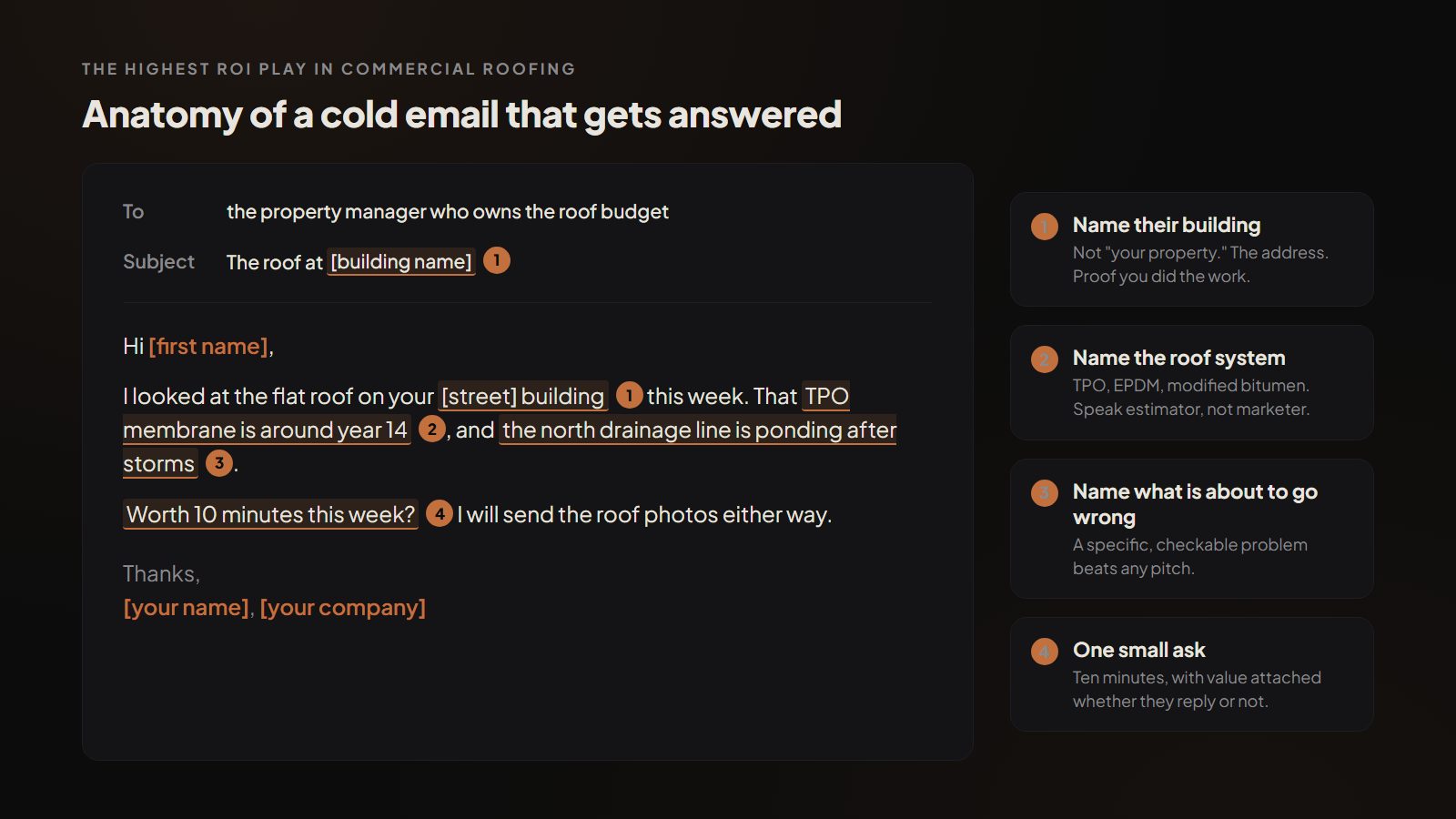
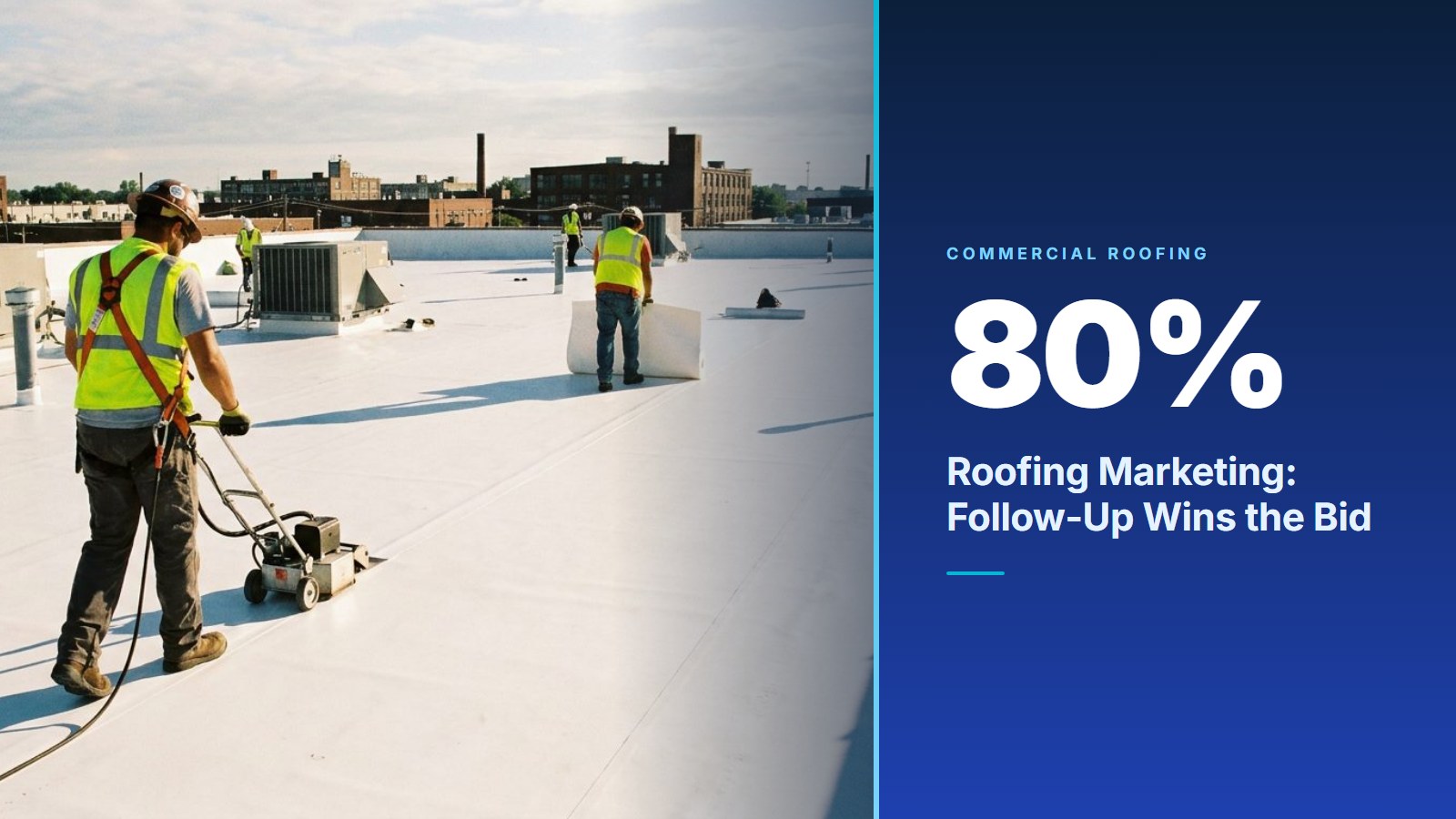
Persistence does the rest. ZoomInfo reports that 80% of sales require at least five follow-up contacts, yet 44% of reps quit after one attempt. And Woodpecker’s analysis of over 20 million sales emails found that adding a single follow-up increases total replies by 65.8%. The bar is on the floor.
Get in front of somebody before the job hits the bid board
Owners in the trades describe plan-and-spec the same way: the prints go out to dozens of shops, the low number wins, and their own hit rate sits somewhere between 5 and 10 percent. Direct outreach changes the order of events. When the facility director already knows your estimator, the re-roof starts as a conversation instead of a competitive bid, and when it does go out to bid, you are the shop she calls to say the low number came in under yours. That call only happens if you got in front of somebody first.
For the full outbound playbook, see how to get commercial roofing leads.
First step: build a list of 100 buildings in your service area with a decision-maker name, an email, and one true fact about each roof.
2. Lead With Leak Repair, Land the Maintenance Deal
Nobody fires their roofer while the roof is dry. The way into a building is the leak.
It rains hard on a Tuesday and a property manager has three ceilings dripping by 9 AM. Her incumbent roofer is buried. If you can be on that roof within 24 hours with photos and a fixed price, you just auditioned for everything that comes next.
The leak call is the cheapest commercial roofing lead you will ever get. Treat it like an audition, because it is one.
What comes next is the maintenance agreement: two inspections a year, photo-documented reports, priority response. Recurring revenue for you, budget predictability for them, and when the re-roof finally comes up, you are the incumbent. Property managers already buy building services this way. Look at how commercial HVAC maintenance contracts lock in the relationship years before the big replacement.
First step: write a flat-rate 24-hour leak-response offer and email it to every property manager on your list the morning after the next big storm.
3. Your Google Profile Is the Vetting Layer
Commercial buyers rarely start their search on Google. They end it there.
Before a facility director signs a six-figure contract, she looks you up at 9 PM. What she finds either confirms the referral or kills it. BrightLocal’s 2026 survey found 97% of consumers read reviews for local businesses, and property managers turn into consumers the moment they vet a vendor.
of consumers will not use a business with fewer than 20 reviews. A thin profile quietly kills referrals you never knew you had.
Source: BrightLocal Local Consumer Review SurveySo tune the profile for the buyer you want. Photos of TPO and modified bitumen work instead of shingle jobs. Reviews that name the building type. Warehouses. Schools. Medical offices. A description that says commercial in the first sentence.
First step: ask your ten best commercial clients for a Google review that names their building type and the work you did.
4. Answer Fast. Most of Your Competitors Don’t.
Here’s the thing. You could skip half this list and still grow if you simply responded to the inquiries you already get, because most of your competitors do not.
I know because we tested it. In May 2026 we called 102 roofing companies across Dallas-Fort Worth and tracked who answered and who called back.
56% never picked up and never called back. Ever.
Among the companies that did respond, the gap between the fastest and the slowest was 30x. The median callback took 31 minutes.
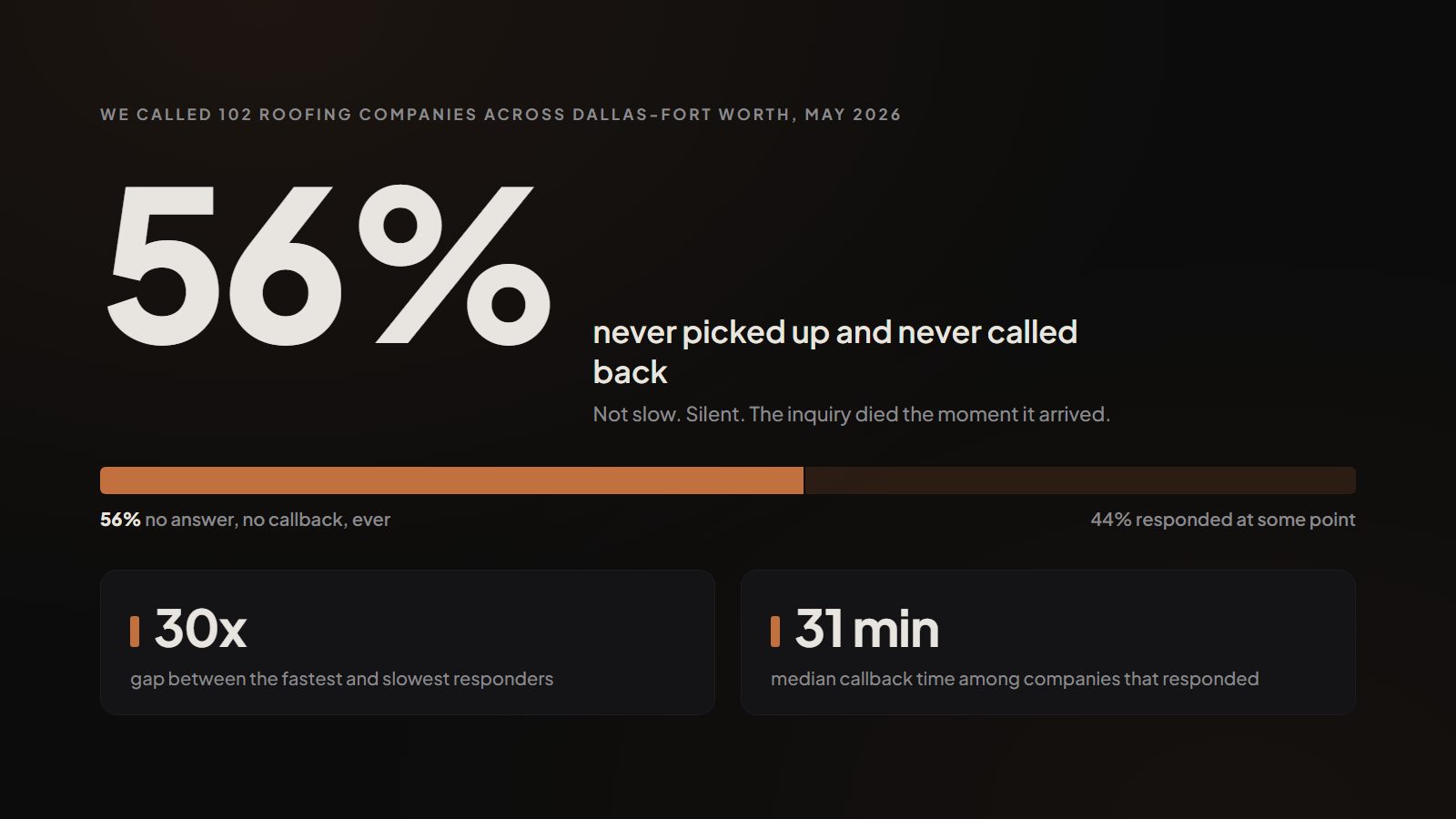
Now hold that median against what the response-time research says:
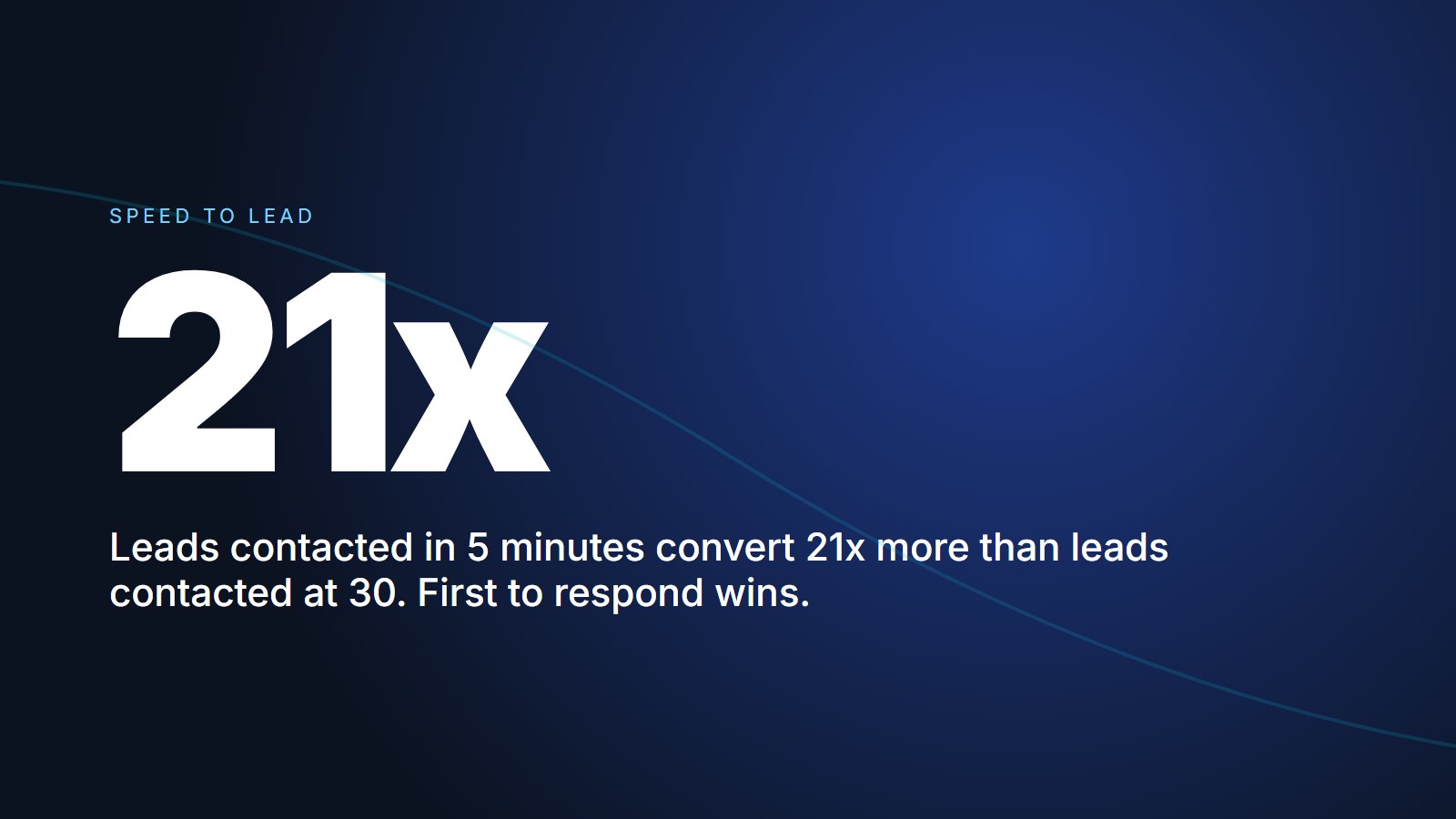
The odds of qualifying a lead drop 21-fold when response time stretches from 5 minutes to 30 minutes.
Source: Lead Response Management studyA 31-minute median callback sounds respectable. The research says otherwise. By a lot. Speed to lead is the whole game on inbound, and a commercial inquiry usually has a contract standing behind it, so every missed call costs more here than it does in residential.
First step: call your own office at 4
PM on a Friday and time how long it takes a buyer to reach a human. Fix whatever you find.5. Prospect on Triggers, Not Cold Lists
Most cold outreach fails because it is timed to the sender’s calendar instead of the buyer’s roof. Belkins analyzed 7.5 million cold emails and measured an average reply rate of 0.45% across 2025 campaigns. Under half a percent. That is what spraying a purchased list gets you.
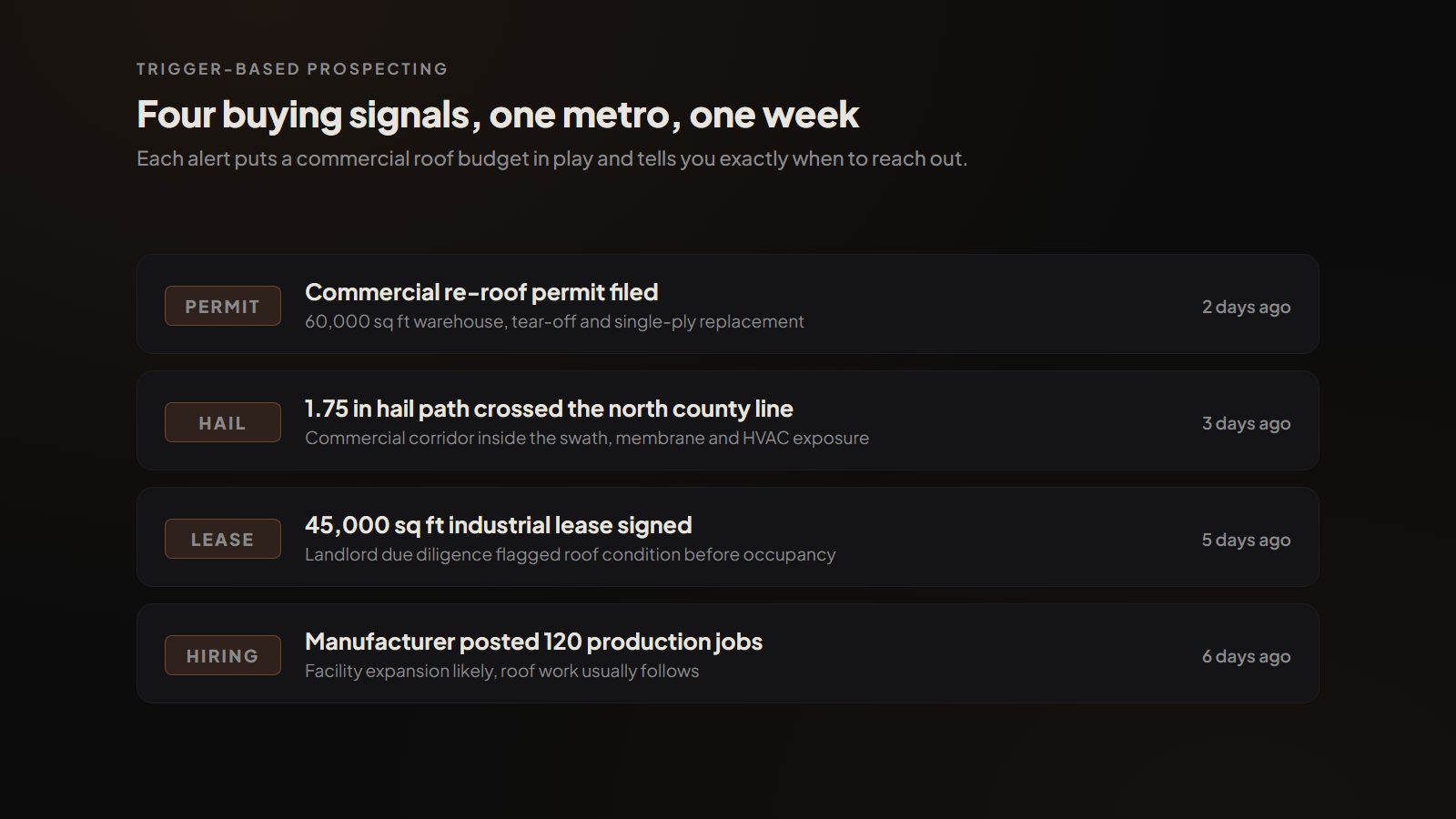
Triggers change the math. A permit filing. A hail path across your county. A 45,000 square foot lease whose due diligence just flagged the roof. A manufacturer posting 120 production jobs, which usually means the facility is about to grow. Each event puts a roof budget in play, and each one tells you exactly when to show up.
- One generic email to 2,000 purchased contacts
- Reply rates under half a percent
- Pitch arrives whenever you got around to it
- First line could be sent to any building in America
- 100 buildings where something just changed
- First lines that name the trigger and the property
- Pitch lands inside the buying window
- Every email has a reason to exist this week
Permits. Weather data. Lease filings. Hiring feeds. Watching all four across a whole metro is a full-time job, which is the honest reason most contractors never run this play. Some build the habit anyway with a Friday-morning routine. However you staff it, the principle stands: reach out when something changed.
First step: subscribe to your county permit portal and set alerts for five trigger types: new commercial construction, tenant build-outs, hail events, lease announcements, hiring surges.
6. Build a Referral Bench That Bids You In
General contractors, roofing consultants, commercial real estate brokers, property management firms. These people award or influence more commercial roofing work than every ad channel combined.
Passive referrals trickle. Bid lists flow. The difference is whether you asked.
Nobody bids you in because they like you. They bid you in because you made them look good on the last job.
Get on the approved-vendor list at three property management firms and you will see more RFPs in a quarter than a year of advertising produces. The same relationship math runs across every building service. Same buyer. Same ask. The playbook for winning commercial cleaning contracts is nearly identical.
First step: list ten GCs and three property management firms in your metro, then ask each one what their approved-vendor process requires.
7. Publish Proof by Building Type
A commercial buyer does not want your portfolio. She wants proof you have handled her building.
Each building type gets its own case study. One page. Four photos from the roof. The problem, the system installed, the timeline, and what the work cost the tenant in disruption (ideally nothing).
A warehouse owner trusts a warehouse case study. Everything else is decoration.
Then distribute where the buyers already are. Property managers and facility directors live on LinkedIn, and a specific case study travels further there than any ad. One post per project. No stock photos.
First step: write one case study from your last completed project and post it on LinkedIn this week, with the building type in the first line.
8. Chase Every Bid You Ever Sent
The warmest list you own is sitting in your estimating software. Every bid that went quiet. Every inspection report that never turned into work. Budgets change, tenants change, and roofs get one year older every year.
of all replies to cold outreach come from follow-up messages, not the first email, across 20 million sales emails analyzed.
Source: Woodpecker cold email studyBottom line: the contractor who calls back in Q3 wins the job the Q1 bid started. Set a quarterly re-touch on every open bid and every past inspection. The cost? One afternoon.
First step: export every bid from the last 24 months, sort by contract size, and call the top ten that went silent.
Where Done-for-You Outbound Fits
Let’s apply that. Five of the eight strategies above belong in-house, and no vendor should touch them. Your Google profile (3), your inbound response (4), your referral bench (6), your building-type case studies (7), and your dead-bid list (8) are relationship and proof work. They compound because your own people did them.
Strategies 1 and 5 are a different kind of work. Watching permit feeds and lease filings, verifying which property manager actually owns the roof decision, writing a first line that names the trigger, calling the same facility director a fifth time without losing the thread. That is a sales ops job, and at $3M and up your estimators already have one. It is also the work that quietly stops the week a big install starts.
That gap is what Ignitvio runs. A dedicated human caller assigned to your account (never a call center, never AI dialing) works the property manager and facility director list from Strategy 1 by phone, while cold email and LinkedIn carry the same trigger note to the same buyer. The triggers are the full set from Strategy 5 and then some: permit filings, zoning approvals, building sales, lease events, personnel changes (a new facility director means every incumbent vendor is up for review), and contract renewal dates on the maintenance agreements your competitors hold today.
Done-for-you outbound
Where done-for-you outbound fits
Ignitvio runs outbound for you: a dedicated human caller (never a call center, never AI dialing) working alongside cold email and LinkedIn, armed with trigger data such as permits, zoning approvals, personnel changes, building sales, lease events, and contract renewal dates. Every meeting is qualified against criteria we agree on up front and approved by you before it counts. The qualified-meeting minimum goes in writing, and if we miss it we keep working at no charge until it is hit.
-
We qualify
Every prospect is screened against criteria we agree on with you up front.
-
You approve
A meeting counts toward the minimum only after you sign off on it.
-
You close
Your team runs the meeting and the deal. We keep the calendar full.
Built for commercial roofing companies above $3M.
Who is on the phone, and what counts as a meeting
Those are the two questions owners ask first, and the two a prior vendor usually dodged. The caller is a person: one dedicated, US-based caller on our team, trained on your roof systems and your objections before the first dial, calling from a local number as business development for your company. No call center, no AI dialer, no rotating pool.
A qualified meeting is never the honor system. Every meeting reaches you before it happens with three options: approve it, send the caller back for more information, or cancel at no charge. Callers are not commissioned on meetings that miss the criteria, so nobody is paid to push a weak walkthrough through. The guarantee lives in the contract, with a refund election on the build fee at the agreed gate, and we take one commercial roofing client per metro, so your caller is never dialing the same property managers for a competitor. Judge it the way you would judge a salesperson: months to payback, on net profit, on the meetings you approved.
Two things separate this from the appointment-setting pitches already in your inbox:
- Qualified is defined before kickoff, and you approve every meeting. The right decision-maker, a building that fits your size range and service area, and a person who genuinely agreed to the call. A meeting that fails any of those tests, or that you decline, never counts toward the minimum.
- The guarantee is in writing. We agree on a qualified-meeting minimum before we start, sized to your metro. Miss it and we keep working at no charge until it is hit. Revenue and signed contracts are never guaranteed, because the close rate belongs to your estimators.
This is also where the strategies you own start paying twice. The case study from Strategy 7 goes into the follow-up after every meeting, matched to the building type in the room. The dead-bid export from Strategy 8 is the first list we load, because a property manager who requested a quote two years ago is warmer than any trigger. And approved-vendor status from Strategy 6 is what turns a booked meeting into an RFP invitation instead of a one-off quote.
One commercial roofing client closed its first deal from the program inside 45 days and was past 100% ROI before the second milestone payment came due. One account, one metro, one set of triggers. Your building mix, ticket size, and service area set your own numbers, which is why the meeting minimum gets written against your market instead of copied from someone else’s.
Outbound is one layer of a complete lead generation system. It stacks on top of everything above it on this list, and it fills the calendar while Strategies 2 through 8 build the reputation that closes what lands there. The full picture for this vertical is on our commercial roofing lead generation page.
See if trigger-based outbound fits your service area
Fifteen minutes on your metro, your building mix, and whether a written meeting minimum makes sense for you.
Book a 15-Minute Fit CallFrequently Asked Questions
What is the most effective marketing for a commercial roofing company?
How do commercial roofers get clients without a big ad budget?
Do Google Ads work for commercial roofing?
What counts as a qualified meeting in commercial roofing lead generation?
How long does it take to win a commercial roofing contract?
How much should a commercial roofing contractor spend on marketing?
Is it a person cold calling, or is it AI?
Does a meeting with a property manager count as qualified?
If I show up and the prospect barely remembers the call, or nobody shows, do I still pay?
Prefer to see it first? Start with a Free Pipeline Audit
A sample prospect list and trigger map for your metro, plus a check on how fast your office answers a commercial inquiry.
Get Your Free Pipeline Audit
Jake Melendy
Founder, Ignitvio
Jake Melendy is the founder of Ignitvio. He spent 12 years in enterprise sales and sales leadership, including at Oracle, before building Ignitvio, which runs done-for-you outbound appointment setting for commercial contractors and B2B service companies. He writes about pipeline, trigger-based prospecting, and lead response.