Plumbing Lead Generation: 8 Proven Strategies
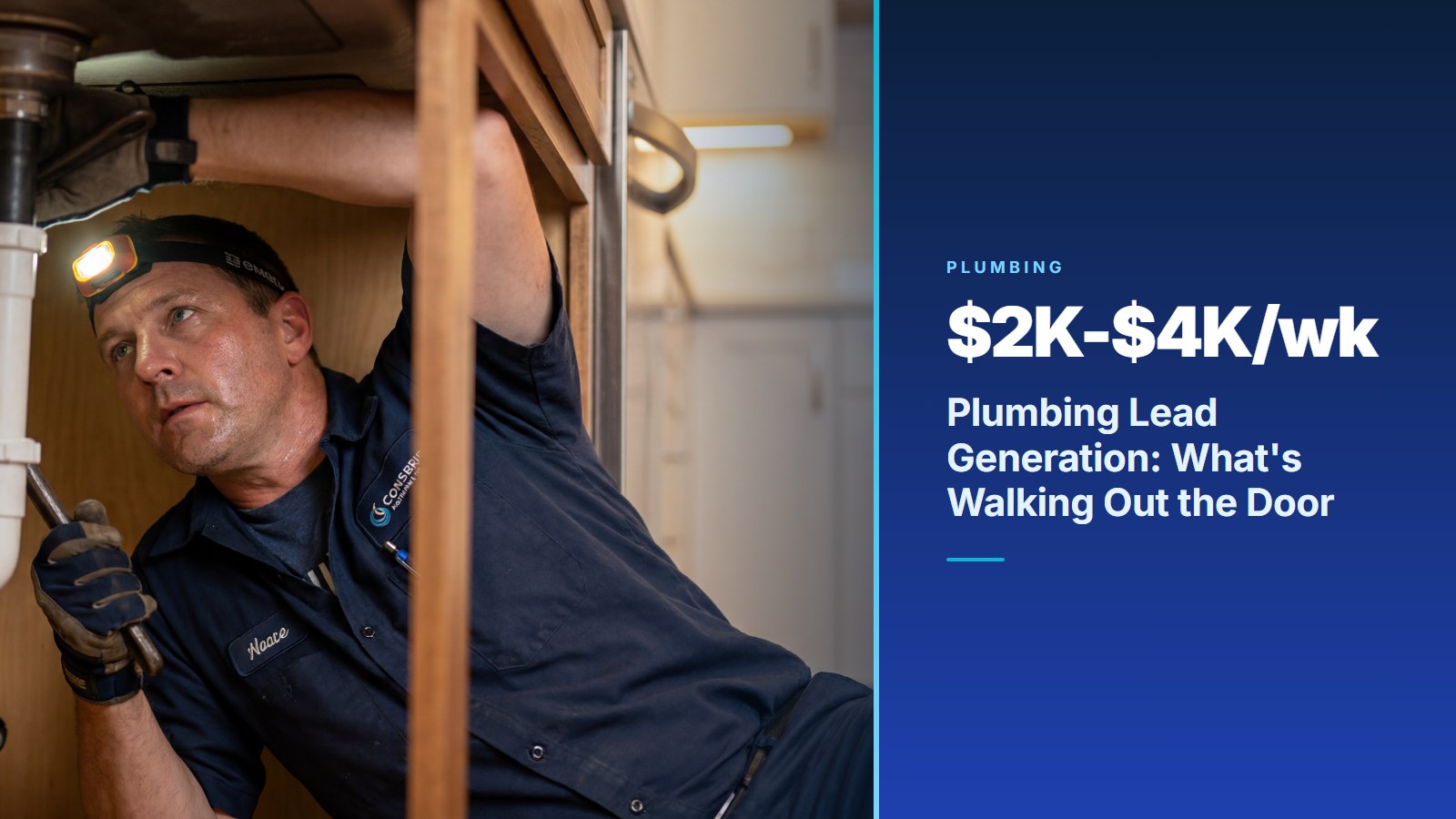
Most plumbing businesses don’t struggle with demand. Pipes burst. Water heaters fail. Drains clog at the worst possible time. Homeowners need plumbers, and they need them now. Plenty of people are searching for help. The problem is that most plumbing companies lose those leads before anyone on the team ever talks to them.
If you’ve been looking into how to get more plumbing leads, you’ve probably seen the standard advice: buy leads from HomeAdvisor, run Google Ads, maybe get listed on Thumbtack. Some of that can work. A lot of it burns cash without a clear return, especially when you’re competing against every other plumber in your market for the same recycled leads.
The plumbing companies growing fastest in 2026 are capturing a higher percentage of the leads they already have, responding faster than the competition, and using automation to stay in front of customers 24/7, and most of them are doing it without spending more on marketing. Eight plumbing lead generation strategies that actually deliver results, ranked by impact. If you run a commercial or mechanical plumbing shop, stay for the last section: it covers where the $3M+ companies get their leads, and the answer looks different from the residential playbook. It starts with why the bid board is a one-in-ten game and how to get in front of the buyer while it is still a conversation instead of a competitive bid.
- Speed to lead is the #1 plumbing lead generation tactic: responding in under 60 seconds converts at 391% higher rates.
- Google reviews with automated follow-up create a compounding flywheel that drives organic inbound leads.
- AI call answering and automated follow-up capture plumbing leads 24/7, including emergency calls at 2 AM.
- Reactivation campaigns to past customers cost almost nothing and generate the highest-ROI jobs.
- Commercial plumbing leads come from trigger-based outbound (permits, TI build-outs, building sales, maintenance renewals) worked by a dedicated human caller plus email and LinkedIn.
1. Speed to Lead: Respond in Under 60 Seconds
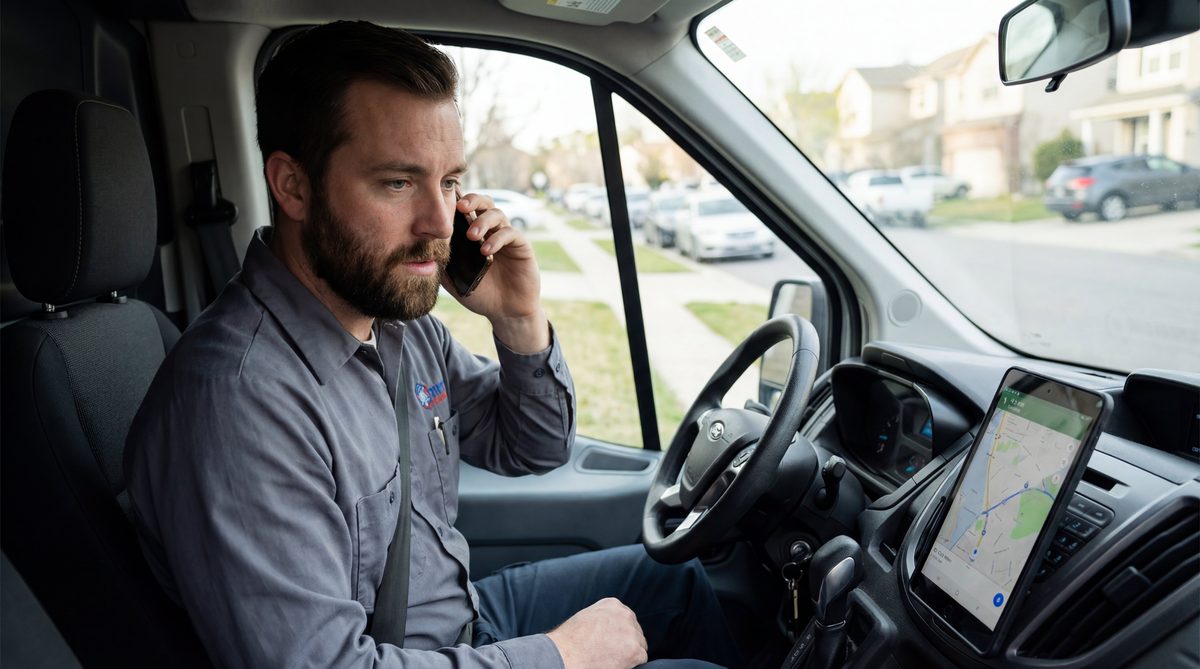
This is the single highest-leverage plumbing lead generation tactic, and it costs almost nothing to implement. The goal is converting the leads you already have, before you spend a dollar getting more.
When a homeowner has water pouring through their ceiling or a toilet that won’t stop running, they don’t call one plumber and wait. They call two or three. The first to respond usually gets the job. The MIT Lead Response Management Study shows the odds of qualifying a lead drop 10x after the first five minutes. Harvard Business Review found that responding within five minutes makes you 21x more likely to qualify the lead compared to waiting 30 minutes.
In our national lead response study, we sent real inquiries to 1,824 local businesses and tracked what happened. 68.5% never replied within a day, and 88% quit after a single attempt. The best companies respond in under a minute. That gap is where most revenue is lost.
The problem is obvious: your plumbers are under sinks, in crawl spaces, running between jobs all day. Nobody’s sitting at a desk waiting for the phone to ring. That’s exactly why automated missed call text-back systems have become essential for plumbing lead generation. When a call goes unanswered, the system fires off an instant text to the caller, opening a conversation and holding their attention until someone on your team can follow up.
The best platforms take this further. Every missed call triggers an immediate text response, and an AI assistant continues the conversation, qualifies the lead by asking about the problem and urgency, and can book the appointment directly onto your calendar. No human intervention needed.
How to implement: Start by measuring your current average response time. Check your call logs for the last 30 days and note how many calls went to voicemail. Then set up an automated text-back system so that every single inbound call gets a response within 60 seconds, whether you answer it or not.
Lead Conversion Drops Fast
The odds of qualifying a lead fall off quickly as response time stretches, per the same MIT Lead Response Management data cited above:
| Response time | What happens to your odds |
|---|---|
| Under 5 minutes | The best odds you will get of qualifying the lead |
| 5 to 10 minutes | Odds of qualifying drop fourfold |
| 5 to 30 minutes | Odds of qualifying drop 21x |
| Next day or never | Where 68.5% of the 1,824 businesses in our national study landed |
Sources: MIT Lead Response Management Study, Harvard Business Review, Ignitvio national lead response study.
2. Local SEO: Own Your Service Area on Google
Digital marketing for plumbers doesn’t get more cost-effective than local SEO. Unlike paid ads where leads dry up the moment you stop paying, SEO compounds over time. Per a Google local-search event presentation, 46% of all Google searches have local intent, and a well-optimized Google Business Profile and website can generate 20 to 40+ organic leads per month without ongoing ad spend. For plumbing companies, this is the foundation of long-term plumbing lead generation.
When a homeowner searches “plumber near me” or “emergency plumber [city],” Google shows the local 3-pack, the three businesses at the top with a map. Getting into that 3-pack is worth more than any ad you can buy. Per Whitespark’s Local Search Ranking Factors study, your Google Business Profile is the single most important factor for local pack rankings, and those listings pull roughly 44% of all clicks per BrightLocal data.
Three pillars to local SEO for plumbing companies:
Google Business Profile optimization
Complete every field. Add job photos weekly: before-and-after shots of repiping projects, water heater installs, and drain cleanings. Post updates twice a month. Choose the right categories (Plumber as primary, then Drain Cleaning Service, Water Heater Installation Service, etc.).
Citation consistency
Your Name, Address, and Phone number (NAP) needs to be identical across every directory: Yelp, BBB, Angi, Thumbtack, Yellow Pages, Apple Maps, Facebook, and at least 30 to 40 others. Inconsistencies confuse Google and hurt your local rankings.
Service area pages
Create dedicated pages for each service (drain cleaning, water heater repair, sewer line replacement, leak detection) and each city or neighborhood you serve. Each page should target a specific keyword with unique content, never the same template with a different city name swapped in.
How to implement: Start with your Google Business Profile. Claim it if you haven’t already, verify it, and fill in every field. Then audit your top 20 citations for NAP consistency using BrightLocal or Whitespark. For on-page work, begin with service pages for your highest-revenue offerings (emergency plumbing, water heater replacement, drain cleaning) and location pages for your top three service areas.
3. Google Review Stacking: More 5-Star Reviews, More Calls
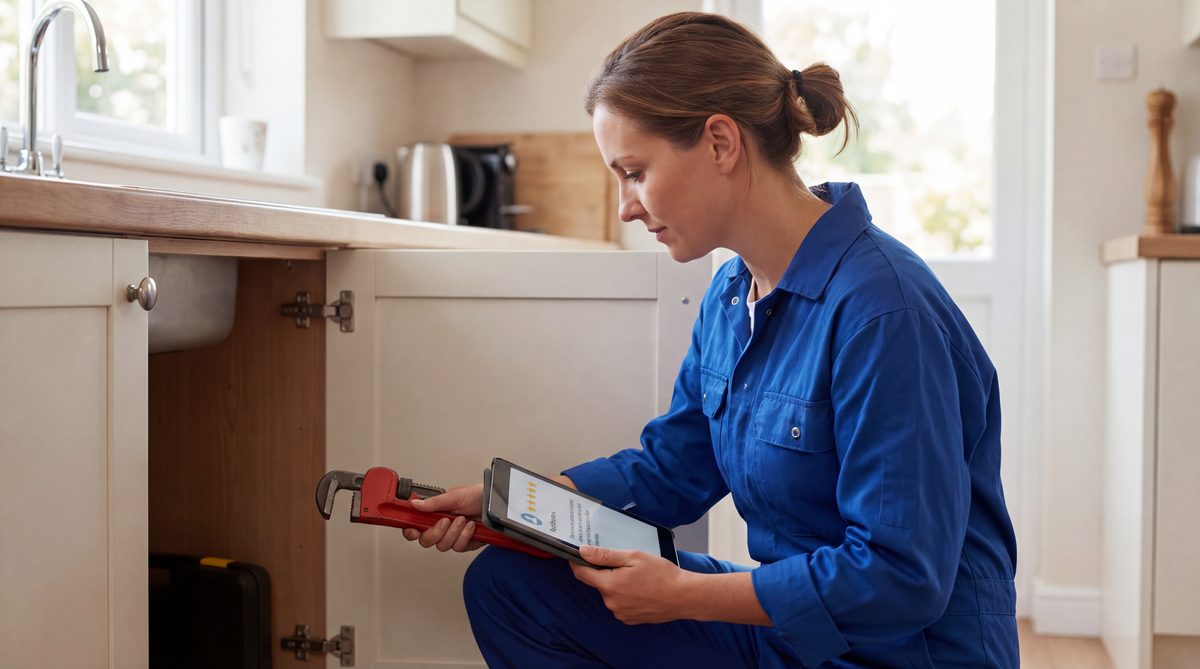
Reviews are the most powerful form of plumbing lead generation that most companies seriously underinvest in. BrightLocal’s 2025 Local Consumer Review Survey found that 87% of consumers read online reviews for local businesses, and 73% only pay attention to reviews from the last month. Not last year. Last month. Research from the Northwestern Spiegel Research Center goes even further: displaying reviews can increase conversion rates by 270%.
For plumbers, reviews serve double duty. They influence whether a homeowner clicks on your Google Business Profile, and they’re a direct ranking factor in Google’s local pack algorithm. More recent, high-quality reviews mean better visibility in the local 3-pack, which drives the majority of clicks for “plumber near me” and similar searches. For a deeper dive on this, see our guide on getting more Google reviews.
The challenge is consistency. Most plumbing companies get a burst of reviews after they first ask, then it tapers off. Asking for reviews manually always falls through the cracks when you’re running jobs all day.
Womply’s analysis of more than 200,000 U.S. small businesses, reported by Search Engine Land, found that businesses with above-average review counts bring in 82% more annual revenue than those below average. Review velocity, meaning how many new reviews you get per month, matters just as much as your total count.
The best approach is to automate review collection by sending a text to every customer after their service is completed. The message includes a direct link to your Google review page, making it one tap to leave a review. Automated review platforms also route negative feedback privately so you can resolve issues before they become public 1-star reviews.
How to implement: Set a goal for review velocity: aim for at least 8 to 10 new reviews per month. Automate the ask so it happens after every completed job, every time, without exception. Respond to every review within 24 hours, positive or negative. This signals to Google that your profile is active and engaged.
Review Velocity: You vs. Your Top Competitor
An illustrative scenario showing how consistent review automation changes the picture:
| Reviews/month | Total reviews (now) | In 12 months | |
|---|---|---|---|
| You (manual asks) | 3 | 47 | 83 |
| Top competitor | 12 | 186 | 330 |
Now the same starting point with automated review requests running after every job:
| With automated review requests (15/month) | Total reviews |
|---|---|
| 6 months | 137 |
| 12 months | 227 |
| 18 months | 317 |
At 15 reviews per month you close the total-count gap by 3 reviews every month, and more importantly, your last-30-days count (the one 73% of consumers actually weigh, per the BrightLocal survey above) beats your competitor’s from month one.
Get a Free Pipeline Audit for your metro
A sample prospect list and trigger map for your market, plus a lead response check: we send your company a real inquiry and show you exactly where it falls through.
Get the Free Pipeline Audit4. AI Call Answering: Never Miss an Emergency Call Again
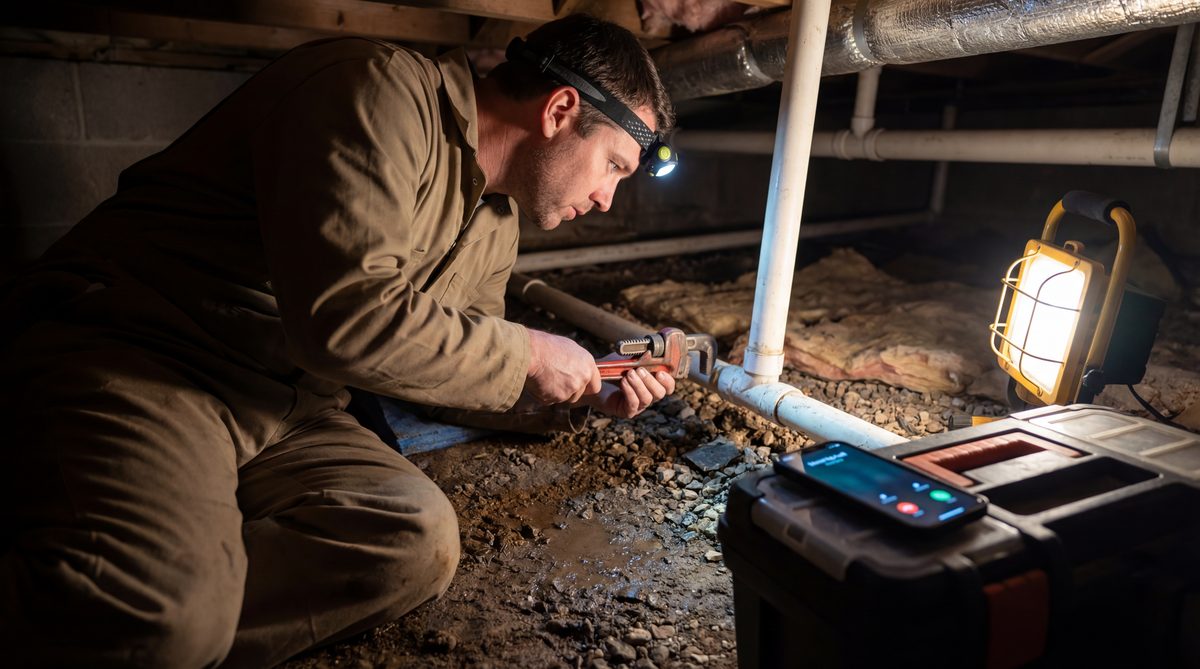
Plumbing is one of the most emergency-driven trades. Burst pipe at 11 PM. Backed-up sewer on a Sunday morning. Water heater that dies in the middle of winter. These are high-value, high-urgency calls, and if nobody answers, that homeowner is calling the next plumber on the list within 30 seconds.
Whatever covers your phones after hours has to do more than take messages. It needs to ask the right qualifying questions (what’s the problem, how urgent is it, what’s the address), check your real-time calendar, and book the appointment on the spot. That can be a live person with booking access or an AI answering service that handles the call in a natural-sounding voice. The requirement is the same either way: 24/7 coverage that ends in a booked job.
ServiceTitan’s State of the Trades analysis of residential HVAC call records found 14.1% of inbound calls arrived outside business hours in June 2025, the seasonal peak. Plumbing emergencies run on the same clock: burst pipes and backed-up drains get discovered at night and on weekends, and if you’re not answering those calls, you’re handing that revenue to whoever is.
For plumbing lead generation specifically, after-hours call capture is even more critical than in other trades. Emergency plumbing jobs are often the highest-ticket calls you’ll get: burst pipes, sewer backups, and flooding can easily run $500 to $2,000+. Miss one of those because it came in at 2 AM and a high-value job goes straight to your competitor.
How to implement: Audit your after-hours call volume first. Pull reports for the last 90 days and look at calls that came in before 8 AM, after 5 PM, and on weekends. Multiply that number by your average emergency job value. That’s the revenue at risk. Then evaluate AI call answering systems built for plumbing that integrate with your scheduling software so booked appointments appear automatically. A purpose-built plumbing answering service handles emergency triage, qualifies the lead, and books directly into ServiceTitan, Jobber, or Housecall Pro before the call ends. If you are an owner-operator running one truck, the economics work differently: our breakdown of an answering service for single-truck plumbers covers the math solo plumbers face.
5. Automated Follow-Up: Turn Quotes Into Booked Jobs
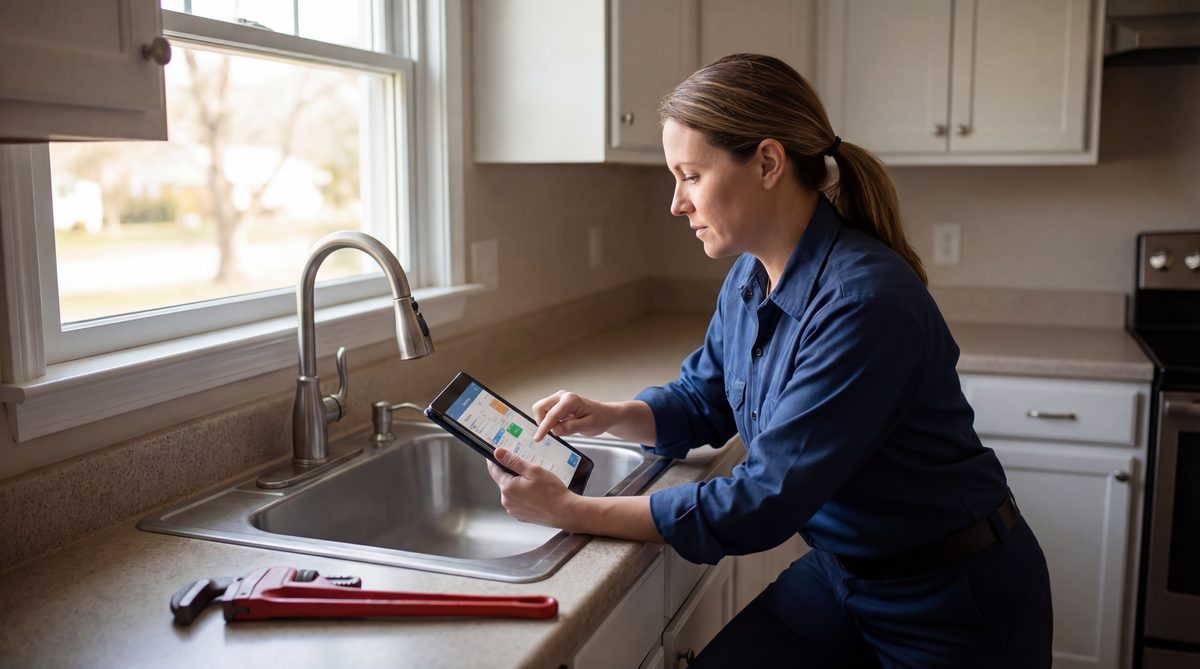
Here’s a stat that should keep every plumbing business owner up at night: 48% of salespeople never follow up after the first contact, per Invesp research. And yet 80% of sales require five or more follow-ups to close.
In plumbing, this plays out every day. A homeowner calls about a water heater replacement quote. Your team gives them a price over the phone. The homeowner says they need to think about it. And then… crickets. Nobody follows up. Nobody texts two days later asking if they have questions. Nobody checks in a week after. That $3,000 to $6,000 water heater install goes to the plumber who did.
Automated follow-up sequences fix this by taking the human bottleneck out of it. After initial contact, the system sends a series of well-timed messages over days and weeks: a thank-you text after the estimate, a check-in two days later, a nudge about why waiting on a failing water heater costs more in energy bills, and a final value-driven message with an easy booking link.
Invesp’s numbers make the math simple. If 80% of sales take five or more touches and 48% of salespeople never make the second one, a five-touch automated sequence puts you ahead of most of your market without hiring anyone. For plumbing companies with high-ticket jobs like repiping and water heater replacements, every recovered quote is real money.
The best plumber marketing combines speed-to-lead with persistent automated follow-up. Once a lead enters the system, whether from a phone call, form submission, or text message, the platform manages the entire nurture sequence. It knows when to reach out, what to say, and when to stop. Your team only gets involved when the lead is ready to book.
How to implement: Map out your current follow-up process. If the answer is “we call them back once and that’s it,” you’re leaving money on the table. Build a minimum five-touch follow-up sequence across text and email, spaced over 14 days. Automate it so it runs without anyone on your team having to remember.
6. Referral Systems: Turn Happy Customers Into Lead Sources
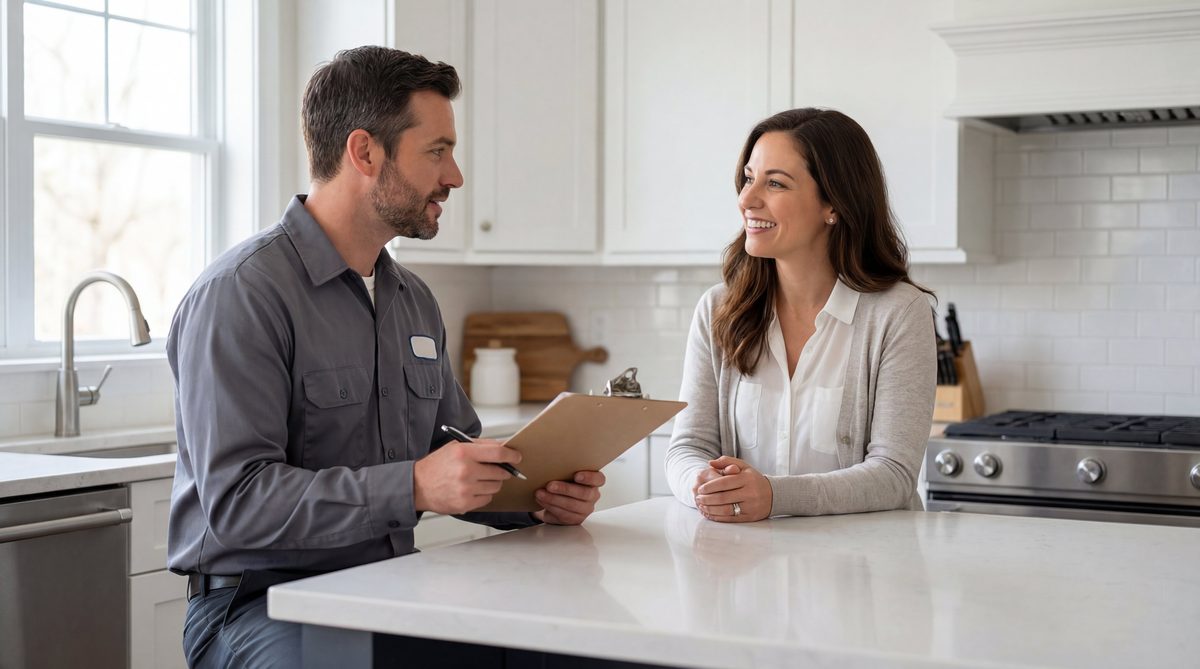
Referrals have always been the best leads in plumbing. They close at higher rates (a Nielsen study found people are 4x more likely to buy when referred by a friend), they have shorter sales cycles, and they’re less price-sensitive because trust has already been established through the referring customer.
Most plumbing companies get high-quality referrals; what they lack is volume and consistency. You get them when you get them, and you’ve got zero control over the flow. That changes when you build an actual referral system instead of just hoping satisfied customers mention you to their neighbors.
Plumbing is especially well-suited to referral programs because homeowners talk about plumbing problems with neighbors and friends more than almost any other home service. When someone’s water heater dies, the first thing they do is text their neighbor: “Do you know a good plumber?” If your customer has a reason and a reminder to share your name, you get that call.
Define the incentive
Keep it simple. A $50 credit toward their next service or a free drain cleaning works well. Make sure the plumber can explain it in 15 seconds at the end of every job.
Ask at the right time
The moment the tech finishes the job and the customer is satisfied is the highest-probability window. Train your plumbers to mention the referral program during their wrap-up conversation.
Follow up with a text
Send an automated message after the job with a shareable referral link: “Know anyone who needs a plumber? Send them our way and you’ll get $50 off your next visit.”
How to implement: Create a one-page referral program with a clear incentive. Print referral cards for your plumbers to hand out. Set up a post-service automated text that reminds customers about the program with a trackable link. Track referral sources in your CRM so you know which customers are your best ambassadors.
7. Content Marketing: Attract Leads Before They Call
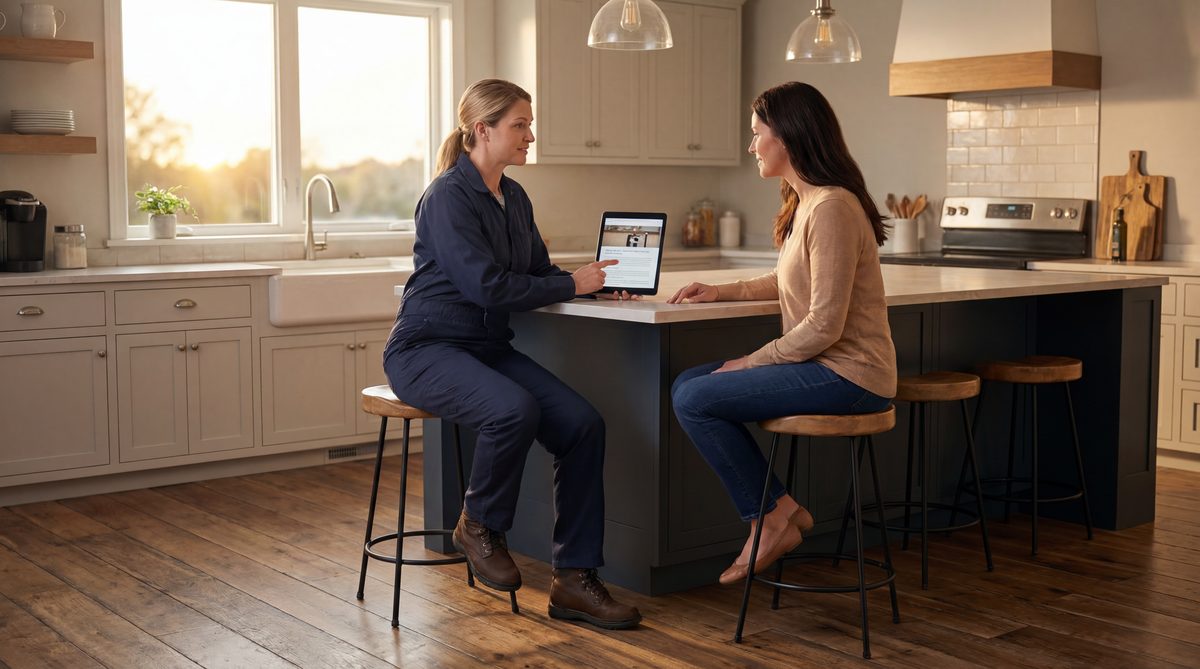
Content marketing for plumbing companies means creating content that homeowners in your service area find when they’re searching for answers to plumbing questions. Those searches represent people who either need a plumber now or will soon. One of the most underrated plumber marketing ideas out there.
The content that drives the most plumbing leads falls into three categories:
Problem-aware content
“Why is my water heater making noise?” “Toilet keeps running after flushing.” “Brown water coming from faucet.” These searches come from people with an active problem who are one step away from calling a plumber. A well-written guide that answers their question and ends with a clear call-to-action can convert at 5% to 10%.
Cost and comparison content
“How much does it cost to replace a water heater in [city]?” “Tankless vs. tank water heater: which is better?” “Cost to repipe a house.” These searches signal someone in the consideration phase getting closer to a purchase decision.
Seasonal and prevention content
“How to prevent pipes from freezing.” “Spring plumbing maintenance checklist.” “Signs your sewer line needs replacement.” These attract homeowners before they have an emergency, giving you a chance to build trust and capture their information.
The key to digital marketing for plumbers through content is targeting keywords with local intent and reasonable competition. You don’t need to rank nationally. You need to rank in your city and surrounding areas for the searches that lead to booked jobs.
How to implement: Start with five to ten articles targeting your highest-intent keywords. Use Google’s “People Also Ask” and autocomplete suggestions to find what homeowners in your area are searching for. Publish one to two articles per month, each 1,000 to 1,500 words, with a clear CTA to call or book online. Link each article to your relevant service pages.
8. Reactivation Campaigns: Re-Engage Past Customers

If you’re wondering how to grow a plumbing business without spending more on ads, start here. Most plumbing companies are sitting on a goldmine they never touch: their past customer list. If you’ve been in business more than a few years, you’ve probably got hundreds or even thousands of previous customers who haven’t booked in 6, 12, or 18+ months. These people already know you, already trust you, and already have plumbing systems that need maintenance. They just need a reason and a reminder to come back.
Reactivation campaigns are automated text and email sequences specifically targeting past customers who’ve gone dormant. The messaging is simple and direct: remind them about seasonal maintenance, offer a water heater flush before winter, or let them know about a whole-house plumbing inspection special.
Acquiring a new customer costs 5 to 7 times more than retaining an existing one. Reactivation campaigns let you generate revenue from customers you’ve already paid to acquire, and the close rate is 3 to 5 times higher than cold outreach.
Plumbing has natural seasonal angles that make reactivation campaigns especially effective. Before winter: “Your water heater hasn’t been flushed in over a year. Sediment buildup is the #1 cause of early failure. Let’s get it tuned up before the cold hits.” In spring: “Winter is hard on pipes. A 15-minute inspection can catch small issues before they become expensive repairs.” Before summer: “Outdoor faucets and sprinkler systems take a beating. Book a quick check to make sure everything’s sealed.”
The beauty of reactivation campaigns is the cost. You’ve already paid to acquire these customers once. Reaching out via automated text costs pennies per message. And because they already trust you, conversion rates are way higher than any cold lead source.
How to implement: Export your customer list and segment it by last service date. Create three campaigns: one for customers who haven’t booked in 6 to 12 months, one for 12 to 24 months, and one for 24+ months (with a “we miss you” angle). Use automated text and email sequences timed to hit 4 to 6 weeks before each seasonal peak. Include a clear call-to-action with easy online or text-to-book scheduling.
Putting It All Together
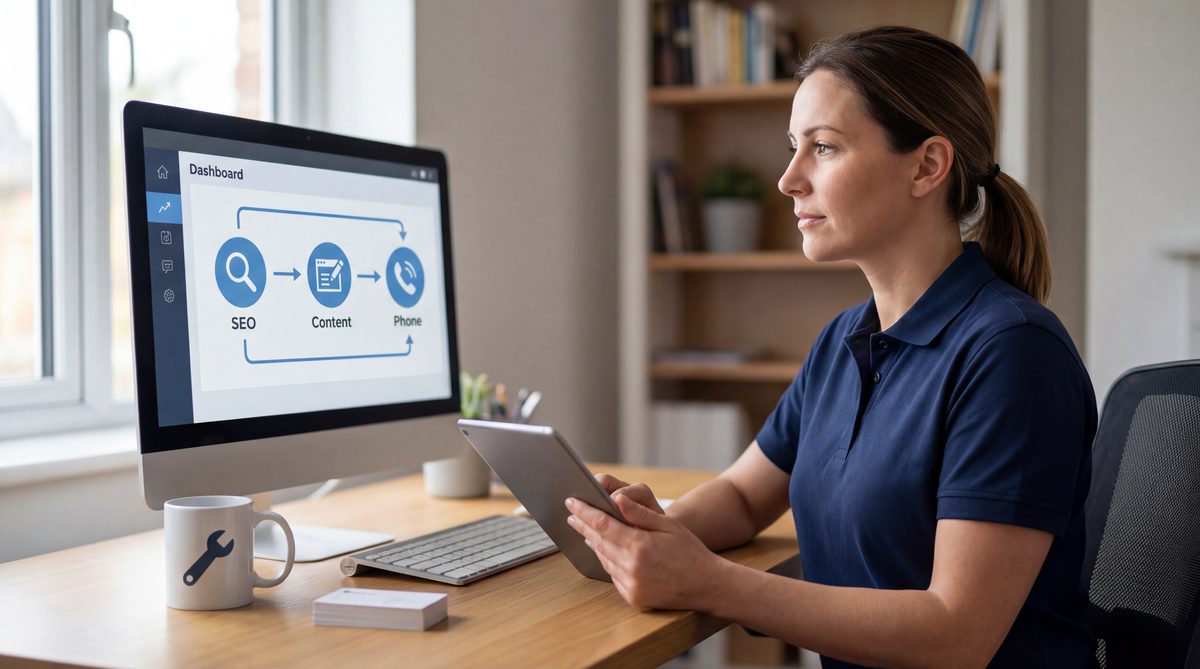
The best plumbing lead generation strategy is all eight tactics working together as a system. Local SEO and content marketing bring leads to your door. Speed-to-lead and AI answering make sure you capture every inquiry, including the emergency call at 2 AM that’s worth $1,500. Automated follow-up converts the homeowners who got a quote but haven’t booked yet. Review stacking builds the social proof that makes everything else work better. Referral systems turn every happy customer into a lead source. And reactivation campaigns bring back the hundreds of past customers sitting in your CRM.
The plumbing companies growing fastest in 2026 are capturing a higher percentage of the leads they already generate, following up persistently, and reactivating past customers, all through automation and without spending more on marketing. That’s how you grow a plumbing business without hiring more office staff or burning more cash on ads.
If you’re investing in ads, SEO, or any other lead source but haven’t automated your speed-to-lead, call answering, follow-up, and reviews, you’re pouring water into a leaky pipe. Fix the leak first. Then turn up the pressure.
Run electrical crews too? The same system, adapted for electrical contractors, is in the electrician lead generation breakdown.
Commercial Plumbing Leads: Where the $3M+ Shops Get Them
Owners of commercial and mechanical shops tell us the same story on almost every fit call. The owner is the only one selling, and the selling stops every time that owner is walking a site, chasing a net-90 receivable, or covering for a foreman. The bid board sends the same prints to two or three dozen shops and pays out for the one the GC already wanted. Service tickets keep the phones busy and never build a backlog. And the last vendor who promised meetings booked walkthroughs where the person on the other side did not know who you were, had only said yes to stop the calls, or could not sign anyway, and the invoice showed up regardless. Every one of those has the same fix: get in front of the right buyer while it is still a conversation instead of a competitive bid, and hand the hunting to someone whose whole job is the hunting.
Everything above is built for residential demand: homeowners with a problem, searching right now. If you run a commercial or mechanical plumbing company, the buyer looks completely different. A facilities director choosing a plumbing maintenance vendor for a 40-building portfolio does not search “plumber near me” at 2 AM. The property manager whose flex industrial park just changed hands does not fill out a web form. And the GC awarding the plumbing package on a tenant-improvement build-out already has three subs on speed dial.
That is why commercial plumbing leads rarely show up in the inbound channels above. Google Ads and the local 3-pack catch service calls, and those are worth taking, but the contracts that move a $3M+ shop (repipes, maintenance agreements, backflow programs, new-construction packages, hydro-jetting schedules across a portfolio) are won by getting in front of the buyer before the RFP exists. The signal for that is trigger data.
Why the bid board is a one-in-ten game
Plan-and-spec work looks like a pipeline because there is always another set of prints to price. Owners who track it put their hit rate on public bid boards at somewhere around one in ten, and the jobs they do win come in at margins they would never accept on a negotiated contract. The reason is structural. By the time a plumbing package is posted, the GC usually has a sub in mind, and the other bids exist to keep that sub honest. Pricing a posted package means pricing to be the number the favorite has to beat.
The shops that win commercial work at healthy margins get in before the prints go out. When the project executive already knows your estimator, has walked a site with your foreman, and trusts your crews to hold a schedule, the bid becomes a formality and the conversation is about scope and timing instead of who is lowest. That pre-construction conversation, weeks or months before the package hits the board, with a buyer who has a live scope and a reason to talk, is the meeting the outbound program below is built to produce.
The triggers that predict a commercial plumbing purchase
| Trigger | What it tells you | Who to call |
|---|---|---|
| Commercial building permits and plan approvals | A plumbing scope is being designed or bid right now | GC project executive, owner’s rep |
| Tenant-improvement build-outs (restaurants, medical, labs) | Grease interceptors, med-gas, backflow, and fixture counts on a deadline | GC, tenant’s facilities lead |
| Building sales and refinancing | New ownership reviews every vendor, and deferred plumbing shows up in due diligence | New property manager, asset manager |
| Personnel changes (new chief engineer, new facilities director) | Incoming leaders re-bid contracts in their first 90 days | The new hire directly |
| Maintenance contract renewal windows | The incumbent’s agreement is up, and the buyer is open for 30 to 60 days | Facilities director, plant manager |
| Zoning approvals and expansions | Square footage is being added and someone has to plumb it | Developer, GC pre-construction |
Someone else does the hunting: how the outbound system works
Trigger data on its own is a spreadsheet. What turns it into commercial plumbing leads is a sequence: a verified decision-maker behind each signal, a dedicated human caller who works the list every day (never a call center, never AI dialing), and cold email plus LinkedIn running alongside the calls so the buyer sees the same name in three channels. The caller’s job is a qualified meeting on your calendar, with the buyer, the scope, and the timing confirmed.
Two things separate this from vendors that sell commercial plumbing leads by the piece. First, every meeting is qualified against criteria you agree on up front and approved by you before it counts. Second, the qualified-meeting minimum is agreed in writing. Miss it and the work continues at no charge until it is hit. There is no revenue or close guarantee, because closing is your estimator’s job; filling the calendar with the right buyers is ours.
Owners who have bought meetings before ask the same four questions long before they ask about price, so here are the answers up front.
- Is it a person or AI? A person. A dedicated, US-based caller trained on your trade and your talk track, assigned to your account and working it every day. Never a call center, never an AI dialer.
- Is a qualified meeting the honor system? No. Every meeting comes to you with the call notes before it happens, and you choose one of three options: approve it, send the caller back for more information, or cancel it at no charge. Callers are not commissioned on meetings you did not approve, so nobody on our side is paid to book a warm body who only said yes to stop the calls.
- Is the refund real? The qualified-meeting minimum, the work-free-until-hit clause, and the refund election on the build fee at the agreed gate are written into the contract, in numbers, so there is nothing to argue about later.
- Will you also work for the shop across town? No. One client per vertical per metro. The caller working your list is never working your competitor’s.
What counts as a qualified commercial plumbing meeting
Before a meeting counts toward the written minimum, it has to clear the criteria we set with you during onboarding. For a commercial or mechanical plumbing contractor that usually means:
- Building type and size you actually want. Class A office, industrial, multifamily, healthcare, food processing, or whatever mix your crews are built for.
- A named decision-maker or budget owner, confirmed by the caller on the phone, with the authority to award or renew.
- A live scope or renewal, tied to the trigger that surfaced the account, so the conversation starts with the buyer’s project and never with a pitch.
- Timing inside your bid calendar, so your estimator is walking a site that will be awarded this year.
- Contract value above the floor you set, so a one-off drain call never counts against a maintenance-program minimum.
- Your sign-off, after you see the call notes and before the meeting is counted.
The same system, run for a commercial roofing contractor, produced its first closed deal inside 45 days, and that client passed 100% ROI before the second milestone payment came due. Plumbing scopes carry longer bid cycles on new construction, which is exactly why the maintenance-renewal and building-sale triggers matter so much: they produce meetings that close in weeks, while the permit-driven work fills the back half of the year.
Where inbound still fits for a commercial shop
The inbound layer above stays on. Service calls, referrals from property managers, and warranty work still arrive by phone and form, and a commercial buyer who takes a cold call will check your Google Business Profile and website the same afternoon. Strategies 1 through 4 make sure that check, and that call, land well. They are the capture layer; the outbound program is where the pipeline comes from.
The full breakdown, including how the ideal customer profile is defined and how meetings are scored, is on the page covering done-for-you outbound appointment setting for commercial and mechanical plumbing contractors.
Done-for-you outbound
Where done-for-you outbound fits
Ignitvio runs outbound for you: a dedicated human caller (never a call center, never AI dialing) working alongside cold email and LinkedIn, armed with trigger data such as permits, zoning approvals, personnel changes, building sales, lease events, and contract renewal dates. Every meeting is qualified against criteria we agree on up front and approved by you before it counts. The qualified-meeting minimum goes in writing, and if we miss it we keep working at no charge until it is hit.
-
We qualify
Every prospect is screened against criteria we agree on with you up front.
-
You approve
A meeting counts toward the minimum only after you sign off on it.
-
You close
Your team runs the meeting and the deal. We keep the calendar full.
Built for commercial and mechanical plumbing companies above $3M.
Commercial plumbing leads: common questions
Can you buy commercial plumbing leads from a marketplace? Marketplaces and pay-per-lead vendors mostly resell service calls: a clogged drain at a restaurant, a leaking water heater at a strip center. Those are jobs, and they are shared with several other contractors the moment they arrive. The maintenance agreement or repipe behind that building is never for sale by the piece; it goes to whoever was in the room before the buyer started shopping.
How long before outbound produces commercial plumbing leads? The first meetings usually come from renewal windows and building sales, because those buyers already have a reason to talk. Permit-driven new-construction meetings follow the bid calendar. Either way the pace is measured against the written minimum, and if the minimum is missed the work continues at no charge until it is hit.
Is $3M in revenue the real floor? Yes. Above it, a shop can staff the meeting cadence and absorb a repipe or a portfolio maintenance program when one lands. Below it, the inbound layer above returns more per dollar, and that is where we would point you.
Does this replace our estimators or bid team? No. The caller’s output is a qualified, approved meeting with a decision-maker. Your estimator walks the site, scopes it, and prices it, the same as a meeting that came from a referral. Your bidding process stays exactly as it is. The only variable that moves is how many of the right buyers you are in front of each month.
What about a no-show? Is that a charge? No. A meeting that does not happen is never billed and never counts toward the written minimum, no questions asked. The other version of a wasted walkthrough, showing up to someone who did not know who you were or cannot award the work, is what the approval step exists to catch: every meeting is judged against your criteria, on the call notes, before anyone drives anywhere.
What if you send more meetings than my crews can absorb? You set the pace before the first call is made. The program is sized to how many jobs you can take on before quality or cash flow breaks, never to the maximum the list could produce, and because you approve every meeting, a full pipeline means you get pickier rather than buried. If you need to pause for a big job, a hire, or travel, the guarantee clock pauses with you.
Should we chase plan-and-spec new construction at all? Only where you are already the shop the GC wants. Blind-bidding a posted package is the one-in-ten game covered above, and it competes on price alone. The permit and plan-approval triggers are still worth working, because they surface the project before the package is posted, and a pre-construction conversation with the project executive is what moves you from one number on a bid tab to the sub the GC is protecting.
Two Ways to Take the Next Step
If you run a residential plumbing company
Start with the leak, then the pressure. Put your own call volume and average ticket into the revenue calculator to see what missed calls and unanswered quotes are costing you per year, then work Strategies 1, 3, and 5 in that order. Those three run on automation you can stand up in a week, and they compound before you spend another dollar on ads.
If you want a 30-day order of operations:
- Week 1: missed-call text-back on every line, and a baseline response time pulled from your call logs.
- Week 2: an automated review request after every closed job, with a target of 8 to 10 new reviews per month.
- Week 3: a five-touch quote follow-up sequence across text and email, spaced over 14 days.
- Week 4: export the customer list and send the first reactivation campaign ahead of the next seasonal peak.
If you run a commercial or mechanical plumbing company
Book a 15-minute fit call. We’ll tell you in that call whether your market has enough trigger volume to support a written meeting minimum, which buyer types we would target first, and what the first 90 days look like. If the answer is no, you’ll hear that too. Prefer to see the data first? The Free Pipeline Audit is a sample prospect list and trigger map for your metro, with a lead response check included.
Commercial plumbing leads, on a written minimum
A dedicated human caller plus cold email and LinkedIn, working trigger data in your metro. Every meeting is qualified against your criteria and approved by you before it counts.
Book a 15-Minute Fit Call
Jake Melendy
Founder, Ignitvio
Jake Melendy is the founder of Ignitvio. He spent 12 years in enterprise sales and sales leadership, including at Oracle, before building Ignitvio, which runs done-for-you outbound appointment setting for commercial contractors and B2B service companies. He writes about pipeline, trigger-based prospecting, and lead response.