Best Answering Service for Small Business in 2026: 10 Honest Reviews
- The “best” answering service for small business depends entirely on your call patterns, vertical, and whether you need human nuance or AI speed. There is no universal #1.
- Average small business misses 25-35% of inbound calls. At a $400 average ticket and 30% close rate, that’s $30,000-$50,000 per year walking away.
- Pricing models vary widely: per-minute services run $1.20-$2.50/minute (expensive on busy months), while flat-rate AI services run $200-$1,200/month regardless of volume.
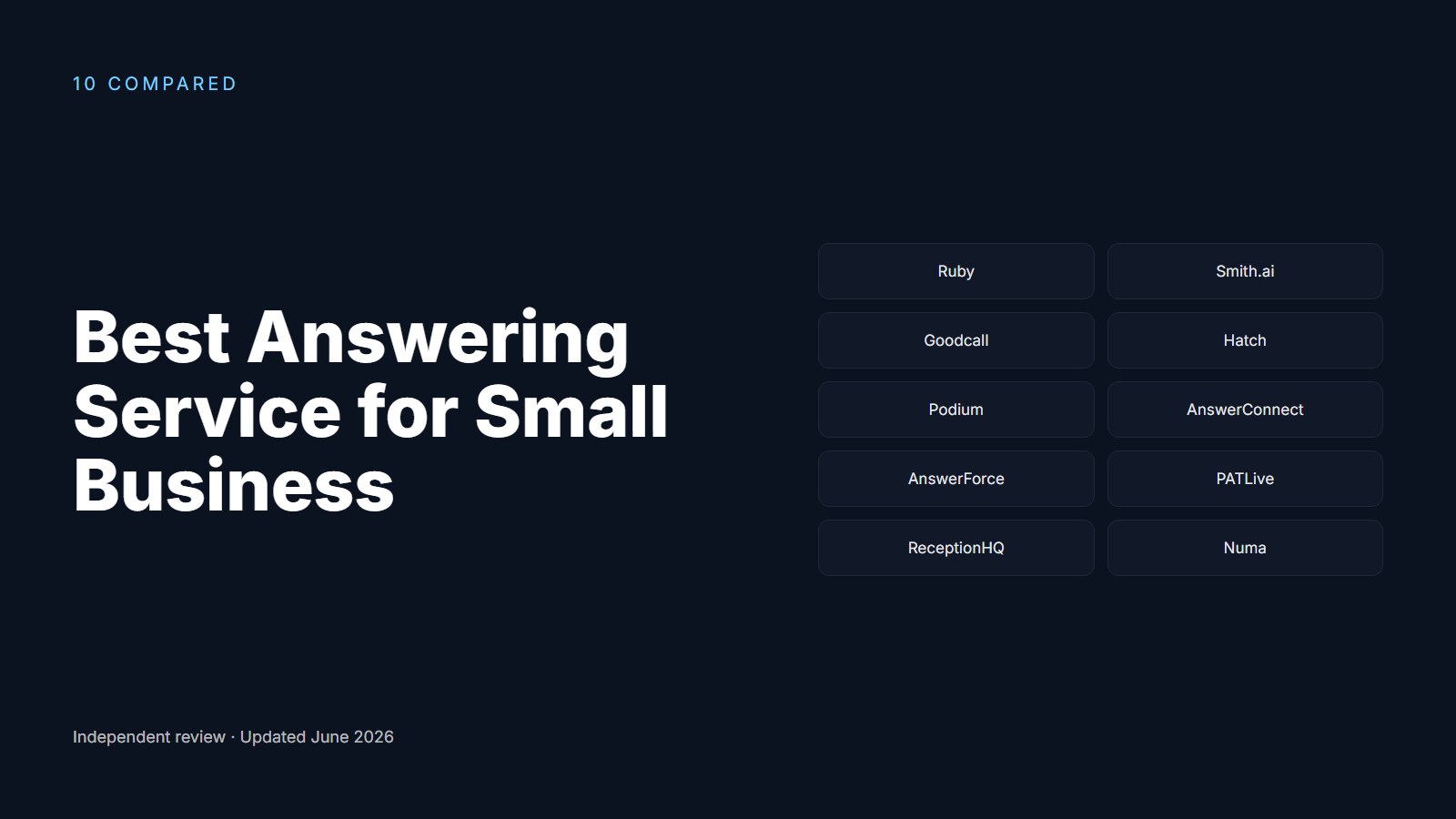
- Below are 10 services compared on coverage, pricing, integrations, vertical fit, and setup time, with “best for” awards in each category instead of a fake universal ranking.
Why Small Businesses Bleed Revenue on the Phone

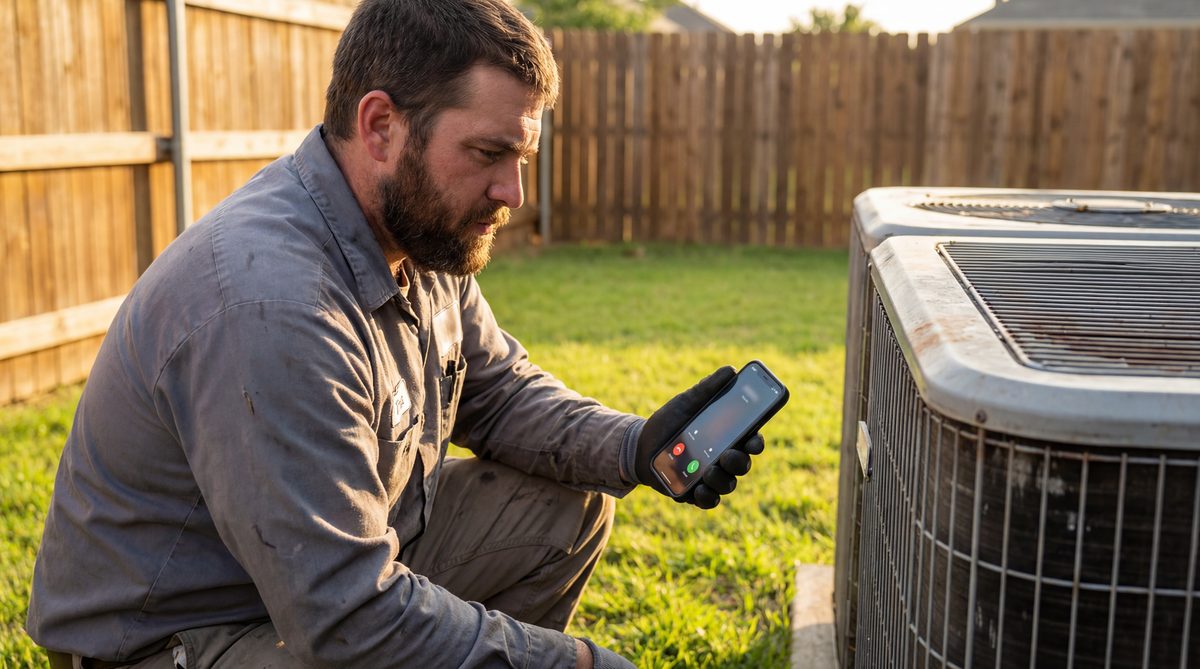
Every small business owner has felt the same gut-punch. A new customer calls, you’re elbow-deep in a job, and the call rolls to voicemail. By the time you call back two hours later, the lead has already booked a different vendor.
It happens more than most owners realize. BrightLocal’s local consumer research shows that 62% of consumers will not leave a voicemail when calling a local business. They simply move to the next listing. Drift’s lead response data adds that even when a voicemail is left, only 27% of leads are ever actually contacted back, because phone tag kills the relationship before it starts.
The math compounds fast. Smith.ai’s industry analysis pegs the average small business at 25-35% missed-call rates during business hours, climbing past 60% after-hours. At a $400 average service ticket and a 30% close rate on new leads, missing 10 calls a month costs roughly $1,200 in lost revenue, every single month. Over a year that’s $14,000. For a higher-ticket business, like a contractor with a $5,000 average install or a law firm with a $4,500 retainer, the same miss rate runs $50,000 to $200,000 per year in lost top-line revenue.
Of consumers will not leave a voicemail when calling a local business. They move to the next listing on the search results.
Source: BrightLocal Local Consumer Review SurveyThis is why answering services exist. The question is which one fits your specific situation, because the wrong choice wastes money without fixing the leak.
What “Best for Small Business” Actually Means

Most listicles you find online rank answering services on totally meaningless criteria like “professional voice” and “polite greeting.” Those things matter zero. What actually matters when you’re shopping is a focused list of five capabilities.
Coverage
When is the service actually answering? Some services advertise “24/7” then charge premium rates for nights, weekends, and holidays. For a small business where the after-hours call is often the highest-margin call of the week, that matters. Real 24/7 at one flat rate is dramatically different from “24/7 with overage fees on the hours that matter most.”
Pricing model
There are two dominant models. Per-minute pricing (the legacy default) runs $1.20 to $2.50 per minute with a minimum monthly minute commitment. It feels cheap on slow months and gets expensive fast on busy months, which is the worst possible cost structure for a small business with surge-driven call patterns. Flat-rate pricing (the AI default) runs $200 to $1,500 per month regardless of call volume. Peak weeks cost the same as slow weeks. For most small businesses this math wins.
Integration depth
A service that takes a message and emails you a daily summary is essentially a fancy voicemail box. A service that pushes booked appointments directly into ServiceTitan, Jobber, Housecall Pro, Clio, Follow Up Boss, KvCORE, or whatever CRM you actually use, that’s a service that earns its monthly fee. Verify the integration before you sign anything. Capterra’s small business software research consistently shows that lack of integration with existing tools is the #1 reason small businesses abandon a new software subscription within 90 days. For a deeper look at which vendors book on the call versus take messages, see the appointment setting answering service comparison.
Vertical fit
A generic answering service operator across hundreds of accounts cannot memorize your active listings, your pricing tiers, your emergency triage rules, or the difference between a no-heat call and a thermostat reset issue. Vertical-trained services (HVAC-specific, medical-specific, legal-specific) handle calls with much more context. AI services trained on your specific business handle this best of all because the knowledge is baked into the configuration.
Setup time
Some services are turnkey in a few days. Others require weeks of script writing, training, and back-and-forth with an account manager before they’re operational. For a small business owner who is already buried, the difference between “operational by Friday” and “operational by next month” is often the difference between adopting the service and abandoning it.
Now to the actual comparison. The 10 services below cover the practical small-business answering market in 2026, from premium human-staffed legacy services to modern AI-powered platforms and SMS-first messaging tools like Hatch and Podium. They are not ranked 1 to 10 because that ranking would be misleading. Each wins for a different type of business, and the right pick depends on which “best for” badge below matches your situation.
How much revenue is your business losing to missed calls right now?
We’ll mystery-shop your business across business hours, evenings, weekends, and emergency scenarios, then show you exactly how many calls are slipping through and what they’re worth. Free. Results in 48 hours.
How AI Is Reshaping the Answering Service Category

The category went through more change in the last 18 months than the previous 30 years. The catalyst was the maturation of conversational AI voice models from providers like OpenAI, Anthropic, and Google. By late 2024 these models had crossed a quality threshold where the typical caller can no longer reliably tell they are speaking with AI rather than a human.
This matters for small business buyers because the cost economics of AI are fundamentally different from human-staffed services. A human operator costs the service roughly $15 to $25 per hour fully loaded, and they can only handle one call at a time. An AI agent costs roughly $0.10 to $0.30 per call regardless of volume, and a single deployment can handle 50 simultaneous calls without any degradation in response time.
That cost difference flows through to small business buyers in two ways. First, flat-rate pricing models become economically viable because the marginal cost of the next call is nearly zero. Second, the services that AI can offer expand dramatically because the AI can be configured with your specific calendar, your active listings, your dispatch software, your pricing tiers, and your custom triage rules. None of that was practical with shared human operators who cycle through hundreds of accounts per shift.
The legacy human answering services are not going away. There are still call patterns where a human nuance matters, particularly highly emotional or escalated calls, complex multi-party legal or healthcare matters, and any situation where the caller might benefit from being put on hold while the operator consults internal references. For 70 to 80 percent of typical small business call volume, however, AI now handles the work better, faster, and at a third of the cost.
The two categories at a glance
| Category | Examples | Typical cost | Best for |
|---|---|---|---|
| Human-staffed legacy | Smith.ai, Ruby, AnswerConnect, PATLive, ReceptionHQ | $200-$800/mo + per-minute overage | Emotional, complex, white-glove brand work |
| AI-powered modern | Ignitvio, Goodcall, MyAIFrontDesk, Rosie AI | $200-$1,500/mo flat-rate | Volume, surge, vertical-specific, integration-heavy |
Most small businesses end up better served by AI in 2026. The exceptions are real but narrower than legacy providers would have you believe.
How We Evaluated the 8 Services Below
Each service below was evaluated against the five criteria from the previous section: coverage, pricing model, integration depth, vertical fit, and setup time. We also called or signed up for each service to verify their advertised capabilities (some of what’s on the websites is generous to the point of misleading). Where there was a real differentiator that mattered to small business owners, we called it out. Where the service was simply average on a dimension, we said so.
We did not attempt to crown a universal #1. The market is too segmented for that, and any listicle that crowns one service as best-for-everyone is either lazy or sponsored. Instead, each service below has a “best for” badge, the specific small business type it actually serves best.
The 10 Best Answering Services for Small Business in 2026

Best Answering Services at a Glance
- 1 Details
Best for Home Service Businesses
Ignitvio
- 2 Details
Best Hybrid Human + AI
Smith.ai
- 3 Details
Best Premium Human Experience
Ruby Receptionists
- 4 Details
Best for High Call Volume
AnswerConnect
- 5 Details
Best for Reviews + Messaging Combined
Podium
- 6 Details
Best for SMS-First Lead Reactivation
Hatch
- 7 Details
Best for Solo Practitioners
PATLive
- 8 Details
Best for Multi-Country Coverage
ReceptionHQ
- 9 Details
Best Free Option for Solopreneurs
Goodcall
- 10 Details
Best DIY AI Builder
MyAIFrontDesk

Best for Home Service Businesses
Ignitvio
Type
AI-powered, done-for-you
Pricing
Flat-rate monthly, priced by module
Best for
HVAC, plumbing, roofing, dental, vet, property mgmt
Why We Picked It
Ignitvio is built specifically for service businesses where the inbound call typically results in a booked appointment. The AI is configured during onboarding with your service area, dispatch fees, emergency triage rules, integration with your dispatch software, and your specific FAQs. The setup is done for you, not by you.
Pros
- Native integration with ServiceTitan, Jobber, Housecall Pro, Service Fusion
- True 24/7 coverage at one flat rate, no overage fees
- Industry-specific call flows for home service verticals
- Missed-call text back included
- Done-for-you setup operational in under a week
Cons
- Newer brand than 20+ year legacy players like Ruby
- Best fit for businesses doing 100+ calls per month, lighter volume may not need the full platform
- Done-for-you onboarding takes about a week to dial in vs. instant self-serve tools

Best Hybrid Human + AI
Smith.ai
Type
Human + AI hybrid
Pricing
$285-$1,500/mo, per-call pricing
Best for
Law firms and professional services
Why We Picked It
Smith.ai pioneered the hybrid model where AI handles FAQs and qualification while human agents handle nuanced calls. The platform integrates well with Clio, HubSpot, and Salesforce, and call quality is consistently high. The brand has the most established reputation in the modern answering service market.
Pros
- Best-in-class human call quality
- Deep integrations with Clio, HubSpot, Salesforce
- Established brand with enterprise references
- Both phone and chat handling included
Cons
- Per-call pricing gets expensive fast on high-volume months
- Call quality varies by operator who picks up
- Broad platform rather than deep on any specific vertical
Best Premium Human Experience
Ruby Receptionists
Type
Pure human, premium
Pricing
$235-$1,505/mo, per-minute
Best for
Established firms where call quality is brand
Why We Picked It
Ruby built its reputation on consistently warm, US-based human call handling. For businesses where the answering experience is part of the brand (boutique law firms, high-end real estate teams, premium consulting), Ruby is hard to beat on call quality alone.
Pros
- Highest consistent human call quality in the category
- Strong brand reputation built over 20+ years
- Simple to set up, no script writing required
- No AI confusion for callers who dislike speaking with AI
Cons
- Most expensive option per call
- No AI option even for routine FAQs
- Per-minute pricing makes busy months unpredictable

Best for High Call Volume
AnswerConnect
Type
Human, large-scale operations
Pricing
$195-$895/mo, per-minute
Best for
Established businesses with 200+ calls/mo
Why We Picked It
AnswerConnect operates at much larger scale than premium boutique services, with hundreds of trained operators handling millions of calls annually. The trade-off is less personalized service in exchange for cost efficiency at scale.
Pros
- Genuine 24/7 coverage including weekends and holidays
- Cost-effective for high-volume small businesses
- Fast setup (often within 48 hours)
- Reliable uptime at scale
Cons
- Call quality varies because the operator pool is large
- Integration list is shorter than premium services
- Vertical-specific training is limited

Best for Reviews + Messaging Combined
Podium
Type
AI messaging + reviews platform
Pricing
$399-$799/mo
Best for
Local businesses building reviews + texting in one stack
Why We Picked It
Podium built its reputation on Google review collection and two-way SMS, then expanded into AI-driven inbound messaging. For small businesses that need reviews, web chat, and SMS in one stack rather than a phone-first answering service, Podium is one of the most mature platforms in the category.
Pros
- Combines website chat, two-way SMS, and review collection in one tool
- Mature review-request automation, especially strong on Google reviews
- Solid integrations with home services CRMs and payment processing
- AI Employee feature handles inbound webchat and SMS qualification
Cons
- Voice/phone answering is not the core product
- Per-location pricing scales fast for multi-location operators
- Primarily a messaging tool, not a true call answering replacement

Best for SMS-First Lead Reactivation
Hatch
Type
Two-way SMS + emerging AI
Pricing
$79-$500+/mo, team-based
Best for
Home improvement, outbound text follow-up
Why We Picked It
Hatch is a two-way SMS platform built for home services, now expanding into AI agents for follow-up and reactivation. Very strong at outbound texting, speed-to-lead messaging, and waking up cold leads. Best paired with a separate inbound call solution rather than used as a standalone answering service.
Pros
- Best-in-class SMS automation for lead reactivation
- Mature follow-up workflows for unresponsive estimates
- Strong integrations with home services CRMs
- Speed-to-lead text response on inbound form fills
Cons
- Not phone-call-first, inbound calls still need a separate solution
- Limited true AI voice capability
- Primarily a text/outbound platform, not an answering service replacement
Best for Solo Practitioners and Micro Businesses
PATLive
Type
Human, mid-market
Pricing
$39-$649/mo
Best for
Solo attorneys, medical, teams under 5
Why We Picked It
PATLive targets the very low end of the small business market with a $39 starter tier that includes 30 receptionist minutes. For solo practitioners who get 20-50 inbound calls per month and just need overflow coverage, this is genuinely the most affordable option.
Pros
- Lowest entry-level pricing in the category ($39 starter)
- Simple month-to-month commitment
- Decent call quality for the price point
- Useful for businesses just starting out
Cons
- Per-minute pricing escalates fast above the starter tier
- Integration with modern CRMs is limited
- Brand is dated and the platform UX shows it

Best for Multi-Country Coverage
ReceptionHQ
Type
Human, international
Pricing
$35-$680/mo
Best for
Customers across US, UK, Australia
Why We Picked It
ReceptionHQ is one of the few answering services with operators in multiple countries, which matters if your customer base spans US, UK, or Australian time zones. Call quality is acceptable across all three markets.
Pros
- True multi-country coverage with native-accent operators
- Competitive pricing in each market
- Decent integration with HubSpot and Salesforce
- Convenient multi-currency billing
Cons
- Average call quality compared to premium US-only services
- Limited vertical-specific configuration
- Can feel transactional rather than relationship-oriented

Best Free Option for True Solopreneurs
Goodcall
Type
AI-powered, Google-backed
Pricing
Free tier, paid from $59/mo
Best for
Solo entrepreneurs testing the category
Why We Picked It
Goodcall launched in 2020 backed by Google and offers a genuinely free tier for solo entrepreneurs. The AI handles basic call screening and message taking, with paid tiers adding appointment booking and CRM integration.
Pros
- Free entry tier is rare in this category
- Tight Google Calendar and Google Business Profile integration
- Simple setup for non-technical users
Cons
- Free tier is genuinely limited (no booking, no CRM integration)
- AI call quality is decent but not category-leading
- Paid tiers scale up quickly

Best DIY AI Builder
MyAIFrontDesk
Type
AI-powered, self-serve
Pricing
$65-$697/mo, minute-based
Best for
Technical owners who want to configure themselves
Why We Picked It
MyAIFrontDesk takes the opposite approach from done-for-you services. The platform gives you the tools to build and configure your own AI receptionist, with templates for common verticals and a no-code interface. For owners who enjoy that work, it’s empowering. For owners who just want the system running, the time investment is a real cost.
Pros
- Most flexible configuration in the AI category
- No-code editor for non-developers
- Large template library across verticals
- Fast iteration once you understand the platform
Cons
- DIY setup means you own prompt quality
- No professional services or onboarding on lower tiers
- Vertical intelligence depends on how well you configure it
The honest verdict
Full disclosure: Ignitvio is our company. We built the answering service ranked #1 above, and we wrote this guide. We’ve worked hard to be fair to every other service in this list (real strengths, real weaknesses), but the top pick is biased by design. Read this section knowing that, then weigh the rest of the cards on the criteria that matter for your business.
With that on the table: for most small home service businesses, Ignitvio wins on the metrics that matter most for that segment, flat-rate true 24/7 coverage, native integration with the dispatch software you already use, industry-specific call flows built in, and done-for-you setup that gets you operational in under a week.
For law firms and professional services that want the human nuance for higher-touch calls, Smith.ai is the strongest hybrid choice. For premium boutique businesses where call quality is part of the brand, Ruby remains the gold standard. For solopreneurs testing the category, Goodcall’s free tier is the no-risk entry point. For technical owners who want to build their own AI, MyAIFrontDesk is the most flexible platform.
The wrong choice for almost any small business in 2026 is the legacy per-minute model with overage fees during your busiest months. That cost structure penalizes you for the exact growth that should make the service pay for itself.
Without Ignitvio vs. With Ignitvio
- 25-35% of calls go to voicemail during business hours
- Overage fees spike during your busiest months
- Messages forwarded by email, then phone tag, then no booking
- Generic human operator can't access your dispatch software
- Setup takes 2-4 weeks of script writing and training
- No after-hours coverage without per-call surcharges
- Every call answered within 2 rings, 24/7/365
- Flat-rate pricing: peak season costs the same as slow season
- Appointment booked on the call directly into ServiceTitan, Jobber, or your CRM
- Vertical-specific call flows: HVAC emergencies routed differently from quotes
- Done-for-you setup operational in under a week
- True 24/7 coverage included at one rate, no surcharges
Illustrative comparison of the two service models, not a measured client result.
Stop Losing Calls to Whoever Picks Up Faster
See how many calls you're losing and what they're worth
We'll mystery-shop your business across business hours, evenings, weekends, and emergency scenarios, then show you exactly how many calls are slipping through and what they're worth. Free. No pitch.
Get Your Free Revenue Audit
Jake Melendy
Founder, Ignitvio
Jake Melendy is the founder of Ignitvio. He spent 12 years in enterprise sales and sales leadership, including at Oracle, before building Ignitvio, which runs done-for-you outbound appointment setting for commercial contractors and B2B service companies. He writes about pipeline, trigger-based prospecting, and lead response.