Contractor Lead Follow-Up: Turn More Quotes Into Jobs
Lead follow-up for contractors is the structured process of contacting potential customers after initial inquiry or quote, using a defined sequence of touchpoints over days or weeks, until they book or explicitly opt out. Done right, it is the highest-ROI activity most service businesses are currently skipping.
The Quote That Never Gets a Follow-Up Call Doesn’t Close
Here’s a number that should change how you run your business.
According to HubSpot’s sales statistics roundup (citing Invesp), 44% of salespeople give up after a single follow-up attempt. One call. One text. Then they move on and assume the lead was dead.
For a roofing contractor in Austin who estimates 15 jobs a week, that means 10 to 12 of those estimates get abandoned after one or two contacts. Not because the homeowner chose a competitor. Because nobody called back.
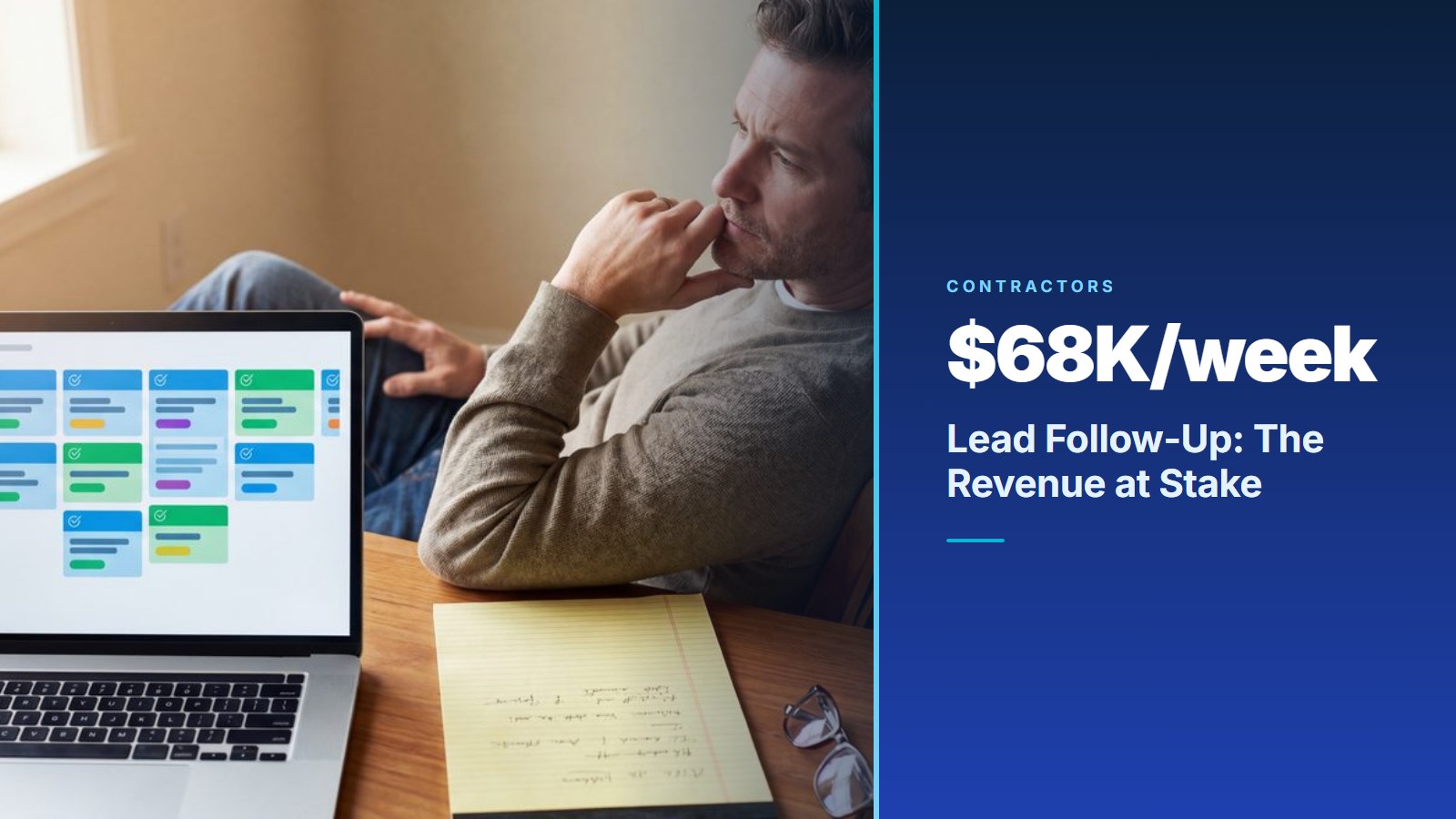
The math is brutal. If your average roofing job is worth $8,500, and you’re leaving 8 potential jobs per week on the table from inadequate follow-up, that’s $68,000 in weekly revenue walking out the door. Most of those homeowners hadn’t made a decision yet. They were waiting for someone to follow up.
of salespeople give up after just one follow-up attempt, leaving most contractor quotes with nowhere to go
Source: HubSpot Sales Statistics (citing Invesp)The problem isn’t demand. Homeowners who request quotes are already interested. The problem is the follow-up gap between the quote and the booking.
Two Contact Attempts Is Not a Follow-Up Strategy
Most contractors have what they call a follow-up process. Call once after the estimate. Call once more three days later if no answer. Move on.
That’s two touches. HubSpot’s follow-up research (citing Brevet) notes that 80% of sales require an average of five follow-ups to close. Two is not a system. Two is an attempt.
The fundamental issue is that homeowners requesting home service quotes are rarely at a “buy now” moment. An HVAC company in Minneapolis checked their CRM in January and found 340 open quotes from the previous 60 days. Of those, 51 had received zero follow-up after the initial estimate. Another 190 had received exactly one call that went to voicemail. None of them had received more than two contacts.
What happened to those 340 open quotes? Some hired a competitor. Some are still thinking about it. Some will call back in spring when the weather forces the decision. The contractor had no way to know which was which, so they treated all 340 the same: as lost.
A proper follow-up system segments those leads and routes each one through a defined contact sequence based on where they are in the decision process. The homeowner who said “I’m not ready yet” gets a different sequence than the one who said “send me a second quote option.” Both get more than two contacts.
The homeowners who don’t respond after your first call aren’t gone. Most of them haven’t decided anything yet. You’re the only one who’s already moved on.
An HVAC company in Minneapolis also found that of the 82 open quotes they followed up on with a 5-touch sequence over two weeks, 23 booked. That’s a 28% close rate from leads they had already written off after one unanswered voicemail.
A 5-Touch Sequence That Converts More Quotes in 14 Days
A 5-touch contractor lead follow-up sequence can run entirely over text and phone, in 14 days, without requiring your team to make judgment calls at every step. Here’s the structure:
Day 1 (same day as quote): Send a follow-up text within 30 minutes of leaving the estimate. Something like: “Hi [Name], this is [Your Name] from [Company]. I left your quote at [address] today. Happy to answer any questions or adjust anything. What would work best for your timeline?”
Day 3 (no response): Call once. If voicemail, leave a brief message referencing the quote and a specific detail: “Calling about the roof estimate from Tuesday. Had a question about whether you wanted to discuss the underlayment options we talked about.”
Day 6 (no response): Text with a soft time element: “Following up on the estimate I left last week. We have a crew slot opening in your area on [specific date]. Wanted to make sure you had first access before I fill it.”
Day 10 (no response): Call again. If voicemail, try a different angle: mention seasonal demand, a similar job in their neighborhood, or a material cost update.
Day 14 (no response): Final text. Keep it brief: “Last message on this. I’ll close out the quote on Friday unless I hear back. Happy to reopen it whenever the timing works. [Name], [Number].”
The sequence stops the moment they respond, positive or negative. The goal isn’t to pester them. It’s to stay in the frame long enough for them to make a decision, because most homeowners take 7 to 14 days from quote to booking on mid-size projects.
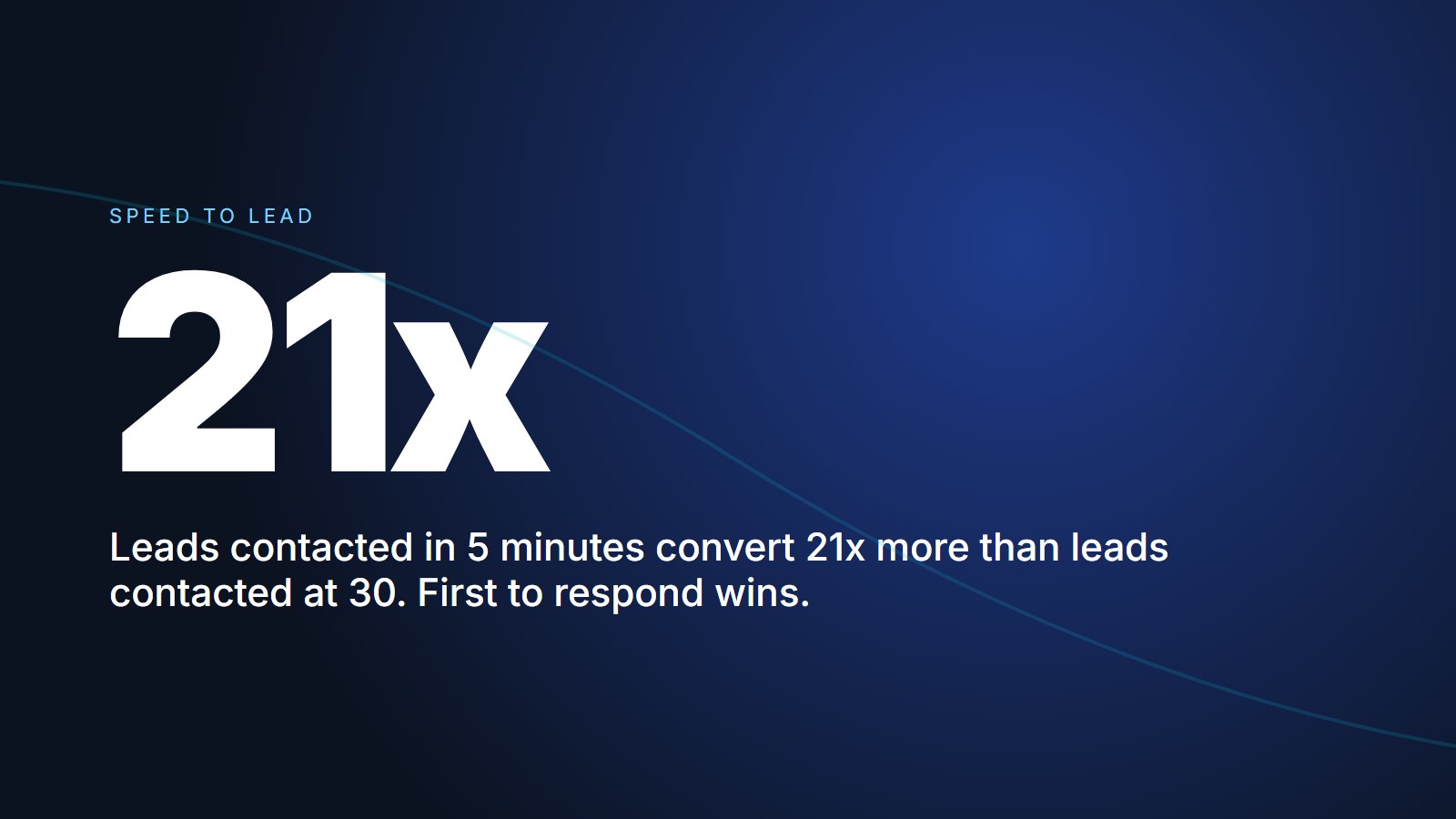
According to Velocify research covered by PR Newswire, prospects called within one minute of inquiry were 391% more likely to convert than those called later. That stat applies to first contact, but the principle carries through the whole sequence: speed and persistence together multiply your close rate.
Related: see how appointment setting answering service locks in the booking during the initial call, which reduces the amount of follow-up you need to do later.
Phone Calls Alone Won’t Reach Most of Your Leads
The classic contractor follow-up is a phone call. Two calls if you’re diligent. The problem is that most homeowners don’t answer calls from numbers they don’t recognize.
USA TODAY reporting on Hiya’s State of the Call research found that about 94% of surveyed people let unidentified incoming calls go unanswered. Your estimate follow-up call, coming from your business cell, looks like every other spam call they get on a Tuesday afternoon. It goes to voicemail. They don’t listen to it.
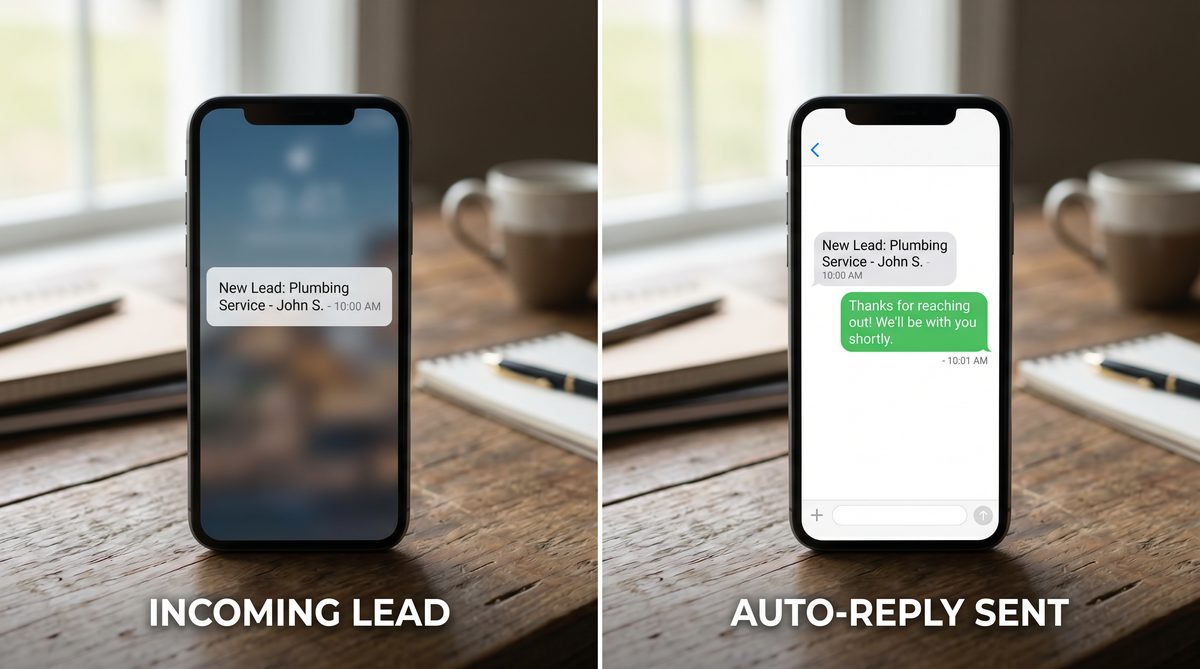
Text messages are the opposite. A short follow-up text that says “Hi Sarah, this is Mike from [Roofing Co] about your estimate last Wednesday” lands in a channel homeowners actually check. A voicemail from an unknown number often never gets played.
This means your follow-up sequence should be text-first, with phone calls mixed in but not dominant. Specifically: texts on days 1, 6, and 14. Calls on days 3 and 10. If they respond to any text, switch to whatever channel they engaged on.
The other reason multi-channel follow-up outperforms phone-only: different homeowners are reachable at different times. A plumber texting at 7 PM Thursday catches a homeowner who’s home from work and has mental space to think about the kitchen drain they’ve been putting off. The same plumber calling at 10 AM Wednesday gets voicemail from the same person who’s at the office and can’t talk about it.
An automated missed-call text-back system handles the first contact layer before follow-up even begins, so you’re entering the follow-up sequence with a warmer lead who already had a conversation.
The Ghosted Lead Playbook: What to Do When Nobody Responds
Five touches across 14 days. Zero response. What do you do?
Most contractors stop here. The lead was dead, they figure. Maybe it was.
The homeowner who went quiet after your roofing estimate in April might be ready in July. Their finances shifted. Their schedule cleared. The first storm of summer reminded them. Silence is not the same as a no.
A pest control company in Tampa tested this approach. They tagged all leads who went through a 5-touch sequence without responding and sent a single reactivation text 45 days later: “Hi [Name], circling back on the pest treatment quote from April. Any interest in setting something up before summer?”
Thirty-one percent of those “dead” leads responded. Eleven percent booked.
A “dead” lead is just a lead you stopped contacting. Most of them hadn’t said no. They just hadn’t said yes yet.
The ghosted lead playbook has one rule: they’re not a lost lead until they tell you they’re not interested. Silence means they haven’t decided yet. Put them in a 45-day dormant bucket. Send one touchpoint. See who’s suddenly ready.
The reactivation touchpoint is different from your initial follow-up sequence. It’s shorter, softer, and doesn’t reference how many times you’ve already reached out. It reads like a fresh start: “I know it’s been a while, just wanted to check if the timing ever worked out.”
One pattern we see repeatedly across service businesses: the leads that convert from a reactivation touchpoint are often your highest-value customers. They weren’t lost. They were slow. And the businesses that reach back out in 45 days are almost always the only ones who do.
Which Leads Are Worth Following Up On (and Which Ones Aren’t)
Not every quote deserves a 5-touch, 14-day follow-up sequence. Some leads should get one call and nothing more. Spending follow-up resources on low-probability leads is how contractors burn out their teams and their budget.
Here’s a simple triage system:
High priority (full 5-touch sequence): Leads who engaged in conversation during the estimate, gave a realistic timeline (“we’re looking at doing this in the next few months”), mentioned a specific problem that needs solving, or provided a complete contact set (name, phone, address).
Medium priority (3-touch sequence): Leads who got a quote but were clearly price-shopping, vague about timing, or mentioned they were getting multiple bids. Give them three touchpoints over 10 days. If nothing, tag them for a 45-day reactivation.
Low priority (1-2 contacts only): Leads where something felt off during the estimate. Incomplete information. They mentioned they were calling “just to see” or the job description changed significantly during the walkthrough. One call and one text. Then move on.
The criteria for each tier will differ by business. An HVAC company in high-demand seasons might tighten their high-priority criteria. A tree service company in a slow month might expand it. The point is having the criteria at all, so every lead gets treated according to its actual value, not according to whoever’s desk it lands on.
Reference small business automation principles here: the businesses that grow fastest aren’t doing more manual follow-up. They’re being smarter about which leads get which resources.
Manual Follow-Up Doesn’t Scale. That’s the Whole Problem.
Every service business owner reading this knows the follow-up sequence works. They’ve seen the numbers. They’ve had the conversation about staying on top of quotes.
And then Tuesday happens.
Three calls come in during a job. The estimate from last Thursday is still in the notebook. The homeowner who said “call me next week”? That was two weeks ago. The team is on six jobs simultaneously and nobody has time to track 30 open quotes across three people’s phones and the shop CRM that gets updated when someone remembers.
This is the actual problem. Every contractor knows follow-up matters. The barrier is capacity.
A 5-touch follow-up sequence requires roughly 45 minutes of manual effort per lead across two weeks: drafting messages, finding contact info, checking whether they’ve already responded, logging attempts. Multiply that by 30 open quotes at any given time and you’ve created a part-time job that nobody has.
- Open quotes tracked in a notebook or spreadsheet
- Follow-up depends on whoever has time (which is nobody)
- Two contact attempts per lead on a good week
- Ghosted leads get marked as lost after day 3
- No way to know which leads are close to booking
- Every quote automatically enters the right follow-up sequence
- Texts sent at optimal times without anyone on your team lifting a finger
- Full 5-touch sequence completed for every lead, every time
- Ghosted leads re-enter a 45-day reactivation sequence automatically
- Dashboard shows open quotes by stage, last contact, and response status
How Ignitvio’s Lead Follow-Up System Runs While You’re on the Job
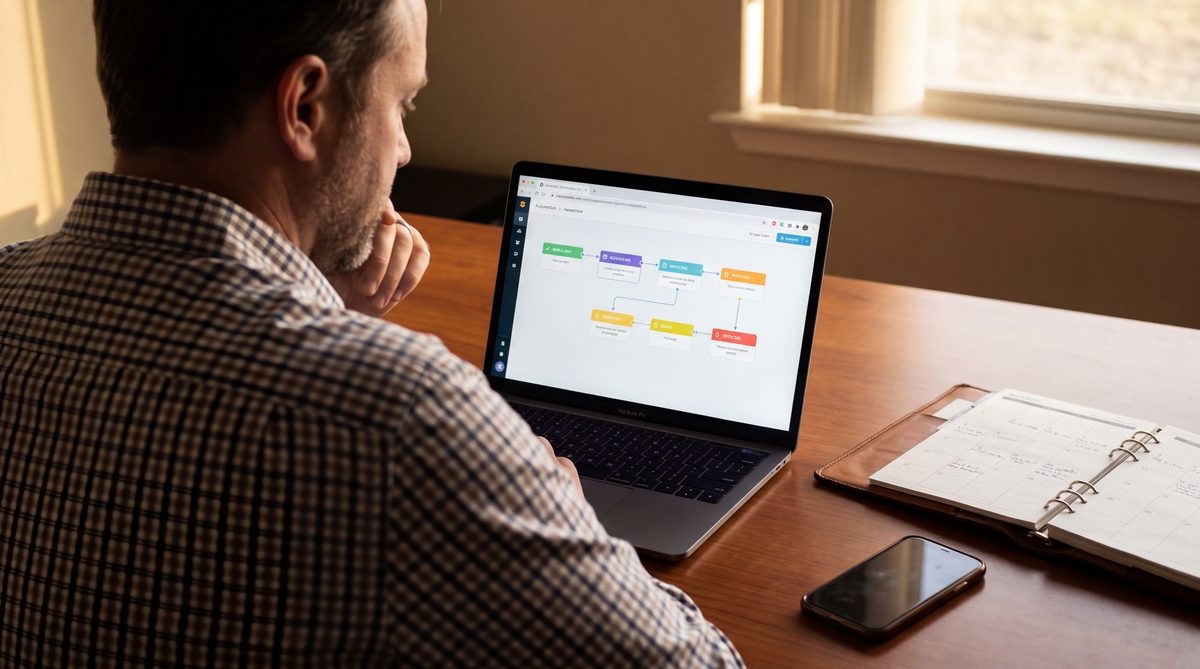
Ignitvio’s lead follow-up automation runs the entire contact sequence without requiring any action from your team after the initial quote is logged.
The businesses that close the highest percentage of their quotes are the ones that follow up most consistently. The difference is a system, not effort.
Here’s what the platform handles:
- Automatic sequence enrollment: When a new lead enters your CRM or job management system (ServiceTitan, Jobber, HouseCall Pro, or via a direct intake form), Ignitvio assigns them a follow-up tier and starts the sequence on day 1 without manual input.
- Text-first outreach: Day 1, day 6, and day 14 messages go out as personalized texts, referencing the specific job type, location, and quote date. They come from your business number, not a generic marketing line.
- Call reminders: For day 3 and day 10 (the phone-call touchpoints), the system queues a task in your dashboard for your team to complete, rather than automating the call itself. Human voice where it matters. Automation everywhere else.
- Response detection: When a lead replies, the sequence stops immediately. The response routes to your team’s phone or CRM in real time. No more leads who responded getting another automated text an hour later.
- 45-day reactivation: Every lead that completes the sequence without booking gets tagged for a single reactivation touchpoint at day 45. The message is drafted by the system and goes out automatically.
The setup takes one session. You connect your job management system or upload your quote history, set your sequence timing and message templates, and the system runs from there. No weekly management.
For a shop carrying 20 to 40 open quotes per week, the system does the follow-up that was previously happening 30% of the time on a good week, on every quote, every time. That consistency is where the quote-to-booking gain comes from.
Find Out How Many Quotes Your Team Is Losing to Inconsistent Follow-Up
Free. No pitch.
Book a Revenue Audit
Jake Melendy
Founder, Ignitvio
Jake Melendy is the founder of Ignitvio. He spent 12 years in enterprise sales and sales leadership, including at Oracle, before building Ignitvio, which runs done-for-you outbound appointment setting for commercial contractors and B2B service companies. He writes about pipeline, trigger-based prospecting, and lead response.